
 Worksheets
A-Level Chemistry Atoms Elements and Molecules_1&2
Total questions: 63
Worksheet time: 35mins
Which of the following is true about the periodic table?
A) Each box contains a lower case letter
B) Each box contains a number
C) Each box contains a capital letter or a pair of letters
D) Each box contains a symbol
Match the following
Periodic table
What is the name of the table that contains a capital letter or pair of letters representing ELEMENT
Oxygen
What element do we breathe?
Iron
What element is used to make bodies of cars and bicycles?
In Periodic table, The first one is always a (a) and
the second one is (b) a capital letter
What is an element?
A) A substance that contains atoms of only one type
B) A substance that can be broken down using chemical reactions
C) A substance that contains neon atoms
D) A substance that cannot be broken down into atoms of any other element
Which of the following statements correctly defines an element?
A) An element is a substance that contains atoms of different types.
B) Elements are chemically complex substances that can be broken down using chemical reactions.
C) An element is a substance that contains atoms of only one type.
D) Elements are substances that can be broken down into other elements.
Which of the following substances is considered an element?
A) Neon
B) Water
C) Hydrogen
D) Oxygen
Which of the following statements about elements and isotopes is true?
A) All elements contain isotopes.
B) Isotopes have different numbers of protons and electrons.
C) Elements cannot be broken down into isotopes.
D) Isotopes of the same element have the same number of protons and electrons but different numbers of neutrons.

Isotopes of an element have a different number of...
Protons
Neutrons
Electrons
Mass
Which of the following isotopes are stable isotopes of neon?
A) 20 Ne
B) 21 Ne
C) 22Ne
D) 19Ne
Atoms are visible to the human eye.
A) True
B) False
How many atoms of silicon and oxygen are present in a tiny grain of sand?
A) Thousands of atoms
B) Millions of atoms
C) Billions of atoms
D) Trillions of atoms
Which of the following statements about atoms is true?
A) Atoms are the smallest particles that make up elements.
B) Atoms consist of protons, neutrons, and electrons.
C) Atoms do not contain any smaller particles.
D) Atoms have properties different from the element they belong to.
What is a molecule?
two elements bonded together (sharing electrons)
a mixture of different substances
smallest individual particles
salt mixed in water
What is a compound?
Two different elements bonded together.
Two of the same elements bonded together.
A mixture of different substances.
Two substances stuck together with glue.
What is a molecule?
A. A particle made of two or more atoms bonded together
B. A particle made of two or more elements bonded together
C. A particle made of two or more compounds bonded together
D. A particle made of two or more symbols bonded together
If a molecule contains atoms of the same element, then what is the result?
A. A molecule of an element
B. A molecule of a compound
C. A molecule of a symbol
D. A molecule of two or more atoms
What is the result when atoms of two or more different elements are combined together?
A. Molecule of a compound
B. Atom of a compound
C. Element of a compound
D. Formula of a compound
Q2. What is the formula of water?
A. H2O
B. H,0O
C. O2H
D. H20O
A water molecule has the chemical formula H2O. This means that the water molecule is made up of
a) Two hydrogen atoms and one oxygen atom
b) Two oxygen atoms and one hydrogen atom
c) Two hydrogen atoms and two oxygen atoms
d) Two molecules of water
water is a _____ as it is made up of two or more different elements.
A compound
An element
A mixture
None of the above
Why is water considered a compound?
A) It contains atoms of the same element.
B) It is made up of two or more different elements.
C) It is a combination of two or more compounds.
D) It is a particle made of only one type of atom.
What is an ion?
A. A species consisting of one or more atoms joined together and having a positive or negative charge.
B. A species consisting of one or more atoms joined together and having a neutral charge.
C. A species consisting of two or more atoms joined together and having a positive charge.
D. A species consisting of two or more atoms joined together and having a negative charge.
A anion is a ____ ion.
negative
positive
neutral
ficticious
WHICH OF THE FOLLOWING IS A COMPOUND?
WATER
CARBON
HYDROGEN
MANGANESE
Element
Compound
Mixture
Examples are diamonds (C) and Uranium (U)
elements
mixtures
compounds

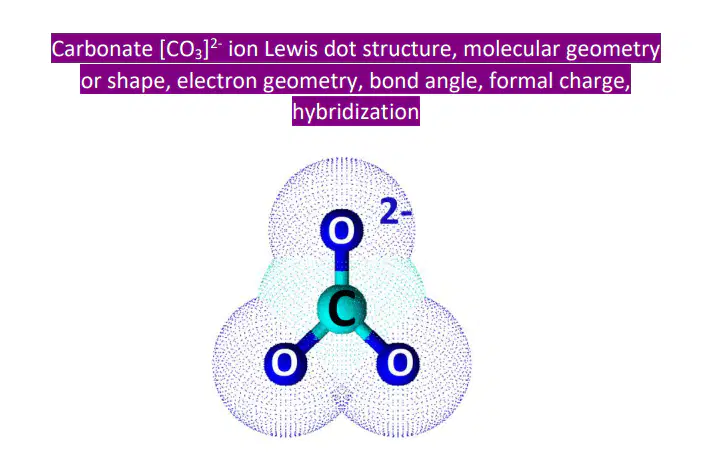
What is the charge of the carbonate ion?
A) Positive
B) Neutral
C) Negative
D) Variable
What are monoatomic elements?
A) Elements that consist of a single atom.
B) Elements that form compounds with other elements.
C) Elements that have a positive charge.
D) Elements that have a negative charge.
Which of the following is an example of a monoatomic element?
A) Helium
B) Water
C) Sodium chloride
D) Carbon dioxide
Which gas is commonly used in weather balloons and is an example of a monoatomic element?
A) Hydrogen
B) Oxygen
C) Nitrogen
D) Helium
What is the chemical symbol for helium?
A) H
B) He
C) Hee
D) Hl
How are elements and compounds described when they are made up of two atoms joined together?
A) Monatomic
B) Polyatomic
C) Diatomic
D) Triatomic
Which of the following gases are considered the two main diatomic gases in the atmosphere?
A) Nitrogen (N2) and Oxygen (O2)
B) Hydrogen (H2) and Carbon dioxide (CO2)
C) Methane (CH4) and Water vapor (H2O)
D) Helium (He) and Neon (Ne)
How are elements and compounds described when their molecules are made up of several atoms joined together?
A) Monatomic
B) Diatomic
C) Polyatomic
D) Triatomic
Which of the following are examples of polyatomic molecules?
A) Phosphorus (P)
B) Methane (CH4)
C) Oxygen (O2)
D) Helium (He)
Which of the following statements is true regarding ions?
A) Ions are always polyatomic.
B) Chloride (Cl) is an example of a polyatomic ion.
C) Ions can be described using the terms monatomic or polyatomic.
D) Chloride (Cl) is an example of a diatomic ion.
Chloride (Cl) is an example of a polyatomic ion
False
True
Which of the following statements is true regarding the hydroxide ion?
A) The hydroxide ion is a monatomic ion.
B) The hydroxide ion is a polyatomic ion.
C) The hydroxide ion is a triatomic ion.
D) The hydroxide ion is a diatomic ion
Which of the following statements is true regarding the sulfate ion?
.
A) The sulfate ion is a monatomic ion
B) The sulfate ion is a polyatomic ion.
C) The sulfate ion is a diatomic ion.
Atomic no.of Hydrogen is
1
2
3
4
The word hydrogen could refer to a hydrogen ______ (H)
Ion
Molecule
Atom
Compound
The word hydrogen could refer to a hydrogen ________ (H2)
Ion
Molecule
Atom
Compound
The word hydrogen could refer to a hydrogen ________ (H+)
Ion
Molecule
Atom
Compound
Classify the following into elements and compounds: H2O
Compound
Element
Classify the following into elements and compounds : He
Compound
Element
Classify the following into elements and compounds : Cl
Compound
Element
Classify the following into elements and compounds :
Carbon monoxide (chemical formula CO)
Compound
Element
Classify the following into elements and compounds :
Cobalt (Co),
Compound
Element
Classify the following into element and compounds :
Bromine Br2
Compound
Element
Neither Compound nor Element
Classify the following into element and compounds :
Hydrogen peroxide H2O2
Compound
Element
Neither Compound nor Element
Classify the following into element and compounds :
Nitrate (NO3) nitrogen-containing _______
Compound
Element
Neither Compound nor Element
Classify the following into element and compounds :
Ozone O3
Compound
Element
Neither Compound nor Element
Classify the following into element and compounds :
Oxocalcium [Calcium oxide (formula: CaO)]
Compound
Element
Neither Compound nor Element
Where do the names and symbols of many elements often originate from?
A) English language
B) Spanish language
C) Greek and Latin languages
D) German language
What is the origin of the name "hydrogen"?
A) English language
B) Latin language
C) German language
D) Greek language
What is the origin of the symbol "Cu" for the element copper?
A) English language
B) Latin language
C) German language
D) Greek language
What does the Latin word "cuprum" mean?
A) Metal from Cyprus
B) Shiny element
C) Copper-colored substance
D) Metallic symbol
Which ancient civilization obtained much of their copper from the island of Cyprus?
A) Greeks
B) Romans
C) Egyptians
D) Persians

