
 Worksheets
Chemistry Final
Total questions: 156
Worksheet time: 2hrs 1mins
Metals are hard because metals have a
sea of electrons that tightly hold the nuclei together
they form triple bonds
low melting point
high luster
Alloys are important because
their properties are often superior to the component elements
their properties are a blend of the component elements
they never corrode
they are less expensive than their component elements.
In metallic bonds electrons are:
shared
move around the nuclei randomly
transferred
Why does copper wire conduct electricity when a potential difference is applied?
The crystal lattice breaks down
Copper (II) ions move to the cathode
The atoms of copper become ionised
Bonding electrons in the crystal lattice move
Why are metals malleable?
The metal ions can easily slide past one another
The metal ions cannot easily slide past one another
The metal ions repel one another
The metal ions attract one another
Metals conduct electricity because
the metal ions are free to travel
their electrons are free to travel
the bonds between metal atoms can easily be broken
of witchcraft
The structure of metals includes
metal atoms sharing electrons
metal ions bonded to non-metal ions
cations surrounded by free-floating electrons
metal atoms giving electrons to other metal atomes
Which of the following would be held together by the metallic bond?
Atoms of iron (Fe)
Molecules of CH4
Atoms of sulfur (S)
Units of NaCl

True or False: Gold reacts easily with other elements like oxygen.
True
False

What property of metals is being shown in figure 1(b) in the image?
malleable (bend without breaking)
ductile (stretched into a wire)
conductive (can conduct electricity)
shiny
Which of the following is NOT a property of metals?
Hard
Can conduct electricity
Very brittle (breaks easily)
Malleable (can bend without breaking)


The electrons in a polar covalent molecule are shared...
Evenly
Unevenly
Electrons are not shared
None of the Above
If Bromine bonds with Hydrogen, a ____________ bond forms.
Bromine EN = 2.96, Hydrogen EN = 2.20

When you have Br-Br, what is the polarity?
Polar
nonpolar
Ionic
What two types of atoms make a covalent bond?
2 non-metals
1 metal and 1 non-metal
2 metals

What kind of reaction is this?
Synthesis
Decomposition
Electrolysis

What kind of reaction is this?
Synthesis
Decomposition
Electrolysis
Which of the following describes a chemical change?
Atoms are rearranged, forming a new substance
Reactants yield products
New substance or substances are produced
All of the above!

How many hydrogen (H) atoms are there on the reactant side of this chemical change?
3
2
6

How many total carbon atoms are there on the product side of this chemical change?
4
2
1

What does the arrow mean in this chemical equation?
Reactants
Products
Yield

In the electrolysis of water, why did we observe more bubbles (gas) produced at the end of one pencil compared to the other?
Because twice as much hydrogen gas was produced compared to oxygen gas
Because twice as much oxygen gas was produced compared to hydrogen gas
There was an equal amount of hydrogen and oxygen gas produced

What does this chemical equation represent?
Decomposition of water
Synthesis of water
What is one way that we may be able to produce hydrogen gas to power cars?
The synthesis of water
Burning coal
Using oil and gasoline
Electrolysis of water
covalent bond
London forces
hydrogen bond
dipole-dipole attraction
The stronger the intermolecular forces of a substance, the _____________ the melting point.
higher
lower
The weaker the intermolecular forces of a substance, the _____________ the boiling point.
higher
lower
Which of the following explains the very high melting and boiling point of water?
Strong dipole-dipole attractions between water molecules
Strong hydrogen bonds between water molecules
London dispersion forces between water molecules
Dipole-induced dipole attractions between water molecules
Propane is a gas at room temperature, while bromine is a liquid at room temperature. Which statement correctly explains these observations?
Bromine has weaker intermolecular forces than propane does
Bromine has greater molecular polarity than propane does
Bromine has weaker molecular polarity than propane does
Bromine has stronger intermolecular forces than propane does
Li+
What is the symbol for Oxide?
O-2
HO-
O2-
O
The positive ion changes the ending of the name.
TRUE
FALSE
If the negative ion ends with -ate/ -ite that is means that ion is a polyatomic ion.
TRUE
FALSE
Select ALL of the polyatomic ions.
CO3-2
O-2
NO3-1
HO-
Li+
What is the formula for Hydroxide?
OH-1
O2-2
H+
OH
What is the correct symbol of an iron (III) ion?
Fe2+
Fe3+
Fe2-
Fe3-
What is the correct symbol of a mercury (I) ion?
Hg1+
Hg2+
Hg1-
Hg2-
The name of FeCl₂ is
iron chloride
iron (II) chloride
iron (I) chloride
iron dichloride
LiBr is called
lithium bromine
lithium (I) bromine
lithium bromide
lithuim (I) bromide
Name the following ionic compound: BeCl2
beryllium chlorine
beryllium II chloride
beryllium chloride
beryllium dichloride
Name the following ionic compound: Cs2S
cesium sulfide
cesium sulfate
cesium II sulfate
cesium II sulfide
When naming ionic compounds with transition metals you need to include roman numerals to show the _____ of the metal..
atomic number
mass number
charge
ionization energy
When naming a compound, which of these is written first?
Metal
Nonmetal
Anion
Cation
When naming a compound, what must the last part be?
the element with "ide" at the end
the element with the ending "ite"
the name of the element
the element with "ide" at the end, unless its a polyatomic ion
The name of the compound Ca3(PO4)2
calcium phosphate
tricalcium diphosphate
calcium phosphorus oxide
calcium phosphide
If I gain electrons I become
Positive because I've added to my atom
negative because I've added electrons
same because i'm balanced
equal because now I have electrons

What two types of atoms make a covalent bond?
2 Nonmetals
1 Metal and 1 Nonmetal
2 Metals
2 Noble Gases

What is the name of the compound with the formula BrO3?
bromine oxide
monobromine trioxide
bromine trioxide
bromine (III) oxide

N4O10
Dinitrogen pentoxide
Tetranitrogen decoxide
Nitric acid
Nitrogen oxide

What is the correct formula for sodium oxide?


What is the correct formula for magnesium fluoride?


What is the charge on a lithium ion when it is bonded to a calcium ion?
+3
+1
-1
lithium will not bond with calcium

All matter is made of _____ that are constantly moving.
insulators
particles
convection
pieces of plastic

What happens to the average kinetic energy of matter when it is heated?
It increases
It stays the same
It decreases
It cannot be determined

Two flasks each contain water at 25 degrees Celsius. Which one has more heat energy?
They have the same heat energy because they are the same temperature.
The one on the right has more heat energy because it has less water.
The one on the left has more heat energy because it has more water.

This diagram represents particles in a __________ state.
solid
liquid
gas
plasma
When a substance changes directly from a gas to a solid, it is called :
Deposition
Sublimation
Condensation
Vaporization
Thermal energy always moves from :
Warm object to cool object
Object with low KE to object with high KE
Cool object o warm object
Object with high mass to object with low mass

What phase change occurs between points B and C if heat is added?
Freezing
Melting
Boiling
Condensing

Which phase change occurs between points D and E if heat is removed?
Freezing
Melting
Boiling
Condensation
A substance Y has a melting point of -7 degrees Celsius and a boiling point of 63 degrees Celsius. At which temperature is Y a liquid?
-25
25
75
150
An inflated balloon is placed in a refrigerator. Which statement the movement of the gas particles in the balloon?
The particles move faster and become further apart.
The particles move more slowly and become further apart.
The particles move faster and become closer together.
The particles move more slowly and become closer together.
Which of the following statements about the particles of a gas is true?
The particles vibrate about a fixed position.
The particles are far apart and move freely.
The particles are packed close together, but in a disorderly arrangement.
The particles are stationary and orderly.
Particles are always moving.
True
False

Which gas "explodes" and gives you a squeaky pop?
hydrogen
oxygen
carbon dioxide

Which gas(es) could I test for with a glowing splint?
hydrogen
oxygen
carbon dioxide

Which gas can relight a glowing splint?
hydrogen
oxygen
carbon dioxide

Which gas can suffocate a lit splint?
hydrogen
oxygen
carbon dioxide
Which of the following is the most likely clue that a reaction has created a gas?
you can smell it
the container gets hot
the container gets cold
bubbles form in liquid solution
Which substance has the weakest intermolecular forces?
Substance A, boiling point of 75 °C
Substance B, boiling point of 105 °C
Substance C, boiling point of 25 °C
Substance d, boiling point of 45 °C
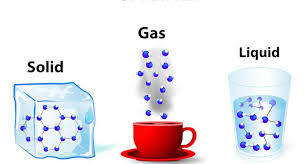
What phase change is occurring when substances like dry ice turn straight from a solid to a gas?
sublimation
deposition
evaporation
freezing

A substance's heating curve is shown in the graph. What is its boiling point? (Diagram B)
100 C
60 C
80 C
20 C
Match the following phase changes
Melting
Solid -> Liquid
Evaporation
Liquid -> Gas
Deposition
Gas -> Solid
Match the following phase changes
Freezing
Liquid -> Solid
Condensation
Gas -> Liquid
Sublimation
Solid -> Gas
Water bugs can walk on water because of _______ tension.
surface
Santa Claus
San Diego
Surface tension is the property of water in which...
water molecules at the surface tend to stick together.
water spills easily.
water tends to be see-through.


Which solution contains an electrolyte?
A
B
Oil is a nonpolar substance. Why can't it dissolve in water?
water is nonpolar
water is polar
oil is an electrolyte
oil is a colloid

In this solution, what is the solute?
water
koolaid
If water contains dissolved substances, it is known as ___.
an organic solvent
a nonelectrolyte
an aqueous solution
a nonpolar solution
Which substances dissolve best in water?
gasoline and kerosene
ionic compounds
nonelectrolytes
colloids

Under which conditions would carbon dioxide be most soluble in water?
20 degrees Celsius and 1 atm
20 degrees Celsius and 2 atm
10 degrees Celsius and 1 atm
10 degrees Celsius and 2 atm
At which temperature would 100 g of liquid water contain the most dissolved nitrogen?
20 degrees Celsius
15 degrees Celsius
10 degrees Celsius
5 degrees Celsius

solvent
solute
solution

solvent
solute

solute
solvent

solute
solvent

solvent
solution
solute

solution
solute
solvent
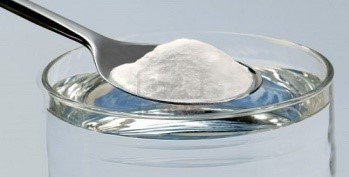

In which beaker does salt dissolves faster?
Hot water
Room temperature
Ice watet

Magnesium can be burned in oxygen to produce solid magnesium oxide.
Mg + O2→ MgO
Mg+ O→ MgO
Mg + CO2 → MgO + C
Mg + O2→ Mg2O2

Sodium reacts with chlorine gas to produce sodium chloride.
NaCl→ Cl + Na
Na+ CO2 → NaCO2
Na + Cl2→ NaCl
Na + Cl → NaCl
Magnesium + ________ --> magnesium oxide
What is missing?
Hydrogen
Sulphur
Oxygen
Oxide

What are the reactants in this word equation?
Carbon dioxide and oxygen
Carbon dioxide and water
Oxygen and glucose
Oxygen and water

In this chemical reaction zinc is a...
Product
Reactant
Neither
__ Al + __ FeO → Al2O2 + __ Fe
1, 1, 2
2,1,2
2, 2, 2
2,4,2

A reaction that gives out energy to the surroundings causes the surroundings ....
temperature to drop
temperature to rise
temperature to remain constant
temperature to vary

In the reaction picture, the energy will be on product or reactant
Product
Reactant

endothermic reaction
exothermic reaction
Is this equation endo- or exo-thermic?
PCl3 (s) + Cl2 (g) --> PCl5 (s) + energy
endothermic
exothermic
Is this equation endo- or exo-thermic?
2KNO3 (s) + energy --> 2KNO2 (s) + O2
endothermic
exothermic
CaO(s) + H2O(l) ⟶ Ca(OH)2(s) ΔH = −65.2 kJ
Is the above reaction exothermic or endothermic?
Exothermic
Endothermic

