
 Worksheets
Science_our universe
Total questions: 100
Worksheet time: 1hrs 6mins

At this moment, Hong Kong is ...
in the daytime
in the evening
at night-time

Earth spinning on its axis is an example of
Rotation
Revolution

Earth traveling around the sun is an example of
Rotation
Revolution
How long does it take the Earth to make a complete turn on its axis? Select all of the correct answers
1 year
24 hours
1 day
365 1/4 days
How long does it take Earth to make one complete revolution around the sun? Select all of the correct answers
1 year
1 day
24 hours
365 1/4 days
Without the tilt of Earth's axis, we would not have ________
Day and night
Years
Seasons
The moon
Select all of the correct statements
The Earth revolves around the Sun
The Moon revolves around the Earth
The Earth revolves around the Moon
The Sun revolves around the Earth
The Earth rotates on its axis

What season is the Northern Hemisphere having?
Fall
Winter
Spring
Summer

What season is the Northern Hemisphere having?
Fall
Winter
Spring
Summer

9. An irregular shaped rocks that smaller than the planets and can found between Mars and Jupiter is ….
comet
meteor
asteroid
moon

6. The picture shows ... of the Earth.
rotation
revolution
5. While the Earth spin on it’s axis, the Earth orbit the Sun or we know as ….
revolution
rotation
4. The imaginary lines drawn through the North and South poles of the Earth is called .…
space
orbits
galaxy
axis
3. What is the Moon to Earth?
Axis
Probe
Satellite
Comet
12. Which two planets do not have any moon?
Mars and Jupiter
Saturn and Uranus
Mercury and Venus
Mercury and Neptune
15. A star that is the center of our solar system.
Jupiter
Sun
Earth
Saturn
16. Which one is the correct sentence about moon?
Moon is a star
Moon has its own light
The orbit of the moon is always changing
Moon is revolving around the Sun together with the Earth
18. Our Solar system is part of the Milky Way galaxy.
TRUE
FALSE
The axis of the earth is an (a) line
Day and night are caused due to (a) .
When does a lunar eclipse occur?
When the Sun comes between the Earth and Moon.
When the Moon comes between the Sun and Earth.
When Earth comes between the Sun and Moon.
When Venus comes between
Moon and
Sun.
Craters
Goes around a planet
Satellite
Huge round pits on the Moon.
Cresent
Helps us see things that are far away
Eclipse
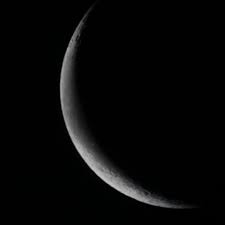
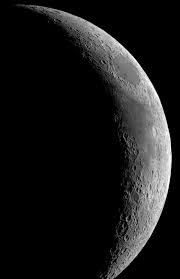
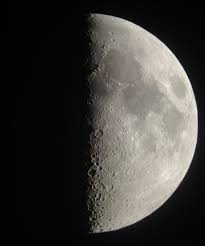
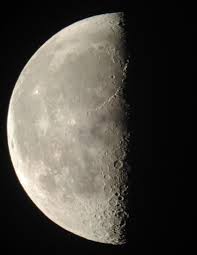
Phase when we see less than half of the Moon.
Telescope
Caused by the shadow of Earth or Moon.
The time taken from one New Moon to the next is about (a) days.

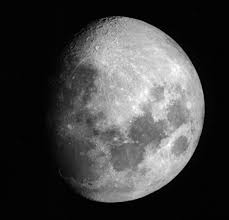
Which eclipse is this?
(a)
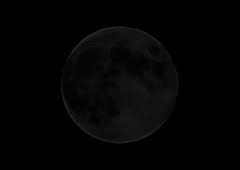
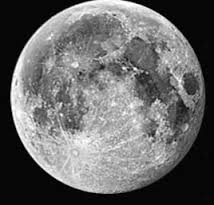
When is the Moon not visible?
Crescent Moon
Gibbous Moon
New Moon
Lunar Eclipse

Lunar Eclipse

Apollo 11

Solar eclipse

Gibbous Moon
There is (a) life on the Moon. It does not have any water, and its surface is covered with a layer of (b) . It has huge round pits called (c)
The moon orbits the (a)


When Earth spins, it turns around an imaginary line called a(n)
rotation
axis
orbit
ellipse
Which planet is the solar system's largest rocky planet?
Mars
Earth
Mercury
Jupiter
Which list shows the correct order of planets from the sun?
Mercury, Venus, Earth, Mars
Earth, Mars, Venus, Jupiter
Mars, Venus, Earth, Saturn
Uranus, Jupiter, Neptune, Saturn
What do Jupiter, Saturn, Uranus, and Neptune have in common?
They all have rocky surfaces.
They all appear to be similar to Earth.
They all are gaseous planets.
They all appear to be made of rock and ice.
Why does the sun seem to change position in the sky?
Earth's rotation
Earth's orbit
The sun's rotation
The sun's orbit
What do we call a celestial body in space that circles around a planet?
Revolution
Rotation
A star
A satellite
What is the smallest planet ?
Moon
Mercury
Earth
Jupiter
Which of the following plants is the hottest planet?
Mars
Venus
Mercury
Neptune


Mercury
Pluto
Venus
Neptune
The inner planets in order from the Sun are (a) , (b) , (c) , and then (d) .
The solar system contains the Sun, 8 planets, moons, asteroids, and comets.
true
false
Mercury is the (a) planet while Jupiter is the (b) planet.
Reorder the following planets according to the distance from the Sun.
Venus
Mars
Jupiter
Saturn
Neptune
How are the inner and outer planets similar?

Why is space exploration important to us?
Improve
world safety
Develop
new technology
Search for
resources
Learn more about science and the universe
all of the above

Which Country used the armillary sphere in the past to measure the position of celestial bodies?
China
England
Japan
Korea
Scientists invent and use ____ to study space.
glasses
microscope
telescope
stethoscope
What are the limitations of studying space from the Earth?
( choose three answers )
light pollution
noise pollution
water pollution
changes in the weather
changes in the atmosphere
What do humans use to overcome the limitations of studying space from the Earth??
planes
trains
rockets
ships
A rocket takes off by ____ .
Marvel heroes
using extraordinary powers
blowing wind
burning fuel
When fuel is burned, the gas produces a force in the opposite direction that pushes the rocket upwards.
What is this called?
action
reaction
opposite force
upward force
A spacecraft takes off with the help of a ____ .
space shuttle
rocket
artificial satellite
parachute
In which year was the first artificial satellite sent to orbit the Earth.
1957
1967
1977
1987
In 1969, two American astronauts became the first humans to walk on ____ .
Mercury
the Moon
Mars
Jupiter
In which year did China launch its first manned spacecraft?
1983
1993
2003
2013
In which year did China land its first lunar rover on the Moon for lunar exploration?
1983
1993
2003
2013
How many stars are in our solar system?
one
two
three
five
4. Which space technology use to deliver astronauts to the space?
Satellite
Space craft
Space shuttle
Telescope
9. A tool for viewing and observing.
satellite
space craft
space shuttle
telescope

What does the Hubble take pictures of?
plants and animals
planets, stars and galaxies
famous people
Largest celestial object
Sun
Mercury
Jupiter
Meteoroid
Space lab that orbits earth.
Astronauts from all over the world are aboard.
Space probe
Space rover
International Space Station
NASA lander
__系統吸取氧,並排出二氧化碳和其他氣體
神經
泌尿
呼吸
循環
__系統把食物消化,並吸收養分,然後排出糞便‧
神經
骨骼
呼吸
消化
__系統負責運送血液到身體各部分。
神經
骨骼
循環
消化
__系統指揮和協調各個系統
神經
骨骼
循環
消化
以下哪個/哪些是神經系統的功能?
思考
記憶
協調動作
消化食物
彈奏樂器時神經系統正在發揮____及____功能。
思考
記憶
協調動作
消化食物
神經系統由__發出指令。
脊髓
神經
腦
骨骼
吸煙者易患上哪些疾病?
心臟病
腸胃炎
皮膚病
糖尿病
以下哪項不是喝酒的害處?
引致嚴重疾病
可以幫助入睡
影響大腦
使人頭昏腦脹和頭痛
吸食毒品對哪器官最有影響?
手
腳
鼻
腦
哪個機構負責緝毒,防止毒品流入及經香港轉往其他地方?
消防局
教育局
海關
衞生署
以下哪項不是拒絕吸毒的方法?
堅決拒絕法
理智分析法
儘快離開法
立即答應法
以下哪一項不是青少年吸毒的原因?
受朋友影響
為了解悶
出於好奇
味道吸引

