
 Worksheets
Year 8 Geography Revision - Term 3 - Africa
Total questions: 95
Worksheet time: 1hrs 2mins
River Nile is the ___________________________
The fastest river in the world.
The oldest river in the world.
The longest river in the world.
The shortest river in the world.
In which country does the Nile River meet the Mediterranean Sea?
Egypt
Sudan
Nigeria
Kenya
This country borders Lake Victoria, Ethiopia and Somalia.
Kenya
Sudan
Egypt
Nigeria
The World's Largest desert, located in Northern Africa
Sahara
Sahel
Savanna
World's longest river, flows from Lake Victoria to the Mediterranean Sea.
Nile River
Niger River
Congo River
Mountain with the tallest peak in Africa
Mt Kilimanjaro
Mt Everest
Mt McKinley
The largest lake in Africa
Lake Victoria
Lake Superior
Lake Congo
Lake Huron
This river flows through central Africa, it's the 2nd longest river in Africa
Congo River
Nile River
Niger River
Africa is the second largest _________ on Earth. (7-1.1 PR)
Country
Island
Continent
Commonwealth

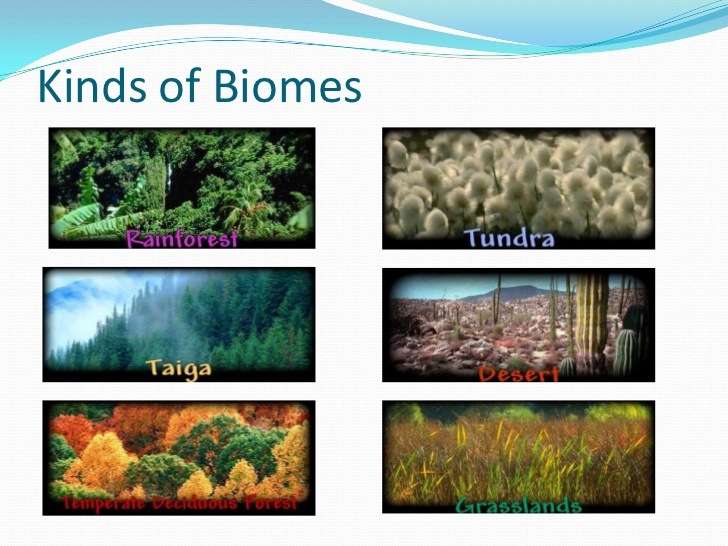
Which physical feature is number 1?
Atlas Mountains
Great Rift Valley
Mt. Kilimanjaro
Kalahari Desert
Name the river on which Victoria falls is located?
Nile
Zambezi
Blue nile
What is the name of the name of the desert on the southwest coast of Africa?
Death Valley
Namib
Kalahari
Sahel
What is the name of the large rain forest in central Africa?
Daintree
Amazon
Congo
Congolian

What physical feature is number 14
Lake Tanganyika
Lake Malawi
Lake Victoria
Sahara desert

What physical feature is number 12?
Sahara desert
Suez Canal
Lake Malawi
Namib desert

What physical feature is number 17?
Sahara desert
Namib desert
Kalahari desert
Nile River

What physical feature is number 9?
Congo River
Lake Tanganyika
Lake Malawi
Indian Ocean

What physical feature is number 1?
Suez Canal
Atlas Mountains
Sahara desert
Kalahari desert

What physical feature is number 11?
Lake Victoria
Lake Tanganyika
Lake Malawi
Zambezi river

What physical feature is number 13?
Namib desert
Kalahari desert
Sahara desert
Savanna

What physical feature is number 6?
Nile River
Niger River
Congo River
Zambezi River

What physical feature is number 15?
Niger River
Zambezi River
Nile River
Congo River

What physical feature is number 10?
Lake Tanganyika
Lake Malawi
Lake Victoria
Nile River

Which is It
South Afica
Zambia
Nigeria
Camels hump is filled with...
water
fat
fat and water
Name the adaptations of a camel
Large and flat feet
Thick layer of fur and fat
Hump to store food
Long Eyelashes
Big ears and wrinkly skin

An adaptation that helps a cactus live in the desert is its
wide, flat leaves to catch water
bright green color
thin, spiny needles
tall stems

A cactus might have what physical adaptation to help it store water?
a. cactus flowers
b. spines
c. thick stem
d. big leaves
Some grasses grow in hot dry areas. Why might they grow very deep roots?
to protect the plant from sun damage
to take in as much light as possible
to spread seeds to new places
to reach water that is underground

Desert plants have a coat of wax on their leaves to
keep water from escaping
protect them from animals eating them
absorb water from the air
release scent to attract animals
Why does a cactus have shallow roots while other desert plants have deeper roots?
Shallow roots help to absorb water quickly before it evaporates.
A cactus does not need deep roots because it has a strong stem.
Other plants only want to take in water that is deep underground.
The water near the surface is much better for helping a cactus to grow.
Poverty causes desertification through...
Overgrazing
Overcultivation
Lack of education regarding farming techniques
All answers are correct
The loss of forest cover that results in desertification.
nutrient loss
deforestation
rise in population
water waste
Desertification can
only be found in Africa
be found around the world
only be found in Asia
The area in Africa affected by desertification is called...
Sahara
Sahel
Sarah
Saar
The Sahel is...
north of the Sahara
south of the Sahara
Due to rapid population growth and drought, the vegetation of the Sahel is being damaged by overgrazing.
True
False
Overgrazing happens when nomads have too many animals on a piece of land for too long.
True
False
Cutting down trees and shrubs for fuel causes desertification.
True
False
Desertification includes natural processes and humans.
True
False
What is Desertification?
Land that suffers from short term drought
Land that is cared for and managed
Land used for farming using sustainable practises
Land is gradually turned into a desert, usually on the edge of an existing desert.
Which of the following is one of the causes of desertification?
Clearing land for more homes
Cutting trees and bushes for firewood
Wild animals eating all of the plants
larger numbers of migrating birds
One of the main causes of desertification is...
storing water indoors
overgrazing of livestock
clearing trees for larger cities
people irrigating their farms
Which is a result of desertification for the people living in the Sahel region?
increased tourism
more jobs in manufacturing
increased starvation and poverty
decreased support from the United Nations
What destroyed the grassland and forests that were once found in the Sahel?
years of heavy flooding
the development of factories
continuous farming and over-grazing
repeated use by nomads and camel caravans
In the Sahel, overgrazing, poor farming methods, and drought have resulted in a decrease in the grassland region. What is this process called?
Deforestation
Unequal distribution
Desertification
Environmental Pollution
Which of the following are effects (results) of desertification?
overpopulation, poor sanitation, parasites
starvation, poverty, migration
dams, irrigation, transportation
logging, settlement, agriculture

Identify the ecosystem
Forest
Tundra
Freshwater
Desert

Identify the ecosystem
Forest
Tundra
Freshwater
Grassland

Name this ecosystem
Tundra Ecosystem
Desert Ecosystem
Rainforest Ecosystem

Identify this ecosystem.
Rainforest Ecosystem
Savanna Ecosystem
Desert Ecosystem

Identify this ecosystem.
Pond Ecosystem
Forest Ecosystem
Coral Reef Ecosystem


An ______________ is a community of living things working together with their non-living environment.
Ecosystem
Biotic
Latitude
System
The _____________ biome is found on the tropics of cancer and Capricorn.
tropical rainforest
hot desert
tundra
temperature deciduous woodland
The _____________ biome has four distinct seasons: spring, summer, autumn and winter.
tropical rainforest
hot desert
tundra
temperature deciduous woodland


A successful artificial ecosystem would require which of the following?
A. Nothing; an artificial ecosystem cannot be built.
B. a correct balance of producers and consumers to allow for proper cycling of nutrients and raw materials
C. large buildings and water refinement plants to support human lifestyles
D. a carefully controlled light, temperature, and moisture environment
What is the relationship between an ecosystem and a biome?
A. A biome contains a planet, that planet's moon, and the two neighboring planets.
B. There is only one biome in an ecosystem.
C. There can be multiple ecosystems in a biome.
D. They are totally different and one does not have a relationship to the other.
Africa is one of the world’s seven continents. It is
the .................................... largest continent.
second
third
fourth
fifth
There are ........................... countries in Africa. Around 1.4 billion
people live there (2023).
50
52
54
56
............................. is the largest country in Africa.
Egypt
Nigeria
Kenya
Algeria
............................. has the largest population in Africa.
Egypt
Nigeria
Kenya
Algeria
Around 2000 languages are spoken in Africa.
......................................... is the most spoken language.
Arabic
Swahili
French
English
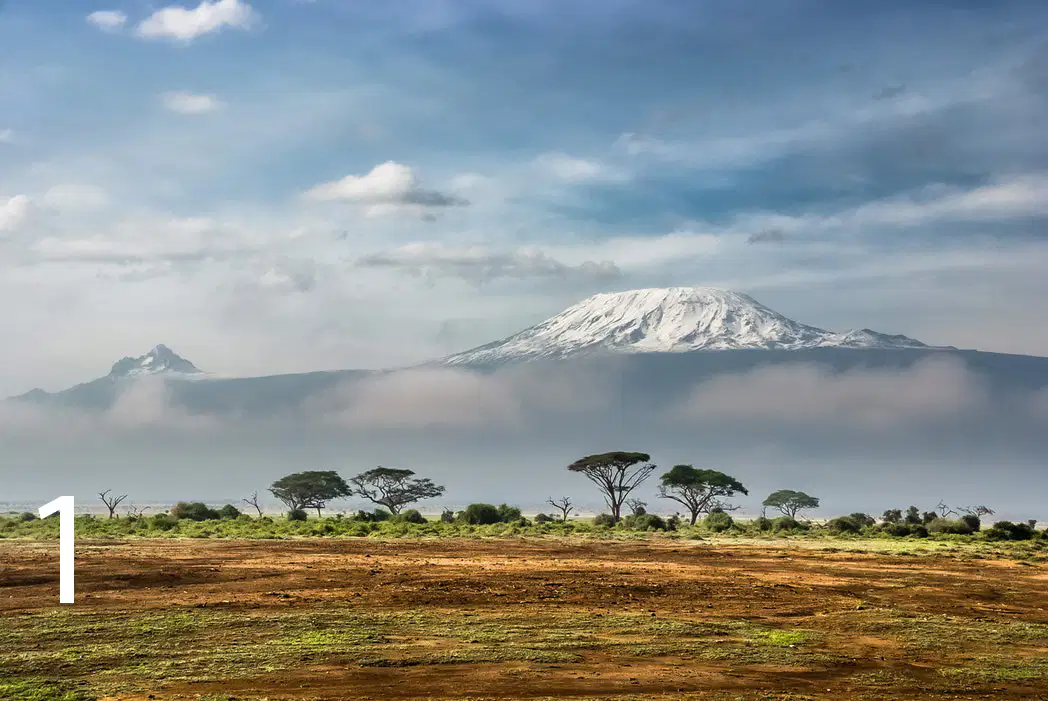
The highest mountain in Africa is ................................ It is 5895 meters
(19,341ft) high.
Mount Meru in Tanzania
Mount
Kenya in Kenya
Mount
Kilimanjaro in Tanzania
The Atlas Mountains in North Africa (Morocco, Algeria and Tunisia)
The ................................... desert is in Africa. It is the largest hot
desert in the world.
Danakil
Kalahari
Namib
Sahara
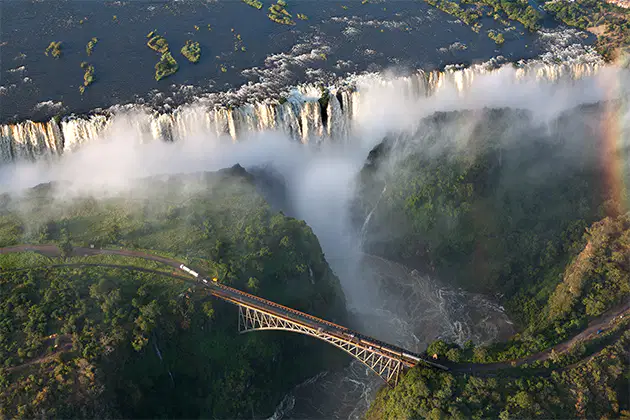
The largest waterfall in Africa is .........................................
Blue Nile Falls in Ethiopia
Victoria Falls on the border between Zambia and Zimbabwe
Tugela Falls in South Africa
Lisbon Falls in South Africa
The river ..................... is the longest river in the world.
Nile
Amazon
Zambesi
Congo

