wayground logo

Free Printable Worksheets

Font size

S
M
L
XL
Worksheets

nguyên phân giảm phân

Total questions: 216

Worksheet time: 3hrs 40mins

Name
Class
Date
1.

What is the correct definition of a haploid cell?

a)

A cell that only has a single set of chromosomes. (23 = n)

b)

A cell that has 2 sets of chromosomes (46 = 2n)

2.
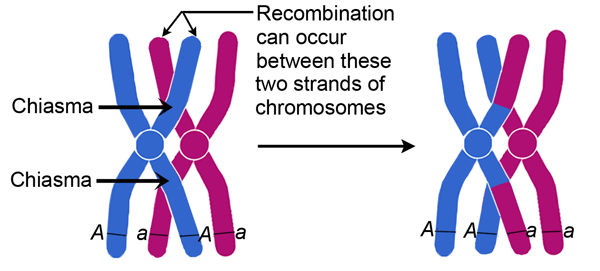
What scientific process is being shown?
a)
Mixing
b)
Crossing under
c)
Crossing over
d)
square dancing
3.

During which of the following stages are the chromosomes aligned at the midpoint of the nuclei?

a)

metaphase

b)

anaphase

c)

telophase

d)

prophase

4.
Name the phase:
a)
Anaphase
b)
Telophase
c)
Metaphase
d)
Prophase
5.
The structure labeled B in the figure below is called the _____.
a)
Centromere
b)
Centrioles
c)
Sister Chromatids
d)
Spindles
6.

What is the end product of meiosis?

a)

4 haploid cells.

b)

2 diploid cells.

c)

2 haploid cells.

d)

4 diploid cells.

7.

How is DNA organized inside the Nucleus?

a)

Chromosomes

b)

Base pairs

c)

Segments

d)

Plasmids

8.
Structure (b) is a ____.
a)
chromosome
b)
chromatid
c)
centromere
9.
Structure (c) is a ____.
a)
chromosome
b)
chromatid
c)
centromere
10.

During what stage of the cell cycle do organelles get duplicated?

a)

G1

b)

S

c)

G2

d)

M (mitosis)

11.

What is the next phase of mitosis?

a)

Prophase

b)

Metaphase

c)

Anaphase

d)

Telophase

12.

What process results in the division of 1 cell into 2 identical daughter cells?

a)

Mitosis

b)

Meiosis

c)

G1

d)

Cross-Over

13.

What is the correct order of the stages of Mitosis?

a)

Telophase, Anaphase, Metaphase, Prophase

b)

Prophase, Telophase, Metaphase, Anaphase.

c)

Prophase, Metaphase, Anaphase, Telophase.

d)

Anaphase, Metaphase, Prophase, Telophase.

14.
Name the phase:
a)
Prophase
b)
Metaphase
c)
Anaphase
d)
Telophase
15.

What is the final stage of meiosis?

a)

telophase I

b)

anaphase II

c)

Metaphase I

d)

telophase II

16.

What is the normal number of chromosomes in a normal (diploid) cell?

a)

46 (23 x 2)

b)

23 (23 x 1)

c)

92 (23 x 4)

d)

92 (46 x 2)

17.

What is the name for the event that results in the division of the cell body (cytoplasm) into 2 daughter bodies.

a)

Telophase

b)

Citokinesis

c)

Mitosis

d)

Cross Over

18.
Which of the following happens when a cell divides?
a)
The cell's volume increases.
b)
It becomes more difficult for the cell to get ride of wastes.
c)
Each daughter cell receives it own copy of the parent cell's DNA.
d)
It becomes more difficult for the cell to get enough oxygen and nutrients.
19.
When you start with 1 cell, at the end of mitosis, how many identical cells will you have?
a)
1
b)
2
c)
3
d)
4
20.
When a cell is not actively dividing, it is in what phase?
a)
interphase
b)
anaphase
c)
prophase
d)
telophase
21.

What process results in the division of 1 cell into 2 identical daughter cells?

a)

Mitosis

b)

Meiosis

c)

G1

d)

Cross-Over

22.

During what stage of the cell cycle do organelles get duplicated?

a)

G1

b)

S

c)

G2

d)

M (mitosis)

23.

During what stage of the cell cycle does genetic material get duplicated?

a)

G1

b)

S

c)

G2

d)

M

24.

What is the name for the event that results in the division of the cell body (cytoplasm) into 2 daughter bodies.

a)

Telophase

b)

Citokinesis

c)

Mitosis

d)

Cross Over

25.

How is DNA organized inside the Nucleus?

a)

Chromosomes

b)

Base pairs

c)

Segments

d)

Plasmids

26.

What is the correct order of the stages of Mitosis?

a)

Telophase, Anaphase, Metaphase, Prophase

b)

Prophase, Telophase, Metaphase, Anaphase.

c)

Prophase, Metaphase, Anaphase, Telophase.

d)

Anaphase, Metaphase, Prophase, Telophase.

27.

What is the normal number of chromosomes in a normal (diploid) cell?

a)

46 (23 x 2)

b)

23 (23 x 1)

c)

92 (23 x 4)

d)

92 (46 x 2)

28.

What is the correct definition of a haploid cell?

a)

A cell that only has a single set of chromosomes. (23 = n)

b)

A cell that has 2 sets of chromosomes (46 = 2n)

29.

What is the end product of meiosis?

a)

4 haploid cells.

b)

2 diploid cells.

c)

2 haploid cells.

d)

4 diploid cells.

30.

During which of the following stages are the chromosomes aligned at the midpoint of the nuclei?

a)

metaphase

b)

anaphase

c)

telophase

d)

prophase

31.

What is the final stage of meiosis?

a)

telophase I

b)

anaphase II

c)

Metaphase I

d)

telophase II

32.

Fruit fly body cells have 8 chromosomes. After mitosis you would expect the resulting fruit fly daughter cells to have… chromosomes.

a)

16

b)

8

c)

46

d)

4

33.

What is the next phase of mitosis?

a)

Prophase

b)

Metaphase

c)

Anaphase

d)

Telophase

34.

Why would it be important to replicate DNA before a cell divides in mitosis or meiosis?

a)

In order for the genetic information to be transferred into daughter cells

b)

In order for the DNA to be contained in the nucleus

c)

In order for the cell to be able to increase in size

d)

In order for the cell to re-order the DNA sequencing in the new cells

35.

In mitosis the two resulting cells are

a)

Different from the starting cell and identical to each other

b)

Identical to the starting cell and different from each other

c)

Different from the starting cell and different from each other

d)

Identical to the starting cell and identical to each other

36.

Stage in the cell cycle where the cell’s nuclear material divides and separates…

a)

G1

b)

G2

c)

Synthesis

d)

Mitosis

37.

The end of meiosis results in _______ to each other.

a)

2 cells that are genetically identical

b)

4 cells that are genetically identical

c)

2 cells that are genetically unique

d)

4 cells that are genetically unique

38.

Which of the following represents what happens to the chromosome number during MITOSIS?

a)

2n → n

b)

n → 2n

c)

2n → 2n

d)

2n → 4n

39.

Stage in the cell cycle where the cell’s nuclear material duplicates…

a)

G1

b)

G2

c)

Synthesis

d)

Mitosis

40.

Which stage of cell division divides the cytoplasm?

a)

G1

b)

G2

c)

Cytokinesis

d)

Mitosis

41.

The ___________ pulls the sister chromatids apart during mitosis or meiosis 2

a)

kinetochore

b)

cell plate

c)

spindle fibres

d)

centromere

42.

During mitosis, when does the nuclear envelope reform?

a)

prophase

b)

metaphase

c)

anaphase

d)

telophase

43.

Which of the following results in two cells identical to the parent cell?

a)

mitosis

b)

meiosis

44.

Which phase of mitosis is shown?

a)

prophase

b)

metaphase

c)

anaphase

d)

telophase

45.

What is the period between cell divisions?

a)

Interphase

b)

Prophase

c)

Metaphase

d)

Anaphase

46.

When does chromatin condense during mitosis?

a)

telophase

b)

anaphase

c)

metaphase

d)

prophase

47.

Which of the following best describes the offspring of asexually reproducing organisms?

a)

They vary genetically from the parent

b)

They are genetically identical to the parent

48.

Nuclear division and cytoplasmic division are involved with mitosis.

a)

True

b)

False

49.

As a cell becomes larger...

a)

Its volume increases faster than its surface area

b)

Its volume and surface area increase at equal rates

c)

The volume increases but the surface area remains the same

50.

When are chromosomes visible during the cell cycle?

a)

Interphase

b)

Mitotic Phase

c)

Cytokinesis

d)

Never

51.

When does DNA replication occur?

a)

G1 phase

b)

S phase

c)

G2 phase

d)

Cytokinesis

52.

When cells loses their ability to control cell division, it may lead to (a)   .

53.

(a)   are a group of related proteins that help regulate the cell cycle.

54.

How many chromosomes are found in a human somatic cell?

a)

23

b)

46

c)

48

d)

52

55.

How many chromosomes are found in a human egg cell?

a)

23

b)

46

c)

unknown

56.

How many cells are produced as a result of meiosis?

a)

2

b)

4

c)

6

d)

8

57.

When does crossing over occur?

a)

Metaphase I

b)

Metaphase II

c)

Prophase I

d)

Prophase II

58.

(a)   cells can differentiate into many kinds of cells.

59.

During which of the following stages are the chromosomes aligned at the midpoint of the nuclei?

a)

metaphase

b)

anaphase

c)

telophase

d)

prophase

60.
Structure (b) is a ____.
a)
chromosome
b)
chromatid
c)
centromere
61.

Which stage facilitates cell growth and preparation for mitosis?

a)

Interphase

b)

Metaphase

c)

Prophase

d)

Anaphase

62.

What is the next phase of mitosis?

a)

Prophase

b)

Metaphase

c)

Anaphase

d)

Telophase

63.

How is DNA organized inside the Nucleus?

a)

Chromosomes

b)

Base pairs

c)

Segments

d)

Plasmids

64.

What is this phase of Mitosis?

a)

Prophase

b)

Metaphase

c)

Anaphase

d)

Telophase

65.

The nuclear membrane dissolves, spindle fibers form towards the center of the cell. and centrioles move to opposite poles of the cell during which phase?

a)

prophase

b)

anaphase

c)

telophase

d)

metaphase

66.

What are loosely packed combination of DNA and proteins (histones)?

a)

chromatin

b)

chromatids

c)

chromosomes

d)

dna

67.
Identify the process.
a)
Mitosis
b)
Meiosis I
c)
Meiosis II
d)
Interphase
68.
a)

A

b)

B

c)

C

d)

D

69.

Chromosomes become visible in the cell during which phase?

a)

prophase

b)

anaphase

c)

telophase

d)

cytokinesis

70.

Is the following cell diploid or haploid?

a)

Diploid

b)

Haploid

71.

What is the final stage of meiosis?

a)

telophase I

b)

anaphase II

c)

Metaphase I

d)

telophase II

72.

What is the final stage of meiosis?

a)

telophase I

b)

anaphase II

c)

Metaphase I

d)

telophase II

73.
Structure (c) is a ____.
a)
chromosome
b)
chromatid
c)
centromere
74.

What happens during synthesis?

a)

DNA is replicated in the nucleus resulting in two identical copies of DNA.

b)

Cells just function as they should.

c)

DNA is replicated in the cytoplasm resulting in two different copies of DNA.

d)

Cells are duplicated.

75.

What process results in the division of 1 cell into 2 identical daughter cells?

a)

Mitosis

b)

Meiosis

c)

G1

d)

Cross-Over

76.

What is the end product of meiosis?

a)

4 haploid cells.

b)

2 diploid cells.

c)

2 haploid cells.

d)

4 diploid cells.

77.
Structure (a) is a ____.
a)
chromosome
b)
chromatid
c)
centromere
78.
Which one is Metaphase?
a)
A
b)
E
c)
C
d)
F
79.

what is the split phase called

a)

telophase

b)

antiphase

c)

metophase

d)

prophase

80.

During what stage of the cell cycle does genetic material get duplicated?

a)

G1

b)

S

c)

G2

d)

M

81.
The structure labeled B in the figure below is called the _____.
a)
Centromere
b)
Centrioles
c)
Sister Chromatids
d)
Spindles
82.

what is this phase?

a)

anaphase

b)

prophase

c)

telaphase

d)

enter phase

83.

What is the correct definition of a haploid cell?

a)

A cell that only has a single set of chromosomes. (23 = n)

b)

A cell that has 2 sets of chromosomes (46 = 2n)

84.
What phase of mitosis is pictured?
a)
Metaphase
b)
Telophase
c)
Prophase
d)
Anaphase
85.
Name the phase:
a)
Prophase
b)
Metaphase
c)
Anaphase
d)
Telophase
86.

DNA is replicated in which stage?

a)

Interphase

b)

Prophase

c)

Anaphase

d)

Metaphase

87.

The G1, S, and G2 are parts of which phase of the cell cycle?

a)

Prophase

b)

Interphase

c)

Telophase

d)

Anaphase

88.

What process results in the division of 1 cell into 2 identical daughter cells?

a)

Mitosis

b)

Meiosis

c)

G1

d)

Cross-Over

89.
a)

A

b)

B

c)

C

d)

D

90.

How is DNA organized inside the Nucleus?

a)

Chromosomes

b)

Base pairs

c)

Segments

d)

Plasmids

91.

What is the correct order of the stages of Mitosis?

a)

Telophase, Anaphase, Metaphase, Prophase

b)

Prophase, Telophase, Metaphase, Anaphase.

c)

Prophase, Metaphase, Anaphase, Telophase.

d)

Anaphase, Metaphase, Prophase, Telophase.

92.

What is the normal number of chromosomes in a normal (diploid) cell?

a)

46 (23 x 2)

b)

23 (23 x 1)

c)

92 (23 x 4)

d)

92 (46 x 2)

93.

During what stage of the cell cycle do organelles get duplicated?

a)

G1

b)

S

c)

G2

d)

M (mitosis)

94.

T or F: Metaphase is the longest phase of mitosis?

a)

True

b)

False

95.

What is the NEXT phase of mitosis after the phase shown?

a)

Prophase

b)

Metaphase

c)

Anaphase

d)

Telophase

96.

what is this phase

a)

prophase

b)

metaphase

c)

anaphase

d)

teloophase

97.
a)

A

b)

B

c)

C

d)

D

98.

What cell cycle process' prupose is to divide the nucleus to make 2 nuclei with identiacal DNA; split the DNA so the correct half can go in the new cell?

a)

mitosis

b)

meiosis

c)

interphase

d)

cytokinesis

99.
Compared to small cells, large cells have more trouble _____.
a)
Dividing
b)
Producing daughter cells
c)
Storing needed materials and waste products
d)
moving needed materials in and waste products out
100.
Which of the following happens when a cell divides?
a)
The cell's volume increases.
b)
It becomes more difficult for the cell to get ride of wastes.
c)
Each daughter cell receives it own copy of the parent cell's DNA.
d)
It becomes more difficult for the cell to get enough oxygen and nutrients.
101.
The process by which a cell divides into two daughter cells is called _____.
a)
Cell Division
b)
Metaphase
c)
Interphase
d)
Mitosis
102.
The structure labeled A in the figure below is called the _____.
a)
Centromere
b)
Centrioles
c)
Sister Chromatids
d)
Spindles
103.
The structure labeled B in the figure below is called the _____.
a)
Centromere
b)
Centrioles
c)
Sister Chromatids
d)
Spindles
104.
Which of the following is a phase of mitosis?
a)
Cytokinesis
b)
Interphase
c)
Prophase
d)
S Phase
105.
The first phase of mitosis is called ____.
a)
Prophase
b)
Anaphase
c)
Metaphase
d)
Interphase
106.
During which phase of mitosis do the chromosomes line up along the middle of the dividing cell?
a)
Prophase
b)
Telophase
c)
Metaphase
d)
Anaphase
107.
What store information in a cell?
a)
Proteins
b)
Carbohydrates
c)
Lipids
d)
DNA
108.
What happens when a piece of DNA is missing?
a)
Genetic information is stored.
b)
Genetic information is copied.
c)
Genetic information is lost.
d)
Genetic information is transmitted.
109.

Both mitosis and meiosis

a)

produce gametes

b)

are involved in making new cells

c)

occur in bacteria

d)

produce Somatic cells

110.

What does diploid mean?

a)

Two copies of chromosomes

b)

1 copy of chromosomes

c)

46 copies of chromosomes

d)

23 chromosomes

111.

How many chromosomes do YOU receive from each parent?

a)

10 chromosomes from mom and 10 chromosomes from dad

b)

46 chromosomes from mom and 46 chromosomes from dad

c)

23 chromosomes from mom and 23 chromosomes from dad

112.

How many chromosomes do humans have in each of their body cells?

a)

20

b)

30

c)

46

d)

92

113.

You cut your finger. Your body works hard to make more skin cells to heal the cut. Which process would happen to make more skin cells for you?

a)

Mitosis

b)

Meiosis

114.

Homologous chromosomes are

a)

Identical chromosomes

b)

Similar in size and shape but are not identical

c)

Found only in mitosis

d)

Completely different chromosomes

115.

At the END of Mitosis, we make...

a)

2 haploid cells

b)

4 haploid cells

c)

2 diploid cells

d)

4 diploid cells

116.

What is the product of meiosis?

a)

2 identical cells

b)

4 identical cells

c)

2 genetically different cells

d)

4 genetically different cells

117.

Haploid cells have

a)

half the number of chromosomes of a starting cell

b)

a full number of chromosomes like the organism's body cells

118.

If an organism has 50 chromosomes in its body cells, how many chromosomes would be in each cell at the end of meiosis?

a)

20

b)

25

c)

50

d)

100

119.
Fruit fly body cells have 8 chromosomes. After mitosis, you would expect a resulting fruit fly daughter cell to have ...
a)
16 chromosomes.
b)
46 chromosomes.
c)
8 chromosomes.
d)
4 chromosomes.
120.
The process by which the nuclear material is divided equally between two new cells
a)
mitosis
b)
cancer
c)
spindle
d)
centromere
121.
Structure (b) is a ____.
a)
chromosome
b)
chromatid
c)
centromere
122.
Structure (a) is a ____.
a)
chromosome
b)
chromatid
c)
centromere
123.
Structure (c) is a ____.
a)
chromosome
b)
chromatid
c)
centromere
124.
Name the phase:
a)
Anaphase
b)
Telophase
c)
Metaphase
d)
Prophase
125.
Name the phase:
a)
Anaphase
b)
Telophase
c)
Metaphase
d)
Prophase
126.
What is the next phase of mitosis?
a)
Prophase
b)
Metaphase
c)
Anaphase
d)
Telophase
127.
What is the next phase of mitosis?
a)
Prophase
b)
Metaphase
c)
Anaphase
d)
Telophase
128.
What is the next phase of mitosis?
a)
Prophase
b)
Metaphase
c)
Anaphase
d)
Telophase
129.
Name the previous phase.
a)
Prophase
b)
Metaphase
c)
Anaphase
d)
Telophase
130.
Name the previous phase.
a)
Prophase
b)
Metaphase
c)
Anaphase
d)
Telophase
131.
Name the previous phase.
a)
Prophase
b)
Metaphase
c)
Anaphase
d)
Telophase
132.
Name the previous phase.
a)
Prophase
b)
Metaphase
c)
Anaphase
d)
Telophase
133.
Name the phase:
a)
Prophase
b)
Metaphase
c)
Anaphase
d)
Telophase
134.
Name the phase:
a)
Prophase
b)
Metaphase
c)
Anaphase
d)
Telophase
135.
Name the phase:
a)
Prophase
b)
Metaphase
c)
Anaphase
d)
Telophase
136.
Name the phase:
a)
Prophase
b)
Metaphase
c)
Anaphase
d)
Telophase
137.
Name the phase:
a)
Prophase
b)
Metaphase
c)
Anaphase
d)
Telophase
138.
Name the phase:
a)
Prophase
b)
Metaphase
c)
Anaphase
d)
Telophase
139.
The organelle that helps in cell division and produces spindle fibers.
a)
Chromosome
b)
Centriole
c)
Cytoplasm
d)
Chloroplast
140.
The stages of mitosis in order
a)
Metaphase, Anaphase, Prophase, Telophase
b)
Prophase, Anaphase, Metaphase, Telophase
c)
Prophase, Metaphase, Anaphase, Telophase
d)
Anaphase, Prophase, Telophase, Metaphase
141.
What phase is  shown in the picture?
a)
anaphase 1
b)
anaphase 2
c)
metaphase 1
d)
telophase 1
142.
The process of crossing over occurs in what phase of meiosis?
a)
anaphase 1
b)
prophase 1
c)
prophase 2
d)
telophase 1
143.
This image shows chromosomes during Prophase 1. Which of the following correctly describes the process shown?
a)
segregation of sister chromatids
b)
condensation and segregation of alleles
c)
mutationin which the DNA content of the gene is altered
d)
crossing - over in which alleles are exchanged
144.
What phase is  shown in the picture?
a)
anaphase 1
b)
anaphase 2
c)
metaphase 1
d)
telophase 1
145.
The correct order of the phases of mitosis and meiosis could be abbreviated as:
a)
MAPT
b)
PAMT
c)
TPAM
d)
PMAT
146.
The nuclear membrane dissolves during
a)
Prophase
b)
Metaphase
c)
Anaphase
d)
Telophase
147.
What phase is shown here?
a)
Prophase II
b)
Metaphase I
c)
Metaphase II
d)
Anaphase I
148.
What phase is shown here?
a)
Metaphase II
b)
Telophase I
c)
Telophase II
d)
Metaphase I
149.
What phases is shown here?
a)
Prophase II
b)
Prophase I
c)
Anaphase II
d)
Interphase I
150.
What phase is shown here?
a)
Anaphase I
b)
Prophase I
c)
Metaphase II
d)
 Metaphase I
151.
What phase is shown here?
a)
Telophase II
b)
Anaphase II
c)
Metaphase I
d)
Interphase I
152.
What phase is shown here?
a)
Telophase I
b)
Metaphase II
c)
Telophase II
d)
Anaphase I
153.
What phase is this?
a)
Interphase II
b)
Prophase I
c)
Metaphase I
d)
Anaphase II
154.
Meiosis results in the production of
a)
2 diploid cells
b)
2 haploid cells
c)
4 haploid cells
d)
4 diploid cells
155.
Which of the following is NOT a part of mitosis?
a)
prophase
b)
anaphase
c)
metaphase
d)
interphase
156.
The end of meiosis results in  ____ to each other.
a)
2 cells that are identical
b)
4 cells that are identical
c)
2 cells that are not identical
d)
4 cells that are not identical
157.
What is the name of the structure labeled X?
a)
Centriole
b)
Centrosome
c)
Chromatid
d)
Chromosome 
158.
Why would it be important to replicate DNA before a cell divides in mitosis or meiosis?
a)
In order for genetic information to be transferred into daughter cells.
b)
In order for the cell to be able to increase in size.
c)
In order for the DNA to be contained in the nucleus.
d)
In order for the cell to re-order the DNA sequencing in the new cells.
159.
The structure labeled A is a(n)
a)
chromatid
b)
centriole
c)
centromere
d)
chromophere
160.

Each chromosomes pairs with its corresponding homologus chromosome to form a tetrad

a)

Metaphase I

b)

Telophase I & Cytokinesis

c)

Prophase I

d)

Anaphase II

161.
What are chromosomes?
a)
different versions of genes
b)
condensed DNA 
c)
uncoiled DNA
162.
Structure (b) is a ____.
a)
chromosome
b)
chromatid
c)
centromere
163.
Structure (c) is a ____.
a)
chromosome
b)
chromatid
c)
centromere
164.
Name the phase:
a)
Anaphase
b)
Telophase
c)
Metaphase
d)
Prophase
165.
Name the phase:
a)
Prophase
b)
Metaphase
c)
Anaphase
d)
Telophase
166.
The stages of mitosis in order
a)
Metaphase, Anaphase, Prophase, Telophase
b)
Prophase, Anaphase, Metaphase, Telophase
c)
Prophase, Metaphase, Anaphase, Telophase
d)
Anaphase, Prophase, Telophase, Metaphase
167.
When a cell is not actively dividing, it is in what phase?
a)
interphase
b)
anaphase
c)
prophase
d)
telophase
168.
What portion of the cell cycle involves the actual dividing?
a)
interphase
b)
mitosis
c)
Gap 1
d)
Gap 2
169.
What is the name of the process in which DNA (genetic information) is exchanged during meiosis?
a)
crossing under
b)
crossing over
c)
melding
d)
blending
170.
When you start with 1 cell, at the end of mitosis, how many identical cells will you have?
a)
1
b)
2
c)
3
d)
4
171.
After meiosis is complete how many cells will there be?
a)
1
b)
2
c)
3
d)
4
172.
What scientific process is being shown?
a)
Mixing
b)
Crossing under
c)
Crossing over
d)
square dancing
173.
A human has 46 chromosomes in their body cells.  What is the haploid number?
a)
46
b)
92
c)
23
d)
12
174.
Mitosis produces cells with haploid or diploid number of chromosomes?
a)
Haploid
b)
Diploid
175.
Meiosis produces cells with a haploid or diploid number of chromosomes?
a)
Haploid
b)
Diploid
176.
Are the cells in Mitosis identical or unique?
a)
Identical 
b)
Unique
c)
It's random
177.
Structure (b) is a ____.
a)
chromosome
b)
chromatid
c)
centromere
178.
Structure (c) is a ____.
a)
chromosome
b)
chromatid
c)
centromere
179.
Name the phase:
a)
Anaphase
b)
Telophase
c)
Metaphase
d)
Prophase
180.
Name the phase:
a)
Prophase
b)
Metaphase
c)
Anaphase
d)
Telophase
181.
The stages of mitosis in order
a)
Metaphase, Anaphase, Prophase, Telophase
b)
Prophase, Anaphase, Metaphase, Telophase
c)
Prophase, Metaphase, Anaphase, Telophase
d)
Anaphase, Prophase, Telophase, Metaphase
182.
When a cell is not actively dividing, it is in what phase?
a)
interphase
b)
anaphase
c)
prophase
d)
telophase
183.
What portion of the cell cycle involves the actual dividing?
a)
interphase
b)
mitosis
c)
Gap 1
d)
Gap 2
184.
What is the name of the process in which DNA (genetic information) is exchanged during meiosis?
a)
crossing under
b)
crossing over
c)
melding
d)
blending
185.
When you start with 1 cell, at the end of mitosis, how many identical cells will you have?
a)
1
b)
2
c)
3
d)
4
186.
After meiosis is complete how many cells will there be?
a)
1
b)
2
c)
3
d)
4
187.
What scientific process is being shown?
a)
Mixing
b)
Crossing under
c)
Crossing over
d)
square dancing
188.
A human has 46 chromosomes in their body cells.  What is the haploid number?
a)
46
b)
92
c)
23
d)
12
189.
Mitosis produces cells with haploid or diploid number of chromosomes?
a)
Haploid
b)
Diploid
190.
Meiosis produces cells with a haploid or diploid number of chromosomes?
a)
Haploid
b)
Diploid
191.
Are the cells in Mitosis identical or unique?
a)
Identical 
b)
Unique
c)
It's random
192.
What phase is  shown in the picture?
a)
anaphase 1
b)
anaphase 2
c)
metaphase 1
d)
telophase 1
193.
The process of crossing over occurs in what phase of meiosis?
a)
anaphase 1
b)
prophase 1
c)
prophase 2
d)
telophase 1
194.
This image shows chromosomes during Prophase 1. Which of the following correctly describes the process shown?
a)
segregation of sister chromatids
b)
condensation and segregation of alleles
c)
mutationin which the DNA content of the gene is altered
d)
crossing - over in which alleles are exchanged
195.
The correct order of the phases of mitosis and meiosis could be abbreviated as:
a)
MAPT
b)
PAMT
c)
TPAM
d)
PMAT
196.
What phase is shown here?
a)
Prophase II
b)
Metaphase I
c)
Metaphase II
d)
Anaphase I
197.
What phase is shown here?
a)
Telophase II
b)
Anaphase II
c)
Metaphase I
d)
Interphase I
198.

What are the "X" shaped things in the drawing.

a)

PMATs

b)

Chromosomes

c)

Ribosomes

d)

Telophase

199.
Before cells can divide, what must be copied?
a)
mitochondria
b)
cytoplasm
c)
DNA
d)
Cell Wall
200.
a)

Interphase

b)

Prophase

c)

Metaphase

d)

Anaphase

e)

Telophase

201.

What process results in the division of 1 cell into 2 identical daughter cells?

a)

Mitosis

b)

Meiosis

c)

G1

d)

Cross-Over

202.

What is the normal number of chromosomes in a normal (diploid) cell?

a)

46 (23 x 2)

b)

23 (23 x 1)

c)

92 (23 x 4)

d)

92 (46 x 2)

203.

What is the correct definition of a haploid cell?

a)

A cell that only has a single set of chromosomes. (23 = n)

b)

A cell that has 2 sets of chromosomes (46 = 2n)

204.

What is the end product of meiosis?

a)

4 haploid cells.

b)

2 diploid cells.

c)

2 haploid cells.

d)

4 diploid cells.

205.

What pulls the chromosomes apart?

a)

Spinner wheels

b)

Spiral windows

c)

Spindle fibers

d)

Spiral fibers

206.

Has one set of chromosomes

a)

Haploid

b)

Diploid

c)

Body cells

d)

None of the above

207.

Starts with one diploid cell

a)

Mitosis

b)

Meiosis

c)

Both

d)

Neither

208.

Produces diploid cells

a)

Mitosis

b)

Meiosis

209.

Produces haploid cells

a)

Mitosis

b)

Meiosis

210.

How many divisions are in meiosis?

a)

46

b)

23

c)

2

d)

4

211.

Timmy fell off his skateboard and scraped his knee. Which cell process is going to be used to heal the wound?

a)

Mitosis

b)

Meiosis

c)

The wound would not heal

d)

Cell diffusion

212.

If an organism reproduces asexually, its offspring will most likely be...

a)

genetically identical to the parent

b)

genetically different from each other

c)

produced from specialized cells known as gametes

d)

A mutant

213.

How many chromosomes do the daughter cells have in meiosis?

a)

23

b)

46

c)

2

d)

4

214.

How many chromosomes do the daughter cells have in mitosis?

a)

23

b)

46

c)

2

d)

4

215.

The end result of meiosis is...

a)

4 identical cells

b)

4 genetically different cells

c)

2 identical cells

d)

2 genetically different cells

216.

The end result of mitosis is

a)

4 Identical Cells are produced

b)

4 genetically different cells are produced

c)

2 identical cells are produced

d)

2 genetically different cells are produced