wayground logo

Free Printable Worksheets

Font size

S
M
L
XL
Worksheets

EOC Review Biology

Total questions: 220

Worksheet time: 4hrs 10mins

Name
Class
Date
1.
Name the photosynthesizing organelle of the plant cell.
a)
G
b)
B
c)
J
d)
C
2.
Name the process in the picture.
a)
transcription
b)
mitosis
c)
translation
d)
replication
3.
What process is occurring in the picture?
a)
DNA replication
b)
mitosis
c)
protein synthesis
d)
meiosis
4.
Name B.
a)
phosophate
b)
glucose
c)
deoxyribose
d)
nitrogen base
5.
These onion cells are losing water, they are suffering from .......
a)
turgor pressure
b)
plasmolysis
c)
hemolysis
d)
exocytosis
6.
What type of punnett square?
a)
codominance
b)
incomplete dominance
c)
complete dominance
d)
sex linked recessive
7.
Widow's peak is dominant to straight hair line. Cross a heterozygous widow's peak female with a heterozygous widow's peak male. What is the genotype ratio?
a)
1:2:1
b)
3:1
c)
1:1
d)
1:0
8.
Which molecule is made up of amino acids?
a)
carbohydrates
b)
lipids
c)
proteins
d)
water
9.
Which molecule contains the most energy?
a)
carbohydrates
b)
lipids
c)
proteins
d)
water
10.
What type of molecule is this?
a)
carbohydrate
b)
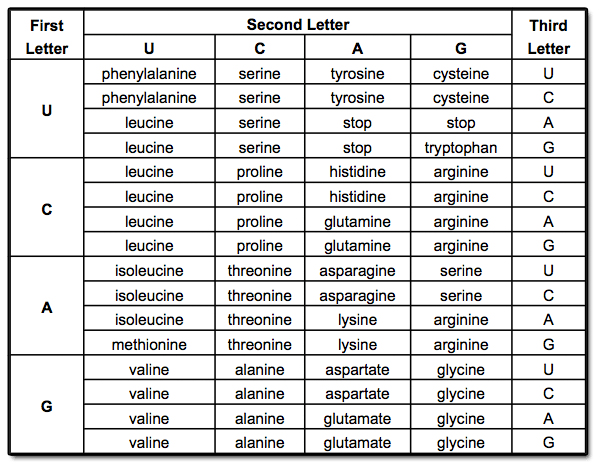
lipid
c)
protein
d)
water
11.
What type of molecule is this?
a)
carbohydrate
b)
protein 
c)
lipid
d)
water
12.
According to the diagram, when did the common ancestor of giant pandas and spectacled bears exist? 
a)
5-10 mya
b)
10-15 mya
c)
15-20 mya
d)
20-25 mya
13.
Movement of materials down the concentration gradient through a protein channel is an example of 
a)
facilitated diffusion
b)
active transport
c)
respiration
d)
osmosis 
14.
Which list includes only structures that would be found in a prokaryotic cell? 
a)
Cell wall, plasma membrane, mitochondria
b)
Central vacuole, cell wall, lysosome
c)
Cell wall, plasma membrane, cytoplasm
d)
Plasma membrane, nucleus, mitochondria
15.
Which of the following statements vest describes the cell cycle? 
a)
Interphase is the reproductive phase, mitosis is the growth phase
b)
Interphase is the growth phase, mitosis is the reproductive phase
c)
Cytokinesis is the growth phase, S-phase is the reproductive phase
d)
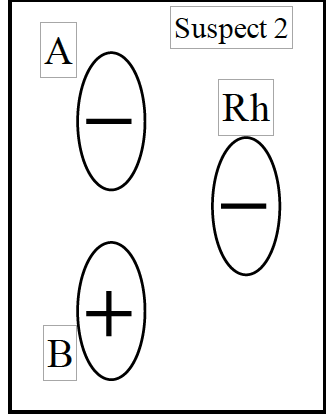
Cytokinesis is the reproductive phase, S-phase is the growth phase
16.
What is the function of this molecule in organisms? 
a)
Storage of genetic information
b)
Structure and support
c)
Short term energy storage
d)
Long term energy storage
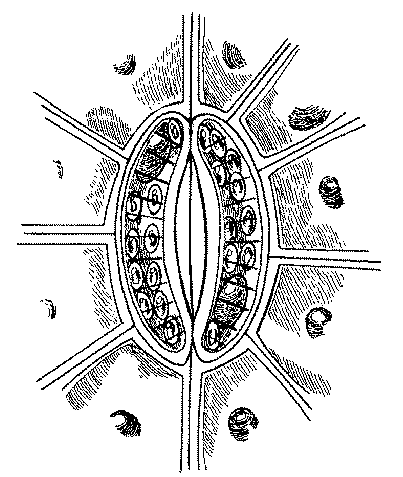
17.
Which best describes the function of enzymes?
a)
to speed up chemical reactions in a cell
b)
to produce cellular energy
c)
to produce proteins
d)
to speed up cell division
18.
Which factor determines the shape and function of a protein?
a)
The density of ribosomes in the cell
b)
The peptide bonds between amino acids
c)
The order of the amino acids in the peptide chian
d)
The sequence of the phosphate molecules in the DNA chain. 
19.
What are the products of photosynthesis? 
a)
glucose and oxygen
b)
glucose and carbon dioxide
c)
glucose and water
d)
water, carbon dioxide, and energy
20.
Which process uses ATP to move materials across the plasma membrane against the concentration gradient?
a)
passive transport
b)
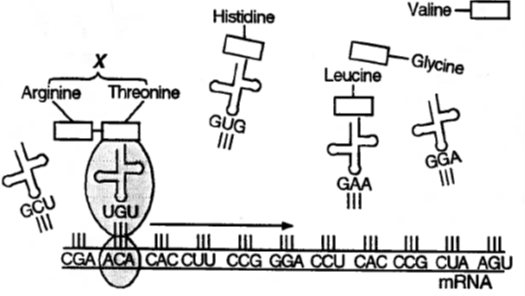
active transport 
c)
facilitated diffusion
d)
osmosis
21.
Which process of the carbon cycle removes carbon dioxide from the atmosphere? 
a)
photosynthesis
b)
cellular respiration
c)
combustion of fossil fuels 
d)
death and decomposing organisms 
22.
Which statement best describes how the use of antibiotics on certain bacteria affects natural selection? 
a)
Natural Selection is altered because bacteria are killed
b)
The rate of selection is decreased because antibiotics kill only young bacteria
c)
Antibiotics alter natural selection by causing bacterial DNA to mutate 
d)
The rate of selection is increased because antibiotics do not kill bacteria that are naturally resistant to them. 
23.
Which method would be most helpful in preventing eutrophication of lakes and waterways?
a)
recycling aluminum
b)
conserving fossil fuels 
c)
reducing run-off from farms 
d)
using less pesticide 
24.
Which statement describes how complementary strands of DNA are linked?
a)
each sugar in one strand is paired with a complementary base in the other strand. 
b)
Each sugar in one strand is pained with a complementary phosphate in the other strand
c)
Each phosphate in one strand is paired with a complementary phosphate in the other
d)
Each base in one strand is paired with a complementary base in the other 
25.
Which statement describes how complementary strands of DNA are linked?
a)
each sugar in one strand is paired with a complementary base in the other strand. 
b)
Each sugar in one strand is pained with a complementary phosphate in the other strand
c)
Each phosphate in one strand is paired with a complementary phosphate in the other
d)
Each base in one strand is paired with a complementary base in the other 
26.
How do enzymes increase the speed of chemical reactions?
a)
reducing the number of products   
b)
reducing the activation energy
c)
increasing the temperature of the cell
d)
increasing the concentration of reactants 
27.
Which of these is NOT true?
a)
Enzymes can denature (change shape) when the temperature gets too high.
b)
Enzymes can only be used once in a chemical reaction. 
c)
Extreme pH can denature enzymes.
d)
Enzymes speed up chemical reactions. 
28.
What process is going on in this photo? 
a)
Transcription 
b)
Translation 
c)
Replication 
d)
All the above 
29.
The cell below is in a _________ solution.
a)
Hypotonic
b)
Hypertonic
c)
Isotonic
30.
Which of these is not a way in which biotechnology can benefit agriculture?
a)
increase crop population
b)
reducing the loss of crops to insects
c)
producing better-tasting fruits
d)
improving farm machinery
31.
What two products does a plant make during photosynthesis?
a)
Water and Glucose
b)
Oxygen and Glucose
c)
Oxygen and Water
d)
CO2 and Glucose
32.

What is the role of the pioneer species in Primary Succession?

a)

To kill any remaining organisms from before the disturbance

b)

To break down rock and rebuild soil

c)

To provide food for large animals

d)

To put fresh oxygen into the air

33.
The diagram below represents a cell. Which organelle is the site where amino acids are synthesized into proteins? 
a)
1
b)
2
c)
3
d)
4
34.
An offspring will receive how many alleles from each parent to determine a specific trait?
a)
one
b)
two
c)
three
d)
five
35.
G = green, g = yellow
The genotype for a yellow plant is...
a)
GG
b)
Gg
c)
gg
d)
all of the choices result in yellow
36.
Which process is used to make mRNA from the DNA in the nucleus?
a)
transcription
b)
translation
c)
replication 
37.
Which RNA bases would pair with TACGAA in transcription
a)
AUGCUU
b)
ATGCTT
c)
GCATCC
d)
GCAUCC
38.
Where does transcription take place?
a)
nucleus
b)
cytoplasm
c)
ribosome
39.
How many amino acids are coded for by this sequence of nucleotides:
ATG GGA ACT CCA
a)
4
b)
2
c)
6
d)
12
40.
What is occurring in this picture?
a)
Translation
b)
Replication
c)
Translocation
d)
Transcription
41.
Which species’ DNA is most similar to the DNA of the toothed whale? 
a)
Hippopotamus 
b)
Baleen Whale
c)
Grazing Mammals
d)
Camels
42.
The white feathers of a snowy owl allow it to blend in with its environment during the winter months (snow). This is an example of ________________
a)
Species
b)
Environmental Change
c)
Adaptation
d)
Variation
43.
What is the advantage of having different shaped beaks?
a)
To look different from other species.
b)
To be able to eat the food readily available in the environment.
c)
To protect itself against predators.
d)
To protect itself against prey.
44.
Which type of cell has no nucleus?
a)
Eukaryote
b)
Prokaryote
c)
Animal
d)
Plant
45.
Which type of cell?
a)
Prokaryote
b)
Eukaryote
46.
Which type of cell?
a)
Prokaryote
b)
Eukaryote
c)
Mixed
47.
Has ribosomes
a)
Prokaryote
b)
Eukaryote
c)
both
d)
nihn
48.
All of the living and nonliving things in an area that interact with each other are called a/an ______.
a)
community
b)
habitat
c)
population
d)
ecosystem
49.

In the graph to the right, what is the population of deer at the carrying capacity of the environment?

a)

3

b)

7

c)

70

d)

40

50.
What does the graph represent?
a)
Emigration
b)
Exponential growth
c)
Immigration
d)
Logistic Growth
51.
Provides support and protection for the cell, while also controlling the movement of materials in and out of the cell.
a)
Cellular Membrane
b)
Nucleus
c)
Ribosomes
d)
Vacuole
52.
What type of transport is illustrated?
a)
facilitated diffusion
b)
active transport
c)
diffusion
d)
osmosis
53.
What will most likely be the result if all of the mitochondria are removed from a plant cell? 
a)
It will be unable to carry out respiration. 
b)
It will lose water through osmosis. 
c)
It will break down the ribosomes in the cell. 
d)
It will be unable to photosynthesize
54.
Fruit fly body cells have 8 chromosomes. After mitosis, you would expect a resulting fruit fly daughter cell to have ...
a)
16 chromosomes.
b)
46 chromosomes.
c)
8 chromosomes.
d)
4 chromosomes.
55.

Is the following cell diploid or haploid?

a)

Diploid

b)

Haploid

56.

What is the purpose of strand "A"?

a)

To carry amino acids to the ribosome

b)

To carry the genetic information to the cytoplasm

c)

To serve as a template for the synthesis of mRNA

57.
Replicate the following strand of DNA: 
AATCATGGA
a)
AATCATGGA
b)
TTAGTACCT
c)
UUAGUACCU
d)
GGATAUCUA
58.
Which of the four major macromolecules is this diagram an  example of -
a)
proteins
b)
nucleic acids
c)
lipids
d)
carbohydrates
59.
This image represents a monomer of which macromolecule?
a)
protein
b)
carbohydrates
c)
lipids
d)
nucleic acids
60.
Which of these is one of the functions of the macromolecule this monomer comes from?
a)
quick energy
b)
long term energy storage and insulation
c)
speed up chemical reactions
d)
carry code to make proteins
61.
In living cells, enzymes act as catalysts, which may reduce the amount of activation energy required for a chemical reaction to occur.  In the graphs below, pathway x is a solid line representing the uncatalyzed reaction. The dotted line shows the catalyzed reaction. Which graph best illustrates the changes in a reaction when the catalyst reduces the amount of energy required?
a)
A
b)
B
c)
C
d)
D
62.
A fertilized egg undergoes several stages before it is successfully implanted. The diagram below shows these stages as the fertilized egg travels through the female reproductive system. 
In which of the following structures of the female human reproductive system is the blastocyst implanted during normal human development? 
a)
ovary
b)
uterus
c)
vagina
d)
amniotic sac
63.
The part of the diagram where cleavage and fertilization occurs is known as the - 
a)
uterus
b)
vagina
c)
oviduct
d)
ovary
64.
Cells need to bring in molecules to carry out cellular processes. Often, this requires moving the molecules across the cell membrane against the concentration gradient. How do these molecules get into the cell? 
a)
 passive transport by diffusion
b)
 active transport using ATP
c)
passive transport by osmosis
d)
phagocytosis
65.
The diagram below represents a cell of a green plant. 
Solar energy is used to produce energy-rich compounds in which structure? 
a)
A
b)
B
c)
C
d)
D
66.
Alleles for the A and B blood cell antigens are codominant. The condition where no antigens are present on the blood cells (type O blood) is a recessive trait. Which set of parents can most likely produce a child with type O blood
a)
one parent with type AB blood, and the other parent with type A blood
b)
one parent with type AB blood and the other parent with type O blood
c)
one parent with heterozygous type A blood, and the other parent with type O blood
d)
one parent with homozygous type A blood, and the other parent with homozygous type B blood
67.
This diagram shows a pedigree for a recessive genetic disorder.
What is the genotype of individual 6?
a)
XHXH
b)
XHXh
c)
XHY
d)
XhY
68.
The diagram below shows the relationship between photosynthesis and cellular respiration and the organelles in which they occur.
Which statement describes how photosynthesis and cellular respiration are interrelated?
a)
Oxygen is produced during cellular respiration and stored during photosynthesis.
b)
Carbon dioxide and water released by cellular respiration are used in photosynthesis.
c)
Photosynthesis releases the energy that is stored during the process of cellular respiration.
d)
Glucose is used during cellular respiration to produce food that is broken down during photosynthesis.
69.
What is another name for natural selection?
a)
survival of the smartest
b)
survival of the fastest
c)
survival of the biggest
d)
survival of the fittest
70.
What is a change in an organism that allows for it to survive in its environment?
a)
homologous
b)
vestigial
c)
variation
d)
adaptation
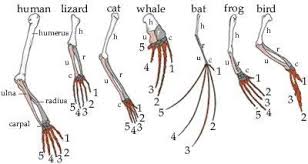
71.
What is this an example of?
a)
vestigial structures
b)
embryology
c)
homologous structures
d)
fossil record
72.

This is a structure that was inherited but has lost most of its original function

a)

homologous

b)

analogous

c)

vestigial

d)

homozygous

73.

These structures are similar from common ancestry

a)

homologous

b)

analogous

c)

vestigial

d)

homozygous

74.

These structures share a common function but not structure ex) the wing of a bird and the wing of an insect

a)

homologous

b)

analogous

c)

vestigial

d)

homozygous

75.
The passing of traits from parent to offspring 
a)
Heredity 
b)
Genetics 
c)
Hybrid 
d)
Probability 
76.
Genotype refers to the ...
a)
physical expression of the genes
b)
the possible combination of alleles in a gene
c)
whether an allele is dominant or recessive
d)
how an organism will appear
77.
Which of the following is a phenotype?
a)
BB
b)
Bb
c)
bb
d)
Blue eyes
78.
Which of the following is heterozygous
a)
FF
b)
tt
c)
Gg
d)
RR
79.
Which of the following is homozygous recessive?
a)
rr
b)
AA
c)
TT
d)
Ff
80.
Which of the following is homozygous dominant?
a)
Jj
b)
Rr
c)
MM
d)
ee
81.
The physical appearance of a trait is known as the-
a)
genotype
b)
phenotype
c)
characteristics
d)
intelligence
82.
Mark is heterozygous. If B is for brown hair, and b is for blonde hair, what is Mark's genotype?
a)
BB
b)
bb
c)
Bb
d)
bB
83.

The image summarizes the impact of natural disasters on human migration. Which type of natural disaster resulted in the greatest human migration?

a)

Earthquakes

b)

Floods

c)

Landslides

d)

Volcanic Eruptions

84.

The region on the DNA indicated in the diagram is called a __________.

a)

chromosome

b)

gene

c)

nucleotide

d)

protein

85.

A gene contains instructions that code for ___________.

a)

chromosomes

b)

genes

c)

nucleotides

d)

proteins

86.

The diagram shows the development of a cell. _________ is the process by which cells begin to change and become specific types of cells.

a)

Differentiation

b)

Fertilization

c)

Growth

d)

Mitosis

87.

The table shows the amount of energy stored in each molecule in the photosynthesis reaction. Which statement correctly describes the flow of energy in photosynthesis?

a)

Photosynthesis releases energy when the reactants rearrange and form the bond in the products.

b)

Photosynthesis releases energy when carbon dioxide and water combine to form glucose molecules.

c)

Photosynthesis stores energy because more energy is stored in glucose than it is in carbon dioxide or water.

d)

Photosynthesis stores energy because energy is released when glucose is formed from carbon dioxide and water.

88.

Which statement correctly describes macromolecules?

a)

Nitrogen is essential for carbohydrate formation.

b)

Lipids are water-loving molecules critical for cell functions.

c)

Most macromolecules contain carbon, hydrogen, and oxygen.

d)

Repeating units, called amino acids, contain phosphorus and are used to build nucleic acids.

89.

A student examined an unknown molecule that contained carbon, hydrogen, oxygen, and nitrogen. No additional elements were found in the molecule. Which type of molecule was examined?

a)

protein

b)

nucleotide

c)

triglyceride

d)

carbohydrate

90.

Which claim is best supported by the data?

a)

As annual precipitation increases, the populations of Species A and Species B increase.

b)

As annual precipitation increases, the populations of Species A and Species B decrease.

c)

As annual precipitation increases, the population of Species A increases while Species B decreases.

d)

As annual precipitation increases, the population of Species A decreases while Species B increases.

91.

Scientists measured levels of dissolved oxygen and carbon dioxide in a pond ecosystem over several days. The figure shows the results of this experiment. Based on the data, under which conditions did the rate of photosynthesis decline? Select all that apply.

a)

during the day

b)

during the night

c)

during sunny days

d)

during cloudy days

e)

when O2 levels were high

92.

Many Missouri deer have brown fur color which helps them blend into their surroundings and avoid predators. However, there are also albino deer that lack this coloring. The albino trait is located on an autosome. Albino deer are highly preyed upon and rarely survive to reproduce. The first albino deer born in a population was most likely due to ___________.

a)

exposure to chemicals after birth.

b)

a mutation in a parent body cell.

c)

a mutation in the DNA of a gamete.

d)

exposure to environmental changes.

93.

What evidence supports common ancestry between two species? Select all that apply.

a)

living in the same biome

b)

growing to the same size

c)

having similar anatomical structure

d)

finding fossil evidence of each species

e)

determining their DNA sequences are quite similar

94.

The black-tailed jackrabbit lives in the desert. These rabbits maintain their body temperature by releasing heat through their long ears. If global temperatures continue to rise, what change would be expected in this rabbit species over time?

a)

Rabbits with longer ears would have an advantage and be more likely to survive

b)

Rabbits with lighter-colored ears would have an advantage and be more likely to survive.

c)

Individual rabbits will grow longer ears during their lifetimes and pass these traits on to their offspring.

d)

Individual rabbits will acquire other adaptations during their lifetimes and pass these traits on to their offspring.

95.

What contributed to the natural selection of the finches' beaks? Select all that apply.

a)

Eating tough seeds made their beaks thicker.

b)

There was an abundance of food available for all finches.

c)

Genetic variation for beak size existed within the population.

d)

Certain beak shapes were better suited for different food sources.

e)

Reproduction increased in individuals who located enough food.

96.

Which human activity would decrease the biodiversity of a wetland?

a)

adding a drainage system

b)

cleaning pollution out of the water

c)

reintroducing native aquatic plants

d)

restriction the use of water on farmland
97.
Pea plants can have green or yellow seeds. In a pea plant that is heterozygous for seed color, the allele for yellow seeds masks the effects of the allele of green seeds. Which of the following terms best describes the allele for yellow seeds?
a)
codominant
b)
recessive
c)
dominant
d)
sex-linked
98.
Which structures are found in every living cell?
a)
cell membrane and cytoplasm
b)
chloroplasts and mitochondria
c)
a cell wall and nucleus
d)
chloroplasts and cell wall
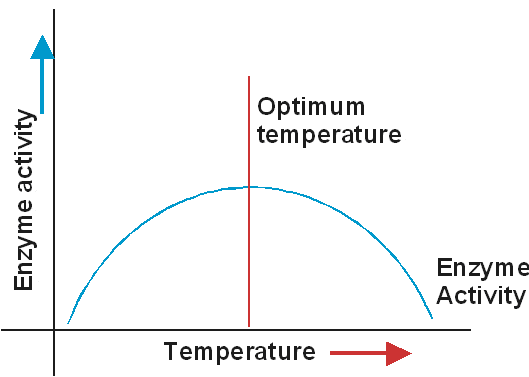
99.
At high temperatures enzyme activity declines because of:
a)
Denaturation
b)
Decreased Kinetic Motion
c)
Increased H-Bonding
d)
Dissociation of Ionic Compounds
100.

If the dots represent sugar what direction will the water flow?

a)

Into the cell

b)

Out of the cell

c)

Both equally (equilibrium)

101.

If the % represent % of sugar, what direction will water flow?

a)

Into the cell

b)

Out of the cell

c)

Both equally (equilibrium)

102.
Waxes, oils and fats are examples of
a)
Carbohydrates
b)
Lipids
c)
Proteins
d)
Nucleic Acids
103.
Which macromolecule is shown?
 View Figure 1 (if not visible)
a)
lipid
b)
protein
c)
nucleic acid
d)
carbohydrate
104.
What is one major difference between passive and active transport?
a)
Passive transport uses energy; active transport does not.
b)
Both types of transport use energy.
c)
Active transport uses energy; passive transport does not.
d)
No difference. They are both the same.
105.
The picture is an example of _________________.
a)
osmosis
b)
isotonic
c)
diffusion
d)
active transport
106.
This picture represents what type of cell transport?
a)
endocytosis
b)
exocytosis
c)
osmosis
d)
passive transport
107.
The function of _____ is to transport amino acids in the cytoplasm to the ribosome.
a)
rRNA
b)
tRNA
c)
mRNA
d)
DNA
108.
The process where mRNA is read and made into an amino acid chain.
a)
Transcription
b)
Translation
c)
Transportation
d)
Transient
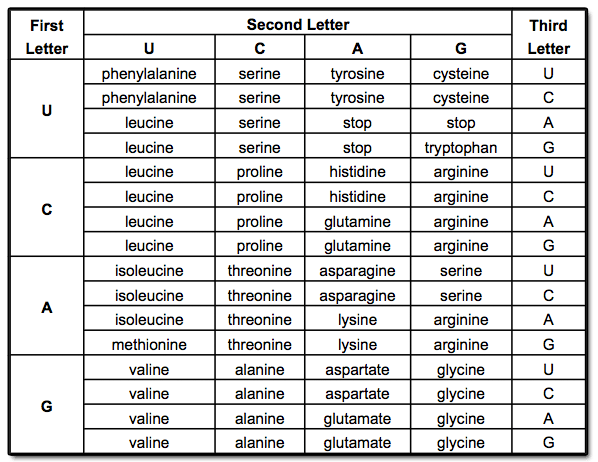
109.
What amino acid is represented by the codon UUA?
a)
Phenylalanine
b)
Tyrosine
c)
Leucine
d)
Stop codon
110.
The diagram shows a container divided into two compartments by a membrane permeable to water but not to starch. Two solutions containing different concentrations of dissolved starch were placed on each side of the membrane. Which of the following describes what will happen to the water level during the process of osmosis?  
a)
The water level of both sides of the membrane will decrease 
b)
The water level on the right side of the membrane will increase 
c)
The water level on the left side of the membrane will increase
d)
The water level on both sides of the membrane will stay the same 
111.
An animal cell placed in a sugar solution is shown in the diagram. Which statement best describes how osmosis will affect this animal cell?  
a)
Water will move out of the cell and the cell will shrink
b)
Water will move into the cell and the cell will expand 
c)
Sugar will move out of the cell and the cell will expand 
d)
Sugar will move into the cell and the cell will expand
112.
 A paramecium is shown.  This paramecium lives in an environment where water is constantly entering the organism.  The paramecium uses specialized vacuoles to pump some of the water back into the environment against a concentration gradient. Which of these processes is used to pump extra water out of the paramecium?   
a)
Osmosis
b)
Diffusion
c)
Active Transport
d)
Electron Transport
113.
What is the diploid number of chromosomes in the above diagrams?   
a)
2
b)
4
c)
6
d)
8
114.
The diagrams show the stages of mitosis in random order.  What sequence correctly shows the stages of mitosis?             
a)
3-1-2-4
b)
1-3-4-2
c)
4-2-3-1
d)
2-1-4-3
115.
A bone cell of a goat contains 60 chromosomes.  How many chromosomes will be in each daughter cell after mitosis? 
a)
15
b)
30
c)
60
d)
120
116.
What must occur during the cell cycle to ensure proper division of the chromosomes?  
a)
The cell must grow in size
b)
The mitochondria must divide 
c)
The DNA of the cell must replicate
d)
The cell membrane must dissolve
117.
The diagram to the right shows the phase of mitosis when the centrioles are at opposite poles of the cell and the chromosomes are lined up midway between the centrioles. Which phase would be the next phase of mitosis?   
  
a)
anaphase
b)
prophase
c)
interphase
d)
telophase
118.
The figures below show four processes involving DNA and RNA.  Use these figures to answer the next question. 
Which figure shows the process of replication?
a)
figure 1
b)
figure 2
c)
figure 3
d)
figure 4
119.
.  Which statement best describes the primary function of DNA replication?   
a)
To ensure daughter cells have a complete copy of the DNA
b)
To prevent mutations from occurring in cells 
c)
To provide genetic variation within specific organisms
d)
to allow prokaryotic cells to undergo meiosis
120.
Genetic engineering has both positive and negative outcomes. One of the most common areas where genetic engineering is used is in agriculture. If farmers plant more genetically modified crops, which of the following negative outcomes could occur?
a)
An increase in the use of pesticides
b)
A decrease in genetic diversity of the crops
c)
An increase in the contamination of the water supply
d)
A decrease in crop productivity
121.
Rice, the most popular food crop in the world, can be successfully grown only in certain places. If trends in climate change continue, the areas in which rice currently grows will be significantly reduced. Which of the following is the best way that biotechnology can keep the harvest of rice from decreasing?
a)
Identifying new areas with soil fertile enough for rice production.
b)
Developing clean energy sources to reduce carbon dioxide production worldwide.
c)
Seeing clouds with dry ice to produce more rainfall where it is needed.
d)
Genetically engineering rice crops that are tolerant to change in the environment.
122.
Rice, the most popular food crop in the world, can be successfully grown only in certain places. If trends in climate change continue, the areas in which rice currently grows will be significantly reduced. Which of the following is the best way that biotechnology can keep the harvest of rice from decreasing?
a)
Identifying new areas with soil fertile enough for rice production.
b)
Developing clean energy sources to reduce carbon dioxide production worldwide.
c)
Seeing clouds with dry ice to produce more rainfall where it is needed.
d)
Genetically engineering rice crops that are tolerant to change in the environment.
123.
Over time, the climate of an island became drier, which resulted in changes to the populations of various island finch species. Finch populations with a certain beak shape were able to forage for food. The population of those not having that beak shape decreased. Which of the following describes a necessary condition for these changes in the finch populations to occur?
a)
fewer mutations
b)
limited resources
c)
limited beak variations
d)
underproduction of offspring
124.
Mutations within a DNA sequence are:
a)
natural processes that produce genetic diversity
b)
natural processes that always affect the phenotype
c)
unnatural processes that always affect the phenotype
d)
unnatural processes that are harmful to genetic diversity
125.
A small population of chimpanzees lives in a habitat that undergoes no changes for a long period. How will genetic drift probably affect this population?
a)
It will accelerate the appearance of new traits.
b)
It will promote the survival of chimpanzees with beneficial traits.
c)
It will increase the number of alleles for specific traits.
d)
It will reduce genetic diversity.
126.
Theodosius Dobzhansky discovered that successful species tend to have a wide variety of genes that do not appear to be useful to the species in its present environment. What did this discovery help explain about genetics and the changes that occur in a species over time?
a)
Environments with more organisms tend to have more successful species.
b)
Species with greater genetic diversity adapt more easily to changing environments.
c)
Changing environments prevent species from adapting and surviving.
d)
Species in a stable environment are more resistant to a changing environment.
127.
1.   Which element is found in proteins but not carbohydrates or lipids?
a)
C
b)
H
c)
N
d)
O
128.
2. Which of the following best describes the function of nucleic acids?
a)
Nucleic acids are used as the building blocks of proteins.
b)
Nucleic acids contain the genetic code for protein synthesis.
c)
Nucleic acids inhibit and stop the flow of biochemical reactions.
d)
Nucleic acids transmit signals that begin biochemical processes.
129.
A scientist analyzing an unknown substance has determined that it consists of carbon, hydrogen and oxygen. During experimentation, she determines that the substance is soluble in oil but not in water. Which of the following macromolecules is the unknown substance most likely to be?
a)
Carbohydrates
b)
lipid
c)
nucleic acid
d)
protein
130.
How does  an enzyme influence a biological reaction?
a)
It increases the net energy difference between reactants and products.
b)
It decreases the activation energy necessary to initiate the chemical change.
c)
It increases the kinetic energy of reactants, thereby increasing their tendency to collide.
d)
It decreases the kinetic energy of reactants, enabling them to undergo chemical change more easily.
131.
The cell theory was first proposed in 1838. Evidence obtained through additional scientific investigations resulted in the current cell theory. Which statement describes a component of the original cell theory that was removed because of the new scientific knowledge?
a)
A. All living things are made of cells.
b)
B. All cells come from other preexisting cells.
c)
C. Cells form through spontaneous generation.
d)
D. Cells are the basic structural and functional units of life.
132.
Which of the following structures would be present in a plant cell, but not in an animal cell?
a)
A. nucleus, mitochondria, chloroplasts
b)
B. chloroplasts, cell wall, central vacuole
c)
C. cell wall, mitochondria, Golgi apparatus
d)
D. central vacuole, Golgi apparatus, nucleus
133.
Which of the following structures would be present in a plant cell, but not in an animal cell?
a)
A. nucleus, mitochondria, chloroplasts
b)
B. chloroplasts, cell wall, central vacuole
c)
C. cell wall, mitochondria, Golgi apparatus
d)
D. central vacuole, Golgi apparatus, nucleus
134.
Which of the following structures would be present in a plant cell, but not in an animal cell?
a)
A. nucleus, mitochondria, chloroplasts
b)
B. chloroplasts, cell wall, central vacuole
c)
C. cell wall, mitochondria, Golgi apparatus
d)
D. central vacuole, Golgi apparatus, nucleus
135.
 Which of the following statements correctly explains the role of lysosomes within a cell?
a)
A.  The lysosome prepares fats and lipids for transport throughout the cell by sorting and encasing them.
b)
B.  The lysosome uses oxygen to convert sugar into chemical energy and also controls the metabolism of the cell.
c)
C.  The lysosome breaks down molecules that are not needed within the cell and returns some of the products of digestion to the cell for later use.
d)
D.  The lysosome isolates water and other molecular compounds and stores them so they can be used later by the cell, or expels them as waste products.
136.
 Which cell organelle is most directly involved with the bonding of amino acids and the production of proteins?
a)
Mitochondrion
b)
endoplasmic reticulum
c)
cell wall
d)
ribosome
137.
in which way are photosynthesis and cellular respiration different?
a)
Photosynthesis releases energy, while cellular respiration stores energy.
b)
Cellular respiration stores ATP, while photosynthesis releases ATP.
c)
Photosynthesis uses , while cellular respiration produces .
d)
Cellular respiration produces oxygen, while photosynthesis uses oxygen.
138.

In humans, the 23rd pair of chromosomes are called:

a)

Autosomes

b)

Sex chromosomes

c)

Chromatids

d)

Gender chromosomes

139.

A diagram that looks like a family tree and is used to track genes throughout generations is called a:

a)

Pedigree

b)

Karyotype

c)

Cladogram

d)

Phylogenetic Tree

140.

If primarily males are affected, such as in the above pedigree, the trait is:

a)

Autosomal

b)

Sex-linked

c)

Dominant

d)

Recessive

141.

True or False? Pedigrees can be used to track multiple genes throughout a family's generations.

a)

True

b)

False

142.

If many individuals are affected in the pedigree, then the trait is:

a)

Autosomal

b)

Sex-linked

c)

Dominant

d)

Recessive

143.

The trait shown in the above pedigree is:

a)

Autosomal dominant

b)

Autosomal recessive

c)

Sex-linked dominant

d)

Sex-linked recessive

144.

Cells spend most of their lives in which phase?

a)

Interphase

b)

Prophase

c)

Telophase

d)

Metaphase

145.

Cells of organisms must replicate for?

a)

Growth

b)

Replacement of dying cells

c)

Repair of damaged cells

d)

All of the above

146.

What is cytokinesis?

a)

When 2 cells merge together to make 1 giant cell

b)

The end of the cell cycle when the cell divides and mitosis is complete

c)

The stage when DNA condenses into chromosomes

d)

The stage where chromosomes are pulled to opposite ends of the cell.

147.

What is the correct order of the phases of mitosis?

a)

Metaphase, Anaphase, Prophase, Telophase,

b)

Pelophase, Motophase, Anaphase, Trophase

c)

Prophase, Metaphase, Anaphase, Telophase

d)

Telophase, Anaphase, Prophase, Metaphase

148.

Is interphase a part of Mitosis?

a)

Yes, it happens after prophase

b)

No, it happens before mitosis

149.
Which phase of the cell cycle is #1?
a)
Interphase
b)
Prophase
c)
Anaphase
d)
Metaphase
150.
Which phase of the cell cycle is #4?
a)
Interphase
b)
Prophase
c)
Telophase
d)
Metaphase
151.
Which phase of the cell cycle is #5?
a)
Interphase
b)
Prophase
c)
Telophase
d)
Metaphase
152.
Cell division is represented by what letter?
a)
A
b)
B
c)
C
d)
D
153.

How is cancer related to cell division?

a)

Mutations can cause uncontrolled cell division which causes cancerous cells to spread rapidly and take nutrients from healthy cells.

b)

Cancer stops cell division from happening.

c)

Cell division causes viruses that spread around the body and cause cancer.

d)

Cancer is not related to cell division.

154.

How many chromosomes does a human somatic (body) cell have?

a)

46

b)

23

c)

42

d)

26

155.
Which of the following shows the correct order of the entire cell cycle?
a)
IMPACT
b)
IPMATC
c)
MATPIC
d)
IPAMTC
156.

Which of the following describes High Blood Viscosity?

a)

There is a High Concentration of Blood cells and Solutes.

b)

The Blood is Thicker

c)

Blood Pressure Decreases

d)

Heart rate and Pressure increase to move the Blood.

157.

When an individual has Atherosclerosis, it forms Plaque within the Arteries.

How does Atherosclerosis affect Blood Flow?

a)

Arterial plaque clogs the arteries, limiting or stopping blood flow.

b)

Arterial plaque changes the direction of blood flow, which forces oxygenated blood to the heart.

c)

Arterial plaque changes the size of blood cells, which prevents blood from flowing in the arteries.

d)

Arterial plaque clears the arteries, increasing blood flow.

158.

Flexibility in blood vessels allows the vessels to stretch and move based on changes in Blood Volume. Conditions like Hypertension can cause the arteries to harden and lose their Flexibility.

How would the hardening of the arteries most likely affect Blood Flow?

a)

The hardening of the arteries would likely cause blood flow to remain constant.

b)

The hardening of the arteries would likely increase blood flow.

c)

The hardening of the arteries would likely cause blood flow to stop completely.

d)

The hardening of the arteries would likely restrict blood flow.

159.

A Doctor prescribes a Blood Thinner, like Aspirin, to a patient with a Heart Condition.

How will this Blood Thinner affect the Flow and Viscosity of Blood?

a)

The Blood Thinner will Increase the Flow and Decrease the Viscosity

b)

The Blood Thinner will Decrease the Flow and Increase the Viscosity

c)

The Blood Thinner will Increase the Flow and the Viscosity

d)

The Blood Thinner will Decrease the Flow and the Viscosity

160.

If the Arteries are Narrow and Hard, the Blood Pressure is likely to be _____ than Normal

a)

Higher

b)

Lower

161.

Select ALL of the Following Factors that CAN affect Blood Flow.

a)

Blood Pressure

b)

Heart Rate

c)

Respiratory Rate

d)

Viscosity

e)

Blood Sugar

162.
What blood type has anti-A antibodies?
a)
Type A
b)
Type B
c)
Type AB
d)
Type O
163.
What is suspect 2's Blood Type?
a)
A-
b)
B-
c)
A+
d)
B+
164.

LETTER e:

a)

Uterus

b)

Fimbria

c)

Ovaries

d)

Fallopian Tubes

165.

LETTER f:

a)

Ovaries

b)

Uterus

c)

Cervix

d)

Vagina

166.

Which serves as a temporary storage of sperm cells before they are released in the urethra?

a)

Testicle

b)

Epididymis

c)

Prostate gland

d)

Cowper's gland

167.

What structure is the arrow pointing to?

a)

Testicle

b)

Vas deferens

c)

Prostate gland

d)

Seminal vesicle

168.

Produces sperm:

a)

Females

b)

Males

169.

The baby grows and develops here

a)

prostate

b)

uterus

170.
Male reproductive parts of a plant....
a)
Petals and ovary
b)
Ovary and ovule
c)
Anther and filament
d)
Stigma and style
171.
In which part of the flower is pollen found?
a)
Filament
b)
Anther
c)
Ovary
d)
Xylem
172.
What is the female part of the plant called?
a)
Stigma
b)
Pistil
c)
Stamen
d)
Style
173.
 This is a tissue in plant stems and roots. It transports water and minerals upwards from the roots to the stem, via capillary action
a)
Xylem
b)
Phloem
c)
Photosynthesis
d)
Oxygen
174.
How does the stomata work?
a)
It helps transport sugars to the root cells.
b)
It helps to transport nutrients to the roots.
c)
It helps to exchange gases and water.
d)
It helps to conduct fermentation in the leaf.
175.

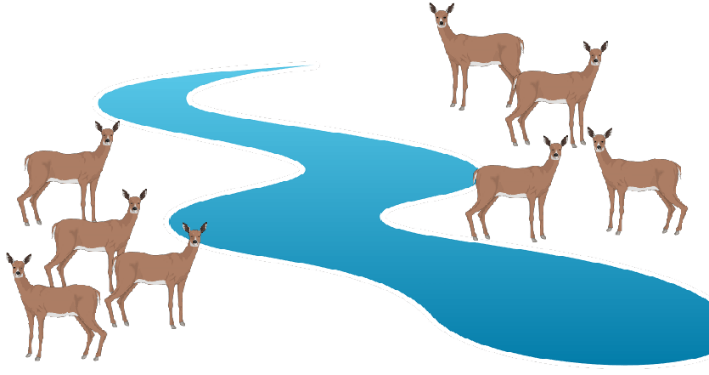
Two populations of the same species are separated by land barriers like rivers or mountains.

a)

geographical isolation

b)

temporal isolation

c)

adaptive ratiation

d)

behavioral isolaton

176.

After a long time in isolation, Island fruit flies and mainland fruit flies meet. They do not produce viable eggs due to genetic differences. The flies have resulted in two seperate lineages due to:

a)

Gene Pool

b)

Genetic Drift

c)

Gene Frequency

d)

Speciation

177.
In natural selection, the selective agent is the
a)
humans
b)
mutations
c)
breeders
d)
environment
178.

Mutations are important because they bring about

a)

death of the organism in which they develop

b)

genetic variation needed for a population to evolve

c)

benefits for the individual, not for the population

d)

Hardey-Weinberg equilibrium within a population

179.
A few deer wander out of their native woods into a completely new park where no deer had ever been before. They go on to create an entirely new population.
a)
Genetic Drift
b)
Natural Selection
c)
Non-random mating
d)
Mutation
180.
Yellow toucan birds seek out one another to make babies together and tend to avoid the green toucan birds.
a)
Genetic Drift
b)
Non-random mating
c)
Gene flow
d)
Mutation
181.
Bats are common in Texas, especially in rocky regions. Bats with longer hang claws have demonstrated higher fitness because of their ability to cling to rock while resting.
a)
Adaptation
b)
Non-random mating
c)
Gene Flow
d)
Mutation
182.
Logan was born with unique abilities for quick healing and awesome claws that stick out of his fingers.
a)
Gene flow
b)
Natural Selection
c)
Mutation
d)
Genetic Drift
183.
What does the picture represent?
a)
Founder Effect
b)
Mutations
c)
Bottleneck effect
d)
Gene Flow
184.
What does the image represent?
a)
Founder effect
b)
Bottleneck effect
c)
Mutation
d)
Natural Selection
185.
What does the image represent?
a)
Gene flow
b)
Gene drift
c)
Mutation
d)
Adaptation
186.
In a water molecule the hydrogen and oxygen atoms hold together by sharing _________.
a)
protons 
b)
neutrons
c)
electrons
d)
nuclei
187.
Which end of the water molecule has a slightly positive charge?
a)
the oxygen end
b)
the hydrogen end
c)
both ends are slightly positive
d)
neither end is positive
188.
When a molecule has an opposite electrical charge on each end, it is known as what?
a)
cohesion
b)
polar molecule
c)
hydrogen bond
d)
solution
189.
What word describes when water is attracted to other substances?
a)
cohesion
b)
adhesion
c)
capillary action
d)
surface tension
190.
When water molecules stick easily to other water molecules, this is called what?
a)
cohesion
b)
adhesion
c)
solution
d)
polar molecule
191.
Water is a universal solvent because it...
a)
It can be found anywhere
b)
It freezes when it gets cold
c)
floats when frozen
d)
Dissolves most substances
192.
Water beads up on the surface of a penny because of what property?
a)
Adhesion
b)
High Surface Tension
c)
Universal Solvent
d)
Changes in Density
193.
Water molecules are attracted to other kinds of molecules because of the property.
a)
Cohesion
b)
Adhesion
c)
Surface Tension
d)
Universal Solvent
194.
How does RNA differ from DNA?
a)
RNA contains uracil and deoxyribose
b)
RNA contains ribose and thymine
c)
RNA contains uracil and ribose
d)
RNA contains adenine and ribose
195.
How would the DNA sequence GCTATA be transcribed to mRNA?
a)
GCUAUA
b)
CGATAT
c)
CGAUAU
d)
GCUTUT
196.

RNA has what base that is instead of thymine?

a)

guanine

b)

adenine

c)

thymine

d)

uracil

197.
Where does transcription take place?
a)
nucleus
b)
cytoplasm
c)
ribosome
198.
How does embryology support the Theory of Evolution?
a)
It shows that they have a common ancestor because of their similarities.
b)
         I'm not sure.
c)
Animals change over time. 
199.
In stage one (top row) of these embryos, most of the embryos________
a)
look very similar.
b)
have very different features.
c)
show different stages of development.
d)
have only a tail if they are non-human.
200.

What type of evidence is represented in the picture above:

a)

Fossils

b)

Vestigial Structures

c)

DNA

d)

Homologous Structures

201.
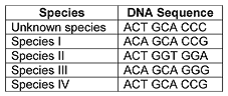
According to this data, the unknown bacterial species is most closely related to: 
a)
Species I
b)
Species II
c)
Species III
d)
Species IV
202.
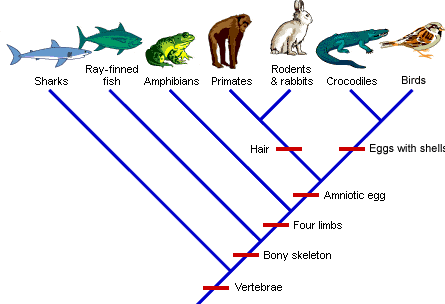
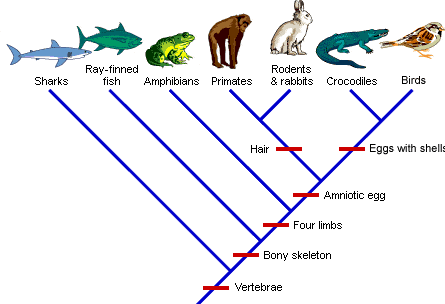
According to this cladogram, sharks are MOST closely related to which organism? 
a)
Amphibians
b)
Ray finned fish
c)
Crocodiles
d)
Birds
203.
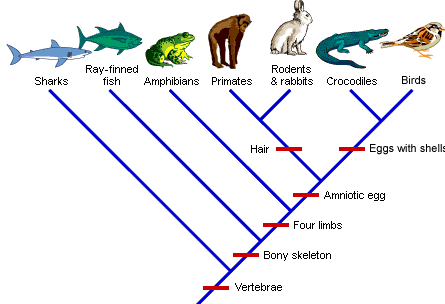
Which two orgainsms have hair? 
a)
Sharks & Ray Finned Fish
b)
Primates & Rodents
c)
Birds & Crocodiles
d)
Rabbits & Birds
204.
According to this cladogram, birds are LEAST related to: 
a)
Amphibians
b)
Sharks
c)
Ray Finned Fish
d)
Crocodiles
205.
Translation takes place in the 
a)
ribosome
b)
chloroplast
c)
nucleus
d)
mitochondria
206.
Brings the amino acids to the ribosome
a)
mRNA
b)
tRNA
c)
rRNA
d)
DNA
207.
What would be the tRNA anticodon for the mRNA codon CAG?
a)
GTC
b)
GUC
c)
CUG
d)
CAG
208.
How many amino acids are coded for by this sequence of nucleotides:
ATG GGA ACT CCA
a)
4
b)
2
c)
6
d)
12
209.
What is the correct amino acid sequence for the mRNA code AUGCCAGUAUGA
a)
Met-Pro-Ala-Val
b)
Met-Pro-Val
c)
Tyr-Gly-His
d)
Tyr-Gly-Arg-His
210.
Which letter on the illustration represents the frontal lobe
a)
A
b)
B
c)
C
d)
D
211.
Which letter on the illustration represents the temporal lobe
a)
A
b)
B
c)
C
d)
D
212.
The cerebellum is labeled
a)
1
b)
4
c)
5
d)
7
213.
Which question were the scientists trying to answer with this experiment?
a)
Where do cells come from?
b)
How did prokaryotes form cell membranes?
c)
How are biomolecules formed?
d)
What gave rise to the Eukaryotic cell?
214.
Miller/Urey and other scientists have shown that:
a)
 Life on early Earth required material from space
b)
Cells survived in the primitive atmosphere
c)
Amino acids could be produced from inorganic molecules 
d)
Simple cells can be produced in a laboratory
215.
The idea that Earth's early oceans had organic molecules that became the first life is called the...
a)
Primordial soup hypothesis
b)
Bubble hypothesis
c)
Miller-Urey Experiment
d)
Radioactive dating theory
216.
Which of the following was probably not present in the atmosphere of the primitive Earth? 
a)
methane
b)
oxygen
c)
water
d)
carbon dioxide
217.
Early Earth had no:
a)
atmosphere
b)
landmass
c)
ozone layer
d)
cyanide within the atmosphere
218.
Which statement best describes conditions on early Earth?
a)
hot with volcanic activity and electrical storms
b)
dry land covered with volcanic dust
c)
cold oceans
d)
dark and dusty with abundant water
219.
Which of the following describes what the first life form resembled?
a)
Eukaryotes
b)
Plants
c)
Bacteria
d)
Fungi
220.
What gas was necessary for complex (eukaryotic) life to evolve?
a)
Carbon dioxide
b)
Oxygen
c)
Dihydrogen monoxide
d)
Methane