
 Worksheets
BiologyMidtermReview
Total questions: 217
Worksheet time: 3hrs 41mins
Name
Class
Date
1.
Controls the movement of materials in and out of the nucleus.
a)
Nuclear Membrane
b)
Cellular Membrane
c)
Cytoplasm
d)
Endoplasmic Reticulum
2.
The clear, jelly-like material in a cell that supports and protects the cell’s organelles.
a)
Cytoplasm
b)
Cell Membrane
c)
Nucleus
d)
Mitochondria
3.
The part of the cell that makes protein.
a)
Vacuoles
b)
Ribosomes
c)
Golgi Apparatus
d)
Cytoplasm
4.
Protects the cell from the outside environment. (Only Plants)
a)
Cell Membrane
b)
Chloroplasts
c)
Cell Wall
d)
Vacuoles
5.
Acts like a subway system, carrying protein through the cell.
a)
Golgi Apparatus
b)
Nuclear Membrane
c)
Ribosomes
d)
Endoplasmic Reticulum
6.
Packages proteins into vesicles and ships them out.
a)
Endoplasmic Reticulum
b)
Ribosomes
c)
Golgi Apparatus
d)
Nucleus
7.
Provides support and protection for the cell while also controlling the movement of materials in and out of the cell.
a)
Cellular Membrane
b)
Nucleus
c)
Ribosomes
d)
Vacuole
8.
Breaks down food to release energy. Known as the power plant of the cell.
a)
Endoplasmic Reticulum
b)
Mitochondria
c)
Ribosomes
d)
Cell Wall
9.
The part of the cell that is used for storage.
a)
Nucleus
b)
Cell Membrane
c)
Mitochondria
d)
Vacuole
10.
The control center of the cell.
a)
Nucleus
b)
Nuclear Membrane
c)
Chloroplasts
d)
Golgi Aparatus
11.
Uses energy from the sun to make food for the plant.
a)
Cell Wall
b)
Cell Membrane
c)
Chloroplasts
d)
Vacuole
12.

Identify letter G.
a)
Golgi complex
b)
ribosome
c)
cell wall
13.
Identify letter B.
a)
Golgi complex
b)
nucleus
c)
cell wall
14.
Which type of cells are simple and have no membrane bound organelles?
a)
eukaryote
b)
prokaryote
15.
Which type of cells are very complex and have membrane bound structures?
a)
eukaryote
b)
prokaryote
16.

Identify letter H.
a)
nucleus
b)
mitochondria
c)
Golgi complex
17.
Identify letter K.
a)
nucleus
b)
mitochondria
c)
endoplasmic reticulum
18.
Identify letter I.
a)
nucleus
b)
mitochondria
c)
cell membrane
19.
Protective layer around cells
a)
Lysosome
b)
Cell membrane
c)
organism
20.
Structures in cytoplasm that help with cell life processes
a)
organ system
b)
cell wall
c)
organelles
21.
Scaffolding-like structure that helps cell keep its shape
a)
cytoskeleton
b)
mitochondria
c)
endoplasmic reticulum
22.
Releases energy from food
a)
Golgi Complex
b)
mitochondria
c)
Lysosome
23.
The smallest unit of an organism that carries on the functions of life
a)
cell
b)
tissue
c)
organ
24.
Temporary storage structure; stores water, waste and food
a)
nucleus
b)
endoplasmic reticulum
c)
vacuole
25.
Protects and gives shape to plant cells
a)
chloroplast
b)
cell wall
c)
ribosome
26.
makes proteins
a)
ribosome
b)
vacuole
c)
lysosome
27.
Any living thing
a)
tissue
b)
organism
c)
organ system
28.
Contains instructions for everything the cell does
a)
lysosome
b)
cell membrane
c)
nucleus
29.
Which is an accurate difference between plant cells and animals cells?
a)
Plant cells have a cell wall, but animal cells do not.
b)
Animal cells have a cell wall, but plant cells do not.
30.
Which is an accurate statement?
a)
Plant cells have a large central vacuole.
b)
Animal cells have a large central vacuole.
c)
Prokaryotes have a large central vacuole.
31.
Why are approved eye protection devices (such as goggles) are worn in the lab?
a)
A. To improve your vision
b)
B. To make you look like a bug
c)
C. To give you headaches
d)
D. To protect eyes around chemicals, heat, or glassware
32.
You are working in the lab using glassware. Your partner drops a glass beaker and it shatters. A piece of glass gets in his eyes. What should he have been wearing?
a)
A. Gloves
b)
B. Sun glasses
c)
C. Safety Goggles
d)
D. A lab aporn
33.
You are in lab and your partner accidentally gets their hair stuck in a triple beam balance. What should have your partner done?
a)
A. Worn a hat in class
b)
B. Skipped class
c)
C. Got a hair cut
d)
D. Tied/pulled their hair back
34.
If you have been injured in the lab, what should you do first?
a)
A. Apply the first aid yourself
b)
B. Go to doctor after school in a few hours
c)
C Tell your science teacher immediately
d)
D. Not tell anyone
35.
Flammable materials should never be dispensed (or used) near:
a)
A. An open door
b)
B. An open flame
c)
C.Another student
d)
D. A sink
36.
If you get something in your eyes, how long do you need to use the eyewash station?
a)
15 - 20 seconds
b)
5 minutes
c)
15 - 20 minutes
d)
Don't use the eyewash.
37.

If you see a science experiment set up in the classroom...
a)
do not touch anything until instructed.
b)
immediately begin working on the lab.
c)
go and check all equipment.
d)
walk around and check each station.
38.

Horseplay or practical jokes in the laboratory are...
a)
always against the rules.
b)
okay.
c)
not dangerous.
d)
okay if you are working alone.
39.

You may eat or drink in the science laboratory...
a)
after you have washed your hands.
b)
on the days you are not doing a lab.
c)
only from the beakers.
d)
at no time unless given teacher approval.
40.
Which of the following should not be worn during laboratory activities?
a)
loose clothing
b)
dangling jewelry
c)
open-toed shoes
d)
all of the above
41.
After completing an experiment in the lab, all chemical wastes should be:
a)
poured down the sink.
b)
disposed of according to the teacher's directions.
c)
thrown at other students.
d)
taken home to play with.
42.

You are heating a piece of glass and now want to pick it up. You should...
a)
pour cold water on it.
b)
use tongs.
c)
pick up the end that looks cooler.
d)
use a rag or paper towels.
43.
You are heating a substance in a test tube. Always point the open end of the tube...
a)
away from all people.
b)
toward another classmate.
c)
toward your lab partner.
d)
toward yourself.
44.

Fruit fly body cells have 8 chromosomes. After mitosis, you would expect a resulting fruit fly daughter cell to have ...
a)
16 chromosomes.
b)
46 chromosomes.
c)
8 chromosomes.
d)
4 chromosomes.
45.
The process by which the nuclear material is divided equally between two new cells
a)
mitosis
b)
cancer
c)
spindle
d)
centromere
46.

Structure (b) is a ____.
a)
chromosome
b)
chromatid
c)
centromere
47.

Structure (a) is a ____.
a)
chromosome
b)
chromatid
c)
centromere
48.

Structure (c) is a ____.
a)
chromosome
b)
chromatid
c)
centromere
49.

Name the phase:
a)
Anaphase
b)
Telophase
c)
Metaphase
d)
Prophase
50.

Name the phase:
a)
Anaphase
b)
Telophase
c)
Metaphase
d)
Prophase
51.

What is the next phase of mitosis?
a)
Prophase
b)
Metaphase
c)
Anaphase
d)
Telophase
52.

What is the next phase of mitosis?
a)
Prophase
b)
Metaphase
c)
Anaphase
d)
Telophase
53.

Name the phase:
a)
Prophase
b)
Metaphase
c)
Anaphase
d)
Telophase
54.

Name the phase:
a)
Prophase
b)
Metaphase
c)
Anaphase
d)
Telophase
55.

Name the phase:
a)
Prophase
b)
Metaphase
c)
Anaphase
d)
Telophase
56.

Name the phase:
a)
Prophase
b)
Metaphase
c)
Anaphase
d)
Telophase
57.

The organelle that helps in cell division and produces spindle fibers.
a)
Chromosome
b)
Centriole
c)
Cytoplasm
d)
Chloroplast
58.

The stages of mitosis in order
a)
Metaphase, Anaphase, Prophase, Telophase
b)
Prophase, Anaphase, Metaphase, Telophase
c)
Prophase, Metaphase, Anaphase, Telophase
d)
Anaphase, Prophase, Telophase, Metaphase
59.
When a cell is not actively dividing, it is in what phase?
a)
interphase
b)
anaphase
c)
prophase
d)
telophase
60.
What portion of the cell cycle involves the actual dividing?
a)
interphase
b)
mitosis
c)
Gap 1
d)
Gap 2
61.
When a cell divides, what do we call the 2 new cells?
a)
mother cells
b)
father cells
c)
daughter cells
d)
son cells
62.
Before a cell can divide, what must happen?
a)
Nothing, it is always ready to divide
b)
The number of chromosomes must be cut in half
c)
The number of chromosomes must double
d)
The number of chromosomes must triple.
63.
If the message never gets through for a cell to stop dividing and it just keeps dividing over and over again, what can form?
a)
tumor
b)
freckle
c)
goosebump
d)
scab
64.
The cells produced via meiosis are called:
a)
sex cells
b)
somatic cells
c)
body cells
d)
skin cells
65.
This produces 2 identical cells.
a)
mitosis
b)
meiosis
66.
A human usually has xx amount of chromosomes.
a)
6
b)
22
c)
4
d)
46
67.

Meiosis makes sperm and egg cells. In humans, sperm and egg cells each have _____ chromosomes. Therefore a fertilized human egg cell (sperm and egg cell combined) would create a cell with _____ chromosomes.
a)
23, 46
b)
46, 23
c)
2, 4
d)
50, 100
68.
What causes genetic variation in meiosis?
a)
chromosomes lining up
b)
crossing over of chromosomes
c)
separation of chromosomes
d)
chromosomes pulling apart
69.
Unlike mitosis, meiosis in male mammals results in the formation of
a)
one haploid gamete
b)
three diploid gametes
c)
four diploid gametes
d)
four haploid gametes
70.

When an area of a chromatid is exchanged with the matching area on a chromatid of its homologous chromosome, _________________ occurs
a)
crossing over
b)
mutagenesis
c)
hybridization
d)
fertilization
71.
What kind of cells are made in MEIOSIS?
a)
Haploid Gametes
b)
Diploid Somatic Cells
c)
Skin Cells
d)
Liver Cells
72.
If the Diploid number of Carrots is 18, the haploid number is
a)
18
b)
9
c)
27
d)
36
73.
Goes through P.M.A.T two rounds
a)
Mitosis
b)
Meiosis
c)
Osmosis
d)
Transcription
74.
Which of these cells would be produced through meiosis?
a)
skin cells
b)
liver cells
c)
brain cells
d)
sperm cells
75.
The chromosomes that pair up during meiosis, are called __________ chromosomes.
a)
homozygous
b)
asexual
c)
homologous
d)
genes
76.
When homologous chromosomes match up, they form a structure call a ___________.
a)
tetrad
b)
triad
c)
diploid
d)
gamete
77.
Why do we need meiosis?
a)
To double the number of chromosomes going into sex cells
b)
To halve the number of chromosomes going into sex cells
c)
To triple the number of chromosomes going into sex cells
d)
To not change the number of chromosomes going into sex cells
78.
A human zygote should have _____ chromosomes inside.
a)
46
b)
23
c)
92
d)
64
79.

What is cancer?
a)
The heart does not receive enough blood.
b)
Sudden disruption of blood flow to part of the brain.
c)
Blood filled weak spot.
d)
Uncontrolled growth and spread of abnormal cells.
80.

Which of the following would describe a cancerous tumor?
a)
malignant
b)
biopsy
c)
benign
d)
infectious
81.

What does it mean for a tumor to metastasize?
a)
mass
b)
spread
c)
to get better
d)
to repair cells
82.

A mole that changes in size, shape or color means:
a)
oral cancer.
b)
mouth cancer.
c)
skin cancer.
d)
prostate or ovarian cancer.
83.

Which of the following would be a way to protect yourself from skin cancer?
a)
Use sunscreen and reapply as directed to protect the skin.
b)
Only tan in a tanning bed - they are safer.
c)
Use baby oil to keep your skin soft and moist.
d)
Use vaseline after tanning to seal in moisture.
84.

Cancer harms the body by destroying healthy body tissues.
a)
True
b)
False
85.

What is a biopsy?
a)
It is the removal of a cancerous organ.
b)
It is the removal of a cancerous mole.
c)
It is the removal of the lining of the uterus.
d)
It is the removal of a small piece of tissue to check for cancer.
86.

What cancer treatment involves stimulating the body's immune system to attack cancer cells?
a)
Immunotherapy
b)
Surgery
c)
Radiation Therapy
d)
Chemotherapy
87.

Which of the following is NOT a way to prevent cancer?
a)
Avoid smoking
b)
Avoid alcohol
c)
Avoid exercise
d)
Avoid carcinogens
88.

Which cancer is caused by smoking?
a)
lung cancer
b)
ovarian cancer
c)
skin cancer
d)
breast cancer
89.

Cancer cells typically form a mass of tissue called a:
a)
biopsy.
b)
carcinogen.
c)
tumor.
d)
allergy.
90.

What is the most common type of cancer in men?
a)
lung cancer
b)
prostate cancer
c)
testicular cancer
d)
rectal cancer
91.

What is the most common type of cancer in women?
a)
Lung cancer
b)
Breast cancer
c)
Ovarian cancer
d)
Cervical cancer
92.

What is is called when a tumor proves to be NON cancerous?
a)
malignant
b)
benign
c)
oncogene
d)
byogene
93.

The removal of a malignant tumor is called:
a)
radiation therapy.
b)
chemotherapy.
c)
surgery.
d)
immunotherapy.
94.
Which sequence of DNA bases would pair with this partial strand
ATG TGA CAG
ATG TGA CAG
a)
ATG TGA CAG
b)
TAC ACT GTC
c)
GTA AGT GAC
d)
CAT TCA CTG
95.
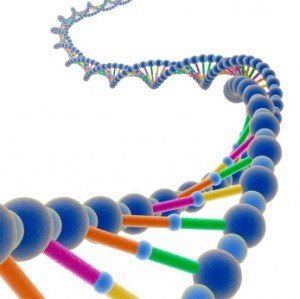
Which of the following best describes a DNA molecule?
a)
double helix
b)
contains ribose
c)
made of amino acids
d)
contains Uracil
96.

In a molecule of double-stranded DNA, the amount of Adenine present is always equal to the amount of
a)
cytosine
b)
guanine
c)
thymine
d)
uracil
97.
Adenine bonds with ______________.
a)
Guanine
b)
Thymine
c)
Cytosine
d)
Adenine
98.
Guanine bonds with ______________.
a)
Adenine
b)
Guanine
c)
Cytosine
d)
Thymine
99.
Why is DNA important?
a)
it is very small and very complicated
b)
it's in everything
c)
it serves as the blueprint for traits of all living things
d)
because we eat it every day for energy
100.
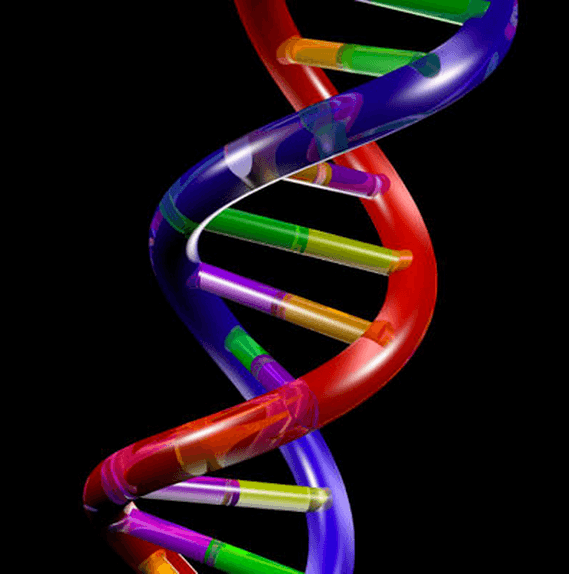
What determines the code, or information, of a DNA molecule?
a)
the shape (structure) of the nitrogen bases
b)
the order (sequence) of the nitrogen bases
c)
the color of the nitrogen bases
d)
the frequency (number) of nitrogen bases
101.
Which 2 molecules form the sides (backbone) of the DNA ladder?
a)
deoxyribose sugar and adenine
b)
deoxyribose sugar and a hydrogen bond
c)
deoxyribose sugar and the nucleus
d)
deoxyribose sugar and phosphate
102.
Which organelle is DNA usually found in?
a)
cell membrane
b)
vacuole
c)
chloroplast
d)
nucleus
103.
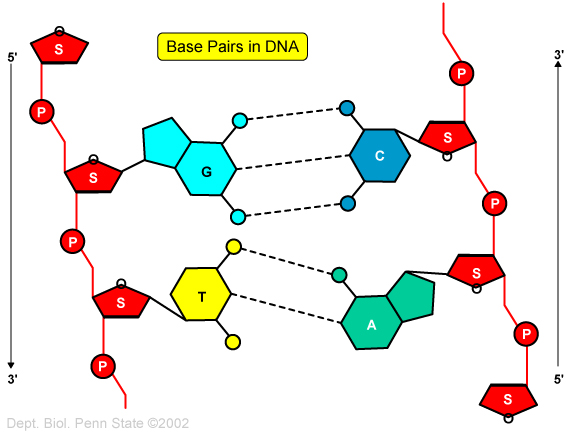
Nitrogenous bases are joined by which type of bond?
a)
polar bonds
b)
ionic bonds
c)
covalent bonds
d)
hydrogen bonds
104.

Replicate the following strand of DNA:
AATCATGGA
AATCATGGA
a)
AATCATGGA
b)
TTAGTACCT
c)
UUAGUACCU
d)
GGATAUCUA
105.
The enzyme that unzips the DNA to prepare for replication
a)
helicase
b)
replicase
c)
polymerase
d)
synthase
106.
DNA replication results in two DNA molecules,
a)
each one with two original strands
b)
each one with two new strands
c)
each one with one new strand and one original strand
d)
one with two new strands and the other with two original strands
107.

order of replication
a)
3, 2, 1, 4
b)
2, 1, 4, 3
c)
2, 3, 1, 4
d)
3, 4, 1, 2
108.
A process in which DNA has the unique ability to make an exact copy of itself.
a)
Replication
b)
Translation
c)
Transcription
109.
A process in which DNA has the unique ability to make an exact copy of itself.
a)
Replication
b)
Translation
c)
Transcription
110.
What is the correct complimentary strand for the following DNA?ATCGAG
a)
TACGAG
b)
ATCGAG
c)
TAGCTG
d)
TAGCTC
111.
In what phase of the cell cycle does DNA replication take place?
a)
G1
b)
S
c)
G2
d)
M
112.
What are the three components of a nucleotide?
a)
sugar, hydrogen, nitrogen base
b)
sugar, oxygen, nitrogen base
c)
sugar, phosphate, nitrogen base
d)
sugar, phosphate, protein
113.
Which of the following is a base that is NOT contained in DNA?
a)
Adenine
b)
Thymine
c)
Uracil
d)
Guanine
114.
In what phase of the cell cycle does DNA replication take place?
a)
G1
b)
S
c)
G2
d)
M
115.
What are the three components of a nucleotide?
a)
sugar, hydrogen, nitrogen base
b)
sugar, oxygen, nitrogen base
c)
sugar, phosphate, nitrogen base
d)
sugar, phosphate, protein
116.
Which of the following is a base that is NOT contained in DNA?
a)
Adenine
b)
Thymine
c)
Uracil
d)
Guanine
117.
Chargraff's Rule says that
a)
Adenine will be equal to Thymine
b)
Cytosine will be equal to Thymine
c)
Uracil will be equal to Guanine
d)
Adenine will be equal to Cytosine
118.
DNA is copied during
a)
Translation
b)
Transcription
c)
Reproduction
d)
Replication
119.
DNA and RNA are macromolecules in the category of
a)
Proteins
b)
Lipids
c)
Nucleic Acids
d)
Carbohydrates
120.
DNA is a polymer made of monomers called
a)
Nucleotides
b)
Proteins
c)
Amino Acids
d)
Lipids
121.
Which shows the correct complementary base pairing for DNA?
a)
C-A, T-G
b)
A-G, C-T
c)
C-G, U-A
d)
T-A, G-C
122.
What does DNA stand for?
a)
Deoxyribonucleic acid
b)
Denitrogenous acid
c)
Deribonucleic acid
d)
Diribonucleic acid
123.
What determines the traits of an organism?
a)
The length of DNA molecules
b)
The way nucleotides are paired in the two strands of DNA
c)
The order of nucleotides in DNA molecules
d)
The proportions of A, T, C, and G in DNA molecules
124.

In a molecule of double-stranded DNA, the amount of Adenine present is always equal to the amount of
a)
cytosine
b)
guanine
c)
thymine
d)
uracil
125.
Replication is referred to as...
a)
conservative
b)
semi-conservative
c)
quasi-conservative
d)
mostly liberal
126.
Which enzyme proofreads the DNA after replication to catch any mistakes?
a)
primase
b)
proof-read-ase
c)
DNA polymerase
d)
helicase
127.
According to the central dogma of molecular biology, which of the following transfers of information is not possible?
a)
from DNA to RNA
b)
from DNA to RNA
c)
from RNA to protein
d)
from protein to RNA
128.
A gene gives the instructions for protein synthesis. Which type of molecule is responsible for "reading"the instructions and then creating the protein?
a)
ATP
b)
RNA
c)
DDT
d)
DNA
129.
Franklin used x-ray crystallography to determine the shape of the DNA molecule is
a)
a cloverleaf
b)
a braided rope
c)
a pleated sheet
d)
a twisted ladder
130.
How did Rosalind Franklin's photo 51 affect th work of Watson and Crick?
a)
It was used to determine the physical structure of DNA
b)
It was used to identify the four bases that make up DNA
c)
It was used to determine the theory of independent assortment
d)
It was used to show DNA was the molecule of inheritance
131.
Watson and Crick were the first to suggest that DNA is _____
a)
a short molecule
b)
the shape of a double helix
c)
a protein molecule
d)
the genetic material
132.
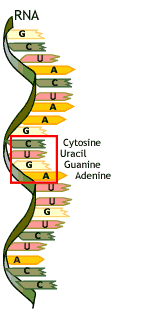
In RNA, Uracil pairs with ______.
a)
cytosine
b)
adenine
c)
guanine
d)
thymine
133.
The process to go from DNA to mRNA is _______
a)
translation
b)
transcription
c)
replication
134.
The process to go from mRNA to a protein is called ____
a)
transcription
b)
rRNA
c)
replication
d)
translation
135.
The process to go from mRNA to a protein is called ____
a)
transcription
b)
rRNA
c)
replication
d)
translation
136.
DNA holds the code for
a)
lipids
b)
carbohydrates
c)
protein
d)
sugar
137.
Choose the nucleotide sequence of the RNA strand that would be complementary to the following strand:
GTAGTCA
GTAGTCA
a)
UATUAGA
b)
ACGACTG
c)
CAUCAGU
d)
CATCAGT
138.
The main function of tRNA is to...
a)
carry a message that, when translated, forms proteins
b)
form a portion of ribosomes
c)
string together complementary RNA and DNA strands
d)
bring amino acids from the cytoplasm to the ribosomes
139.
Which component of DNA determines the traits of an organism?
a)
Nitrogen Bases
b)
Sugar-Phosphate Backbone
c)
Hydrogen bonds
140.
What is the location in the cell for transcription?
a)
nucleus
b)
cytoplasm
c)
ribosome
d)
mitochondria
141.
Which is the mRNA molecule that would be transcribed from this DNA template:
TGGCAAGTACGT
TGGCAAGTACGT
a)
ACCGTTCATGCA
b)
UGGCAAGUACGU
c)
UCCGUUCUUGCU
d)
ACCGUUCAUGCA
142.
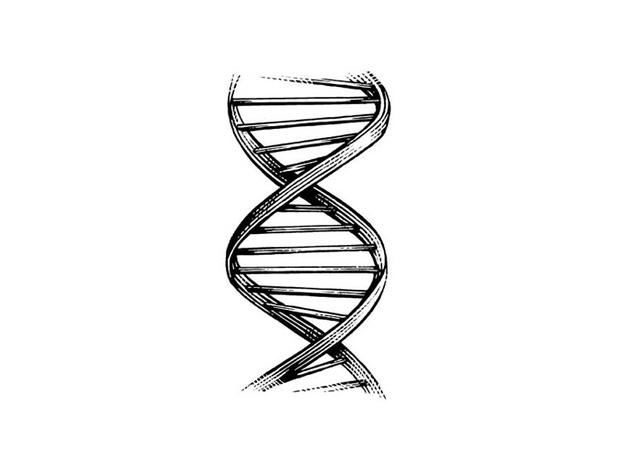
DNA has a _____________ structure.
a)
double helix
b)
single strand
c)
ring
d)
chain
143.
Translation is the process where
a)
mRNA is created in the Nucleus
b)
mRNA is decoded to form a protein
c)
glucose molecules are made
d)
is where lipids are synthesised
144.
Does the order of amino acids in a protein matter?
a)
YES!
b)
NO!
145.
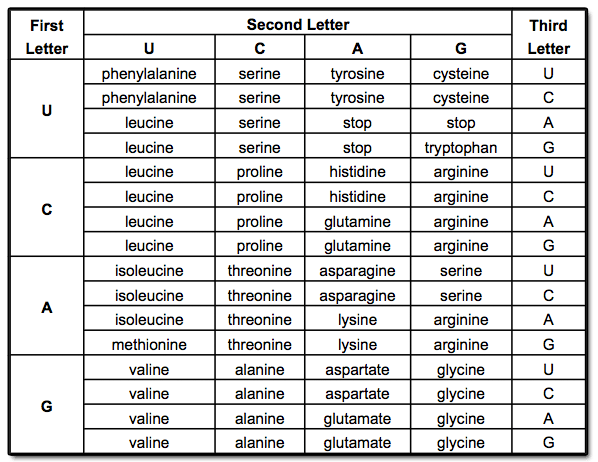
What is the correct amino acid sequence for the mRNA code AUGCCAGUAUGA
a)
Met-Pro-Ala-Val
b)
Met-Pro-Val
c)
Tyr-Gly-His
d)
Tyr-Gly-Arg-His
146.

What is the RNA synthesized from a section of DNA with the code: GATTACA ?
a)
CUAAUGU
b)
GATTACA
c)
GAUUCA
d)
CTAATGA
147.

The enzyme that produces RNA in Transcription is called
a)
RNA Polymerase
b)
DNA Polymerase
c)
Transcriptase
d)
RNA Intrase
148.

Splicing is accomplished by:
a)
Spliceosomes
b)
DNA Ligase
c)
RNA Polymerase I
d)
SSBPs
149.

Translation is a process in eurkaryotic cells takes place in the:
a)
Cytoplasm
b)
Nucleus
c)
Nucleolus
d)
Golgi Bodies
150.

tRNA molecules move through the ribosome in the order:
a)
A-P-E
b)
E-P-A
c)
E-A-P
d)
P-E-A
151.

tRNA molecules match the mRNA codons with a(n):
a)
Codon
b)
Anti-Codon
c)
Intron
d)
Methylated Cap
152.

Translation begins with a(n):
a)
Start Codon
b)
Intron
c)
Promoter
d)
Origin
153.

The codon 5'-UAC-3' would have an anti-codon match:
a)
3'-AUG-5'
b)
3'-TAC-5'
c)
5'-AUG-3'
d)
5'-CAU-3'
154.

When the Ribosome reaches ________________ the process of translation stops
a)
Stop Codon
b)
Okazaki Fragment
c)
Terminator
d)
taq Polymerase
155.
The process of copying a gene's DNA sequence into a sequence of RNA is called:
a)
Transcription
b)
Translation
c)
Splicing
d)
Protein Synthesis
156.

RNA contains which bases?
a)
adenine, guanine, uracil, cytosine
b)
thymine, guanine, cytosine, uracil
c)
thymine, uracil, cytosine, guanines
d)
adenine, uracil, guanine, thymine
157.
RNA is
a)
double stranded
b)
single stranded
158.
__________ builds structures and causes actions in cells.
a)
DNA
b)
sugar
c)
proteins
159.
DNA travels outside of the nucleus.
a)
true
b)
false
160.
Messenger RNA carries a copy of the DNA code.
a)
true
b)
false
161.
Which RNA bases would pair with TACGAA in transcription?
a)
AUGCUU
b)
ATGCTT
c)
GCATCC
d)
GCAUCC
162.
When does DNA replication happen?
a)
Before Mitosis begins
b)
During prophase
c)
During metaphase
d)
During anaphase
163.
One difference between DNA and RNA is that....
a)
Only RNA has the base Uracil
b)
only RNA contains the base Thymine
c)
only RNA contains the base Cytocine
d)
only RNA contained the base Guanine
164.

What process is being shown here?
a)
Replication
b)
Translation
c)
Transcription
165.

The process represented in the diagram produces a molecule that is complementary to the template strand of DNA. What type of molecule is produced?
a)
New DNA
b)
Polypeptide
c)
Messenger RNA
d)
Carbohydrate
166.
what does mRNA do?
a)
carry info from genes to ribosomes
b)
carry amino acids to ribosomes
c)
help with RNA splicing
d)
make up ribosomes
167.
Brings the amino acids to the ribosome
a)
mRNA
b)
tRNA
c)
rRNA
d)
DNA
168.
Which phrase best describes translation?
a)
converts mRNA into a polypeptide
b)
catalyzes bonds between amino acids
c)
produces RNA from DNA molecules
d)
recycles tRNA molecules for reuse
169.
The work of scientists including Griffin, Avery, Hershey & Chase and Franklin helped us to determine the __ are responsible for carrying genetic material.
a)
Amino Acids
b)
Proteins
c)
Nucleic Acids
d)
Carbohydrates
170.
If Chargaff found that a sample of DNA has 20% ADENINE, how much GUANINE would he have determined to be there?
a)
30%
b)
20%
c)
80%
d)
60%
171.
From his work with mice and pneumonia-causing bacteria, Frederick Griffin coined the term
a)
Replication
b)
Transcription
c)
Transformation
d)
Translation
172.
From his work with mice and pneumonia-causing bacteria, Frederick Griffin coined the term
a)
Replication
b)
Transcription
c)
Transformation
d)
Translation
173.
By using radioactive isotopes, Hershey and Chase were able to conclude that __ is/are the carrier(s) of genetic information.
a)
nucleic acid
b)
Proteins
c)
Carbohydrates
d)
Lipids
174.
The work of Erwin Chargaff allowed Watson and Crick to determine the rules of...
a)
protein synthesis
b)
transcription
c)
hydrogen bonding
d)
nitrogen base pairing
175.
How did Hershey and Chase's use of radiolabeled bacteriophages to study the genetic material validate Avery's research?
a)
It demonstrated conclusively that the genetic material is not protein.
b)
It showed that bacteriophages are not digested by bacterial enzymes.
c)
It proved that bacteria will take up phosphorus, but not sulfur.
d)
It confirmed that bacteriophages cannot inject radiolabeled DNA.
176.

Who was responsible for the experiment depicted by the image?
a)
Friedrich (Fritz) Miescher
b)
Hershey & Chase
c)
Frederick Griffith
d)
Oswald Avery, et. al.
177.
What causes mutations?
a)
Mistakes in replication or environmental substances
b)
The amino acids
c)
Passed down by genetics
d)
It's how your born
178.
This type of substitution codes for a stop codon
a)
Missense
b)
Nonsense
c)
Silent
d)
Deletion
179.
Mutations:
a)
are permanent changes in the DNA sequence or structure
b)
produce allelic variation
c)
are more likely to be harmful than beneficial
d)
all of the above
180.
A type of substitution in which no amino acids change is called
a)
Missense
b)
Nonsense
c)
Silent
d)
Deletion
181.
What is the correct mRNA strand from this DNA?
CAC-GTG-ACA-GCG
CAC-GTG-ACA-GCG
a)
GTG-CAC-TGT-CGC
b)
CAC-GUG-ACA-GCG
c)
GUG-CAC-UGU-CGC
182.
Why are insertion and deletion mutations so harmful?
a)
They change all of the codons from the mutation on down the line, which changes the amino acid sequence
b)
They insert things that an organism doesn't need.
c)
They often delete things that organisms need.
d)
Insertion and deletions are not any more harmful than substitution mutations.
183.
Why is the order of amino acids so important?
a)
The order of amino acids dictates what shape the protein will fold into.
b)
It is not important. The protein folding chamber will force the protein to fold into the correct shape.
184.
Why does DNA replication have to occur?
a)
So that it can fix any mistakes the cell made during division
b)
So that the cell can get bigger
c)
So that each new cell will have a full set of chromosomes after mitosis
d)
So that each cell has a back-up copy of its DNA
185.
If a mutation occurs in an expressed gene, it will most directly affect the structure of a cell's
a)
ATP
b)
proteins
c)
energy source
d)
membrane
186.
using living things or parts of living things to produce a product or solve a problem
a)
biotechnology
b)
tissue culturing
c)
bioremediation
d)
transgenic
187.
Organisms that have DNA from a different species artificially inserted into their cells are called
a)
bioremediated
b)
transgenic
c)
cultured
d)
a clone
188.
Using microbes like bacteria to remove harmful toxins from the environment is called
a)
bioremediation
b)
transgenic
c)
tissue culturing
d)
gene therapy
189.
Using a virus to enter a cell and replace defective genes with healthy genes is called
a)
tissue culturing
b)
bioremediation
c)
cloning
d)
gene therapy
190.
the creation of genetically identical organisms
a)
Bioremediation
b)
Cloning
c)
Gene Therapy
d)
Tissue Culturing
191.
growing human tissue and organs in a laboratory
a)
Gene Therapy
b)
Bioremediation
c)
Tissue Culturing
d)
Cloning
192.
GMO stands for
a)
Genetically Made Organism
b)
Growing More Organisms
c)
Genetically Modified Organism
d)
Growing Many Organisms
193.
GMO stands for
a)
Genetically Made Organism
b)
Growing More Organisms
c)
Genetically Modified Organism
d)
Growing Many Organisms
194.
GMO stands for
a)
Genetically Made Organism
b)
Growing More Organisms
c)
Genetically Modified Organism
d)
Growing Many Organisms
195.
What is the primary purpose of using restriction enzymes in gel electrophoresis?
a)
It restricts the number of base pairs that can be tested in a sample.
b)
It makes the testing simpler by moving the strands into the gel faster.
c)
It allows the DNA strands to be charged so the electrical current can send the strands into the gel.
d)
It allows the strands of DNA to be cut into various lengths for testing.
196.
Gel electrophoresis separates DNA according to size. Which is true regarding movement of the DNA?
a)
The longest pieces of DNA will move the least distance.
b)
The longest pieces of DNA will move the greatest distance.
c)
The shortest pieces of DNA line up along the middle.
d)
The shortest pieces of DNA line up an equal distance from the middle
197.
Which best describes recombinant DNA?
a)
DNA that has been deactivated by enzymes
b)
DNA found in organelles other than the nucleus
c)
inserted genes from one organism into another to direct it to produce a protein
d)
genes developed when an egg nucleus and a sperm nucleus fuse to form a zygote
198.
Which has the Human Genome Project been useful in determining?
a)
the gender of an individual
b)
the frequency of crossing-over during meiosis
c)
whether a fetus has Down Syndrome
d)
whether individuals could carry genes for a certain condition
199.
How does a hypothesis begin?
a)
After writing procedures
b)
After making observations and doing research on a phenomena
c)
After buying materials for an experiment
200.
A hypothesis is
a)
a random guess
b)
an explanation that answers a question
c)
an experiment
201.
What do you do with a hypothesis?
a)
write a lab report
b)
experiment
c)
use it to make a prediction that can be tested
202.
A hypothesis can be worded like this:
a)
Then...if...because
b)
If...I predict...I think
c)
If...then...because
203.
A possible explanation to a problem that has not yet been tested.
a)
data
b)
theory
c)
hypothesis
d)
fact
204.
This variable in an experiment is the one being changed by the scientist.
a)
dependent variable
b)
independent variable
c)
control variable
d)
control group
205.
Should experiments be repeated over and over to see if the results are the same each time?
a)
yes
b)
no
206.
The summary at the end of an experiment that explains the results.
a)
conclusion
b)
procedures
c)
materials
d)
responding variable
207.
A series of steps used by scientists to solve a problem or answer a question.
a)
scientific method
b)
recipe
c)
data collection
d)
metric system
208.
A list of the steps anyone could follow to conduct an experiment.
a)
obervations
b)
question/problem
c)
materials
d)
procedures
209.
Mr. S. sets up an experiment to see how toy cars with different masses affects the distance they roll down a ramp. Identify the dependent variable.
a)
height of the ramp
b)
distance traveled by the cars
c)
mass of the car
d)
number of cars
210.

What is the Movement of WATER IN and OUT of the cell membrane?
a)
Diffusion
b)
Osmosis
c)
Hypertonic
d)
My 3g is slowww
211.

The movement of molecules from an area of HIGHer Concentration TO an area of LOWer Concentration
a)
Diffusion
b)
Osmosis
c)
High Low
d)
Alay wa?
212.

EQUAL AMOUNT OF SOLUTE AND SOLVENT IN AND OUT OF THE CELL
ตัวละลาย SOLUTE = ตัวทำละลาย SOLVENT
ตัวละลาย SOLUTE = ตัวทำละลาย SOLVENT
a)
Osmosis
b)
Isotonic
c)
Hypotonic
d)
Hypertonic
213.

What type of solution is this cell in?
a)
Isotonic
b)
Hypertonic
c)
Hypotonic
d)
diffused
214.

What type of solution is this cell in?
a)
Isotonic
b)
Hypertonic
c)
Hypotonic
d)
diffused
215.

What type of solution is this cell in?
a)
Isotonic
b)
Hypertonic
c)
Hypotonic
d)
diffused
216.
What type of transport requires energy?
a)
Active Transport
b)
Facilitated Diffusion
c)
Simple Diffusion
d)
Passive Transport
217.
What type of transport does not require energy?
a)
Active Transport
b)
Passive Transport
100 %

