
NEW
Font size
 Worksheets
Year 7 To infinity and beyond test revision
Total questions: 70
Worksheet time: 1hrs 5mins
Scientists know that Earth is constantly changing. They are familiar with the processes that are repeated in a monthly cycle. Which of these is a natural event that can be predicted to occur monthly?
A. Earth revolves around the Sun.
B. Moon revolves around the Earth.
C. Earth rotates on its axis.
Which best explains why the moon has phases?
A. How much of the sunlit side of the moon faces Earth.
B. The sun's position changes in relation to the moon and Earth.
C. The Earth casts a shadow on the moon as it rotates.
D. The moon rotates along its axis.
Which drawing best shows the orbit of the Moon?


What season is the Northern Hemisphere experiencing when the Southern Hemisphere is tilted directly toward the Sun?
fall
winter
spring
summer
In the Northern Hemisphere, June 21st has more hours of sunlight than any other day. However, June 21st has the fewest hours of sunlight in the Southern Hemisphere. Which best explains why the Northern Hemisphere receives more daylight than the Southern Hemisphere on the same day?
Earth rotates on its axis
Earth is tilted on its axis
The Sun moves closer to the Northern Hemisphere
The Sun releases more energy to the Northern Hemisphere
Earth's rotation takes about
365 days
6 months
24 hours
1 month
Which event takes about one year to complete?
Earth making a complete rotation
The Moon making a complete rotation
Earth revolving completely around the Sun
The Moon revolving completely around Earth
There are four seasons in a year. Which reason is most responsible for the changing seasons on Earth?
The way Earth tilts on its axis
The way Earth rotates on its axis
Changes in the distance between Earth and the Sun
Changes in the amount of energy the Sun produces
The Earth's moon is___.
always much closer to the Sun than it is to the Earth
always much closer to the Earth than it is to the Sun
about the same distance from the Sun as it is from the Earth
sometimes closer to the Sun than it is to the Earth, and sometimes closer to the Earth than it is to the Sun


Which phase will she observe on Night 15?

The moon seems to change from a full moon to crescent shapes back to a full moon over the course of
one year.
two weeks.
about a month.
a single season.
Why is the moon visible from Earth?
The moon reflects light from Earth’s surface.
Sunlight that hits the moon is reflected off its surface.
The moon produces its own illumination when heated by the sun.
The moon produces light similar to the sun’s light, but not as strong.
What determines how the different moon phases appear from Earth?
sudden changes in the path of the moon’s orbit
the amount of light that the moon receives from the sun
the tilt of Earth’s axis relative to the moon’s position in space
the relative positions of the celestial objects in the Earth-sun-moon system
Where is the moon located during a new moon?
high above Earth’s orbital plane
perpendicular to Earth’s axis
directly between Earth and the sun
on the side opposite of Earth from the sun
Each of the four main phases of the moon each take place over the course of about
one month.
seven days.
fourteen days.
twenty-one days.
The phase between a full moon and a third quarter moon is called a
waning gibbous moon.
waxing gibbous moon.
waning crescent moon.
waxing crescent moon.
What is a crescent moon?
when the moon is in the process of waning
when the moon’s shape is exactly a third quarter moon
when the moon’s shape is larger than a semicircle, but not a full circle
when the moon’s shape is smaller than a semicircle, but not completely dark
A student keeps a record of the phases of the moon for one month. On the first night of the student’s observations, the full moon is visible in the sky. After the full moon, which of these phases will the student observe next?
A Waxing crescent moon
B Waxing gibbous moon
C Waning crescent moon
D Waning gibbous moon
The Sun appears to rise and set because of which of the following?
A The Sun is much larger than the Earth.
B The Earth rotates on is axis.
C The Sun’s gravity is very strong.
D The axis of the Earth is tilted.
Approximately how many days after a full moon does the new moon occur?
A 28 days
B 4 days
C 14 days
D 7 days

A student draws the model shown below. Which of these best compares the conditions at Location X and Location Y?
A It is day at Location X and night at Location Y.
B It is winter at Location X and summer at Location Y.
C There are more hours of daylight at Location X than at Location Y.
D The moon is brighter when viewed from Location X than when viewed from Location Y.

The diagram below shows four consecutive moon phases. Which of the following diagrams shows the next four moon phases in the correct order?


A phase of the moon is shown below. Which pair of diagrams shows the moon’s phase immediately before and immediately after this phase?


Which diagram shows the objects arranged so that a new moon would be visible from Earth?


Two friends want to go for a night hike when there is a full moon in July. If there is a third-quarter moon on July 2, what is the approximate date of the next full moon?
A July 9
B July 16
C July 23
D July 30

Look at the diagram of phases of the Moon. What phase does Day 14 represent?
waxing moon
new moon
full moon
waning moon

What moon phase will be observed after the waning crescent?


Which moon phase comes BEFORE the phase in the picture?
new moon
first quarter
waxing gibbous
waning crescent
What moon phase will occur about 14 days after a first quarter?
full moon
new moon
waxing gibbous
last quarter

What moon phase occurs about 7 days after a full moon?
new moon
waning gibbous
waxing gibbous
last quarter

It will be a full moon on December 23, 2018. About what date will the next full moon occur?
January 1, 2019
January 10, 2019
January 21, 2019
February 1, 2019

The spinning of Earth on its axis in a day is called
perihelion
aphelion
rotation
revolution
The yearlong movement of Earth around the sun is called
aphelion
perihelion
rotation
revolution

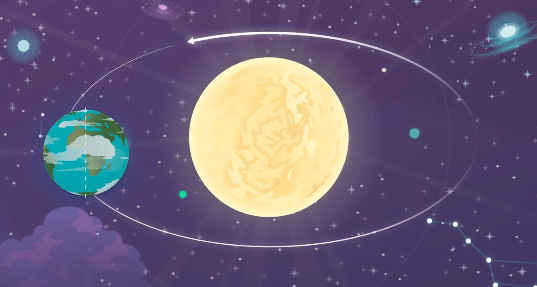
How long does it take for the Earth to make one full revolution around the Sun?
one day
one week
one month
one year
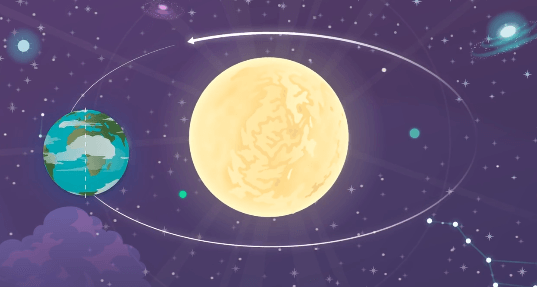
The movement of the Earth around the Sun is called its _____
revolution
rotation
precession
regression


The amount of time it takes Earth to rotate on its axis is
365 days
24 hrs
month
year


Because of the Earth's tilt, every part of the planet receive the exact same amount of direct sunlight
true
false
It is necessary to add a day to the calendar every four years because
the axis of Earth is tilted.
the gravitational pull of the Sun affects Earth's revolution.
the revolution of Earth is not exactly 365 days.
the axis of Earth’s orbit is parallel to its orbit
32. Which of the following is a direct result of Earth’s rotation?
Lunar eclipses
Winter weather
Daylight and night
seasons

What phase of the moon is shown?
waning gibbous
1st quarter
waxing crescent
Waxing gibbous


What is the phase of the Moon at position #5?
New Moon
Third Quarter Moon
First Quarter Moon
Full Moon


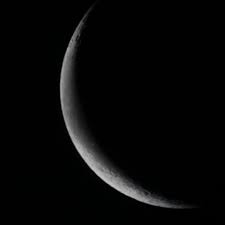
The Moon gets its light from the
It reflects the Earth's light
It reflects the other stars' light
It reflects the Sun's light
It makes its own light


