
 Worksheets
Unit 2: Cells Study Guide
Total questions: 65
Worksheet time: 3hrs 52mins
An organism that is made of a prokaryotic cell is called ....
mold
mushrooms
plants
bacteria
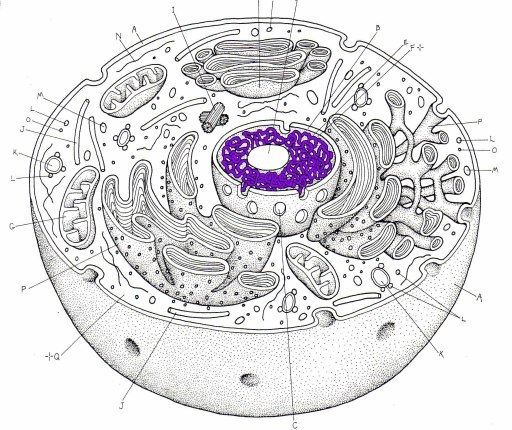
What kind of cell is in the diagram?
Eukaryotic
Prokaryotic

What type of cell is this?
Prokaryote
Eukaryote
Both Prokaryote and Eukaryote
Neither Prokaryote or Eukaryote
contains DNA
Prokaryote
Eukaryote
Both Prokaryote and Eukaryote
Neither Prokaryote or Eukaryote
always unicellular
Prokaryote
Eukaryote
Both Prokaryote and Eukaryote
Neither Prokaryote or Eukaryote
can be multicellular or unicellular
Prokaryote
Eukaryote
Both Prokaryote and Eukaryote
Neither Prokaryote or Eukaryote
how does bacteria reproduce?
binary fission
fussion
meiosis
mitosis
Why are bacteria prokaryotes?
because they lack DNA
because they are multicellular
because they lack a nucleus
because they cause disease
MOST bacteria are ______.
harmful
harmless


Which one of the following is NOT a benefit of bacteria?
To make food like cheese and yogurt
To decompose dead organisms
To infect unwanted plants like wheat
To help plant roots absorb nitrogen
How does bacteria help our bodies?
Digest and break down food
Fight off viruses
Produces oxygen for our bodies
Gets rid of carbon dioxide in our bodies
Bacteria are found in which of the following places?
In digestive system
In the air
In soil
In all of the above
What is the primary function of the eyepiece in a compound light microscope?
To focus light directly on the stage
To magnify the primary image produced by the eyepiece by 10x
To adjust the overall brightness and contrast of the specimen
To physically hold and secure the glass slide in place on the stage


Which scientist was credited with discovering that all animals are made of cells?
Hooke
Leeuwenhoek
Schleiden
Schwann
Virchow

Which scientist was credited with discovering that new cells are formed only from existing cells?
Hooke
Leeuwenhoek
Schleiden
Schwann
Virchow

Which scientist is credited with discovering that all plants are made of cell?
Hooke
Leeuwenhoek
Schleiden
Schwann
Virchow
The idea that living organisms are created from non-living matter is called?
Evolution
Cell Theory
Spontaneous Generation
Biogenesis
Who determined that yeast were responsible for fermentation and was credited with creating the process of pasteurization?
Louis Pasteur
Charles Darwin
Jean-Baptiste Lamarack
Francessco Redi
One of the first scientists to disprove spontaneous generation by showing that flies come from other flies and are not created from meat is?
Louis Pastuer
Francesso Redi
Charles Darwin
Zues
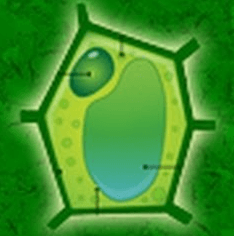

Controls what enters/leaves a cell
Cell membrane
Ribosomes
Cell Wall
Cytoplasm

Which organelle uses energy from sunlight to make sugar?
Mitochondria
Nucleus
Chloroplasts
Vacuoles

jello-like material, fills the space between cell organelles, is where many chemical reactions occur
Cytoplasm
Chlorophyll
Chloroplast
Cell Membrane

contains DNA, which has the information on how to make the cell's proteins control center for the cell. Sometimes called the brain of the cell.
Nucleus
Lysosome
Mitochondria
Endoplasmic reticulum

Break down molecules and dead organelles, works like a “garbage disposal”
Mitochondria
Vacuole
Lysosome
Ribosome

“Powerhouse” of the cell, breaks food down into energy for the cell
Vacuole
Chloroplast
Nucleus
Mitochondria

Stores food and water like a refrigerator for the cell
Chloroplast
Vacuole
Lysosome
Cytoplasm
Which organelle produces proteins?
Ribosomes
Lysosomes
Nucleus
Vacuoles
Which cell parts are not present in animal cells?
cell membrane & cytoplasm
nucleus & chloroplasts
cell wall & chloroplasts
ribosomes & mitochondria
Which part of the cell provides structural support?
Cell Membrane
Cell Wall
Cytoplasm
Nucleus


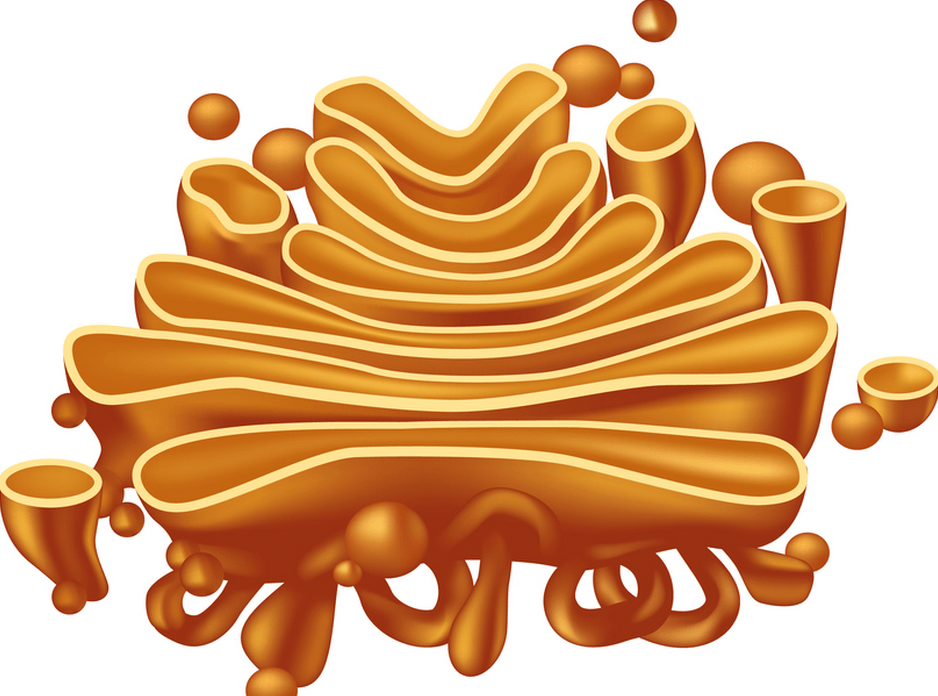
Which organelle is for packaging and shipping?
vacuole
ribosome
endoplasmic reticulum
golgi apparatus
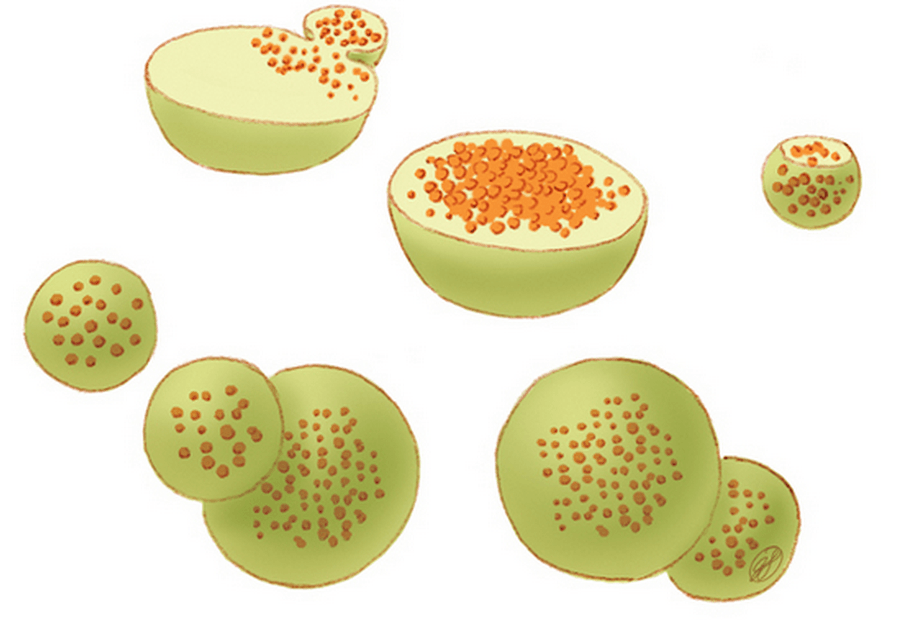
Which organelle is the trash collector, but also recycles parts of the cell?
mitochondria
lysosome
vacuole
ribosome

What is the blue organelle surrounding the nucleus?
mitochondria
lysosomes
golgi apparatus
endoplasmic reticulum

What is important to remember when using the microscope?
start with high objective, then adjust the arm until focused
start with small objective, use coarse then fine adjustment knob, move stage until focused
carry it by holding onto the stage
put the slide under the stage clips, move stage, then adjust the highest objective, bring into focus


Bacteria can be helpful and harmful. Which statement is not true?
Know all true facts for the test ANOTHER ONE TO SCREEN SHOT
they cause infectious diseases and used in medicine to prevent illnesses
bacteria can build resistance due to overuse of antibiotics and antibacterial soaps, and aids in digestion
harmful bacteria are the only type of bacteria, they cause swelling and infection leading to certain death
environmental recycling and clean up by breaking down trash and dead things- decomposers and found in foods, makes foods and oxygen production

Identify #11
Cell wall
Ribosomes
Cytoplasm
Cell membrane
Identify #1
Cell wall
Ribosomes
Cytoplasm
Cell membrane
Identify #2 (pointing to the white background)
Cell wall
Ribosomes
Cytoplasm
Cell membrane
Identify #4 (pointing to the black dots)
Cell wall
Ribosomes
Cytoplasm
Cell membrane

What is #9?
Golgi bodies
smooth endoplasmic reticulum
rough endoplasmic reticulum
Nucleus
Nucleolus
What something does.
process
system
function
role

