wayground logo

Free Printable Worksheets

NEW

Font size

S
M
L
XL
Worksheets

Diversity of life

Total questions: 51

Worksheet time: 40mins

Name
Class
Date
1.

Similar structures with different purposes found in different species are known as _____

a)

vestigial structures

b)

DNA

c)

homologous structures

d)

the fossil record

2.
The changes of species over time
a)
Embryonic 
b)
Natural selection 
c)
Mimicry 
d)
Evolution 
3.

The picture shows a/an ___________

a)

homologous structure

b)

vestigial structure

4.
The opossum and kangaroo both incubate their young in a pouch. This provides evidence that they---
a)
are descended from a common ancestor
b)
Have very similar skeletal structures
c)
belong to the same species
d)
must range great distances to eat
5.
If two organisms have similar traits of DNA they are probably
a)
share a common ancestor
b)
share a common environment
c)
share a common population
d)
speciation
6.
Which species’ DNA is most similar to the DNA of the toothed whale? 
a)
Hippopotamus 
b)
Baleen Whale
c)
Grazing Mammals
d)
Camels
7.

Studying the similarities in organisms development

a)

DNA

b)

Embryonic

c)

Vestigial

d)

Homologous

8.
The differences among a species, like different bird beaks, are called
a)
genes.
b)
variations.
c)
traits.
d)
theories.
9.
Behavioral changes of individuals of a species that allow for better survival. (Acquired traits)
a)
Variation
b)
Adaptation
c)
Behavior
d)
Environment
10.
Where the better adapted organisms survive to pass traits along to offspring.
a)
Evolution
b)
Natural Selection
c)
Extinction
d)
Artifical Selection
11.

All of the genetic information found in a population

a)

population

b)

genetic drift

c)

evolution

d)

gene pool

12.

A change in a gene, group of genes or chromosome that results in a change in the proteins

a)

Replication

b)

Mutations

c)

Translation

d)

Transcription

13.

A mutation is defined as:

a)

A change in the cell's structure

b)

Anything that changes in an embryo

c)

Any change in the physical features of a human

d)

A change in the DNA sequence

14.
Which would NOT be considered a fossil?
a)
bones buried deep in the earth
b)
footprints harened in  mud or rocks
c)
imprints left in rocks
d)
stories passed down from generation to generation
15.
When an organism completely dies out, it is called.....
a)
Adaption
b)
Extinction
c)
Fossilization
d)
Mutation
16.
In the graph shown, how many species of lizards seem to have beneficial adaptations?
a)
1
b)
2
c)
3
d)
4
17.
What do we call similar physical structures that indicate a link to a common ancestor?
a)
absolute dating
b)
adaptations
c)
gradualism
d)
homologous structures
18.
The preserved remains or physical evidence of an organism that lived in the past are called...
a)
evolutionary features
b)
fossils
c)
mutations
d)
variations
19.
What does this picture model?
a)
DNA structure of the horse
b)
Evolution of the horse
c)
Extinction of the horse
d)
Singular traite of the horse
20.
What is it called when an organism is best adapted to its environment, it will survive and reproduce more successfully than other organisms less adapted?
a)
cloning
b)
evolution of all species
c)
natural selection
d)
selective breeding
21.
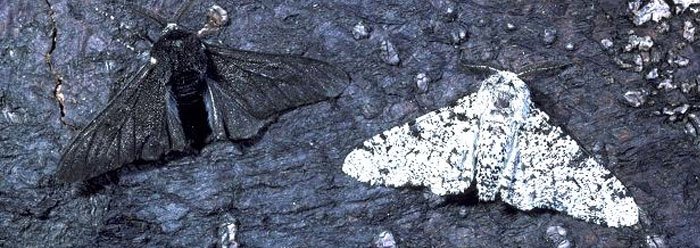
The trees these moths used to live on were white, but have been covered in soot from coal factories. Which moth will be more successful in this environment?
a)
Dark moth
b)
Light moth
c)
Both will be equally successful
d)
Neither will be successful
22.
Which best describes mutations?
a)
Always helpful
b)
Always harmful
c)
Can be helpful or harmful
d)
Always neutral
23.
The diagram shows fossils in different rock layers. Which of these statements about the age of these fossils is most likely correct?
a)
Fossil A and C are the same age
b)
Fossil B is older than fossil C
c)
Fossils A is older than fossil B
d)
Fossil D is older than fossil C
24.

Which of the following best describes an adaptation?

a)

A tight bundle of genetic material in the nucleus of cells

b)

A segment of DNA that codes for a trait

c)

A harmful trait that hurts an organism's chance of survival

d)

trait that allows an organism to be better suit for survival

25.

Which is the best example of an adaptation?

a)

Camouflage

b)

Chromosomes

c)

Albinism

d)

Freckles

26.

Which are the Best examples of homologous structures?

a)

Wisdom teeth and whale's hipbones

b)

A human appendix and tailbone

c)

An insect's wing and a bat's wing

d)

A whale's flipper and a bat's wing

27.

The fossil record documents all the following details of living or once living organisms except

a)

Behaviors of Species

b)

Diversity of Species

c)

Extinction of species

d)

Change of Species

28.
This type of fossil would include nests, eggs, feces, and footprints. 
a)
cast
b)
mold
c)
preserved remains
d)
trace
29.
When we pressed our dinosaur bodies into the clay...What type of "fossil" did it leave us with?
a)
preserved remains
b)
trace
c)
cast
d)
mold
30.
True or False...All living things that die become fossils.
a)
True
b)
False
31.
_______ are the preserved remains or traces of living things.
a)
bones
b)
fossils
c)
artifacts
d)
organic matter
32.
Fossils can provide evidence of how life has changed over time, how Earth's surface has changed, and clues about what past environments were like.
a)
True
b)
False
33.
A _______ is a hollow area in sediment in the shape of an organism or part of an organism.
a)
mold
b)
cast
c)
petrified fossil
d)
trace fossil
34.
A _______ is a solid copy of the shape of an organism.
a)
mold
b)
cast 
c)
petrified fossil
d)
trace fossil
35.
This is an example of a
a)
cast fossil
b)
mold fossil
c)
trace fossil
d)
carbon film
36.

In which kind of rock do we usually find a fossil?

a)

sedimentary rock

b)

metamorphic rock

c)

igneous rock

37.

If you know the age of a fossil, you know the relative age of the ________________ it was found inside.

a)

sticky tar

b)

rock

c)

amber

d)

ice

38.

If you know the age of a rock, you know the relative age of the _________________ that was found inside.

a)

sticky tar

b)

fossil

c)

amber

d)

ice

39.

Which of the following would be an example of absolute age?

a)

Fossil A is older than Fossil B

b)

Fossil A and Fossil B are the same age

c)

Fossil A is 10 million years old

40.
In what way can scientists determine the ages of fossils?
a)
relative dating
b)
radioactive dating
c)
law of superposition
d)
All of the above
41.
Which layer formed first?
a)
Rock Layer W
b)
Rock Layer X
c)
Rock Layer Y
d)
Rock Layer Z
42.

What are the oldest fossils and why?

a)

B, C- because they are closest to the top

b)

A, B- because they are closest to the bottom

c)

They are all the same age- because they are all found on layer 2

d)

A, B- because they are found closest to the top

43.
According to the law of superposition, which layer is the youngest?
a)
A
b)
B
c)
C
44.

Which of the following can be learned by using the fossil record?

a)

When organisms changed or evolved

b)

when organisms appeared on Earth

c)

when organisms became extinct

d)

All the above

45.
By determining the age of fossils, scientists can reconstruct the history of life on Earth
a)
True
b)
False
46.

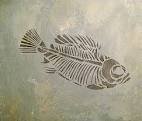
If scientists found this fossil in a desert, what could they infer?

a)

what fish are like today

b)

that this fish lacked oxygen

c)

that water once covered the area where this fossil was found

47.
How do fossils provide evidence that evolution has happened on Earth?
a)
Fossils show how the sizes of certain animals has changed drastically over millions of years
b)
Fossils show that some species have gone extinct
c)
Fossils show how life forms present today are different than those from the past
d)
Different sedimentary rock layers provide evidence for how the environment has changed over time
48.

Fossil A is an ancient mollusk, an organism that needs water to survive. Why do you think that the mollusk went extinct in this particular sample of the fossil record?

a)

When the ocean levels rose in layer 4, the mollusk went extinct because they cannot live in water

b)

For some reason, the ocean disappeared causing the mollusk to thrive

c)

For some reason, the ocean disappeared causing the mollusk to go extinct

d)

When the ocean level rose in layer 4, the mollusk thrived because they need water

49.

When did fossil A become extinct?

a)

Layer 1

b)

Layer 2

c)

Layer 3

d)

Layer 4

50.

Organisms D and C clearly lived in an aquatic (water) environment. Organism A does not look like it lived in the water. What is the most likely explanation for this?

a)

The fossil in layer A died on land and was carried to the water

b)

The fossils in layer C and D did not live in the same location as the fossil in layer A

c)

The environment changed over a long period of time. It used to be under water, but is not anymore

51.
The millions of fossils that scientists have collected are called
a)
The Geologic Time Scale
b)
The Origin of Species
c)
The Fossil Record
d)
A really neat fossil collection