
 Worksheets
Div 2 Test Review
Total questions: 63
Worksheet time: 1hrs 3mins
What is the difference between homogenous and heterogenous mixtures?
Homogeneous looks the same throughout with an even texture. Heterogenous have different parts, texture is uneven.
Homogeneous mixtures often have a thicker texture than heterogenous mixtures.
Heterogenous mixtures need a specific amount of other ingredients whereas homogenous is messier.
What is the difference between a solute and solvent?
A solute is the substance that gets dissolved and solvent is the substance that another substance dissolves in.
A solvent is the substance that dissolves and solute is the substance another substance dissolves in.
None of the above.
Which one is an example of a mechanical mixture?
Peanut Butter
Coke
Salad
Which heterogenous mixtures means "a mixture where different parts separate out or settle over time"?
Solution
Mechanical
Suspension
What are suspensions?
When two substances separate/settle
When two substances mix into a solid
When two substances create a gas.
What are emulsions?
When a suspension has 3 layers of separated substances.
When a substance is emulsified to become a mechanical. mixture.
When a suspensions. is treated by an emulsifier so the substances do not separate.
What are alloys a mixture of?
Food
Mechanical Mixture
Metals
None of the above
Which technique is best for separating sugar in water?
Filtering
Magnetism
Evaporation
An alloy must contain __________
gas
metals
water
heat
A smoothie is an example of a __________
Mechanical mixture
Heterogenous mixture
Suspension
Emulsion
If you put oil in water, what will happen?
Nothing
The oil will mix with the water.
The oil separates from the water to the top.
How can you separate oil spills from water?
Skimming
Sorbent materials
Burn-off
All of the above
How do you turn sap into maple syrup?
Evaporate the water from the sap
Put sap through a sieve to separate the water
The sap is already maple syrup
How do you refine crude oil?
Skimming
Fractional Distillaion
Sorbent materials
Lemon plus water equals lemonade.
True
False
Salt dissolves in warm water faster than in cold water.
True
False
Which is an example of a homogenous mixture?
Skimming
A mixture where other parts are visisble.
A solute dissolved into a solvent.
If you boil dirty water, what will happen?
The water will explode.
The water will become clean.
The water will set on fire.
A mixture is a substance that is made of one type of matter.
True
False
How many types of subatomic particles do atoms have?
3
4
6
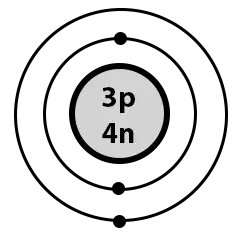
What is this element?
Carbon
Hydrogen
Lithium
Elements are always positively charged.
True
False
Protons have a positive charge.
True
False
Oxygen atoms always have 8 protons.
True
False
Carbon atoms always have the same number of neutrons.
True
False
Electrons are located in the nucleus.
True
False
What is true about protons?
The amount doesn't change in one element
They have no electrical charge
They have a negative electrical charge
Which is true about neutrons?
They have a positive electrical charge
They have no electrical charge
They are related to how reactive an element is
What is a molecule?
Two or more atoms together
Exactly two atoms together
Three atoms together
1 atom
Which one of these is a compound?
Rb
Cl
H2O
None of the above
Which one of these is NOT a compound?
H2SO4
H2O
Rb
All of the above
What is a compound?
Two or more different atoms bonded
One or more of the same atoms bonded
What is the difference between an element and a compound?
Elements have the same type of atom
No difference
Elements have different types of atoms
Carbon dioxide is a compound
True
False
What are elements made of?
One type of atom
Different types of atoms bonded together
Elements only have one atom
True
False
How many elements are there (currently known)?
118
119
Infinite
None of the above
Water is a compound
True
False
What do metals look like?
Shiny
Dull
Smooth
Wrinkly
Non-metals are shiny.
True
False
Metalloids are ________
Good conductors
Semi-conductors
Insulators
Metals are good conductors of heat and electricity.
True
False
Are most metals malleable?
Yes
No
Non-metals are __________
Semi-conductors
Good conductors
Insulators
Which is true about metals?
They are solid at room temperature
They can be liquids or gas at room temperature
Usually solid at room temperature
Solid non-metals are malleable.
True
False
Metals can be found in: (pick all that apply)
Copper pennies
Grasses
Silicone
Computers
Which is true of metalloids?
They are solid at room temperature
They can be liquids or gases at room temperature.
They are usually solid at room temperature.
Which element has the the atomic number 1?
Hydrogen
Helium
Oxygen
Lithium
Which element group has notoriously nonreactive elements?
Halogens
Noble Gases
Lanthanides
Alkali
Which element group contains the elements Uranium, Neptunium, and Plutonium?
Actinides
Lanthanides
Alkaline
Halogens
What is the atomic number for Gold?
69
42
37
79
Why was the periodic table invented?
Accident
Categorize
Funsies
Baking
What is the periodic table?
A table that organizes all of the known elements by protons
Your normal table
An accident
A table that organizes all known elements by reactivity, measure by pH
Which is NOT a periodic table group?
Alkali Metals
Alkaline Earth Metals
Gaseous
Halogens
Which of these is a gas at standard temperature and pressure?
Hydrogen
Mercury
Silicone
Barium
Which of these is a liquid at standard temperature and pressure?
Chlorine
Iodine
Bromine
Radium
Which of these are NOT an element?
Neon
Water
Silver
Hyrdogen
You can observe physical properties without changing a substance.
True
False
Colour change is an indicator of a chemical change.
True
False
True, if the colour wasn't added during the experiment.
Chemical properties can only be observed or measured when atoms of matter rearrange.
True
False
Is flammability an example of a chemical or physical property?
Chemical
Physical
Which is NOT an example of a physical property?
density
boiling point
reactivity
colour

