
 Worksheets
Atomic Structure Periodic Table Review
Total questions: 55
Worksheet time: 1hrs 23mins
How is the periodic table of elements arranged?
(a)
proton
lives in the nucleus & positively charge
electron
lives in the cloud & negatively charge
neutron
lives in the nucleus & no charge
valence electron
lives in the last ring & negatively charge
nucleus
where protons & neutrons are found and largest mass
Label the correct subatomic particles
Label the metals, nonmetals and metalloids
metalloids
characteristics of both metals and nonmetals
metals
generally shiny, malleable, ductile, and good conductors of heat and electricity
nonmetals
generally dull, brittle, and poor conductors of heat and electricity
groups/family
vertical columns on the Periodic Table that contain elements with similar properties
period
the horizontal rows of elements on the Periodic Table
Valence electrons live in the (a) ring of the atomic structure. It tells us how (b) the elements are. Group 1 are the (c) whereas group 18 are the (d)

This change is a
chemical reaction
physical change
musical change
Ice Ice baby
The ability of an atom to attract electrons in a bond is called
Ionization energy
electronegativity
atomic radius
proton affinity
Which of the following will have a lower ionization energy than Scandium (Sc)?
Helium (He)
Titanium (Ti)
Calcium (Ca)
Magnesium (Mg)
As you move left to right across a period, ionization energy
increases
decreases
says the same
Which of the following will have similar properties?
O, S, Se
O, F, Ne
N, Ne, Na
H, K, P
lithium
2 energy levels
helium
1 energy level
aluminum
3 energy levels
bromine
4 energy levels
strontium
5 energy levels
Put in order from biggest to smallest (decreasing size)
Calcium
Iron
Zinc
Bromine
Krypton
Copper is a common metal. Which of the following properties does this metal most likely have?
High conductivity, high malleability, and low luster
Low conductivity, low malleability, and low luster
High conductivity, high malleability, and high luster
Low conductivity, high malleability, and high luster

How many protons does krypton have?
84
36
48
8

How many neutrons does lithium have?
3
4
6
7
Which particles are found in the nucleus of an atom?
protons only
neutrons only
protons & electrons
protons & neutrons
How do you find the number of neutrons in an atom?
It's the same as the atomic #
It's the same as the mass number
Subtract the atomic # from the mass number
Add the mass number and the atomic #
The mass number is the same as......
the number of protons
the number of electrons
the number of neutrons
the number of protons plus neutrons
If we are talking about the isotope carbon-14, the mass number of this isotope is.....
12
13
14
6

This picture shows different isotopes of hydrogen written in isotope notation. How many protons does tritium have?
1
2
3

Which action would make this Nitrogen-15?
Add a proton
Add a neutron
Add an electron
Add a proton and neutron
What is the structure of a neutral Phosphorus-32
15 Protons
15 Neutrons
17 Electrons
17 Protons
15 Neutrons
15 Electrons
15 Protons
17 Neutrons
17 Electrons
15 Protons
17 Neutrons
15 Electrons
4 amu
2 protons
2 neutrons
2 electrons
3 amu
2 protons
1 neutron
2 electrons
2 amu
2 protons
0 neutrons
1 electron
Match the Following
Element
A substance that cannot be broken down into simpler substances by chemical means.
Atom
The smallest unit of an element that keeps the element’s chemical properties.
Nucleus
The dense center of an atom containing protons and neutrons.
Proton
Positively charged particles found in the nucleus of an atom.
Neutron
Particles with a neutral charge found in the nucleus of an atom.
Using a periodic table (you can use the one in the textbook) order the following elements by mass number, least to greatest.
Hydrogen
Boron
Gallium
Thallium
Radon
Using a periodic table (you can use the one in the textbook) order the following elements by # of valence electrons, least to greatest.
Potassium
Barium
Carbon
Oxygen
Neon
Using a periodic table (you can use the one in the textbook) order the following elements by # of Electron Shells, least to greatest.
Sodium
Calcium
Strontium
Barium
Dubnium

How many electron shells does the pictured atom have?
1
2
3
4

How many valence electrons does the pictured atom have?
20
3
2
4


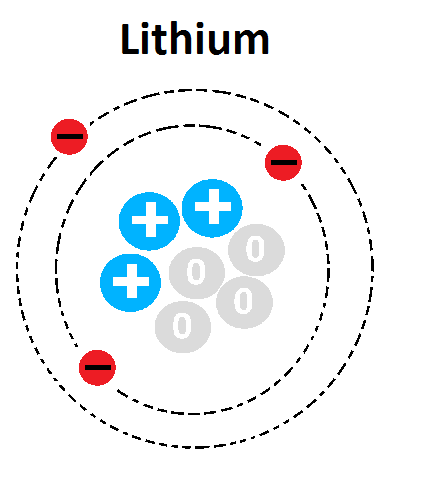

How many electrons can fit on the 1st energy level (orbital) for any Bohr Model?
2
6
8
10

Which element does this Bohr model represent?
Aluminum
Silicon
Magnesium
Cobalt
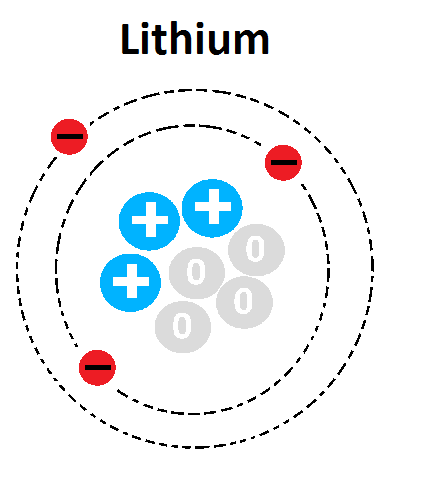
What is the atomic number of this atom?
1
3
4
7
The innermost energy level has a maximum of how many electrons?
1
2
6
8

Name this element.
Neon
Magnesium
Sodium
Manganese
Match the following

potassium

lithium

magnesium

titanium

sodium
Match the following
Alkali Metals
1 valence electron and very reactive
Alkaline Earth Metals
2 valence electrons and very reactive
Halogens
7 valence electrons & highly reactive
Noble Gases
8 valence and completely unreactive

