
 Worksheets
Extra Bell Ringer Questions- Study Island
Total questions: 126
Worksheet time: 1hrs 3mins
Name
Class
Date
1.
Elliot wants to compare the density of four objects to the density of water. Elliot knows that if an object sinks in water, it has a higher density than water and that if an object floats in water, it has a lower density than water.
Which of the following is a scientific investigation that Elliot could conduct to test the densities of the objects?
a)
Elliot could put the four objects in water to see if they sink or float.
b)
Elliot could ask his teacher which object has the greatest density.
c)
Elliot could look up the densities of the objects in a textbook.
d)
Elliot could put the objects in water to see how much water they absorb.
2.

Keith hypothesizes that if he plants a rose bush in the sun, it will grow twice as fast as a rose bush planted in the shade. Keith makes the following plan for his experiment:
What is wrong with this experimental design?
a)
He should not use rose bushes that are the same age.
b)
There is more than one variable.
c)
He should measure the plants growth more often.
d)
There is nothing wrong with the design.
3.
Which of the following activities are part of scientific investigations?
a)
communicating
b)
observing
c)
comparing and contrasting
d)
all of these
4.
Janice wants to grow flowers in her backyard. She has four types of dirt that she could use, but she is unsure of which type would allow the flowers to grow the best. In order to figure this out, she sets up an investigation. Janice puts each type of soil in a different pot and plants a flower in each pot.
What scientific question should Janice ask from her experiment?
a)
Which soil looks the best?
b)
Which soil type is preferred by most people?
c)
Which soil type allows the flower to grow the most?
d)
Which soil is the oldest?
5.
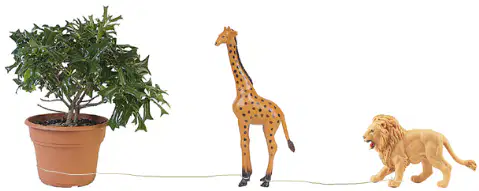
Deedee has recently finished learning about ecosystems of the African plains in her science class. She has since built a model in which a plant is tied by a string to a toy giraffe, and the toy giraffe is tied to a toy lion.
What is this model most likely meant to represent?
a)
extinction
b)
a food chain
c)
organ systems
d)
parts of a cell
6.
George designed an experiment to determine the number of calories consumed daily in the average American diet. The procedure he used for his experiment is shown below.
1. Find 100 volunteers to record everything they eat for a week
2. Ask volunteers what their favorite dessert is
3. Collect volunteers' records
4. For each volunteer, calculate the total number of calories taken in during the week
5. Divide each volunteer's total calorie count by seven and then average the 100 participants' daily calorie consumption
Which step in George's experimental procedure is unnecessary?
a)
step 2
b)
step 3
c)
step 1
d)
step 4
7.
Which of the following statements is a valid hypothesis?
a)
Talc is softer than quartz.
b)
A cat purrs when it is happy.
c)
Ghosts do not exist.
d)
What causes the tides?
8.
Evan decides to test his prediction that seeds grow better in the dark. He has gathered seeds and put them on damp paper towels.
Which of the following would be the best way for Evan to test his prediction?
a)
put one paper towel with seeds in a cold closet and another in a warm closet
b)
put one paper towel with seeds in a sunny place and one in a dark closet
c)
put one paper towel with seeds in a sunny window
d)
put one paper towel with seeds in a cold, dark closet
9.
Nicole is doing a science project. Her hypothesis is below.
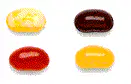
The plants in the sun will sprout before the plants in the closet.
Which question did she most likely ask to begin her project?
a)
What kinds of seeds sprout the fastest?
b)
Which kind of soil helps seeds sprout the fastest?
c)
What is the effect of sunlight on how long it takes seeds to sprout?
d)
What is the effect of water on how long it takes seeds to sprout?
10.
Linda is curious about how snowflakes form. Which of the following sentences is the best hypothesis for Linda to test?
a)
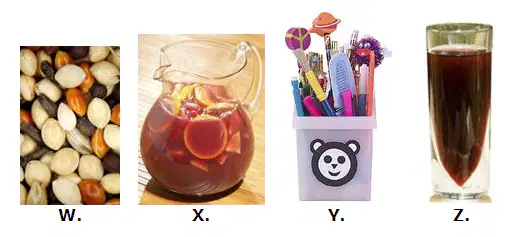
Snowflakes are different from rain and sleet.
b)
Why do snowflakes form?
c)
Something causes snowflakes to form inside a cloud.
d)
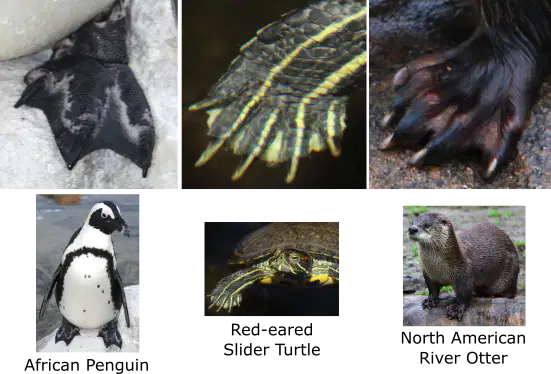
Snowflakes form when water freezes slowly.
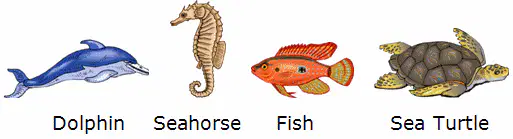
11.

Laura performed an experiment to determine the effect of nitrogen-rich fertilizer on plants. The procedure she used in her experiment is shown below.
What is wrong with Laura's experiment?
a)
She did not use a second plant as a control.
b)
She did not measure the plant's growth daily.
c)
She did not set a time limit on how long she was going to continue fertilizing the plant.
d)
She did not measure how much fertilizer she was giving the plant.
12.
To show that the results from an experiment are valid, a scientist
a)
must convince 20 other scientists to do the experiment.
b)
must show that the experiment produces different results each time.
c)
must repeat the experiment multiple times and get the same results.
d)
must claim that no errors were made during the experiment.
13.
Nancy wants to find out how the steepness of a hill's slope affects the amount of soil that erodes from it. She has soil, a long pan, and a pile of books with which to build a model hillside. She has a watering can to model rainfall.
In her experiment, which of the following factors should Nancy make sure that she does not change?
a)
the time of day that she conducts the experiment
b)
the amount of water she pours on the model
c)
the amount of light she uses when conducting the experiment
d)
the steepness of the slope she models
14.
Graham is building a model of a flower for a science project. He wants to use materials that look and feel similar to a real flower. What would be a good choice for making the flower's petals?
a)
metal
b)
silk
c)
wood
d)
cardboard
15.
Mike has several pets, including a snake, a rabbit, and a turtle. While he was playing with his pets, he noticed that each one moved differently and with a different speed.
Mike decided to do a scientific experiment to learn more about the movement of his pets.
Which of the following would be a valid scientific question for Mike to ask about the way his pets move?
a)
Which pet can move the fastest?
b)
What does each pet like to eat?
c)
Which pet enjoys moving the most?
d)
Which pet is largest?
16.
Which of the following statements would be the best hypothesis for an investigation studying weather systems?
a)
Why do plants need water to grow?
b)
How do birds know how to fly south in the winter?
c)
If the air pressure rises, then it is more likely to rain.
d)
Crickets chirp more often when it rains.
17.
Which of the following questions could best be explored using a scientific investigation?
a)
How many lady bugs have ever lived?
b)
How many pebbles are at the bottom of a river?
c)
Why are there insects on Earth?
d)
How many seeds are in an apple?
18.
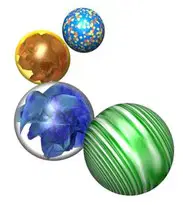
Carla has four marbles that are different sizes. She wants to know how size affects the speed at which the marbles roll.
How could she do a scientific investigation to test this?
a)
Carla could roll a marble, a block, a ring, and a coin down a slope to see which object rolls the fastest.
b)
Carla could roll the marbles down different sized slopes to see which angle makes the marbles roll the fastest.
c)
Carla could roll the different sized marbles down a slope to see whether the small or large marbles roll faster.
d)
Carla could look up whether small or large objects roll fastest in a textbook.
19.
Vicky wanted to investigate water evaporation. She placed 50 mL of distilled water in three identical glass jars. She left one jar in the sunlight, one jar in the dark, and one jar in a shady area. After four hours, she measured how much water was still in each jar.
Which of the following variables was held constant in the experiment?
a)
amount of water in jars at the end of the investigation
b)
air temperature
c)
amount of water placed in jars
d)
light exposure
20.
Valerie hypothesizes that frogs lay more eggs in warm water than in cold water. When Valerie designs her experiment, what should be the only variable that changes?
a)
time of year
b)
frog species
c)
water flow rates
d)
water temperature
21.

Kevin experimented to find the effect of exercise on his body temperature. The steps of his experiment are shown below.
Which step in Kevin's experiment was NOT needed?
a)
3
b)
2
c)
4
d)
1
22.

All of the following students are performing laboratory experiments. Which student has the safest laboratory behavior?
a)
Susan
b)
Simon
c)
Jose
d)
Lucy
23.
Nikki is doing chemistry experiments in science class. She is wearing an apron, safety goggles, and sandals. Her hair is in a ponytail. What should she change about her appearance in order to be safe while doing her experiment?
a)
Take the apron off.
b)
Take the safety goggles off.
c)
Take the hair band out of her hair and let her hair hang loose.
d)
Wear closed-toed shoes.
24.
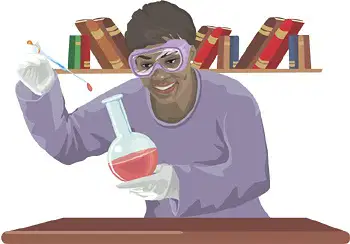
Why is it important to wear safety goggles when pouring an unknown liquid?
a)
Safety goggles make you look like you're a real scientist.
b)
Safety goggles protect your eyes from liquids that could splash up and cause serious damage.
c)
Safety goggles make it easier to see what you are doing, which helps to avoid making mistakes during the experiment.
d)
Safety goggles protect your body from getting burned during an experiment.
25.
Which of the following should you always do when working with chemicals?
a)
taste the chemical
b)
wear safety goggles
c)
keep the chemical hot
d)
smell the chemical
26.
Why is it important to know all of the safety rules you need to follow before you start an experiment in the lab?
a)
Your teacher may have a pop quiz on the safety rules, and you need to be prepared.
b)
If you don't know the safety rules you need to follow, you are putting yourself as well as students around you in danger.
c)
You will be able to complete the experiment faster than your classmates if you know all of the safety rules.
d)
If you don't know the safety rules you need to follow, you will not know how to perform the experiment.
27.
Students were working with a glass beaker during a science activity. The bottom cracked but did not break completely. What should the students do?
a)
Put the beaker in the broken-glass bin and get another one.
b)
Trade beakers with another group that is not using its beaker.
c)
Continue with the experiment, using the beaker as it is.
d)
Tape the cracked area and continue using the beaker as it is.
28.
Mr. Wesley has had to remind his class many times to wear their goggles and to follow the safety rules. What could the class do to help themselves to remember to be safe in science class?
a)
always have science class right after lunch
b)
wait until someone gets hurt
c)
make safety posters to hang in the classroom
d)
wear their goggles all day long
29.
What safety rules do you need to follow when handling an unknown substance?
a)
Do not put the substance in your eyes or on your bare skin.
b)
Do not smell the substance.
c)
Do not taste the substance.
d)
all of these
30.
Heather is using a lamp during her lab. She notices that the lamp’s cord is damaged. What should Heather do?
a)
Take the damaged lamp to her teacher.
b)
Turn the lamp on to test it.
c)
Wrap a piece of tape around the cord.
d)
Use the lamp. It is still safe.
31.
What is the most likely reason that science investigations often say to use a small amount of chemicals?
a)
It is easier to see the results with smaller samples.
b)
The investigation will not work with larger samples.
c)
They want schools to buy more chemicals.
d)
Conserving chemicals produces less waste.
32.
Which items used by a science class could be reused or recycled instead of thrown away in the trash?
a)
foam cups
b)
plastic cups
c)
empty soda cans
d)
all of these
33.
A science class is doing a laboratory experiment with liquids.
What safety equipment will keep their hands safe from spills?
a)
an apron
b)
gloves
c)
goggles
d)
all of these
34.
Why is it important not to smell unknown chemicals that are being used during an experiment?
a)
The chemical may smell really bad.
b)
The fumes may be harmful to your health.
c)
If the chemical smells good, you might be tempted to taste the chemical.
d)
Smelling the chemical could cause you to make a mistake during your experiment.
35.
Gina is doing an experiment with mice. Each day, she picks the mice up and checks them to make sure they are healthy. What should she do after she checks the mice?
a)
put gloves on
b)
feed the mice
c)
wash her hands
d)
wash her face
36.
A student accidentally broke a glass light bulb in science class and the glass made a small cut on his finger. What safety equipment should he ask the teacher to help him with?
a)
lab apron
b)
gloves
c)
eye wash
d)
first aid kit
37.
Greg's teacher tells the class that they will be doing an experiment in the laboratory today, and that the experiment will involve working with several chemicals.
What should Greg do before beginning the experiment?
a)
make sure the lab area is clean
b)
listen to his teacher's instructions
c)
put on his safety goggles
d)
all of these
38.
Once a laboratory experiment has been finished, it is important to
a)
leave the lab area immediately without cleaning.
b)
clean up the lab area and wash your hands.
c)
play around with the laboratory equipment.
d)
taste the product of the laboratory experiment.
39.
Janie is doing a laboratory experiment. She accidentally spills a chemical in the lab area.
What should Janie do after she spills the chemical?
a)
tell the teacher about the spill
b)
clean up the spill herself
c)
leave the spill and do not tell anyone
d)
put a paper towel over the spill
40.
Adam is mixing chemicals in the science lab when one of the chemicals accidentally gets in his right eye. What should Adam do?
a)
Show his friend what happened.
b)
Look directly into the sun.
c)
Put his safety goggles on.
d)
Flush his eyes with running water for at least 15 minutes.
41.
When dealing with unknown chemicals, why is it important to read the label on the container?
a)
The label will tell you the nutritional value in one serving of the chemical.
b)
The label will tell you the possible dangers of using the chemical and the safety rules you should follow when handling the chemical.
c)
The label will tell you how the chemical tastes so that you can try some during the lab.
d)
The label will tell you how to perform experiments that are not in your lab manual.
42.
What safety precaution should you take when handling insects that are unknown to you?
a)
Wash your hands after touching the insect.
b)
Use gloves or tongs to handle the insects.
c)
Wash your hands before touching the insect.
d)
Always hold the insect with two hands so you don't drop it.
43.
Why is it important not to taste unknown substances that are being used during an experiment?
a)
The substance may be valuable, and tasting it would waste the valuable substance.
b)
The substance could have a bad taste.
c)
The substance may be poisonous.
d)
You could accidentally contaminate the substance and mess up the results of the experiment.
44.
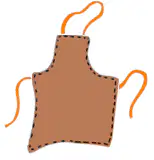
Glenda's teacher has passed out non-absorbent aprons for everyone to wear during a science experiment. What could Glenda predict will happen during science class today?
a)
The experiment will use electricity or batteries.
b)
The experiment will be easy.
c)
The experiment will use fire.
d)
The experiment will use chemicals or hot water.
45.
A _______ is a type of lab equipment used to heat substances. It has a flat platform where a beaker containing a liquid can be placed. When it is turned on, the platform heats up, causing the beaker and liquid to heat up.
a)
hot plate
b)
microscope
c)
barometer
d)
thermometer
46.
Which of the following pieces of equipment should you use to keep your eyes safe during an experiment?
a)
safety cap
b)
safety goggles
c)
contact lenses
d)
lab coat
47.
Select the choice that best completes the following sentence:
A compass uses the property of ________ to indicate direction.
a)
solar energy
b)
electricity
c)
radiation
d)
magnetism
48.
Eric wants to know how many times a human blinks in 30 seconds (on average). To help answer his question, he sets up an experiment in which he will count the number of times his friend blinks in 30 seconds. He will repeat this experiment for several of his classmates.
Which of the following should Eric use to accurately measure time in this experiment?
a)
the hour hand of a clock
b)
a calculator
c)
the minute hand of a clock
d)
the second hand of a clock
49.
Mike is doing a laboratory experiment. The experiment's materials list says that Mike needs to have a balance. What will Mike most likely need to measure during the experiment?
a)
the temperature of something
b)
the mass of something
c)
the volume of something
d)
the length of something
50.
Which of the following pieces of equipment can be used to add, subtract, multiply, and divide numbers quickly?
a)
balance
b)
compass
c)
calculator
d)
scale
51.
Mary loves lizards. She wants to see how lizards live in nature, but she doesn't live near any lizard habitats.
What tool could she use to see how lizards live?
a)
aquarium
b)
terrarium
c)
cage
d)
kennel
52.
Evan needs to find the density of a rock. In order to do this, he needs to use
a)
a balance and a thermometer.
b)
a thermometer and a ruler.
c)
a ruler and a graduated cylinder.
d)
a graduated cylinder and a balance.
53.
Jasmine wants to capture some images of the kinds of butterflies that come to feed on the flowers outside her window.
Which would be the best tool for Jasmine to use?
a)
camera
b)
voice recorder
c)
balance
d)
telescope
54.
Diana is performing an experiment in which she must separate a mixture. The mixture contains sand and iron filings. Which of the following tools should Diana use to help her separate the mixture?
a)
graduated cylinder
b)
balance
c)
funnel
d)
magnet
55.
Marissa needs to pour water from a wide beaker into a narrow graduated cylinder. What type of tool can she use to help her pour the water without spilling?
a)
a hot plate
b)
a test tube
c)
a magnet
d)
a funnel
56.
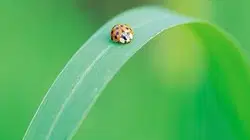
Steven's class went outside to study insects. Steven caught a ladybug on a piece of grass.
Which of the following tools would Steven use to see the ladybug in more detail while he is still outside with his class?
a)
binoculars
b)
hand lens
c)
microscope
d)
telescope
57.
Leslie wants to measure the air temperature every day for a month. Which of the following tools should she use to do this?
a)
meter stick
b)
thermometer
c)
balance
d)
graduated cylinder
58.

Martina is using a ruler to measure the length of a leaf in centimeters. To measure the leaf most accurately, where should she place the end of the leaf?
a)
position W
b)
position Y
c)
position Z
d)
position X
59.
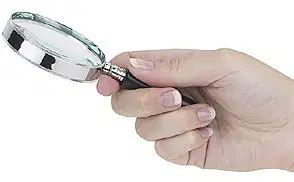
Which of the following is true about the tool shown in the picture above?
a)
The tool is called a hand lens and is used to magnify objects so they are easy to see.
b)
The tool is called a microscope and is used to magnify objects so they are easy to see.
c)
The tool is called a microscope and is used to make far-away objects easier to see.
d)
The tool is called a telescope and is used to make far-away objects easier to see.
60.
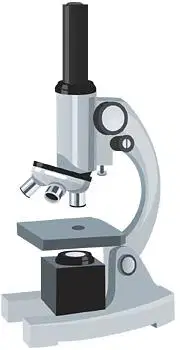
What is the function of the piece of lab equipment shown in the picture?
a)
to measure temperature
b)
to magnify small objects
c)
to measure length
d)
to measure volume of a liquid
61.
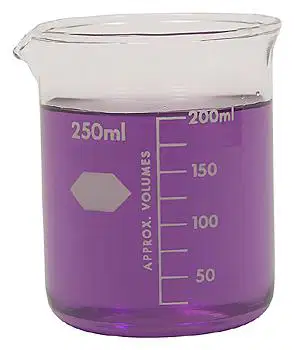
What is the volume of liquid in the beaker?
a)
0 mL
b)
200 L
c)
150 mL
d)
200 mL
62.
When should a measuring tape be used instead of a ruler?
a)
when measuring longer distances
b)
when measuring heavier objects
c)
when measuring shorter distances
d)
when measuring speed
63.
Which of the following can be used to analyze and interpret numerical data?
a)
dictionaries
b)
binoculars
c)
calculators
d)
microscopes
64.

Kyle wanted to make some extra money over the summer. He decided that, to make the most money possible, he needed to gather scientific evidence about which tasks would pay the most.
To obtain the evidence he needed, Kyle polled his neighbors about how much they were willing to pay him for the different tasks. Then he made the graph shown.
Which task will earn Kyle the most money per hour?
a)
painting fences
b)
mowing lawns
c)
walking dogs
d)
washing cars
65.

Devin designed and tested a prototype for sorting gumballs by size. The data he collected is shown in the table.
Which of the following should Devin use to report his test results to the class?
a)
stem and leaf plot
b)
line graph
c)
Venn diagram
d)
circle graph
66.

A charity group wants to give away insect-resistant corn seeds to farmers in poor countries. One of the main insects that harms corn crops in these countries is the corn rootworm.
To decide which type of corn to give away, the charity group tests 4 types of corn to see which one the corn rootworms like least.
Some of the farmers receiving the seeds want to grow the corn with the biggest ears because they think this corn will produce the most food per acre. Other farmers think that the tallest plants will produce the most food per acre.
Based on the group's research, which type of corn resists the corn rootworm best and therefore produces the most corn per acre?
a)
Sample D
b)
Sample B
c)
Sample C
d)
Sample A
67.

Rita is a market researcher. Her company has just made a new fruit bar and is trying to decide what price to put on it. Rita surveys 50 people and asks them if they would buy the fruit bar at a certain price. The results of Rita's survey are in the table below.
At which price were the fewest fruit bars sold?
a)
$2.25
b)
$2.00
c)
$1.25
d)
$2.50
68.
Look at the table above, which shows the average number of plant species per square kilometer at different latitudes. What generalizations can you make from the data on this table?
a)
Plants thrive at high latitudes.
b)
The amount of plant diversity increases as latitude decreases.
c)
The amount of plant diversity decreases as latitude decreases.
d)
Longitude has no effect on plant growth.
69.

If the trend in the above table continues in the future, what do you think will happen?
a)
The number of newspaper subscribers will exceed the number of cable TV subscribers.
b)
The number of newspaper subscribers and cable TV subscribers will decrease at the same rate.
c)
The number of cable TV subscribers will exceed the number of newspaper subscribers.
d)
The number of newspaper subscribers and cable TV subscribers will increase at the same rate.
70.
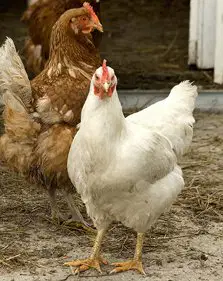
A farmer has a flock of chickens, like the ones shown below. The farmer is trying to get his chickens to lay more eggs, so he decides to conduct an experiment. Before he begins the experiment, the farmer predicts that the type of feed the chickens eat determines the number of eggs the chickens lay.
To conduct the experiment, the farmer gives the same group of chickens a different type of feed each week. The chickens were all the same type. He does not limit the amount of food each chicken is allowed to eat.
What data must the farmer collect to test his prediction?
a)
the amount of food given and the number of eggs laid
b)
the type of food given and the number of eggs laid
c)
the size of the eggs
d)
the type of chickens and the type of food given
71.
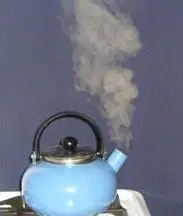
Eri noticed that when she boiled water in the teakettle, sometimes the water boiled quickly, and other times it took a long time.
Eri wanted to find out why this happened. For her experiment, she decided to keep the burner the same temperature for every trial, and she used the same kettle for each trial.
What data should she collect during her experiment?
a)
the amount of water in the kettle and the color of the kettle
b)
the time it takes the water to boil and how the water tastes
c)
the amount of water in the kettle and the time it takes for the water to boil
d)
the temperature of the steam as it leaves the kettle
72.
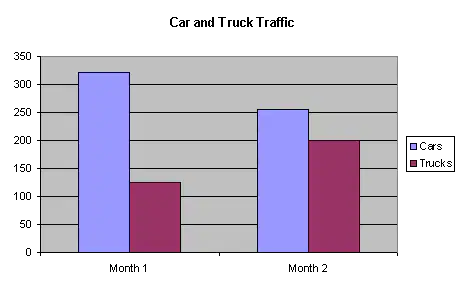
Billy kept track of the traffic that passed in front of his house for two months. The graph below shows the results of his observations.
Which of the following can be concluded from the information in the graph?
a)
Some of the people who drove trucks in month 1 drove cars in month 2.
b)
More trucks passed by the house in month 2 than in month 1.
c)
More cars passed by the house in month 2 than in month 1.
d)
Trucks were less popular in Billy's town in month 2 than in month 1.
73.

Nan performed an experiment to find which of 11 different kinds of sunflower seeds would sprout best in her garden. She divided the garden into 11 parts and planted 60 of one kind of seed in each part. Nan's results are shown in the table below.
Which kind of sunflower seeds sprouted the worst in Nan's garden?
a)
Mammoth
b)
Paul Bunyan
c)
Sunzilla
d)
Giant Grey Stripe
74.

The table below shows the U.S. Census Bureau's population predictions in thousands from 1995 to 2025.
Which state has the lowest population prediction on each date?
a)
Delaware
b)
New York
c)
Pennsylvania
d)
New Jersey
75.

Justin collected some pond scum and made a pie graph of the organisms in his pond.
He found that there were more paramecium than crustaceans, amoebas, and algae. Also, there were more algae than crustaceans and amoebas. Which letter on the pie graph above represents the paramecium?
a)
Y
b)
W
c)
Z
d)
X
76.

The table shows the heights of all the people in a group.
How many people are 60 inches tall or taller, according to the table?
a)
3
b)
6
c)
7
d)
9
77.

Below is a graph that shows the eating habits of a goldfish in an aquarium over a two day period.
At which of the following times during the next day (Wednesday) will the fish be most actively seeking food?
a)
9 P.M.
b)
9 A.M.
c)
3 P.M.
d)
3 A.M.
78.

If the trend in the above table continued, how many cable TV subscribers would there have been in 1998?
a)
57,000,000
b)
63,000,000
c)
60,000,000
d)
66,000,000
79.
Which is a reason that students might write reports, make posters, or make presentations to the class?
a)
to share what they think about a demonstration
b)
to describe the procedures of an experiment
c)
to organize results from an experiment
d)
all of these
80.
How might a student tell about the procedures and results of an experiment?
a)
make a drawing or poster
b)
write in a journal
c)
make a presentation to the class
d)
all of these
81.
Betty did an experiment in which she flipped a coin and recorded whether it landed heads or tails face up. When she flips a quarter 1000 times, 50% of the time, it landed heads up. The other 50% of the time, the quarter landed tails up. Betty took careful notes during the experiment.
If you repeated Betty’s experiment exactly, what results should you get?
a)
a much greater percentage of heads over tails
b)
a random percentage of heads and tails
c)
a much greater percentage of tails over heads
d)
about 50% heads and 50% tails
82.

Karen performed an experiment to see how quickly different materials weathered when placed in a stream. She measured the masses of three different samples of three different materials. She placed each sample in a different stream. After six months, she measured the masses again. Her results are shown below.
What can Karen conclude from this experiment?
a)
Karen can conclude that the material in stream B weathered much faster than the materials in the other two streams.
b)
Nothing; there is no clear pattern between the type of material and how quickly it weathered in the different streams.
c)
Karen can conclude that flowing water does not significantly weather materials.
d)
Karen can conclude that material Z weathers much faster than the other two materials.
83.
Two scientists observe a group of orangutans grooming each other. After watching the orangutans, Scientist A says the orangutans groom each other to stay clean. Scientist B says the orangutans groom each other to form a social bond. Which of the scientists’ conclusions is valid?
a)
Neither scientist’s conclusions are valid because conclusions cannot be drawn from observations alone.
b)
Scientist B’s is valid because it is supported by evidence.
c)
Both scientists’ conclusions could be valid.
d)
Scientist A’s is valid because being clean is necessary to staying healthy.
84.

Abigail did an experiment measuring the temperature of a water and sugar mixture to see how quickly the temperature would rise. She recorded the results in a table, shown below.
Why is it important that Abigail recorded her results?
a)
so others can say that her experiment is wrong
b)
so others can erase her data
c)
so others can change her data
d)
so others can understand the data and repeat the experiment
85.

Jacob and Carl wanted to test how fast their toy cars would travel down a flat slope. They predicted that the larger the car, the more quickly it would travel down the slope.
They released cars of different sizes from the top of a slope and measured the time it took for the cars to reach the bottom. Their results are shown in the table below.
Was Jacob and Carl's prediction supported by the data that they collected?
a)
No, the boys' data showed that the smaller the car, the more quickly it traveled down the slope.
b)
No, the boys' data showed that the larger the car, the more quickly it traveled down the slope.
c)
Yes, the boys' data showed that the larger the car, the more quickly it traveled down the slope.
d)
Yes, the boys' data showed that the smaller the car, the more quickly it traveled down the slope.
86.

The chart shows data collected when bean plants were placed in sunlight for different lengths of time.
Which conclusion is best supported by the data?
a)
The plants given less than 10 hours of sunlight a day had the thickest stems.
b)
The plants that received 8 hours of sunlight a day grew the most leaves.
c)
The plants that received 4 hours of sunlight a day had the fewest leaves.
d)
The plants given more than 10 hours of sunlight a day died.
87.

Sam did a study on plant growth. He compared the effects of worm castings and bone meal, which are two different kinds of fertilizer. The table below shows his results.
The school newspaper reported that the study shows that plants given worm castings are healthier than plants not given worm castings. Is the newspaper's explanation of the study accurate?
a)
Yes, the study shows that the plant given worm castings grew to be thicker than any of the other plants.
b)
No, the study does not show how healthy any of the plants were.
c)
Yes, the study shows that the plant given worm castings had stronger roots than the other plants.
d)
No, the study does not show that worm castings have any effects on plants.
88.
There is a theory that the Earth's crust is divided into large, thick plates that are continually moving, rearranging the continents, and changing the Earth's surface.
Which of the statements below would directly support this theory?
a)
The Earth's surface is changed by glaciers.
b)
The shapes of Africa and South America fit together like puzzle pieces.
c)
There are volcanoes in Hawaii that erupt frequently.
d)
Animals and plants can be found on every continent.
89.
Both of Tiffany's parents have blue eyes. Tiffany also has blue eyes. Tiffany's mom is about to have another baby. What would be the best prediction about the new baby's eyes?
a)
The new baby will have blue eyes.
b)
The new baby will need glasses.
c)
The new baby will be color-blind.
d)
The new baby will have brown eyes.
90.
An unknown mineral attracts iron filings. It can be assumed that this mineral
a)
has a metallic luster
b)
is hard
c)
is magnetic
d)
is colorless
91.
Objects with high conductivity are able to move electric charges or transfer heat very easily. Which of the following objects best demonstrates the physical property of high conductivity?
a)
a plastic bottle
b)
a metal spoon
c)
a rubber placemat
d)
a glass baking dish
92.

Jordan placed three blocks in a tub of water. He recorded what happened in the picture below.
What can Jordan conclude about the three blocks?
a)
Each block is made of the same material.
b)
Block Z is made of a denser material than block Y.
c)
Block X weighs more than block Y.
d)
Block Y is made of a denser material than block X.
93.

Jenny wanted to know which kinds of materials would dissolve in water. To find out, she put five different materials into five different glasses of water. She wrote down whether or not the materials dissolved. Her results are shown in the table below.
Based on the table, which of the following is true?
a)
Soap is insoluble.
b)
Salt is soluble.
c)
Metal is soluble.
d)
Sugar is insoluble.
94.

Emily's teacher gives her the following table. The table provides the physical properties of four materials.
Emily's teacher tells her to classify the materials by physical state. Which materials should Emily put in the same group?
a)
iron and milk
b)
iron and wood
c)
wood and honey
d)
wood and milk
95.

A science class is doing an investigation to separate materials. The table below shows how they plan to separate three groups of materials labeled X, Y, and Z.
What is the same about the three groups of materials X, Y, and Z?
a)
They each have only one part.
b)
They are all mixtures.
c)
They are all solids.
d)
They are all solutions.
96.
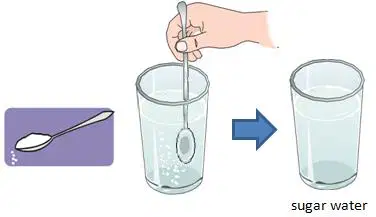
Sugar and water are pure substances. John adds some sugar to a cup of water and stirs the mixture to make sugar water.
Which of these is true about the mixture of sugar and water?
a)
It is a solid like the sugar alone.
b)
It tastes the same as the water alone.
c)
It is the same color as the sugar alone.
d)
It is different than the water or sugar alone.
97.
When a cook begins to make custard, raw eggs are blended with milk. What property of the egg and milk mixture is the same as the milk alone?
a)
texture
b)
mass
c)
color
d)
state of matter
98.
The parts of a mixture can be separated. What would be the easiest way to separate a mixture of sand and iron filings?
a)
using your hands
b)
using a filter
c)
using evaporation
d)
using a magnet
99.
Sand and gravel in a mixture have the same properties as sand and gravel when they are not mixed.
Since gravel is bigger than sand,
a)
the sand and gravel can never be separated.
b)
the mixed sand and gravel will stick together.
c)
the sand and gravel can be separated with a sieve.
d)
the mixed sand and gravel have a lower volume.
100.
Angie went to the candy store to buy some jelly beans. She could not decide on only one flavor of bean, so she made a mixture by putting one scoop each of banana, chocolate, pineapple, and cherry into her bag.
What happened to the physical properties of the jelly beans when Angie put them all in the bag together?
a)
Mixing made each of the jelly beans larger.
b)
The physical properties of the jelly beans did not change.
c)
Each jelly bean became banana split-flavored.
d)
All of the jelly beans turned brown.
101.
Kathy has a bucket of crayons. She digs through the crayons and pulls out all of the yellow ones. Which answer best describes Kathy's actions?
a)
making a mixture of colors
b)
separating a mixture by size
c)
separating a mixture by color
d)
making a mixture of solids
102.
When iron filings are mixed with sand, which physical property of the iron filings stays the same?
a)
magnetism
b)
shape
c)
state of matter
d)
all of these
103.
What physical property would be the easiest to use when separating a mixture of red and green candies?
a)
color
b)
size
c)
solubility in water
d)
magnestism
104.

The cup shown in the image below contains a mixture of oil and water.
What would be the best method for separating this mixture?
a)
pour the mixture through filter paper
b)
place the mixture on a balance
c)
carefully pour the oil off the top
d)
add more water to dissolve the oil
105.

A science class made three solutions using cranberry juice, water, and sugar. The solutions were labeled X, Y, and Z. The class wrote what the solutions looked like in the table below.
Which solutions have a different physical state than one or both of their parts?
a)
Y and Z only
b)
X and Y only
c)
X and Z only
d)
X, Y, and Z
106.
A glass of lemon juice and a glass of water are both at the same temperature. The lemon juice is added to the water to make a solution.
Which physical property of lemon juice and water changes when the two are mixed together?
a)
magnetism
b)
temperature
c)
state of matter
d)
taste
107.
Salt is a solid, while water is a liquid. What change in physical state happens when salt and water mix?
a)
Water changes from a pure liquid to part of a gas solution.
b)
Water changes from a pure liquid to part of a solid solution.
c)
Salt changes from a pure solid to a pure liquid.
d)
Salt changes from a pure solid to part of a liquid solution.
108.
Which answer is always true for solutions?
a)
The properties of a solution are always the same as its parts.
b)
Every sample of a solution is the same.
c)
The parts of a solution must be liquids.
d)
The parts of a solution can each be seen in the solution.
109.
A solution is an even mixture of two or more materials. What is true about the properties of a solution?
a)
A solution has exactly the same properties as one of the materials it is made of.
b)
A solution has exactly the same properties as all of the materials it is made of.
c)
A solution may have different properties than the materials it is made of.
d)
The properties of a solution are never the same as the materials if is made of.
110.

White vinegar is a solution that is used in baking, cooking, and cleaning. It is made by mixing water with acetic acid. The following table shows the physical properties of white vinegar and its ingredients.
Based on the table, which two physical properties have changed in making white vinegar?
a)
scent and physical state
b)
color and electrical conductivity
c)
color and physical state
d)
scent and electrical conductivity
111.
When a gas dissolves in a liquid, the solution is a liquid. Which of these is an example of a gas dissolved in a liquid?
a)
the atmosphere
b)
salt water
c)
a salad
d)
soda pop
112.

A gardener is testing a powder fertilizer. She adds 5 grams of the powder fertilizer to a beaker of tap water. She then stirs the mixture until the powder dissolves. The following table shows her observations of the physical properties of the solution and its ingredients.
Based on the table, which two physical properties have changed in making the fertilizer solution?
a)
electrical conductivity and color
b)
physical state and color
c)
electrical conductivity and magnetism
d)
physical state and magnetism
113.
Which of these mixtures is a solution?
W- Trail Mix
X- Sweet Tea
W- Pens & Pencils
Z- Grape Juice
a)
X
b)
Z
c)
Y
d)
W
114.

Lori added one tablespoon of sugar to a pitcher of water and stirred until the sugar disappeared. Which of the following physical properties of the ingredients have changed?
a)
I and III only
b)
II and III only
c)
III only
d)
I, II, and III
115.
What direction do the Sun, Moon, and stars appear to move in the sky?
a)
south to north
b)
east to west
c)
west to east
d)
north to south
116.
How do the Sun, Earth, and Moon compare in states of matter?
a)
The Earth is mostly solid; the Sun and Moon are made of plasma (a special kind of gas).
b)
The Sun, Earth, and Moon are all mostly solid.
c)
The Sun is mostly solid; the Earth and Moon are made of gas.
d)
The Sun is made of plasma (a special kind of gas); the Earth and Moon are mostly solid.
117.
Which of the following is a physical feature that can be found on the Moon?
a)
a mountain
b)
a plain
c)
a crater
d)
all of these
118.

Based on the table above, _______ planets are made of the same things as _______ moons.
a)
some; some
b)
some; all
c)
all; all
d)
all; some
119.
African penguins, Red-eared slider turtles, and North American river otters are animals that have webbed feet. Each animal eats different types of food and lives in different climates. However, all of the animals use their webbed feet in similar ways. The pictures below show the animals and their webbed feet.
How do these animals use their webbed feet in their environments?
a)
The webbed feet help the animals see predators in their surroundings.
b)
The webbed feet help the animals swim faster or more easily in water.
c)
The webbed feet help the animals grab and hold on to food.
d)
The webbed feet help the animals keep in heat and stay warm.
120.
The image below shows several types of animals.
Which of the following is a characteristic that these animals have in common? .
a)
They all have fur and live in the water.
b)
Their main method of movement is walking.
c)
They all use swimming as a method of movement.
d)
They are all the same color and live on land.
121.
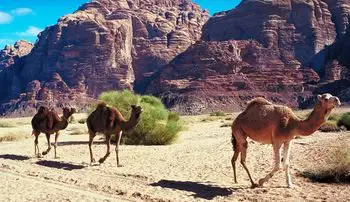
Camels, like the ones shown below, live in a dry desert climate where food and water is scarce.
What is the purpose of the humps on a camel?
a)
They help protect the camel against vultures.
b)
They help protect the camel from the Sun.
c)
They are used to store food for times of need.
d)
They help disguise the camel from predators.
122.
Which of these is a learned trait?
a)
allergies to certain foods
b)
having blue eyes
c)
being tall
d)
riding a bicycle
123.
Which of these is an example of an inherited trait of a plant or animal?
a)
a person speaking French
b)
a tiger jumping through a flaming hoop
c)
a dog coming when his name is called
d)
a cactus having spines
124.
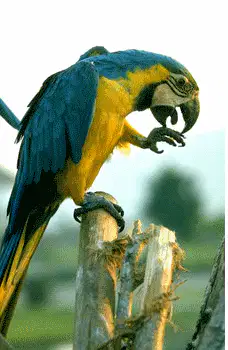
The animal shown below is a parrot.
Which of the following could be a learned trait of this parrot?
a)
needing fruit in its diet
b)
having blue wings
c)
saying the word "food"
d)
being blue and yellow
125.
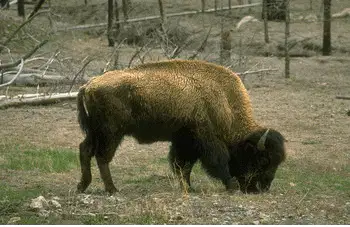
The North American bison, shown below, is able to digest large amounts of grass.
What type of trait is this?
a)
skipped
b)
learned
c)
hidden
d)
inherited
126.
A learned behavior
a)
is a new or changed behavior resulting from experience.
b)
is passed on through genes.
c)
is an unexplainable action that a species may perform.
d)
is a natural instinct.
100 %

