
 Worksheets
NGSS Physics: Fall Final 2024
Total questions: 129
Worksheet time: 1hrs 5mins
Name
Class
Date
1.
Which of the following is NOT part of the R's of waste management
a)
Reduce
b)
Remove
c)
Reuse
d)
Recycle
2.
The main types of biodiversity are (choose 3)
a)
Ecosystem diversity
b)
Ecological diversity
c)
Species diversity
d)
Genetic diversity
3.
An organisms that supports several organisms in an ecosystem is a-
a)
Capital organism
b)
Sustaining organism
c)
Keystone organism
d)
Stable organism
4.
A student builds a series and a parallel circuit.
Both circuits contain one battery(of equal voltage) , and two light bulbs.
In which circuit should the lightbulbs shine brighter
a)
series
b)
parallel
c)
both will be the same
5.
Batteries, provide ______________________ which is the pressure force that gives electrons the potential energy to move through a circuit
a)
Voltage
b)
Power
c)
Current
d)
Resistance
6.
Electrical current measures...
a)
The rate at which charge (electrons) flow or move in an electrical circuit
b)
The pressure/ energy that pushes electrons through an electrical circuit
c)
The opposition a material offers to the flow of electric current
d)
None of the above
7.
In an electrical circuit, if the voltage is constant and the resistance is increased. The electrical current will
a)
increase
b)
decrease
c)
not change
8.
Electrical current is measured in....
a)
amperes
b)
volts
c)
ohms
d)
newtons
9.
Electrical resistance is measured in...
a)
ohms
b)
amperes
c)
volts
d)
newtons
10.
Magnetic fields and electric fields are identical in that they both–
a)
require a medium to travel from place to place.
b)
influence non-metals the same as metals.
c)
are capable of exerting force at a distance.
d)
increase in strength with distance from source.
11.
The voltage supplied to a circuit is 20 V and the current running through is 10 A.
What is the power generated?
a)
200 watts
b)
170 watts
c)
2 watts
d)
200 amps
e)
20 watts
12.
A 15 amp load is running on a 100v supply
What power will it draw?
a)
1,500 watts
b)
150 watts
c)
6.6 watts
d)
150 wats
e)
150 amps
13.

What will the magnets in the picture do?
a)
Attract each other
b)
Repel each other
c)
Attract and repel each other
d)
Neither attract nor repel
14.

Are the magnets in the image attracting or repelling
a)
attracting
b)
repelling
c)
both
d)
neither
15.

The voltmeter is at 0 in this image. How would you manipulate the experiment to create electricity (measured in volts)?
a)
Turn the magnet so the "N" side faces out
b)
Remove the magnet
c)
Move the magnet back and fourth
d)
Add more coils to the cylinder
16.
What is one of the advantages of electromagnets?
a)
They can be switched on or off
b)
They are usually very small
c)
They work during power outages
d)
They can have up to three poles
17.
What is current of light bulb that uses 70 watts and is "plugged in" to 120 volts
a)
0.583 amps
b)
0.75 amps
c)
1.2 amps
d)
0.41 amps
18.
The unit of electrical power is the....
a)
watt
b)
volt
c)
amp
d)
ohm
e)
newton
19.
Which of the following is NOT a valid expression of Ohm's law
a)
I=V/R
b)
R=V/I
c)
V=IxR
d)
V=I/R
20.

Read the question and view the diagram below
a)
a
b)
B
c)
C
d)
D
21.

In the image shown, the magnet is inserted into the loop of wire "North pole first"
What would happen if the direction of the magnet were changed? (the south pole entered the loop first?)
a)
There would be more voltage
b)
There would be the same amount of voltage, but in the opposite direction
c)
There would be no voltage
22.

Which of the following will result in the most induced voltage?
a)
A
b)
B
c)
C
d)
D
23.

Which of the following show parallel circuits
a)
Option 1
b)
Option 2
c)
Option 3
d)
Option 4
24.
The widest part of an ellipse is called-
a)
the semimajor axis
b)
the minor axis
c)
the foci
d)
the major axis
25.
1 astronomical unit ( 1 AU) is equal to...
a)
the distance from the Earth to the Sun
b)
the distance from the Sun to Pluto
c)
the distance from the Earth to the Moon
d)
the distance light travels 1 year in the vacuum of space
26.
A large object is found in the orbiting the Earth in the asteroid belt.
The semi-major axis of rotation is 2.0 Astronomical Units.
Using Kepler's third law, what is the period of revolution of the asteroid?
a)
2.82 years
b)
3 years
c)
0.5 years
d)
0.01 years
e)
10 years
27.
Which diagram shows a planet with the least eccentric orbit?
a)
Option 1
b)
Option 2
c)
Option 3
d)
Option 4
28.
The eccentricity formula of orbits is...
a)
change in value/ distance
b)
mass/volume
c)
distance between foci/ length of major axis
d)
length of minor/ length of major axis
29.
Given the following information about the asteroid "X-22", calculate it's eccentricity.
Distance from center of ellipse to focus in astronomical units: 1.7
Semimajor axis in astronomical units: 4.2
a)
0.4
b)
2.4
c)
0
d)
1
e)
0.0023
30.
Which ellipse has the highest eccentricity
a)
Option 1
b)
Option 2
c)
Option 3
31.

Where is the planet moving faster
a)
Position A to B
b)
Position B to C
c)
Position H to I
d)
Position I to J
32.
Eccentricity can be between what two numbers if the object is in orbit?
a)
0-1
b)
0-0.1
c)
0-10
d)
0-2
33.

You discover a new planet in our solar system. You measure it's orbital period to be 200 years.
Where is this planet likely to be located based on this information?
a)
Located beyond Neptune
b)
Located between Jupiter and Neptune
c)
Closer to the Sun than Mercury
d)
Located between the Earth and Mars
34.
Kepler’s first law states that the orbits of all planets are elliptical.
Which of the following statements does not represent this law?
a)
Earth’s eccentricity is very low.
b)
The distance between both focal points of an orbiting planet is the same for any location along an ellipse.
c)
The orbit of every planet is the same.
d)
Comets have a very high eccentricity.
35.
Kepler’s second law relates to–
a)
the shape of each planet’s orbit.
b)
how the orbits of planets and comets differ.
c)
the rotation of planets about their axes.
d)
the area an orbit covers in a set amount of time.
36.
Kepler’s third law is known as the law of harmonies. What does it state?
a)
If you square the time it takes for a planet to orbit the Sun and divide this number by the cube of its distance from the Sun, you end up with the same number for all planets.
b)
All planetary orbits have low eccentricity.
c)
A planet covers the same area in its orbit in a set amount of time.
d)
None of the above
37.
Which description of eccentricity is correct?
a)
An eccentricity of zero is a line
b)
An eccentricity of zero is a circle
c)
An eccentricity of one is a circle
d)
An eccentricity of one is elliptical
38.

A scientist is examining the orbital path of two comets. Comet A has an orbital eccentricity of 0.70, while Comet B has an orbital eccentricity of 0.90.
What can the scientist conclude about the orbits of the two comets?
a)
Comet B’s orbit is less circular than Comet A’s orbit
b)
Both Comet A and B have similar orbital paths
c)
Comet B takes longer to complete an orbit than Comet A
d)
Comet A is closer to the Sun than Comet B
39.
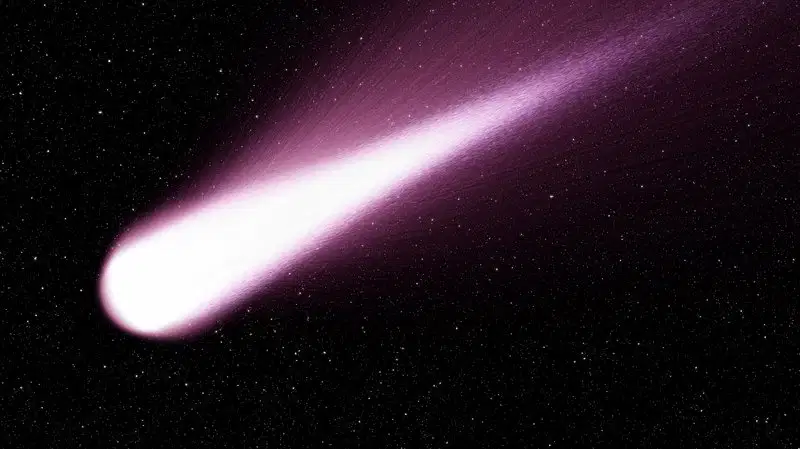
Kepler’s 2nd Law states that the area swept out by a planet’s motion will be the same regardless of where it is in its orbit.
A comet moves much faster when it is closer to the Sun than when it is further out from the Sun.
What is the primary cause in the change of the comet’s orbital velocity?
a)
Jupiter's gravitational field
b)
The sun's solar wind
c)
The sun's gravitational field
d)
Earth's magnetic field
40.

The Moon orbits the Earth as the Earth orbits the Sun. The Moon’s orbit is elliptical, and changes its distance from the Earth by around 10 % over the course of an orbit.
Any ellipse has two centers, which are called foci.
For the Moon’s orbit, what must exist at one of the two foci?
a)
Earth
b)
The Sun
c)
The Moon's center of gravity
d)
Mars
41.
What do we call a path followed by an object revolving around another object, cause by gravity?
a)
Orbit
b)
Path
c)
Route
d)
Trail
42.
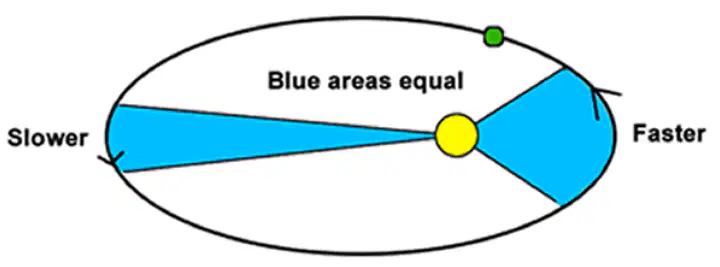
This diagram best illustrates which of the following laws?
a)
Keplers 2nd law
b)
Keplers 1st law
c)
Newtons 2nd law
d)
Newtons law of universal gravitation
43.
SOLVE:
P(before) = P(after)
2 kg x 4 mps = 1 kg x ___mps
a)
8
b)
0
c)
2
d)
10
e)
0.5
44.
Which of the following best describes "universal gravitation"
a)
Only large items experience gravity
b)
Gravity only happens if you are a planet
c)
Everything with mass is attracted to everything else with mass
d)
Like charges repel, opposite charges attract
45.
If your desk weighs 20 pounds on earth, if you moved the desk to Jupiter it would weigh...
a)
more
b)
less
c)
the same
46.

If both charges have the same sign, what happens to the electrical force compared to when the charges have opposite signs?
a)
Nothing
b)
The electrical force switches direction (attractive versus repulsive, or vice versa).
c)
The electrical force grows larger
d)
The electrical force shrinks
47.
According to Coulomb's law, the force between a pair of charged particles that are brought closer together
a)
decreases
b)
increases
c)
increases only if the charges are of the same sign.
d)
increases only if the charges are of opposite signs
48.
When dealing with electrical charges, like charges _______________
a)
attract each other
b)
repel each other
49.
What variable do "Newtons" represent
a)
Force
b)
Electrostatic charge
c)
Distance
d)
Mass
50.
If the distance between two planets is doubled, what happens to the force of gravity between the planets?
a)
stays the same
b)
reduced by 1/4
c)
reduced by half
d)
quadruples
51.
a)
A
b)
B
52.
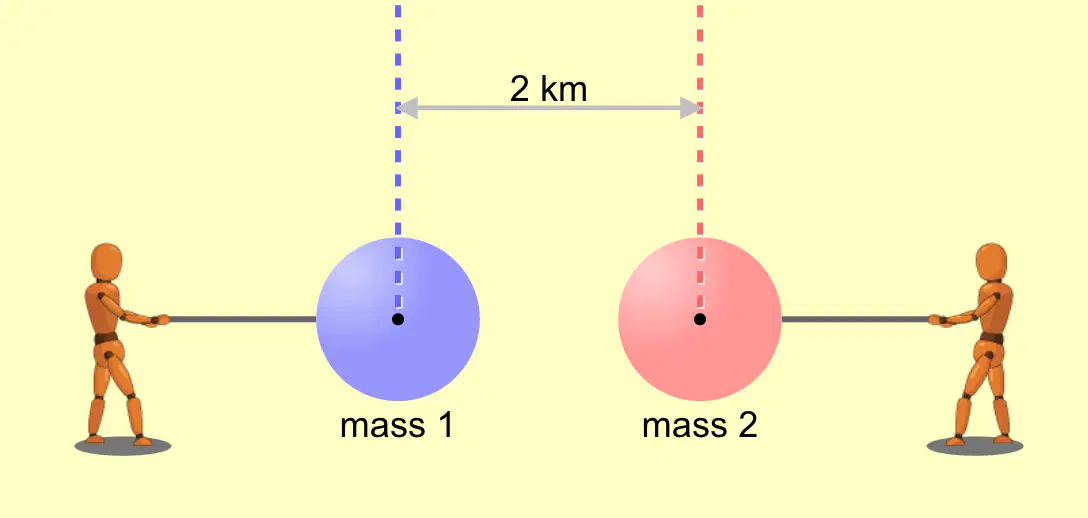
Which of the following change would result in a larger force of gravity?
a)
Decrease mass of object 1
b)
Increase the mass of object 2
c)
Decrease the mass of object 2
d)
Increase the distance between the two objects
53.
What variable is a Coulomb the unit for?
a)
Charge
b)
Force
c)
Mass
d)
Electric Current
54.
If your desk has as mass of 9 kilograms on earth, if you moved the desk to Jupiter, it's mass would be....
a)
more
b)
less
c)
the same
55.
The force of gravity....
a)
Acts on ALL OBJECTS with mass
b)
ONLY acts on objects with large mass
c)
ONLY acts on objects that are far apart from each other
d)
Only acts on very small objects
56.
The force of gravity always
a)
pulls objects together
b)
pushes objects away from each other
c)
can either cause objects to pull towards or push away from each other
57.
Two spheres exert a gravitational attraction on each other.
Which of the following changes to this system would reduce the gravitational attraction by one half?
a)
Cutting the distance between the spheres in half
b)
Doubling the distance between the spheres
c)
Doubling the mass of the spheres
d)
Reducing by half the mass of one sphere only
58.

The force of gravity depends on two variables, __________________ and ________________
a)
mass of the objects, distance between the objects
b)
electrical charge of the objects, distance between the objects
c)
mass of the objects, electrical charge of the objects
59.
Electrical force depends on two variables, ___________________ and ______________
a)
mass of the objects, distance between the objects
b)
electrical charge of the objects, distance between the objects
c)
energy of the of the objects, mass of the objects
60.
Gravitational Force is based on the "Inverse Square Law"- based on this principle what would happen to the gravational force between two planets if you increased the distance between the planets
a)
stronger
b)
weaker
c)
it would remain the same
61.
The relationship between distance and gravity is based on the " inverse square law" which of the following graphs illustrates the inverse square law?
a)
A
b)
B
c)
C
d)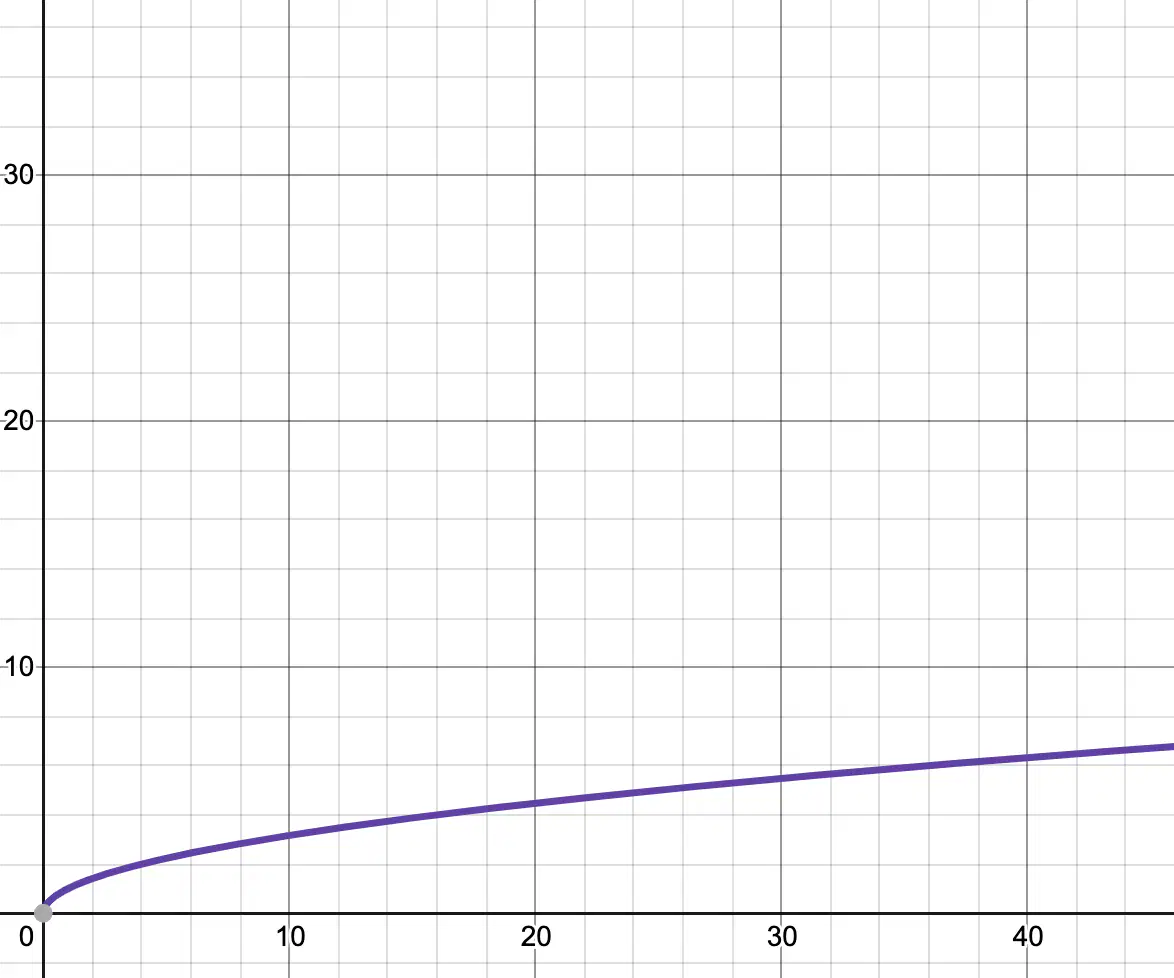
D
62.
A 5 kg object is moving at 10 m/s. What is its momentum?
a)
50 kg m/s
b)
5 kg m/s
c)
10 kg m/s
d)
0.5 kg m/s
63.
What type of quantitity are momentum and velocity
a)
vector
b)
scalar
c)
numeric
d)
non- numeric
64.
A force of 4 N is applied to a ball for 0.75 s.
What is the impulse?
a)
3 N*S
b)
.1875 N*S
c)
None
d)
5 N*S
65.
The units of impulse are...
a)
N*S
b)
Newtons
c)
Meters
d)
M/S
e)
Kg*m/s
66.
Solar, hydroelectric, geothermal and wind are all examples of-
a)
renewable energy
b)
nonrenewable energy
c)
mineral energy
d)
fossil fuel dependency
67.
Burning fossil fuels is an example of....
a)
renewable energy
b)
nonrenewable energy
c)
sustainability
d)
green energy
68.
The PE of a magnet in the presence of another magnet is related to-
a)
Only how close the magnets are together
b)
Only the direction in which the poles point
c)
How close the magnets are together and how fast they are moving
d)
How close the magnets are together and which direction the poles point
69.
Choose the position of the skater that best matches the provided description
- All of the energy is potential, none is kinetic
a)
Option 1
b)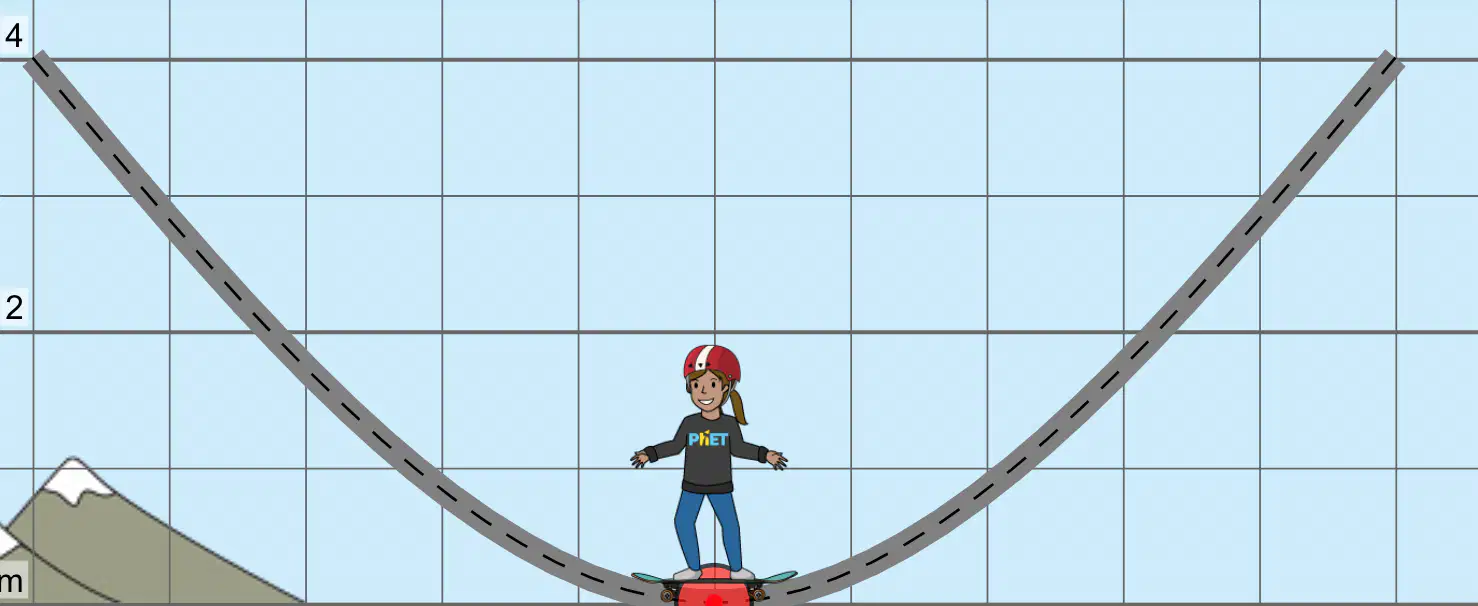
Option 2
c)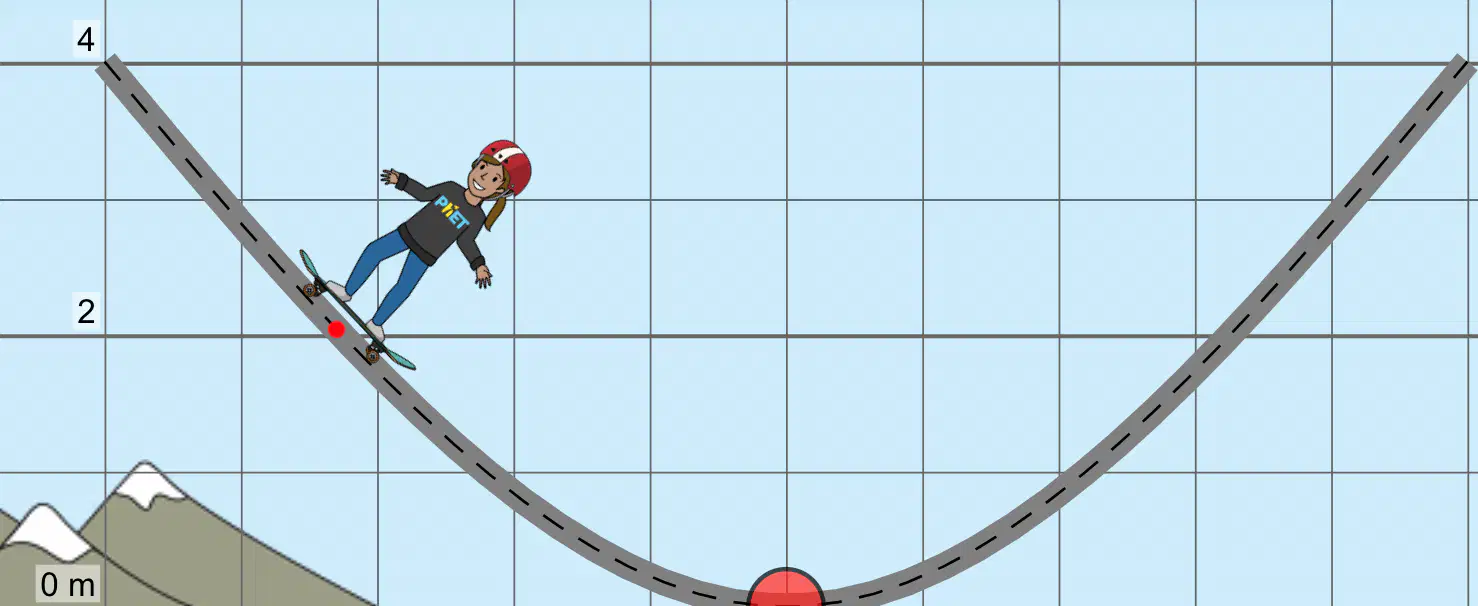
Option 3
70.
Choose the position of the skater that best matches the provided description
-Half of the energy is potential, half is kinetic
a)
Option 1
b)
Option 2
c)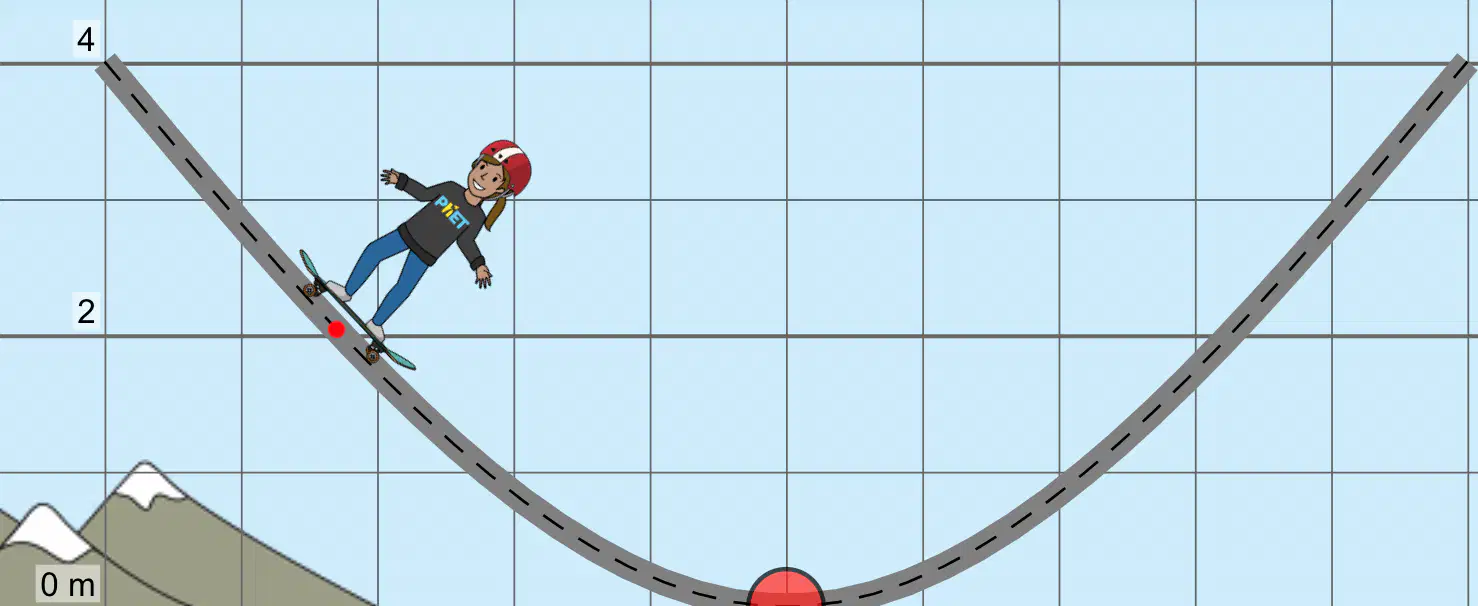
Option 3
71.
Choose the position of the skater that best matches the provided description
-The skater has come to a complete stop, all energy has been converted to thermal energy
a)
Option 1
b)
Option 2
c)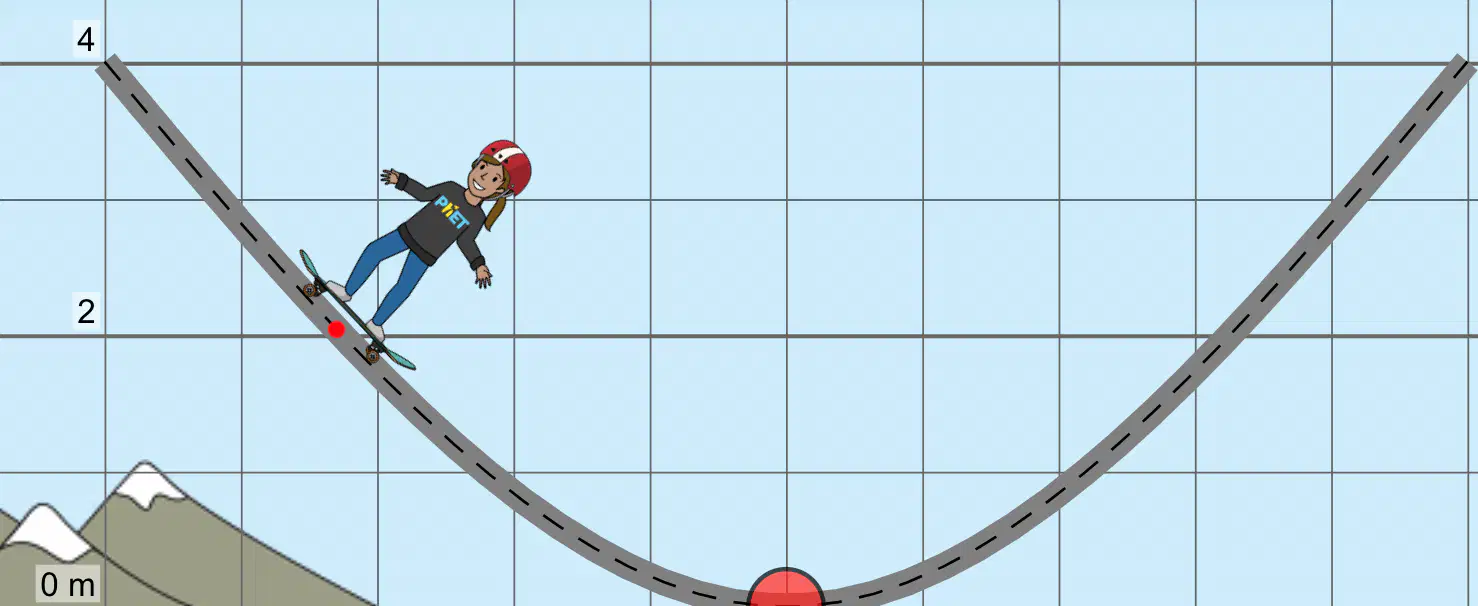
Option 3
72.
If the thermal energy of a substance increases, its temperature will _________________
a)
Increase
b)
Decrease
c)
Stay the same
73.
Adding thermal energy to a substance has what effect on the energy of the particle within the substance
a)
Increases both kinetic and potential energy
b)
Decreases both kinetic and potential energy
c)
Increases kinetic energy, decreases potential energy
d)
Decreases kinetic energy, increases potential energy
74.

The picture shows the swinging of a pendulum.
What is the PE of the pendulum at the "end" of its swing (the image to the right)
-Energy is conserved
a)
10 J
b)
0 J
c)
5 J
d)
7 J
e)
1 J
75.
A glider is flying through the air, it has 0.8 joules of potential energy.
If the speed is doubled, and the height is doubled- the new potential energy is...
a)
1.6 joules
b)
0.2 joules
c)
0.4 joules
d)
3.2 joules
e)
0 joules
76.
Which would ALWAYS be true of an object possessing a kinetic energy of 0 joules
a)
It is on the ground
b)
It is moving
c)
It is above the ground
d)
It is accelerating
e)
It is not moving
77.
The total mechanical energy of an object is the _________
a)
Kinetic energy minus the potential energy of the object
b)
The initial kinetic energy plus the initial energy of the object
c)
Kinetic energy plus the potential energy of the object at any instant during it's motion
d)
Final amount of kinetic energy and potential energy minus the initial amount of kinetic and potential energy
78.
Which would always be true of an possessing a potential energy of 0 joules
a)
It is on the ground
b)
It is moving
c)
It is above the ground
d)
It is at rest
79.
Calculate the kinetic energy of 5.2 kg object moving at 2.4 m/s
a)
14.97 J
b)
5.2 J
c)
2.4 J
d)
10 J
e)
16.3 J
80.
Ball A and ball B have the same mass
If ball B is traveling at double the velocity of A, then ball B has the __________ of ball A
a)
same KE
b)
half the KE
c)
four times the KE
d)
1/8 the KE
81.
An 8 kg dog is running at a speed of 10/s.
What is the kinetic energy of the dog?
a)
400 joules
b)
80 joules
c)
8 joules
d)
10 joules
e)
64 joules
82.
Two trucks have the same velocity but different masses.
Truck #1 has a mass of 200kg and Truck #2 has a mass of 500 kg.
Which Truck will have the greatest kinetic energy?
a)
Truck 1
b)
Truck 2
c)
They have the same kinetic energy
d)
No way of determining the answer from this information
83.
What is energy?
a)
The ability to cause motion or to allow something to move
b)
A push or pull on an object
c)
A measurement of mass or weight
d)
The product of mass and velocity
84.
Mechanical Energy is....
a)
The sum of the potential and kinetic energy of an item
b)
All of the thermal energy contained in an item
c)
An accounting for of all the energy that an item has/ will lose
d)
The difference between kinetic and potential energy
85.
Gravitational potential energy is related to-
a)
what an object is made of
b)
an objects motion
c)
an objects position
d)
an objects color
86.
Which statement about potential energy is correct
a)
The closer an object is to the ground, the greater the PE
b)
The farther an object is from the ground, the greater the PE
c)
The only form of PE is gravitational PE
d)
Potential energy is the energy of motion
87.

In the image, the generator converts _______________ energy to ________________ energy
a)
Mechanical, Electrical
b)
Light, Electrical
c)
Thermal, Electrical
d)
Nuclear, Thermal
e)
None of the above
88.

A roller coaster car starts from rest at point A and proceeds down the track, at what point on the track does the car have the greatest potential energy
a)
A
b)
B
c)
C
d)
D
e)
E
89.
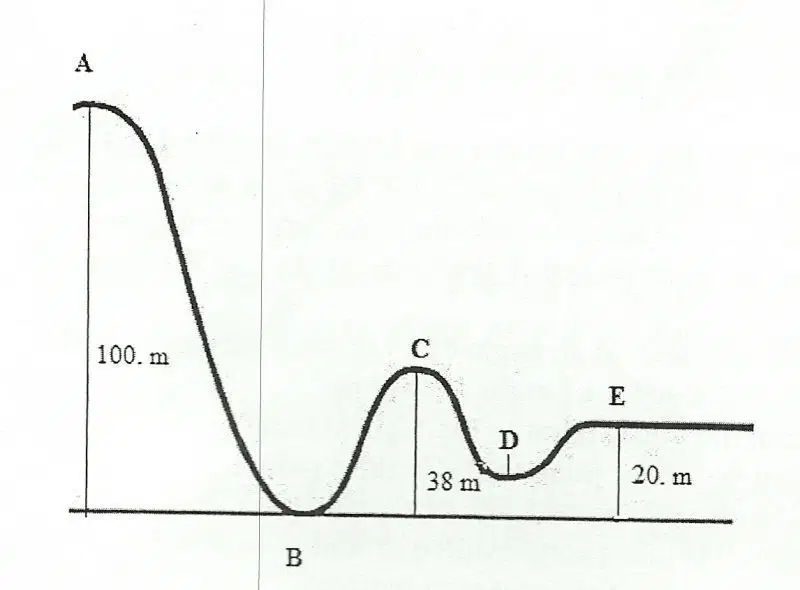
A roller coaster car starts from rest at point A and proceeds down the track, at what point on the track does the car have the greatest kinetic energy
a)
B
b)
A
c)
C
d)
D
e)
E
90.
Which of the following is not a type of potential energy?
a)
kinetic
b)
chemical
c)
gravitational
91.
A 0.1 kg ball is held 1 meter from ground, how much GPE does it have?
a)
10 joules
b)
0.1 joules
c)
0.98 joules
d)
100 joules
92.
When no _______________ forces act on a system, the momentum of the system will __________
a)
external, remain the same
b)
internal, remain the same
c)
external, decrease
93.
Two cars crash into each other and become completely stuck together
What kind of collision is this?
a)
Elastic
b)
Inelastic
c)
Both inelastic and elastic
d)
increased impulse
94.
If you cannot avoid being hit by a fast- moving object, you'll suffer a smaller contact force if you can extend that force over a...
a)
longer time
b)
shorter time
c)
both the same
95.
It is correct to say that impulse is equal to...
a)
momentum
b)
change in momentum
c)
force multiplied by the distance over which it acts
d)
velocity multiplied by time
96.
Which of Newton's laws of motion is a statement of the conservation of momentum?
a)
First
b)
Second
c)
Third
d)
All of the above
97.
A freight train rolls along a track with considerable momentum. If it rolls at the same speed but has twice as much mass, its momentum is
a)
zero
b)
twice as much as before
c)
unchanged
d)
half as much as before
98.
It is correct to say that impulse is equal to
a)
momentum
b)
change in momentum
c)
force multiplied by distance it acts
d)
velocity multiplied by time
99.
If an object has a momentum of 40 kgm/s and a mass of 60 kg, what is it's velocity?
a)
.67 m/s
b)
2400 m/s
c)
1.5 m/s
100.
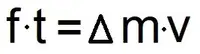
Here we can see the impulse equation. We should read this as:
a)
Impulse = change in momentum
b)
Momentum = change in impulse
c)
Force = Impulse
101.
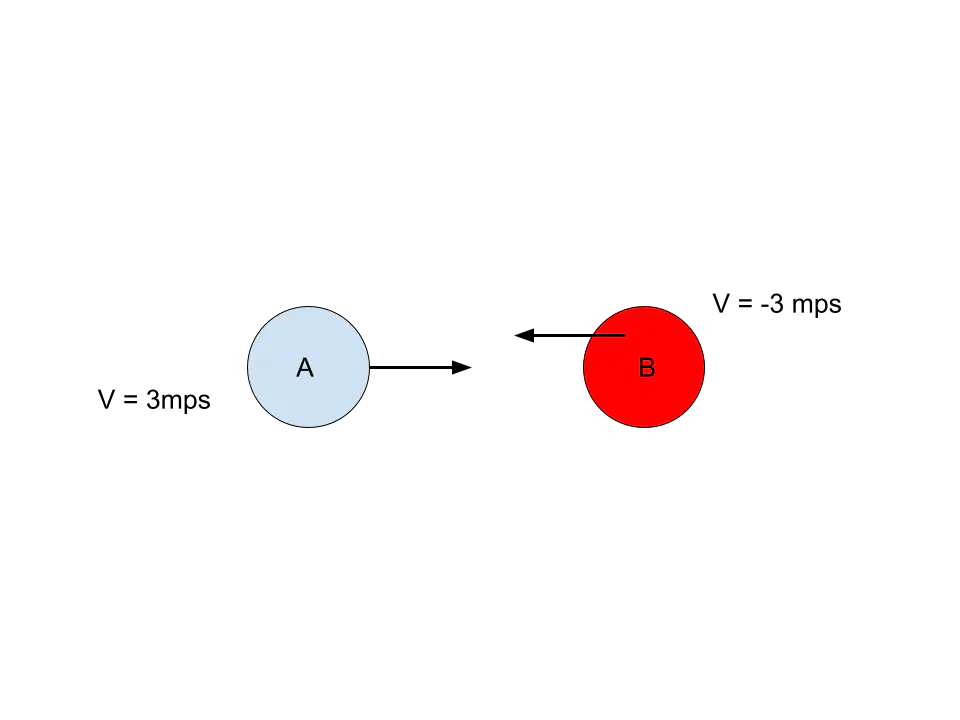
What will happen when these two balls INELASTICALLY COLLIDE with each other?
a)
They will move left
b)
They will move right
c)
They will bounce off and go opposite directions
d)
They will stick together and stop
102.
What does the principle of conservation of momentum state?
a)
The total momentum before and after a collision is the same
b)
The total momentum increases after a collision
c)
The total momentum decreases after a collision
d)
The total momentum before and after a collision is unrelated
103.
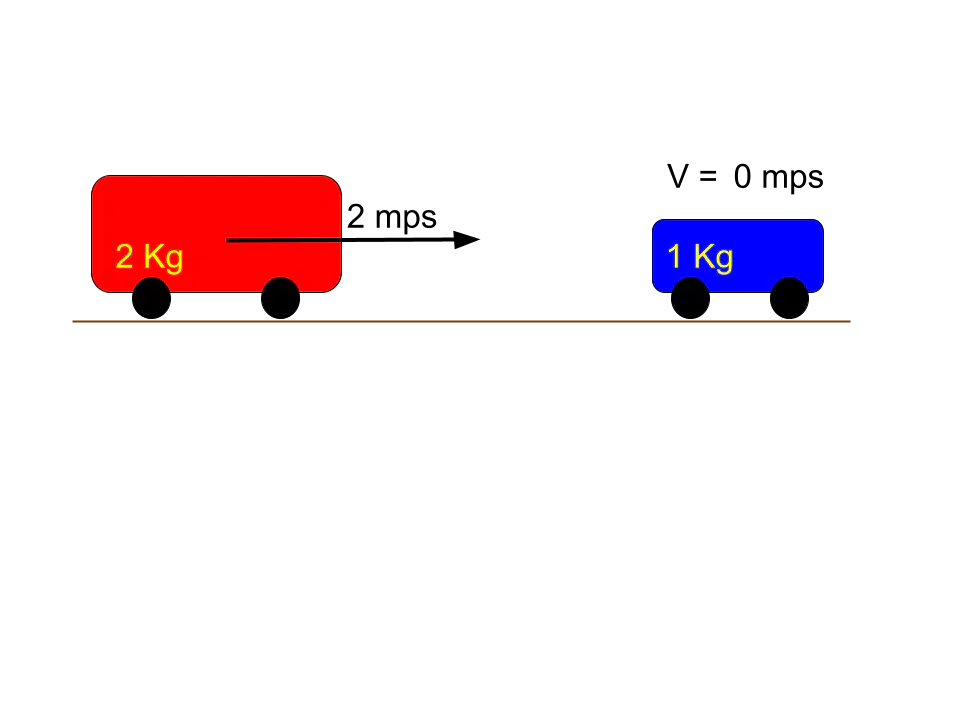
How much TOTAL MOMENTUM does the system in the illustration have BEFORE collision?
a)
0 kg*m/s
b)
5 kg*m/s
c)
4 kg*m/s
d)
20 kg*m/s
104.
If a car's velocity doubles, what happens to its momentum?
a)
it doubles
b)
it remains the same
c)
it triples
d)
it quadruples
105.
The modern definition of momentum is–
a)
mass times velocity squared
b)
mass times velocity
c)
mass dividied by velocity
d)
mass cubed
106.
How fast does a .142-kilogram baseball have to be traveling to achieve a momentum of 3.905 kg • m/s?
a)
27.5 m/s
b)
2.45 m/s
c)
145 m/s
d)
34 m/s
107.
If the mass of an object doubles, then the acceleration is ______________ when the force is kept the same
a)
halved
b)
doubled
c)
kept the same
d)
tripled
108.
______________ is the rate at which velocity changes
a)
acceleration
b)
velocity
c)
gravity
d)
friction
e)
newton
109.
When there is a constant unbalanced force applied in the same direction as the motion, speed will _____________ and acceleration will _________
.
a)
increase, be positive
b)
increase, be negative
c)
increase, be zero
d)
decrease, be postive
e)
decrease, be negative
110.
According to Newton's first law- if a rocket is traveling in space "at full speed" and turns off its engines, what is going to happen?
a)
It will keep going in a straight line at the same speed forever
b)
It will keep going forward- but it will slow down eventually
c)
It will stop immediately
111.
True or False- The weight of an object is constant regardless of motion or location in the universe
a)
True
b)
False
112.
Jenny applies a 60 N force to a 20 Kg cart, what is the acceleration of the cart if friction can be neglected?
a)
2 m/s/s
b)
3 m/s/s
c)
20 m/s/s
d)
60 m/s/s
113.
Newton's First Law is also referred to as the law of
a)
Friction
b)
Inertia
c)
Unbalanced Forces
d)
Newtons
114.
An object in motion tends to stay in motion unless an ___ force acts on it.
a)
unbalanced force
b)
balanced
115.
Objects with greater _________ also have greater inertia.
a)
mass
b)
speed
c)
temperature
d)
friction
116.
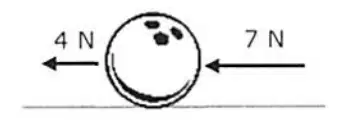
What is the net force on the bowling ball in the diagram?
a)
11 N left
b)
11 N right
c)
3 N left
d)
3 N right
e)
0 N
117.
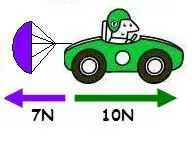
What is the net force?
a)
3 N right
b)
17 N right
c)
3 N left
d)
17 N left
118.
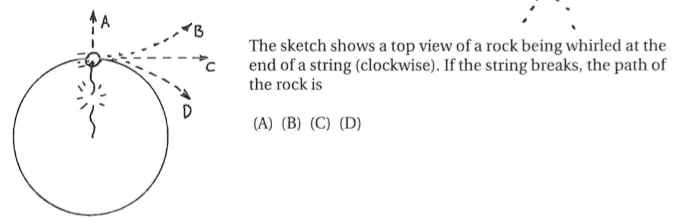
a)
A
b)
B
c)
C
d)
D
119.

Different materials, A, B, C, and D rest on a table, which item will resist being set into motion the most
a)
A
b)
B
c)
C
d)
D
120.
What is Newtons 1st law of motion?
a)
Force= Mass multiplied by acceleration
b)
An object at rest stays at rest unless acted on an unbalanced force. (inertia)
c)
For every action there is a equal and opposite re-action.
d)
Momentum is conserved in every collision
121.
If you get out of your seat, walk around the table, and sit down in the exact same seat- which will be greater. Your distance traveled or your displacement
a)
Distance is greater
b)
Displacement is greater
c)
Distance and displacement are equal
d)
not enough information to answer the question
e)
122.
The change in velocity over time is...
a)
Speed
b)
Acceleration
c)
Motion
d)
Displacement
123.
With unbalanced forces, the object will move in the direction that the _______ force is being applied.
a)
larger
b)
smaller
c)
equal
d)
less
124.
What unit do we use to measure force?
a)
Newtons
b)
Joules
c)
Force
d)
Kilograms
125.
What happens when unbalanced forces act on an object at rest?
a)
the object remains at rest
b)
the object begins moving in an unpredictable direction
c)
the object begins moving in the direction of the net force
d)
the object begins moving opposite to the direction of net force
126.

Which box has more acceleration
a)
Top
b)
Bottom
c)
Acceleration will be equal
127.

Calculate the missing information
- all answers are in m/s/s
a)
5
b)
8
c)
12
d)
20
128.
What is the equation needed to solve for acceleration?
a)
A=f*m
b)
A=m/f
c)
A=f/m
129.
Which is an example of VELOCITY?
a)
A migrating bird headed south for the winter at 3 m/s
b)
A dog running at 3 m/s
c)
A deer sprinting at 4 m/s
d)
A person not moving at all
100 %

