wayground logo

Free Printable Worksheets

NEW

Font size

S
M
L
XL
Worksheets

5th Grade EOG Review

Total questions: 64

Worksheet time: 42mins

Name
Class
Date
1.
Characteristics passed from parents to their offspring.
a)
behavior
b)
learned trait
c)
inherited trait
d)
function
2.
Which characteristic is inherited?
a)
hair color
b)
sleeping late
c)
enjoying hiking
d)
loving to read
3.

An opossum playing dead to confuse its predators is an example of

a)

a behavioral trait

b)

a physical trait

4.

Hawks have sharp claws to help them catch their prey, this is an example of

a)

a behavioral trait

b)

a physical trait

5.

A duck knows how to swim when it's born.

a)

inherited

b)

acquired

6.

A dog that can sit on command.

a)

inherited

b)

acquired

7.

Tommy is good at baking.

a)

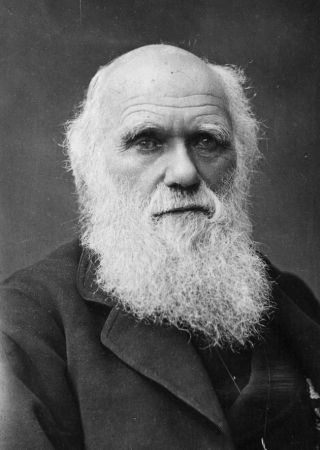
Inherited

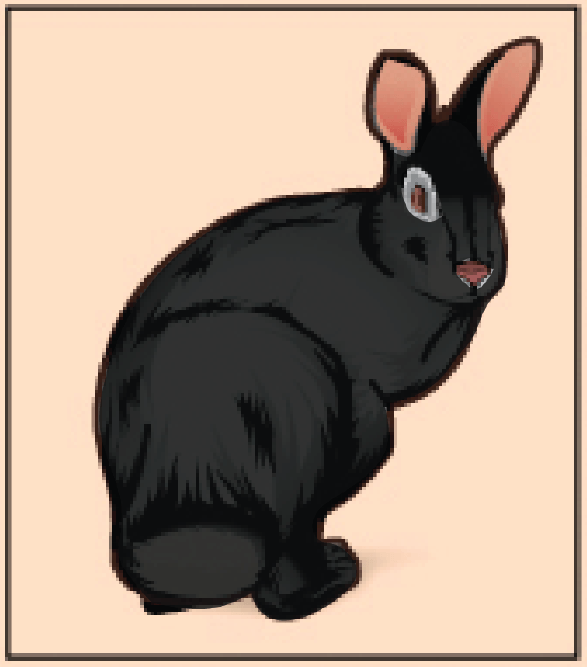
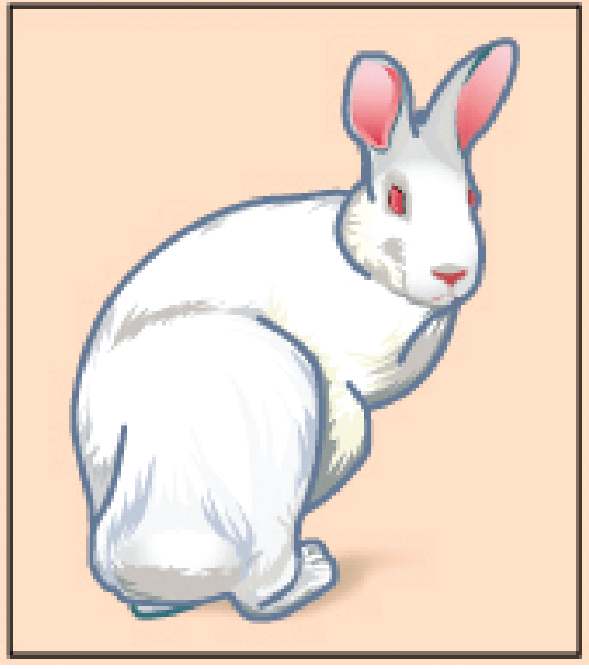
b)

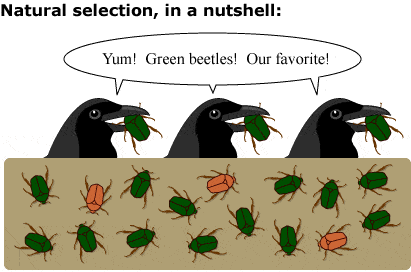
Acquired

8.
Where the better adapted organisms survive to pass traits along to offspring.
a)
Evolution
b)
Natural Selection
c)
Extinction
d)
Artifical Selection
9.
What is the advantage of having different shaped beaks?
a)
To look different from other species.
b)
To be able to eat the food readily available in the environment.
c)
To protect itself against predators.
d)
To protect itself against prey.
10.
Why are advantageous traits more likely to be passed onto offspring?
a)
Because they are more likely to survive and reproduce.
b)
Because they come from dominant alleles.
c)
Because they come from recessive alleles.
d)
Because the trait is an acquired phenotype.
11.
When an organism completely dies out, it is called.....
a)
Adaption
b)
Extinction
c)
Fossilization
d)
Mutation
12.
The preserved remains or physical evidence of an organism that lived in the past are called...
a)
evolutionary features
b)
fossils
c)
mutations
d)
variations
13.
Which would NOT be considered a fossil?
a)
bones buried deep in the earth
b)
footprints harened in  mud or rocks
c)
imprints left in rocks
d)
stories passed down from generation to generation
14.

When I roll a bowling ball. I knock down all ten pins. When I try the same thing with a baseball, I only knock down one pin. Why does this happen?

a)

The bowling ball has more mass, meaning that when force is applied, there will be more impact.

b)

The bowling ball has less mass, meaning that when force is applied, there will be less impact.

c)

The baseball has more mass, meaning that when force is applied, there will be more impact.

d)

The baseball has equal mass, meaning that when force is applied, there will be no change in the impact.

15.

Why is it easier to lift a plate compared to a table?

a)

The plate has less mass, which means less force is needed to move it.

b)

The table has less mass, which means less force is needed to move it.

c)

It is not easier to lift a plate. It is easier to lift a table.

d)

I have more friction when I lift a plate.

16.

When it snows, it's hard for me to walk on my driveway because it is covered in ice. Why does this happen?

a)

The ice increases friction, causing me to stop.

b)

The ice increases friction, causing me to speed up.

c)

The ice decreases friction, causing me to stop.

d)

The ice decreases friction, causing me to speed up.

17.

What example best shows that gravity exists?

a)

A plane is able to fly up into the air with ease.

b)

A baseball falls back down to the ground after being hit.

c)

A hot air balloon floats upwards.

d)

A basketball rolls on a flat floor when it is pushed.
18.

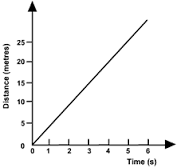
What is the line on this graph showing?

a)

moving away from starting point at a constant speed

b)

moving back towards the starting point at a constant speed

c)

acceleration (getting faster)

d)

deceleration (getting slower)

19.
What is the speed this motion?
a)
constant speed
b)
not moving
c)
speed increasing
d)
speed increasing at a constant rate
20.

What happened during A to B point?

a)

not moving

b)

increasing speed at a constant rate

c)

moving at a constant speed

d)

acceleration

21.

What is something that prevents heat, electricity, sound, light...to pass through it?

a)

insulator

b)

conduction

c)

heat transfer

d)

conductor

22.

the transfer of heat in a fluid (gas or liquid) by means of up & down movements called convection currents

a)

conduction

b)

convection

c)

radiation

23.

the transfer of heat through a vacuum (empty space)

a)

conduction

b)

convection

c)

radiation

24.

the transfer of heat through a medium (material) by direct contact of molecules

a)

conduction

b)

convection

c)

radiation

25.

How does heat move?

a)

from cold to hot

b)

from hot to cold

26.

What is a measure of the average kinetic energy of the individual particles in an object?

a)

heat

b)

volume

c)

kineticism

d)

temperature

27.

Burning your feet on the hot sand is an example of...

a)

conduction

b)

convection

c)

radiation

28.

Which is an example of a single-celled organism?

a)

amoeba

b)

insect

c)

fish

d)

worm

29.

Which body system sends electrical signals to all other body systems?

a)

circulatory system

b)

digestive system

c)

muscular system

d)

nervous system

30.

Which characteristic do single-celled organisms and multicellular organisms have in common?

a)

Both have cells with specialized functions for each life process.

b)

Both perform all life processes within one cell.

c)

Both have a way to get rid of waste materials.

d)

Both are able to make food from sunlight.

31.

Which system of the human body provides protection to most of the major organs?

a)

skeletal system

b)

circulatory system

c)

respiratory system

d)

muscular system

32.

Which example best shows structures that make up the digestive system in the human body?

a)

heart, blood, vessels

b)

nose, trachea, lungs

c)

brain, spinal cord, nerves

d)

esophagus, stomach, intestines

33.

Which body system processes foods into a useable source of energy?

a)

circulatory

b)

digestive

c)

nervous

d)

skeletal

34.

A scientist is trying to decide whether an organism is unicellular or multicellular. Which information would help the scientist most to make her decision?

a)

size of the cells of the organism

b)

what the organism eats

c)

how many types of cells are in the organism

d)

how fast the organism grows

35.
Which type of animal usually eats both producers and consumers?
a)
an omnivore
b)
a carnivore
c)
a herbivore
d)
a predator
36.
Which statement best describes how a multicellular organism survives?
a)
Every cell carries out the same functions for the survival of the organism
b)
The cells all have the same structures that allow the organism to survive.
c)
All life processes are performed by each cell for the survival of the organisms.
d)
The cells have different functions, and together they are essential for the survival of the organisms.
37.
Which classification best describes herbivores?
a)
producers
b)
consumers
c)
predators
d)
decomposers
38.
What will be most affected if the decomposers in an ecosystem are removed?
a)
the spread of disease
b)
the availability of water
c)
the quality of soil
d)
the distribution of organisms
39.
This is a food chain that includes grass, a grasshopper, and a bird. grass ------> grasshopper -------> bird How is the grass in this food chain best described?
a)
It is a producer, because it makes its own food.
b)
It is a producer, because it is eaten by consumers.
c)
It is a consumer, because it gets energy from producers.
d)
It is a decomposer, because it breaks down sunlight.
40.
Which would most likely cause a decrease in a population of herbivores?
a)
an incrase in the number of producers
b)
a decrease in the types of decomposers
c)
an increase in the types of plants
d)
an increase in the number of carnivores
41.
In what way are insects and humans similar?
a)
Both are single-celled organisms.
b)
Both are multicellular organisms
c)
Both have cells that capture sunlight to make food,
d)
Both have cells that carry out all life functions.
42.
A mouse eats seeds and insects. Which best describes the role of the mouse?
a)
consumer
b)
decomposer
c)
herbivore
d)
producer
43.
What would most likely result if all plants in an area were destroyed?
a)
Consumer populations would increase because more sunlight would reach the ground.
b)
Decomposer populations would increase because more sunlight would reach the ground.
c)
Consumer populations would decrease because plants provide them with water.
d)
Consumer populations would decrease because plants provide them with energy.
44.
What would most likely happen if all of the decomposers in an ecosystem were removed?
a)
The animals in the ecosystem would die because of the spread of disease.
b)
The plants in the ecosystem would eventually die because of a lack of nutrients in the soil.
c)
The plants in the ecosystem would begin to die out because of a decrease in available water.
d)
The animals in the ecosystem would eat other types of food because of a decrease in producers.
45.
A food chain in a ecosystem includes blackberry bushes, deer, and wolves. *Deer eat blackberries *Wolves eat deer. If the population of wolves decreases, how will this affect the population of blackberry bushes?
a)
It will decrease because there will be fewer deer.
b)
It will increase because there will be fewer deer.
c)
It will decrease because there will be more deer.
d)
It will increase because there will be more deer.
46.

The image shows various stages in the water cycle. During which stage does water flow back towards the sea as runoff?

a)

W

b)

X

c)

Y

d)

Z

47.

What is precipitation?

a)

Sweat from our bodies on hot days

b)

Warm rain but not cold snow or sleet

c)

Gas that we use in furnaces or ovens

d)

Any form of water that falls from the sky

48.

Condensation occurs when water vapor_____________.

a)

heats up and becomes liquid water

b)

cools off and becomes liquid water

c)

freezes and becomes ice

d)

rains on the land

49.

The process when plants release water vapor from their leaves is called _____________.

a)

precipitation

b)

evaporation

c)

transpiration

d)

condensation

50.
What step of the water cycle occurs when clouds become too heavy
a)
Condensation
b)
Runoff
c)
Precipitation
d)
Evaporation
51.
What is the process during which water cools and turns from a gas to a liquid?
a)
Condensation
b)
Runoff
c)
Precipitation
d)
Evaporation
52.

What step of the water cycle does this picture show?

a)

Condensation

b)

Runoff

c)

Precipitation

d)

Evaporation

53.
What source of energy evaporates the most water from Earth’s surface?
a)
volcanoes
b)
the sun
c)
lightning
d)
wind
54.

When water changes from a liquid to a solid it is known as...

a)

melting.

b)

condensation.

c)

freezing.

d)

evaporation.

55.

Water running off the land surface

a)

Evaporation

b)

Sublimation

c)

Transpiration

d)

Run-off

56.

What are formed when water vapor condenses and come together?

a)

Clouds

b)

Mountains

c)

Transpiration

d)

Valleys

57.

As a part of the water cycle, water from Earth's surface enters the clouds and finally falls back to the ground in the form of rain. What is the correct sequence of processes water undergoes?

a)

Evaporation, Condensation, Precipitation

b)

Precipitation, Condensation, Evaporation

c)

Condensation, Evaporation, Precipitation

d)

Evaporation, Precipitation, Condensation

58.
What is survival of the fittest?
a)
It is where the fittest die out and therefore reproduce and pass on their genes
b)
It is where the fittest die out and therefore can't reproduce and pass on their genes
c)
It is where the fittest don't die out and therefore can't reproduce and pass on their genes
d)
It is where the fittest don't die out and therefore reproduce and pass on their genes
59.
Darwin wrote that organisms with traits that are best suited to the environment will ________________
a)
increase in number
b)
become extinct
60.
What characteristic did Darwin observe about the finches on the Galapagos Islands?
a)
Their feathers 
b)
Genotypes 
c)
Their beaks
d)
Their body sizes
61.
Genetic differences between organisms of the same species
a)
Variation
b)
Adaptation
c)
Behavior
d)
Environment
62.

Who developed the theory of evolution?

a)

Charles Darwin

b)

Mike Tyson

c)

George Washington

d)

Patton Manning

63.

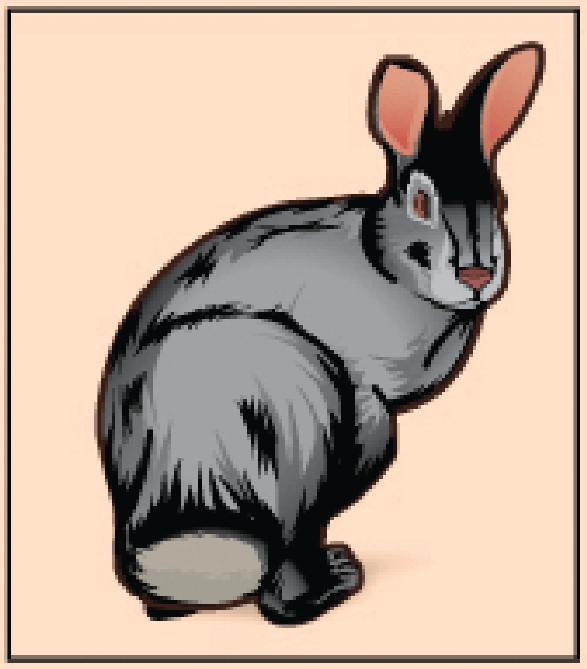
Which of these will be more successful in a cold region with NO snow? (think about the color that will be warmer)

a)
b)
c)
d)
64.
Which of the following is a factor in natural selection?
a)
Individuals of species compete with one another to survive.
b)
All species are genetically diverse.
c)
Individuals better able to adapt to changes leave more offspring.
d)
All are correct