
 Worksheets
Periodic table including symbols
Total questions: 72
Worksheet time: 37mins

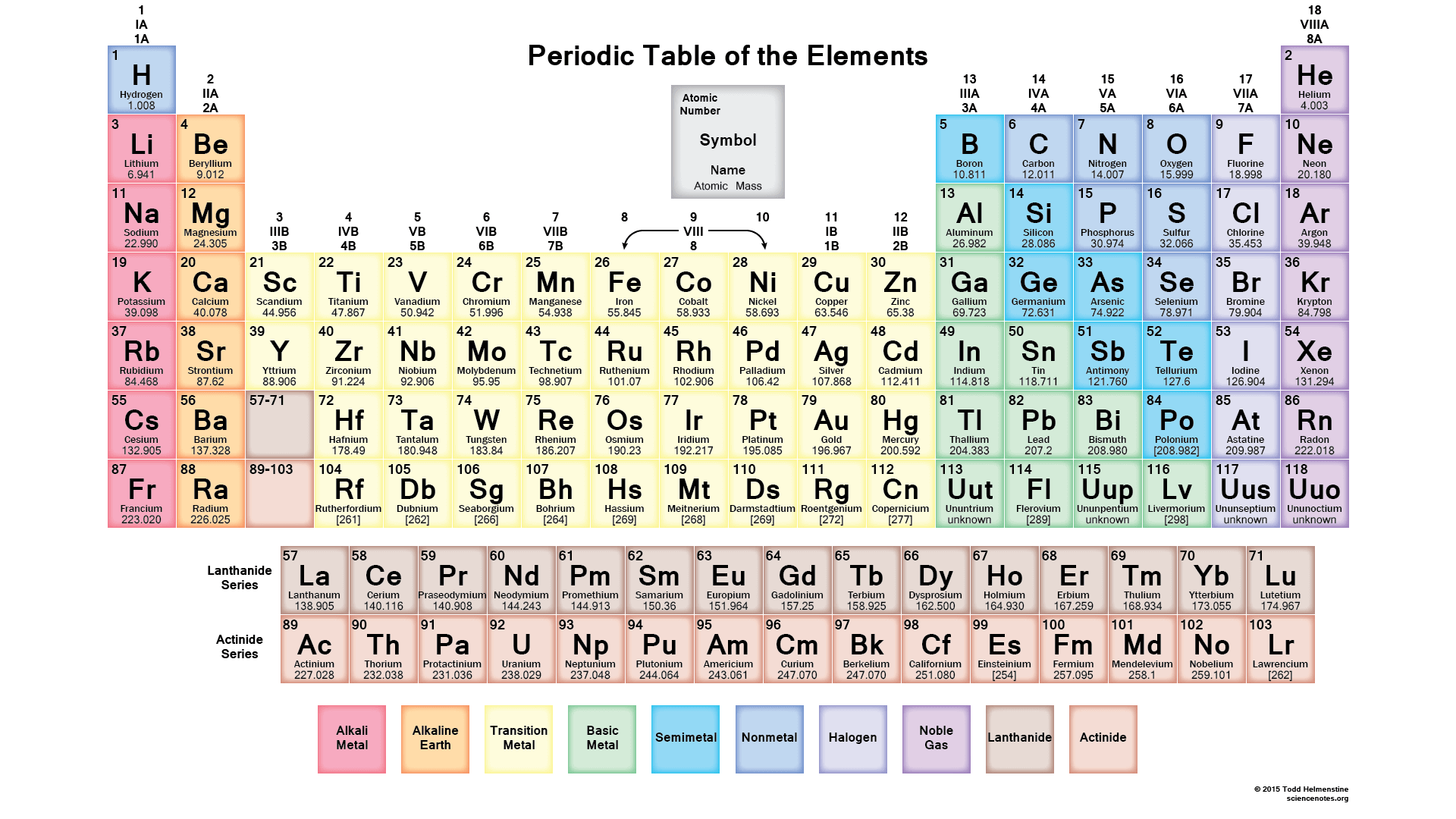


The vertical (up and down) columns in the Periodic Table are called
groups
towers
periods
atomic numbers
The atomic number tells you what? READ THE ANSWERS CAREFULLY
only the number of electrons
only the number of protons
only the number of neutrons
the number of both electrons and protons in an atom.
All elements in the same row have the same number of shells.
True
False
Sometimes

Which of the following lists contain the elements that are most like Flourine?
Boron, Carbon, and Nitrogen
Lithium, Beryllium, and Boron
Chlorine, Bromine, and Iodine
Helium, Neon, and Argon
symbol of Rubidium
Rb
Rm
Rp
Rd
what is the symbol of Tin
(a)
symbol of (Antimony)
An
Ay
Cb
Sb

What is Fluorine's atomic number?
9
18.998
19
10
How many protons does Fluorine have?
9
18.998
19
10
Use your periodic table for this one. Which family does Chlorine belong?
Halogens
Noble Gases
Nonmetals
Metalloids

Which element is this model representing? (Hint: Count the total number of electrons)
Boron
Oxygen
Potassium
Carbon

How many electrons does this element have?
26
55.845
56
2

Neutrons are _____________ charged.
Positively
Negatively
Neutrally
Electrons are _____________ charged.
Positively
Negatively
Neutrally
How many neutrons does this element have?
26
55.845
56
30

Metals are found on the ______________ side of the periodic table.
nonmetals
left
right
metals

What period is this element located in?
1
2
3
4

What group is this element located in?
5
6
7
8
What's the atomic number of Sodium?
14
11
17
10
What's the symbol of "Silicon"
Sn
Se
S
Si
What is the symbol of Sodium ?
Sd
So
Na
K
Which of the following elements is an alkali metal?
calcium
magnesium
mercury
sodium
Mendeleev left gaps in his periodic table because
the table was too small.
protons belonged there.
the table was too full.
no known elements fit there.
Which statement about the alkali metals is correct?
They are located in the left-most column of the periodic table.
They are extremely nonreactive.
They are usually gases.
They form negative ions with a 1- charge.
Metals tend to be
gases.
dull.
brittle.
good conductors.
Alkali metals are extremely reactive because they
have every small atomic masses.
are not solid at room temperature.
have one valence electron that is easily removed to form a positive ion.
have two valence electrons that form compounds with calcium and magnesium.
Copper is a common metal. Which of the following properties does this metal most likely have?
High conductivity, high malleability, and low luster
Low conductivity, low malleability, and low luster
High conductivity, high malleability, and high luster
Low conductivity, high malleability, and high luster
What is the symbol for Magnesium?
M
Mg
Ma
P is the symbol for?
Lead
Polonium
Phosphorus
What is the symbol for Chlorine?
Ch
Cl
C
What is the symbol for Argon?
Al
As
Ar
What is the symbol for Potassium?
P
K
Pt
What is the symbol for Sulfur?
Pu
S
Sf
What symbol is Scandium
Sm
Sc
S
Sd
Titanium
Ti
T
Tm
Tu
Vanadium
Vn
Vd
V
Va
Chromium
Cm
Cr
C
Ch
Manganese
Mg
M
Ma
Mn
Cobalt
C
Co
Cb
Cl
Nickel
Ni
N
Nk
Nl
Copper
Cp
Co
Cu
C
Zinc
Zn
Zc
Z
Zi
Arsenic
Ar
As
A
Ac
Selenium
Sl
Se
S
Su
Bromine
Bm
B
Bo
Br
Krypton
Kr
Kp
Ky
K
Strontium
S
St
So
Sr
Zirconium
Z
Zr
Zi
Zn

The chemical symbol for zinc is ...
Z
ZN
Zn
ZI

The chemical symbol N represents
Nitrogen
Neon
Nickel
(a) is the symbol for the element Helium.
(a) is the symbol for the element Oxygen.
(a) is the symbol for the element Fluorine.
(a) is the symbol for the element Lithium.
(a) is the symbol for the element Boron.
(a) is the symbol for the element Silver.
(a) is the symbol for the element Beryllium.
(a) is the symbol for the element Neon.

