
 Worksheets
AEF 2025 US Chapter 8 LT Quiz
Total questions: 65
Worksheet time: 39mins
Purchasing method introduced in the 1920s where people could buy things without having all of the money for it (basically credit, where they would pay back the price of the good with some interest each month)
Credit Cards
Debit Cards
Installment Plans
Debit Plans
1920s women who were known for their energetic freedom, both in fashion and mannerisms. Some had short “bob” haircuts and some experimented with cigarettes and alcohol. These were women learning to value their individuality and independence.
Flappers
Traditionalists
Hipsters
Bobbers
Speakeasies, gangs, and mobsters formed over the illegal sale and distribution of ___________, leading to violence, including homicide and burglary.
Vehicles
Washing machines
Model-Ts
Alcohol
Who was president when the stock market crashed?
Theodore Roosevelt
Woodrow Wilson
Herbert Hoover
Franklin Delano Roosevelt
What did it mean if you were a "speculator" during the 1920s? You . . .
majorly questioned actions of the government
bought stocks at great risk with the anticipation that prices will rise
watched America's greatest past time of baseball
majorly questioned actions of the banks
When the stock market "peaked," people frantically _______ their stocks.
Hid
Bought
Paid off
Sold
Which of the following is NOT one of the "Root Causes" of the Great Depression?
Uneven distribution of income
Credit and excessive debt
Mistakes by the Federal Reserves (National Banks)
WWI
Which of the following was NOT one of the 3 "R's" of FDR's New Deal?
Relief
Recovery
Reform
Republican
Resulted from a combination of overproduction of wheat by farmers trying to make up for losses when crop prices dropped & terrible Great Plains drought of 1930s.
Superbowl
Dust Bowl
Drought Bowl
Dust Plate

Henry Ford produced a more affordable car primarily because his company….
Paid workers lower wages than his competitors.
Used foreign-made parts.
Developed a faster and less expensive method of production called the assembly line.
Offered a variety of options to buyers
What was the primary way flappers of the 1920s challenged the traditional role of women?
fought for increased job opportunities
pressured colleges and universities to accept female students
displayed fashions and behaviors that shocked mainstream society
helped female politicians win campaigns
What amendment gave women the right to vote?
16
18
19
21
What amendment banned alcohol (Prohibition)?
16
18
19
21
Why was the 1920s known as the "Roaring 20s?"
huge increase in immigration which led to fighting
economic depression
people were free to drink and party at their leisure
it was a time of cultural and social changes
Amendment that ended prohibition
16
18
19
21
What was one of the biggest reasons why the American economy boomed in the 1920s?
mass production led to goods being made faster and an increase in supply
the arrest of criminals who wouldn't stop killing people
the banning of alcohol
giving women the right to vote
Who was most directly affected by the Dust Bowl?
farmers
investors
industrial workers
WWI Veterans
What was President Herbert Hoover's response to the Great Depression?
He believed "rugged individualism" would solve the economy
He created mass welfare
He increased infrastructure to create jobs
He violated his policy of laissez-faire

The reason stock prices rose before the Great Depression
Deficit Spending
Buying on Margin
Federal Reserve System
Hawley-Smoot Tariff
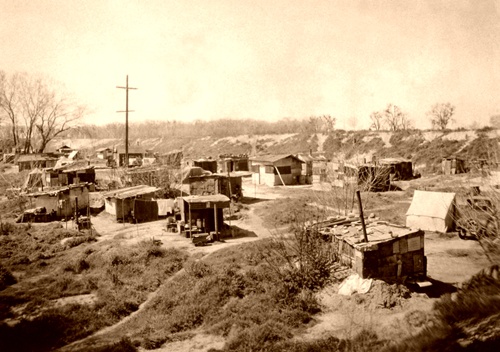
What was the Great Depression?
A period of economic success and an improving economy
The worst economic catastrophe in U.S. history
A period of time that witnessed American involvement in violent foreign wars
A hotly contested presidential election
What is a recession?
Risky speculation on Wall Street
When bank depositors withdraw all their money
A period of economic downturn
A period of economic upturn
What forced banks to close during the Great Depression?
Huge amounts of inflation
War in Europe
Investors unable to pay loans and bank runs
Not enough people invested in the Stock Market
Why did the stock market collapse in 1929?
Only wealthy Americans invested in the stock market
Investors inflated prices, and then sold shares very cheap, losing money
Investors refused to invest in the stock market
Investors bought shares cheap, and then sold stocks at a high price
Which TWO answers best describe President Herbert Hoover's presidency during the Great Depression?
A very hands-on government
Mostly hands-off government
Largely unable to better economic conditions
Created many New Deal programs
Which TWO answers best describe Franklin D. Roosevelt's presidency during the Great Depression?
Very active hands-on gov't with business
Mostly hands-off gov't with business
Created many New Deal Programs
Created a tariff that hurt American economy
What was Roosevelt's New Deal?
A series of government-funded bail outs
A series of federally funded public works programs
A hands-off approach to business and the economy
A series of voluntary business recovery acts
Which amendment banned the sale, manufacutre and transportation of alcohol (prohibition)?
(a)
Which amendement gave women the right to vote?
(a)
During the Great Depression, who wanted a "share the wealth" plan?
Huey Long
Francis Townsend
Charles Coughlin
Herbert Hoover
During the Great Depression, neighborhoods of shacks would be known as...
Shantytowns
Hoovervilles
Ghettos
Projects
True or False: Conditions for Minorities improved during the Great Depression
True
False
What was Black Tuesday?
A massive sale that companies held once a year
The day the Dust Bowl hit
The 1929 collapse of the Stock Market
The total eclipse of 1929
What was the bank run?
A 5k run sponsored by the big banks
People wanting to give as much money as possible
Banks running out of paper
Americans withdrawing all of their money from the banks
Unemployment reached its peak at what percentage?
10
25
50
75
Which of these was NOT a reason Conservatives opposed the New Deal?
It increased the power of the presidency
It added to the National Debt
It didn't go far enough
It encouraged idleness
During the Great Depression, ______.
many Americans lost their jobs
many Americans had little money
many farmers lost their land to drought
a, b, and c
Why was life more difficult for farmers during the Dust Bowl?
Their crops were dying because of the dust
Animals had no grass to eat
Had little access to water.
All of the above

Which of the following best completes this graphic organizer?
Increase in consumer spending
Overspeculation in the stock market
Decrease in military spending
Government subsidization of agriculture

How did the legislation excerpted above affect the relationship between the U.S. government and its citizens?
It allowed the government to tax investment income.
It allowed people to have more direct input in government decisions.
It made most people distrust the power of the government.
It made the government more responsible for the people’s economic welfare.
Which of these factors contributed most to the Dust Bowl?
Flash flooding and intense deforestation
Prolonged drought and poor farming practices
High winds and railroad construction
Severe heat and rapid suburban development

Lines like the one shown above were partially the result of —
growing demand for payment of military pensions
a sudden increase in agricultural exports
the passage of the Selective Service Act
widespread business failures
Which of the following directly contributed to the economic instability of the United States in 1929?
The implementation of a personal income tax
Overspeculation in the stock market
New regulations on banking
The elimination of import tariffs
The Social Security Act affected the role of the federal government by —
authorizing the government to impose a flat tax
creating a government-administered benefits program
implementing new regulations on interstate travel
establishing an agency to monitor immigration

Which action completes this cause-and-effect diagram?
Banks lower interest rates
Elected leaders lower tariff rates
Companies lay off employees
Labor unions demand higher wages
Who was the President of the US when the stock market crashed and the Depression began?
Theodore Roosevelt
Herbert Hoover
Franklin D Roosevelt
William McKinley
On what day did the "bottom fall out" of the stock market becoming one of the leading causes of the Great Depression?
September 29, 1929
October 29, 1929
January 21, 2019
November 29, 1929
Which of the following was most directly responsible for creating new jobs and putting people to work?
Social Security Act
Fair Labor Standards Act
National Labor Relations Act
Works Progress Administration
Results when a surplus of goods are manufactured.
Overspending
Overproduction
Under-consumption
When consumers buy less products. This was common after the Stock Market Crash.
Overspending
Overproduction
Under-consumption

