
 Worksheets
General Science
Total questions: 175
Worksheet time: 2hrs 17mins
What is the 6th planet from the sun?
Jupiter
Venus
Saturn
Neptune
What is the atomic symbol for Chlorine?
C
Ch
Co
Cl
Koalas and kangaroos would be categorised in what animal family?
Mammals
Reptiles
Marsupials
Amphibians
What country was Sir Issac Newton from?
Denmark
England
Germany
Italy
Matter changing state from a gas to a liquid is called what?
evaporation
condensation
boiling
freezing
Which of the following sub-particles in an atom is located on the outside?
electrons
protons
neutrons
quarks
Which law allows for planes to fly?
Bernoulli's Principle
Archimedes Principle
Charles Law
Law of Conservation
Which planet in our solar system has the highest recorded temperature?
Mercury
Venus
Jupiter
Saturn
Which scientist is best known for the formula E=MC2
Albert Einstein
Issac Newton
Thomas Edison
Galileo
How many meters are there in 3 kilometres?
300
3000
1000
10000
What is Newton's First Law of Motion
inertia is based on mass and velocity
For every action there is an opposite reaction
an object in motion stays in motion
gravitational force
How many days are in 1 year?
285
365
425
540
Which element makes up the majority of Earth's atmosphere?
Oxygen
Nitrogen
Hydrogen
Carbon
The most abundant element in the universe is what?
Hydrogen
Helium
Oxygen
Carbon
The asteroid belt is located between what two planets?
Mars & Venus
Mars & Earth
Mars & Jupiter
Mars & Saturn
What percent of Oxygen is produced in the Amazon rainforest?
20%
40%
60%
80%
How many bones are found in the human body?
200
196
206
340
What is the largest country in the world?
USA
Russia
Brazil
China


Is the student's conclusion logical?
What is a hypothesis?
an educated guess
a theory
a conclusive answer
a superstitious belief
What is a herbivore?
eats meat only
eats plants only
eats both meat and plants
fungi
What is a kinetic energy?
an energy of motion
potential energy
food energy
an energy from plants

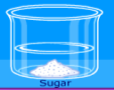
When the sugar and water in the beaker are combined, they will create a solution because -
the water will now turn into a gas
the sugar will dissolve into the water
the water will dissolve into the sugar
the two substances are chemically combining and chemically changing their properties
How many teeth does an adult human have?
32
36
48
20
What do bees collect and use to create honey?
pollen
flowers
sugar
nectar
What is the rarest blood type?
O -
O+
B-
AB -
What part of the plant conducts photosynthesis?
root
stem
leaf
flower
What tissues connect the muscles to the bones?
tendons
ligaments
cartilage
fat
Animals that eat both plants and meat are called what?
omnivores
carnivores
insectivores
herbivores
Diabetes develops as the result of a problem with which specific organ in the body?
stomach
legs
intestines
pancreas
Where can you find the smallest bone in the human body?
pinky
arm
spine
ear
Scientists believe that the continents of the earth were all one large landmass 280 million years ago. The moving of tectonic plates caused this mass to break off into different pieces, making up the continents as we know them today. What was this landmass called?
Mezozoic
America
Pangea
African continent
True or false: Male seahorses give birth to their young, not the females.
True
False
What is the tallest type of grass?
sugar cane
Kentucky blue grass
rice
bamboo
corn
How many bones do sharks have in total?
300
208
0
550
Discovered by Alexander Fleming, this is now used to treat infections and is considered one of the most important discoveries in the field of medical science. What is it?
Vaccines
Head ache medication
Penicillin
Antifungal medication
This type of bond involves the sharing of electron pairs between different atoms. What do you call this bond? example...water
Positive bonds
Covalent
Ionic
Hypotnic
True or false: chloroplasts can be found in animal cells.
True
False
True or false: chloroplasts can be found in animal cells.
True
False
Had pirates known about this vitamin, then they wouldn’t have suffered from scurvy. What vitamin is this
A
D
C
K
Had pirates known about this vitamin, then they wouldn’t have suffered from scurvy. What vitamin is this
A
D
C
K

What is the biggest planet in our solar system?
Venus
The Earth
Jupiter
Mars

What is the chemical symbol for the element oxygen?
O
Ox
O2
Os
A life scientist who observes the relationships between plants, animals, weather and soil on a mountaintop is studying a(n)
community
ecosystem
population
organism
Which of the following statements best describes the composition of air?
air is only made up of nitrogen
air is only made up of oxygen
air is only made up of carbon dioxide
air is made up of a mixture of different gasses
Carbohydrates are made up of which monomers (smallest units)?
amino acids
nucleotides
simple sugars (glucose)
fatty acids
The scientific name for a house cat is Felis catus. What is wrong with how this is written?
the species should also be capitalized
the genus should also be lowercase
the genus should be lowercase and the species should be capitalized
the whole thing should be italicized

The diagram shows two different organisms, a plant and a bird. Which phrase best describes the classification of these two organisms?
same kingdom, same species
same kingdom, different species
different kingdoms, different species
different kingdoms, same species

The diagram shows a rock being placed in a graduated cylinder containing water. What is the volume of the rock? (Note: 1 mL = 1 cm3)
5
8
10
12
All good science begins with ______________.
making observations and asking questions
memorizing the textbook
jumping jacks
falling asleep during class
In science, models are used to ________________.
simplify complex ideas
share ones thoughts with others
show how different parts work together
all of the other options are good answers.
The methodic study of the natural world to give explanations based on evidence
science
knowledge
skills
biology
Putting pieces together, like doing a puzzle, and using the information to draw a new conclusion is known by which of the following terms?
analyzing
observing
inferring
evaluating
Which of the following is NOT a characteristic of life?
living things are composed of cells
living things need to obtain and use energy
living things have adaptations that help them survive in their habitat
living things need to be able to move
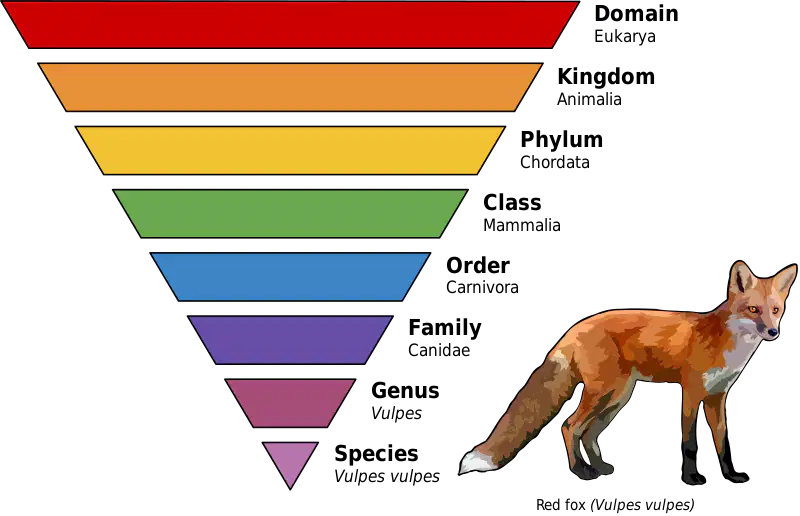
Which level of classification is the most general and includes the largest number of organisms?
Domain
Class
Family
Species
Which level of classification is the most specific and includes only one type of organisms?
Domain
Class
Family
Species
Which domain includes prokaryotes that often live in extreme environments?
Archaea
Bacteria
Ekarya
Cordata
Which laboratory tool should be used to measure out a fluid?
graduated cylinder
test tube
triple beam balance
Bunsen burner
What type of cell has a nucleus and other membrane bound organelles?
eukaryotic cell
prokaryotic cell
unicell
multicell
Who is credited with creating the first compound light microscope?
the Jensen's
Leeuwenhoek
Hooke
Pasture
What units do we use to measure the amount of energy in food?
calories
millimeters
volts
grams
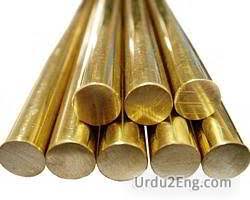
Brass get discoloured in air because of the presence of which of the following gases in air?
Oxygen
Hydrogen Sulphide
Carbon Dioxide
Nitrogen

Which of the following is a non-metal that remains liquid at room temperature?
Phosphorous
Bromine
Chlorine
Helium

Chlorophyll is a naturally occurring chelate compound in which central metal is?
Copper
Magnesium
Iron
Calcium

Which of the following is used in pencils?
Graphite
Silicon
Charcoal
Phosphorous

Which of the following metals from an amalgam with other metals ?
Tin
Mercury
Lead
Zinc

Chemical formula for water is ?
NaAlO2
H2O
Al2O3
CaSiO3

The gas usually filled in the electric bulb is ?
Nitrogen
Hydrogen
Carbon Dioxide
Oxygen
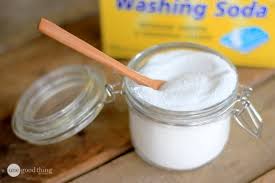
Washing soda is the common name for ?
Sodium Carbonate
Calcium Bicarbonate
Sodium Bicarbonate
Calcium Carbonate

Which of the gas is not known as green house gas ?
Methane
Nitrous Oxide
Carbon Dioxide
Hydrogen

The hardest substance available on earth is ?
Gold
Iron
Diamond
Platinum
This is the system that works as a support structure for your body.
Nervous System
Skeletal System
Muscular System
Cardiovascular System
Which of the choices does not belong to the group?
dog
cat
snake
cow

What part of the skeletal system is in red color?
backbone
breastbone
collarbone
hipbone

What part of the skeletal system is in orange color?
hipbone
collarbone
backbone
breastbone
True or False?
Invertebrate animals have backbone.
True
False
True or False?
Vertebrate animals have backbone.
True
False
Eagle is an example of what type of bird?
flightless birds
hummingbirds
birds of prey
woodpeckers
True or False?
The backbone of a turtle is in its shell.
True
False
Corals are made of ____.
Diamonds
Limestone
Gold
Silver
It is the substance in the skin that produces skin pigmentation or color.
sebum
dermis
melanin
keratin
Who discovered cell.
Robert Brown
Robert Hook
Alexander Volta
Charles Darwin
Who discover double helical structure of DNA.?
Alexander Fleming
Charles Darwin
Hargobind Khorana
Watson & Crick
What class period are you in? (type the numeral only - Example: 5)
In Newton's first Law of Motion, an object at rest will ___________.
defy gravity
want to move
remain at rest
Go to the Moon!
According to Newton's Second Law of Motion, an object in motion will _________.
Stay in motion
want to stop right away
spontaneously combust
Go to the Moon!
Mass of an object can be defined by...
how small an object is
how large an object is
how far an object is from the sun
How much matter an object is made out of.
The greater the mass of an object, the greater the amount of ______ is needed to make it accelerate.
Force
Matter
Acceleration
Velocity
In the equation f=ma, what does the "m" stand for
acceleration
matter
mass
force
In the equation f=ma, what unit of measure is used for force?
Kilogram
Newton
Feet per second
Meters per second
According to Newtons Third Law of Motion, every action has an equal and opposite _________.
gravity
force
mass
reaction
In the equation f=ma, "F" stands for _______.
force
mass
velocity
acceleration
Solve the following equation to find the force.
F = 10kg x 5m/s
20 newtons
50 newtons
2 newtons
50 kilometers
Solve the following equation to find the acceleration of the object.
20n = 10kg x a
2 kilometers
200 meters per second
8 meters per second
2 meters per second

Jumping into the air is an example of _________.
Action-reaction forces
Momentum
electromagnetic fields
Mass
Which choice below best defines MOMENTUM?
Gravitational forces pulling an object from earth
How fast an object can speed up
An object at rest wants to stay at rest
Characteristic of moving objects dealing with its mass and velocity

True or False. If an object is hit opposite sides with the same amount of force on each side, the forces cancel out and the object will NOT move.
True
False
What is velocity?
It is only the acceleration of an object
It is the speed AND direction of an object.
Only the direction of an object
None of the above
True or false. If you change ONLY the direction of an object, you have then changed its velocity.
True
False
Which choice below best defines gravity?
A force that pushes away
an objects ability to accelerate
An objects mass attracting other objects towards it
The ability to change the speed and direction of an object
Select the term that BEST matches the definition below.
Definition: Energy that causes movement.
Force
Gravity
Momentum
Newton's Third Law of Motion

What is Newton's 1st law?
Law of Force and Acceleration
Law of Inertia
Law of Action-Reaction
Law of motion

It takes more force to accelerate the iron man on the left than the iron man on the right because the iron man on the left has more mass. This best describes
Newton's first law, the law of inertia
Newton's second law, the law of acceleration
Newton's third law, the law of action reaction
The law of universal gravitation
Newtons 3rd Law of Motion states:
An object at rest will remain at rest unless acted upon by an outside force.
For every action, there is an equal and opposite reaction
The greater the mass of an object, the more force it will take to accelerate the object

What Newtons law does this picture represent
Newtons 1st law
Newtons 2nd law
Newtons 3rd law
Newtons 4th law
When you push a boat off from the dock, you are demonstrating Newton's 3rd Law of Motion. It simply states that for every action there is an equal and opposite _______________?
Motion
Reaction
Change
Push

The formula for Force is:
Force= Magnet x Acceleration
Force= Mass x Acceleration
Force= Mass x Arsenic
Funny= Monkey x Arrive
Which is an example of Newton's 2nd law?
A ball bouncing
A fan spinning
Pushing a 10 pound box
Sneezing
An object in motion stops when.....
It falls of an edge.
it is acted upon by an outside force.
It is eaten
It never stops
A push or pull on an object is called...
Acceleration
Mass
Inertia
Force
A fireman turns on his hose and is knocked backwards is an example of...
Newton's 1st Law
Newton's 2nd Law
Newton's 3rd Law
Newton's 4rth Law

hint: Miles/hour

Whats Newtons First Law?
The more force applied to an object the faster it will accelerate.
An object in motion will stay in motion and an object at rest will stay at rest unless acted by an outside force.
for every ection there is an equal and oposite reaction

The Law of Inertia
Newtons 1st Law of motion
Newtons 2nd Law of motion
Newtons 3rd Law of motion

The tendency of an object to resist changes in its motion is...
Acceleration
Velocity
Inertia
Force
Newton's third law states that any action will have a(n) ___ and ___ reaction
Equal and similar
Equal and opposite
Equal and different
Greater and opposite

Acceleration: is the rate of change in _____.
distance
Speed
Velocity
displacement

What is the Net Force?
10
0
3
2


Force exerted between the surfaces of two objects.
Friction
Inertia
Force
Gravity

If you lean against a wall, the wall pushes back on you with a(n) weaker force.
True
False

