
 Worksheets
Body System Test Revision 2023
Total questions: 133
Worksheet time: 2hrs 43mins
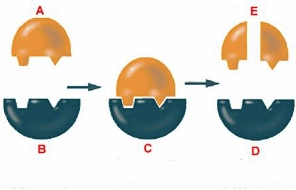
Which letter represents the enzyme?
A
B
Which letter represents the substrate?
A
B
Which letter represents the Product ?
B
C
D
E
Enzymes are "Specific", which best describes this?
function best under certain environmental conditions
speeds up only one type of reaction.
can catalyze the same reaction over and over again.
Enzymes are "Sensitive" which best describes this?
function best under certain environmental conditions
speeds up only one type of reaction. (Like a lock and key!!!) Example: Amylase – only breaks down starches.
can catalyze the same reaction over and over again.
Proteins
Are enzymes used up in chemical reactions?
Yes, they can not be used again for another reaction
No, they can be used again in another reaction

Which of these is most likely an enzyme?
Which sentence is FALSE?
Enzymes are proteins
Enzymes are not specific and can act on all substrates
Enzymes are biological catalysts
Enzymes are affected by pH and temperature
FATS---->FATTY ACIDS/GLYCEROL
Where in the body would Hydrochloric acids be found?
Name the enzyme in the saliva.
salivary maltase
salivary amylase
salivary lipase
salivary pepsin
Where does starch digestion begin?
Mouth
Stomach
Pancreas
Liver
Which group of enzymes breaks down fats into fatty acids and glycerol?
Amylase
Carbohydrase
Lipase
Protease
What is the term given to the contraction and relaxation of intestinal wall muscles, which forces the food through the digestive system?
Emulsification
Digestion
Peristalsis
Egestion
fats are chemically broken down in ...... with .... enzyme.
stomach , lipase
small intestine , lipase
stomach , protease
small intestine , protease
Proteins are digested by enzymes called:
Proteases
lipase
amylase
bile
What is the digestive system?
A system to take out the bad stuff that's in your body
A system where a certain group of organs work together to convert food into energy to feed the body
A system where certain organs in the body digest the food you eat
A system that the organs in the stomach make food for the body to digest.
What does the small intestine do?
reabsorbs the water after the process of the system.
Absorbs most of the end of the nutrients and minerals from where the food takes place.
keeps the stomach in balance for when the system starts.
Absorbs most of the food that's left from the process.
What does the large intestine do?
digest the food from this process
makes a pathway for the food
reabsorb a lot of the water from this process
absorbs the food from this process

Which parts of the diagram is the small and large intestine?
A~ small intestine
E~ large intestine
D~ small intestine
E~ large intestine
C~ large intestine
B~ small intestine
A~ large intestine
C~ small intestine
E~ small intestine
D~ large intestine
What might happen if your large intestine did not absorb water from chyme?
You couldn't digest food.
You wouldn't be able to go to the bathroom.
You would become dehydrated.
Solid waste would not be able to move throughout the digestive system
What is the main function of villi?
They move food from the stomach to the small intestine
They absorb nutrients into the bloodstream
They absorb water from chyme
They move food from the small intestine to the large intestine
What might happen if you had your pancreas removed?
Your intestines might have trouble breaking down food
Your stomach might have trouble producing hydrochloric acid
You would not be able to chew properly
You would have trouble producing saliva
Chewing is an example of what type of digestion?
Dental
Fragmentary
Chemical
Mechanical
Why do we need food to break apart the food we eat?
So it can fit into our stomachs
So our bodies can use the nutrients from the food
So liquids can be separated from solids
So that our bodies' enzymes have something to do.

What is the correct order of digestive system organs?
Mouth, esophagus, small intestine, large intestine, stomach
Large intestine, small intestine, stomach, esophagus, mouth
Esophagus, mouth, stomach, large intestine, small intestine
Mouth, esophagus, stomach, small intestine, large intestine

What happens to food in your small intestine?
Nutrients are absorbed by your blood
Water is absorbed
Mechanical digestion occurs
Undigested food is stored

Which 2 systems work together when blood takes nutrients from your small intestine to your cells?
Circulatory and Digestive
Circulatory and Muscular
Digestive and Respiratory
Digestive and Muscular
Which organ is responsible for absorbing water from digested food?
small intestine
stomach
large intestine
mouth
In which organ does most of the nutrient absorption occur?
small intestine
large intestine
stomach
mouth

absorbs water and minerals into the bloodstream
gall bladder
large intestine
liver
What increases the surface area of the small intestine?
duodenum
villi
ileum
pancreas
What is the purpose of the villi? (select all that apply)
increase the surface area
chemically break down food
absorb nutrients into the bloodstream
mechanically break down food
What is the main function of villi?
They move food from the stomach to the small intestine
They absorb nutrients into the bloodstream
They absorb water from chyme
They move food from the small intestine to the large intestine
What might happen if your large intestine did not absorb water from chyme?
You couldn't digest food.
You wouldn't be able to go to the bathroom.
You would become dehydrated.
Solid waste would not be able to move throughout the digestive system
The majority of the absorption of nutrients into the bloodstream occurs in the _______.
Stomach
Small intestine
Large intestine
Liver
Numerous fingerlike projections in the folds of the wall of the small intestine is classified as
Bolus
Chyme
Bile
Villi
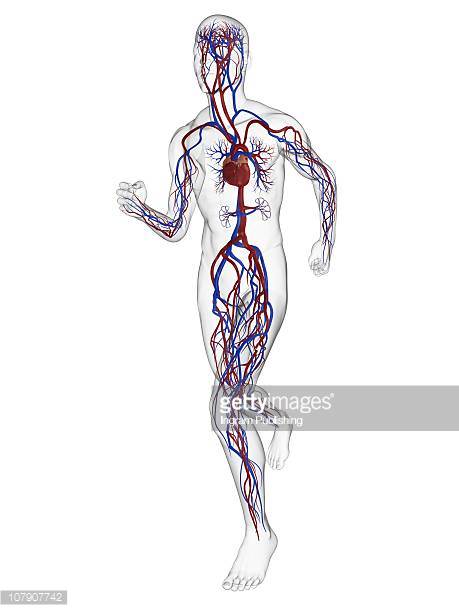
What is the main organ of the circulatory system?
small intestine
bone
lungs
heart
Arteries carry oxygen rich blood away from the heart.
True
False
Veins carry oxygen poor blood back to the heart.
False
True

How does the heart work?
It pumps blood first to the lungs, back to the heart and then around the rest of the body.
It pumps blood first to the rest of the body, back to the lungs and then to the heart.
It pumps blood around the rest of the body, back to the heart and then to the lungs,

The circulatory system works with the ___________ system to provide our body with oxygen.
respiratory
digestive
muscular
skeletal


Deoxygenated blood means that the blood is low in...
Oxygen
Carbon Dioxide
The part of the blood that carries oxygen is called ___________. (Remember we can't live without our blood-line)
red blood cells
white blood cells
Oxygenated means the blood has a lot of....
Oxygen
Carbon Dioxide
Deoxygenated blood means that the blood is low in...
Oxygen
Carbon Dioxide
the gas known as _______ is needed to stay alive and function properly.
oxygen
carbon dioxide
nitrogen
helium
Recall the primary function of the respiratory system.
To ensure each cell receives enough oxygen
To facilitate the exchange of carbon dioxide and oxygen between the environment and our bodies
To digest and metabolise foods
To maintain the body's optimal pH.

Recall two important features of the alveolar wall for gas exchange to occur. Select All correct options.
It is thick
It is thin
It is moist
It is dry
In inhaled air, recall if there is a higher concentration of carbon dioxide or oxygen.
Oxygen
Carbon Dioxide

Recall what structure in fish is adapted for gas exchange.
Gills
Fins
Scales
Lungs
Recall why gills are pink in colour.
Due to blood in the capillaries
Due to oxygen reacting with the blood
Due to chlorophyll in the cells
Due to the countercurrent flow
When you breathe, your lungs take in ___ and remove ___.
air/oxygen
oxygen/carbon dioxide
carbon dioxide/waste
waste/air
The air sacs that are covered with capillaries where gas exchange takes place
bronchi
lungs
oxygen
alveoli
What is the site of gas exchange?
alveoli
bronchus
nose
trachea
what is found around alveoli?
capillaries
pleura
lymphatic nodes
saliva
During gas exchange what enters from alveoli to the capillaries?
CO2
CO
O2
nitrogen
What is the main function of the respiratory system?
to provide oxygen and remove carbon dioxide from the body
to bring oxygen to the body
to break down food and absorb nutrients
to remove oxygen from the body and deliver carbon dioxide

Which is true about diffusion?
occurs from a higher concentration to a lower concentration
occurs from a lower concentration to a higher concentration

In the diagram, oxygen diffuses from the air sac into the capillaries.
true
false

Why does oxygen and carbon dioxide diffuse in the direction shown?
because the inhaled air has less oxygen and less carbon dioxide
because the inhaled air has more oxygen and more carbon dioxide
because the inhaled air has more oxygen and less carbon dioxide
because the inhaled air has less oxygen and more carbon dioxide
With an increase of surface area to volume ratio, what happens to rate of gas exchange?
the rate of gas exchange increases
gas exchange decreases
fish breathe faster
diffusion of oxygen decreases
When particles move from area of high concentration to area of low concentration, this is...
osmosis
diffusion
concentration gradient
The gill cover is called the Operculum.
Which gas exchange method is most efficient?
Parallel flow
Counter-current flow
Which structures increase the surface areas of the gills in fish? (select two)
Gill filaments
Lamellae
Gill arch
Operculum
What adaptations does the alveoli have for efficient gas exchange?
thick walls
thin walls
small surface area
What is meant by a counter-current system?
A short distance for gases to diffuse
When water flows in an opposite direction to blood flow
having a higher concentration inside the lungs than outside
Which one of the following is true for gas exchange?
the movement of lungs.
the exchange of oxygen and carbon dioxide in lungs
the release of energy in cells
How are the gill lamellae adapted for efficient exchange?
They have a good blood supply, lots of capillaries
They are one cell thick, so a short distance for diffusion
There are lots of them, so there is a large surface area
All of the above


What is the correct hierarchy of cells?
tissues-cells-organ systems-organs-organisms
cell-organisms-tissues-organs-organ systems
cells-tissues-organs-organ systems-organisms
organs-tissues-cells-organ systems-organisms
What is an organ system?
an individual living thing such as a plant, bacterium, animal, or fungi.
a group of organs that work together to perform one or more functions.
a group of tissues that perform a specific function or group of functions.
groups of cells that have a similar structure and act together to perform a specific function.
the smallest structural and functioning unit of an organism.
What is the correct order of organization?
cells->tissue->organs->organ systems-> organism
tissue->cells->organs->organ systems-> organism
organs->organ systems-> organism->cells->tissue
Cell--> Tissue ---> X ----> System -----> Organism.
What is X?
Organ
Excretory
plant
Rat
The following shows the cell ortanisation in a muticellular ortanism.
Cell → Tissue → R →System → Organism
Which part of the body can be represented by R?
Ligament
Blood
Epithelium
Liver
From smallest to largest, the levels of organisation of the body are
cell, tissue, organ, system, and organism
organism, tissue, cell, system and organ
organ, cell, system, organism, and tissue
cell, tissue, system, organ, and organism

Which is NOT a function of the nervous system?
gathering information
responding to a stimulus
maintaining homeostasis
collecting waste
What is the nervous system made up of?
The brain, the cerebrum, and nerves.
The cerebellum, the spinal cord, and eyes.
The brain, the spinal cord, and nerves.
The brain, the cerebrum, and eyes.
What are the nerve cells called?
Neurons
Cerebrum
Brain
Medulla
Endocrine glands secrete _
Hormones
Neurotransmitters
A wide range of chemical substances
What is the endocrine system?
A system of vessels that circulates blood around the body.
A group of bones and tissue that provides support and structure for the body.
A group of glands that work together with the nervous system to coordinate all body functions
A group of organs that is responsible for eliminating wastes.
How do hormones travel through the body?
Bloodstream
Intestines
Bones
The main function of the nervous system is _________
to transport nutrients and oxygen to all parts of the body.
to control and coordinate other systems of our body.
to help in movement of our body
to take out waste from our body.
Which of the following are chemicals that travel in the blood and cause changes in different parts of the body?
Hormones
Glands
Parathyroid
Adrenal Gland
How do neurons communicate with each other?
Electrical impulses
Chemical Impulses
Hormones
How do hormones travel through the body?
Bloodstream
Intestines
Bones

Choose levels of organization in the correct order from smallest to largest.
organ system, tissue, organ, cells
cells, organs, tissues, organ systems
cells, tissues, organs, organ systems
organ systems, organs, tissues, cells
Hormones are
email messages
chemical messages
voicemail messages
chemical markers
Combining of egg and sperm
Asexual Reproduction
Sexual Reproduction
Diverse
Uniform
occurs when a second organism develops from an outgrowth of the original.
Vegetative propagation
Budding
Fragmentation
Binary Fission
A type of cell division where the cell divides into two copies
Vegetative propagation
Budding
Fragmentation
Binary Fission
a piece of an organism develops into a fully grown copy.
vegetative propagation
budding
fragmentation
binary fission
What is asexual reproduction?
1 parent
2 parents
What is sexual reproduction?
1 parent
2 parents
Bacteria is an example of
asexual reproduction
sexual reproduction
Which is a simple system with the same/identical offspring(babies)?
asexual reproduction
sexual reproduction
When a cell divides and makes two cells...
It is binary fission
It is fragmentation
It is vegatative propagation

What type of sexual reproduction is this photo showing?
budding
binary fission
fertilization
fragmentation

What type of sexual reproduction is this?
fertilization
budding
vegetative propagation
fragmentation
What is an advantage of asexual reproduction?
it's fast- no need to look for a mate
It uses a lot of energy.
There are a lot of predators to face.

Using the diagram, which type of asexual reproduction is being demonstrated by the bacterial cell?
Binary Fission
Budding
Spore Formation
Regeneration

