
 Worksheets
Comprehensive Viva-voce
Total questions: 48
Worksheet time: 35mins
An allosteric interaction between a ligand and a protein is one in which:
A) binding of a molecule to a binding site affects binding of additional molecules to the same site.
B) binding of a molecule to a binding site affects binding properties of another site on the protein.
C) binding of the ligand to the protein is covalent.
D) multiple molecules of the same ligand can bind to the same binding site.
E) two different ligands can bind to the same binding site.
In hemoglobin, the transition from T state to R state (low to high affinity) is triggered by:
A) Fe2+ binding.
B) heme binding.
C) oxygen binding.
D) subunit association.
E) subunit dissociation.
When a monomers forms a polymer to build repeating units of molecule, the monomers is now called?
(a)
Which of the following is not a possible value for the number of monosaccharide units
in an oligosaccharide?
12
8
5
6
The hydration reaction in beta oxidation of FA is catalyse by:
hydroxy acyl-CoA dehydrogenase
enoyl-CoA hydratase
acyl-CoA dehydrogenase
carnitine acylcarnitine translocase
Water is considered neutral because it
doesn't release or accept H+ ions
releases all its H+
does not dissolve any acids or bases
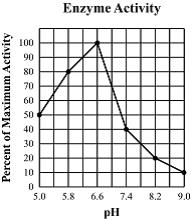
Which of the following conclusions can be drawn from this graph?
The optimal pH of the enzyme is 6.6.
The optimal pH of the enzyme is 9
The enzyme’s activity increases as pH increases from 7 to 9
The enzyme cannot do anything when the pH is 4.
Gram staining is an example of
Acid fast staining
Simple staining
Negative staining
Differential staining
Light gathering capacity of a microscope is
Angular aperture
Numerical aperture
Wavelength
All of the above
protein shells are also known as
Capsid
Nuclei
Cell Envelope
Chemical Machinery
What is the concentration of blood in blood agar?
1-2%
5-10%
20-30%
50-55%
Autocrine signalling happens during ------------------- of T helper cells
MHC II binding with TCR
Synthesis of CD28
Differentiation of T helper
None of the above
Which of the following cells would NOT be found in a germinal center in a lymph node?
dendritic cells
B lymphocytes
plasma cells
monocytes

All cells contain which of the following
Endoplasmic reticulum
plasma membrane
nucleus
mitochondria
What is true about caspases
Caspases are not involved in apoptosis
Caspases cloves protein after cysteine
Only 1 type of caspases is there
Effector caspases need initiator caspases to activate them

What happens here (3rd step)???
nuclear collapse
lysis of apoptotic bodies
chromatin condensation
continued blebbing
The RNA polymerase core enzyme converts into a holoenzyme on the addition of the _________ subunit.
α
β
β’
σ
Which part of the ribosome identifies the Shine – Dalgarno sequence?
Protein
16S rRNA
23S rRNA
5S rRNA
The term molar, which describes a solution's concentration, is written as?
M
mol
g
g/L
These are the mechanism of enzymes, except
Lowering the activation energy
Providing an alternative pathway
Increasing reaction enthropy
Lowering the energy of transition state
Which of the following sequences of RNA will be transcribed from a hypothetical sequence of DNA given below?
3'-ATGCATGCATGCATGC-5'
5'-TACGTACGTACGTACG-3'
3'-UACGUACGUACGUACG-5'
5'-AUGCAUGCAUGCAUGC-3'
5'-UACGUACGUACGUACG-3'
3'-AUGCAUGCAUGCAUGC-3'
Some amino acids are coded by more than one codon, hence the genetic code is
specific
degenerate
Non-overlapping
unambiguous
In the redox reaction: pyruvate + NADH + H+ ⇋ lactate + NAD+, which reactant is oxidized, and which is reduced?
NADH is reduced and pyruvate is oxidized
Lactate is reduced and pyruvate is oxidized
Lactate is reduced and NAD+ is oxidized
Pyruvate is reduced and NADH is oxidized
Cyanide is a metabolic poison that stops the electron transport chain by directly blocking the actions of
NAD+
NADH dehyrogenase
ATP sythase
Cytochrome oxidase
_____________ are molecules that boost the immune system. They do so by protecting cells from harmful molecules called free radicals.
Antbodies
Surfactants
Anti free radicals
Antioxidants
Which of the following is a growth inhibitor
Auxin
ABA
Cytokinin
Gibberellin
What is Homeostasis ?
is the maintenance of a constant internal environment
is the maintenance of a constant external environment
is the maintenance of a constant living environment
A hormone is
a chemical substance produced by a gland and carried by the lymph.
an enzyme produced by a gland and carried by the blood.
a chemical substance produced by an organ and carried by the blood.
a chemical substance produced by a gland and carried by the blood.
Which of the following is NOT a cell theory........
All cells comes from pre-existing cells
All non-living things are made of cells
Cells are basic unit of structure and function of all living things
All of the above
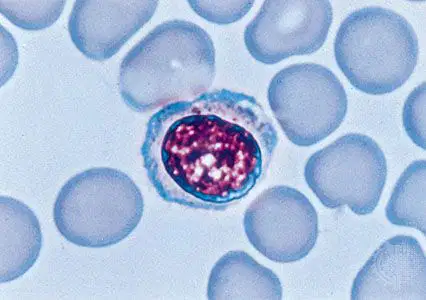
Identify this large nucleated blood cell type
Macrophage
Lymphocyte
Neutrophil
RBC
In an experiment, bacteria are introduced into human blood. It is observed that the complement system is activated and the bacterial cells are killed. Which of the following complement components generated by complement activation will most likely bind to bacteria and lead to either opsonization or phagocytosis?
C3b
C5a
C2
C4
NK cells recognise and kill
Normal host cells
Cells with increased expression of MHC-I molecules
Cells with decreased expression of MHC-I molecule
Intracellular pathogens
Which of the following structures is responsible for protein synthesis in eukaryotic cells?
Nucleus
Golgi Apparatus
Ribosome
Endoplasmic Reticulum
What is the primary function of the mitochondria in eukaryotic cells?
Cell division
Protein synthesis
Energy production
Photosynthesis
Which of the following is a characteristic feature of prokaryotic cells?
Multiple linear chromosomes
Presence of a nucleus
Membrane-bound organelles
Peptidoglycan cell wall
Why the properties of nanomaterials are different significantly compared to bulk materials?
Increase relative surface area
Decreased relative surface area
Increased lattice parameters
Lower down the melting temperature

The sole of a gecko's foot has millions of nanoscale hairs that help it grip to almost any surface.
Using nature as inspiration, what would be a similar concept?


What is a nanoparticle?
A particle that is 1 -10 nanometres (nm) in diameter.
A particle that is 1 -100 nanometres (nm) in diameter.
A particle that is 10 -100 nanometres (nm) in diameter.
A particle that is 1 -1000 nanometres (nm) in diameter.
What are the two Basic Approaches to Nanomanufacturing?
CLUSTER & ATOMS
ATOMIC SCALE & MOLECULAR SCALE
TOPDOWN & BOTTOM UP
BULK & FRAGMENTS

