
 Worksheets
PE1 Gurong Pinoy
Total questions: 150
Worksheet time: 1hrs 15mins
Builds many professional linkages
The learning environment promotes fairness
Is safe and conducive for learning
Establishes and maintains consistent standards
of learner's behavior
Domain 2
Domain 7
Domain 5
Domain 4
Partly, it is in the affective domain.
Very much, it is specific.
Not at all, develop is a non-behavioral term.
Yes, if the word “develop” is replaced with “create”.
Effective learning begins with setting clear expectations and learning outcomes.
Learning is a cooperative and a collaborative process.
Learning is an active process.
Learning is the discovery of the personal meaning and ideas.
Quarrels often with classmates
Is suspicious of others
Relates well to class
Has low level of independence
Authoritarian
Authoritative
Neglecting and permissive
Permissive
teenagers never listen to adult advice.
14-year-olds are not yet capable of perspective taking and cannot take the teacher’s perspective.
the teenager’s favorite word is “no”, and she will simply reject everything the teacher says.
she thinks what she feels is too special and unique, that no one felt like this before.
Concrete operational stage
Formal operational stage
Pre-operational stage
Between concrete and formal operational stage
Allowing children to show that they learned the stages of mitosis in a way where they feel most comfortable.
Allowing children to show that they learned the stages of mitosis in a way where they feel most comfortable except by lecturing.
Applying two sets of different standards.
Preparing two different sets of examination, one for the fast learners and another for the slow learners.
The teacher groups the learners by ability levels and assigns each group a different task on the same topic, and then requests three different teachers, each to assess one of the groups.
The teacher groups the learners by their ability level and makes the groups work with the same topic but assigns a different task appropriate for each group to accomplish.
The teacher divides the class into three heterogeneous groups and assigns the same activity for each group to work on.
The teacher groups the learners by their ability level and assigns different content topics for the groups to work on.
Teachers should accept and value diversity
Teacher must do his/her best to reduce student diversity in class
The less diversity of students in class, the better for teacher and students
Student diversity is purely due to students’ varied cultures
I, II, and III
II and III
I, II, III and IV
I and II
Sinuwerte ka ngayon dito sa test, ha?
Nakikita ko na kailangan mong maglaan ng mas mahabang panahon sa paksang ito para lubos mong maunawaan ito.
Hindi ka talaga magaling dito sa paksang ito, ‘no?
Nahihirapan ka sa paksang ito.
Compare students
Do homogenous grouping for group activities
Make use of variety of teaching and assessment methods and activities
Develop different standards for different student groups
Learning is the discovery of the personal meaning and ideas.
Learning is a cooperative and a collaborative process.
Effective learning begins with setting clear expectations and learning outcomes.
Learning is an active process.
Learning is an active process.
Effective learning begins with setting clear expectations and learning outcomes.
Learning is an active process.
Learning is a cooperative and a collaborative process.
Learning is the discovery of the personal meaning and ideas.
Learning is an active process.
Learning is a cooperative and a collaborative process.
Effective learning begins with setting clear expectations and learning outcomes.
Learning is the discovery of the personal meaning of ideas.
Effective learning begins with setting clear expectations and learning outcomes.
Learning is a cooperative and a collaborative process.
Learning is an active process.
He/she regards his culture as superior to other’s culture.
He/she emphasizes on the differences among people and disregards their commonalities.
He/she accepts the fact that all people are unique in their own way.
He/she regards his culture as inferior to other’s culture.
Availability of flexible furniture
Prominence of bulletin boards in every building
Presence of spacious classrooms
Tall school buildings
II, III and IV
I, II, III and IV
III and IV
I and II
Encourage children to eat independently.
Ask the children to do repeated writing drills every day.
Conduct a variety of fun and challenging activities involving hand muscles daily.
Provide daily coloring book activities.
"Those who were noisy today during seatwork will not be allowed to play games in the computer later.”
"If it takes you longer to finish the seatwork because time is wasted with chatting, then we won’t have time to go to the playground anymore.”
"If you get a grade of 95 or higher in the first two assignments, you will be exempted from the 3rd assignment.”
“Those who are well-behaved in class will be given plus 5 points in the quiz.”
Yes
No
A little, because subject-verb agreement is a must in paragraph writing.
Very much, because she made use of a ten-sentence paragraph for the end-of-the-period.
Share lesson objectives/learning outcomes with students.
Lesson objectives/intended learning outcomes must integrate 2 or 3 domains – cognitive, skill and affective or cognitive and affective or skill and affective.
Begin with the end in mind.
Write SMART lesson objectives/intended learning outcomes.
The teacher clearly explains the rules she prepared.
The learners participate in the rule-making process.
The learners knows the punishments for not following the rules.
The teacher gives additional points for those who follow the rules.
Handle behavior problems promptly and with due respect to learners’ rights
Give immediate feedback to reinforce appropriate behavior of learners
Communicate and enforce school policies and procedures clearly and consistently
Be open to exceptions each time a learner misbehaves in class
learn the participant views rather than imposing their own view of the situation.
try to correct something that is not working.
control for possible rival hypothesis for extraneous variables.
learn how things were done in the past and apply them to current or future events.
Achievement Portfolio
Celebration Portfolio
Competence Portfolio
Project Portfolio
Referent Power
Legitimate Power
Coercive Power
Expert Power
personal and professional development
assessing and reporting
curriculum
content knowledge and pedagogy
Content knowledge and pedagogy
Personal and professional development
Diversity of learners
Learning environment
Beginning
Proficient
Highly Proficient
Distinguished
Classical Conditioning
Operant Conditioning
Social Learning
Information Processing
Episodic memory
Semantic memory
Sensory memory
Working memory
Legitimate power
Expert power
Coercive power
Referent power
Law of Disuse
Law of Effect
Law of Exercise
Law of Readiness
newborn
milestones
parallel play
tantrums
of learning
for learning
as learning
any of the three
Structure of activities
Learning goals, aims and objectives
Materials needed
Activity duration
Contextual theory
Behaviorist theory
Cognitive theory
Constructivist theory
Concepts should be presented in varied and different ways
Effort was put forth when tasks are challenging
Learning by doing is more effective than just by sitting and listening
Learning is aided by formulating and asking questions
Locke
Plato
Gagne
Tolman
Self-actualization, Esteem, Social, Security, Physiological
Self-actualization, Security, Esteem, Social, Physiological
Physiological, Security, Social, Esteem, Self- actualization
Physiological, Social, Security, Esteem, Self- actualization
When what is to be learned is new and easy for the students
Materials presented are difficult and challenging to the students
When the materials to be learned is related to what students already know
Students find the lessons easy and relevant to what was assigned to them
Classical conditioning
Meaningful learning
Operant conditioning
Social learning
2-years old
4-years old
6-months old
5-years old
10-15%
25-30%
45-50%
60-65%
hope
integrity
productivity
initiative
Make sure that there is representation of the student's identity groups in the curriculum beyond tokenism
Avoid discussion of hot-button issues in the classroom out of fear of offending people
Require students of conflicting identities to work together to break down walls
Prescribe what students do to ensure that their actions are right
mesosystem
microsystem
exosystem
chronosystem
Executive
Sustained
Divided
Selective
language
play
scaffolding
mediation
Lev Vygotsky
Jean Piaget
Bronfenbrenner
Erikson
Sensorimotor
Pre-Operational
Concrete Operational
Formal Operational
schema
paradigms
frameworks
scaffolds
Infants
Milestones
Tantrum
Child Development
Real objects, print, audio-visual materials and visual materials
Visual materials, audio visual materials, print and computers
Visual materials, print, audio-visual materials and realia
Print, audio-visual materials, computers and realia
Creativity and innovation
Research and information fluency
Model digital-age work and learning
Technology operations and concepts
Traditional Test
Performance-based Assessment
Written Test
Objective Assessment
Summative Assessment
Formative Assessment
Diagnostic Assessment
Placement Assessment
Ms. Santos who asked questions when the discussion was going on to know who among her students understood what she was trying to emphasize.
Mr. Colubong who gave a short quiz after discussing thoroughly the lesson to determine the programs of learning.
Ms. Ventura who gave 10-item test to find out the specific lessons which the students failed to understand.
Mrs. Lopez who administered a readiness test to the incoming grade one pupils.
How to give immediate feedback to student's strengths and weaknesses
How to determine the area of interest of learners
How to certify student's achievement
How to design one's instruction
No, the giving of an objective test is more appropriate than the use of essay.
No, such method of assessment is inappropriate because essay is difficult.
Yes, essay test could measure more than what other tests could measure.
Yes, essay test is the best in measuring any type of knowledge.
Concurrent
Predictive
Construct
Content
I and II
II and III
I or III
I, II and III
Content Principle
Learning Principle
Equity Principle
Product Principle
Diary
Portfolio
Anecdotal record
Observation report
She models digital-age work and learning
She facilitates and inspires student learning and creativity
She promotes and models digital citizenship and responsibility
She designs and develops digital-age learning experiences and assessments
I, II, III, IV
II, I, III, IV
I, II, IV, III
II, I, IV, III
Portfolio Assessment
Journal Assessment
Traditional Assessment
Performance-based Assessment
It puts linguistically intelligent at a disadvantage.
It is not easy to administer.
It utilizes so much time.
It lacks reliability.
Students are evaluated in one sitting.
Students do an actual demonstration of their skill.
Students are evaluated in the most objective manner.
Students are evaluated based on varied evidences of learning.
Mrs. Bautista who is administering a test to her students.
Mr. Ferrer who is counting the scores obtained by the students in his test.
Ms. Leyva who is computing the final grade of the students after completing all their requirements.
Prof. Cuevas who is planning for a remedial instruction after knowing that students perform poorly in her test
Collecting data relevant to personal characteristics
Administering teacher-made tests
Interpreting and attaching value to data collected
Scoring accomplished tests
Considers students’ suggestions in testing
Gives valid and reliable paper-pencil test
Includes parents in the determination of assessment procedures
Gives students real-life tasks to accomplish
Diagnostic test
Formative test
Summative test
Placement test
Observation
Non-restricted essay test
Short answer test
Essay test
Is focused on lifelike, meaningful, relevant types of student learning
Offers opportunities to study problem intensively
Easy to complete
Fruitful in terms of genuine learning
Portfolio, exhibits, journals
Paper and pencil test, demonstration, reports
Student self-assessment, non-authentic assessment, surveys
Multiple choice, structured observations, sentence completion
Test should not be easy to administer.
The linguistically intelligent are smart.
It utilizes so much time.
Varied forms of assessment should be done.
Administrability
Reliability
Validity
Usability
Objectivity
Economy
Administrability
Scorability
Auditory materials
Visual materials
Tactile materials
Experiential materials
As a teacher, use your own teaching style unmindful of the learning styles of the students.
Adjust to the learning styles of the learners and provide differentiated approach.
Just focus on the learner's styles even if you do not have any skill in delivering it.
Go back to the traditional teaching styles that were used by teachers in the past.
World Wide Web
Learning Resource Center
e-library
A, B and C
Parents
Teachers
Principals
Learners
Commission of Culture and Sports
Technical Education, Skills Development Authority
Commission on Higher Education
Department of Education
Join the Brigada Eskwela
Chaperone their children during outdoor activities
Follow up lessons at home
A, B, and C
Africa
Philippines
America
China
Unlimited Materials
Hard copy
Soft copy
Limited materials
Mean
Range
Mode
Median
Putting human qualities in the center of education
Offering big picture education
Preparing students for lifelong learning
A technology-based education but lesser teacher
Task-Based Language Teaching
Experiential/Project-Based Learning
Content-Based Language Teaching
Cooperative Learning
Cooperative Learning
Content-Based Language Teaching
Strategies -Based Instruction
Corpus-Based Teaching
learning centers
skits
role-playing
simulations
cooperative learning
instructional learning
learning tool
learning center
check the materials of the students.
give the rubric for evaluating students’ performance
distribute the procedure of the hands-on activity and let them figure it out
orient the students with the rules and regulations that must be followed while conducting a hands-on activity
behaviorism
cognitivism
experiential learning theory
constructivism
constructivist
behaviorist
experiential
motivational
discussion
demonstration
brainstorming
index cards
Attitude, Aptitude and Habit
Critical Thinking, Collaboration and Communication
Interest, Learning and Short-Term goal
Strengths, Weaknesses, Opportunities and Threat
Less interaction with peers and adults
Develops strong problem-solving skills
Stress-free learning process
The learning experience becomes more meaningful
BF Skinner
Gestalt
John Holt
John Dewey
Realia and computer
Video, picture and television
Digital video, film, versatile compact disc
Book, imaginative literature, programmed instruction
Split attention
Spatial contiguity
Cost effectiveness
Communication effectiveness
Appropriateness
Authenticity
Responsiveness
Simplicity
To secure materials
To prepare the materials beforehand
To make the students aware of the goal
To be able to practice how to operate the equipment
Stores the password of the user
Stores information about the user’s web activity
Stores the commands used by the user
Stores software developed by the user
To develop cognition and power
To re-engineer society
To acquire productive skill
To know themselves and their place in society
Driving Force > Restraining Force
Driving Force = Restraining Force
Driving Force < Restraining Force
Restraining Force # Driving Force
Lifelong Learners
Ethics
Mediator
Facilitator
Xenophobia
Practicality
Culture Shock
Xenocentrism
Substitution
Alteration
Restructuring
Perturbation
Fact -> Concept -> Procedure -> Metacognition
Fact -> Opinion -> Generalization -> Theory
Concept -> Opinion -> Generalization -> Theory
Concept -> Opinion -> Fact -> Theory -> Principle
Reading, Hearing, Seeing
Reading, Listening, Looking
Watching, Looking, Seeing
Doing, Discussing, Demonstrating
Students are trained how to get along well with others.
Activities like field trips, group work and school programs and celebrations develop the social skills and values of the students.
Social ethics is discussed in schools to cultivate moral and ethical behaviors.
All of the above
Morality
Ethics
Respect
Trust
The Bill of Rights
Magna Carta for Public School Teachers
Code of Ethics for Professional Teachers
The Philippine Constitution
Perennialism
Progressivism
Social Reconstructivism
Existentialism
36
45
30
48
to strengthen military and individual excellence
for religious education
for conformity and survival
realization of national ideals
Education Act of 1940
EO 134 of 1937
RA 7722
EO 46
Hinduism
Islam
Jainism
Confucianism
St. Peter
St. Benedict
St. Thomas Aquinas
Mencius
Humanism
Cognitivism
Constructivism
Metacognition
TESDA
DepEd
CHED
PRC
RA 1006
RA 9163
RA 7836
RA 7722
Immoral, unprofessional or dishonorable conduct
Observing proper procedures in obtaining a certificate of registration
Faithfulness to the code of ethical and professional standards for professional teachers
Willingness to attend seminars, workshops, conferences and the like or the continuing education program prescribed by the Board and the Commission.
a and b
a and c
b and c
a, b and c
TESDA
DepEd
CHED
PRC
I demonstrate attitudes that foster learning and genuine human relationship.
I have a good command of my subject matter.
I possess competencies in the use of teaching skills that facilitate student learning.
I see teaching as a calling for service. In here, I found fulfillment.
Curriculum designing
Curriculum implementation
Curriculum modification
Curriculum planning
D.O No. 70 s. 2012
CMO No. 74 s. 2017
D.O No. 02, s. 2018
CMO No. 82, s. 2020
Knowledge, Comprehension, Application, Analysis, Synthesis, Evaluation
Remembering, Understanding, Applying, Analyzing, Evaluating, Creating
Knowing, Understanding, Applying, Applying, Analyzing, Evaluating, Innovating
Knowledge, Understand, Apply, Analyze, Synthesize, Evaluate
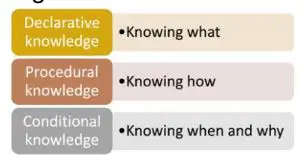
Conditional Knowledge
Cognitive Knowledge
Domain-Specific Knowledge
Procedural Knowledge
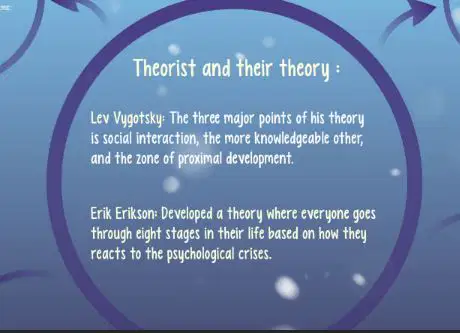
underestimates the effects of culture
based his theories largely on anecdotal evidence
was too biased because his theories were largely based only on men and boys
was too biased because his theories were largely based only on his own children and those of his colleagues
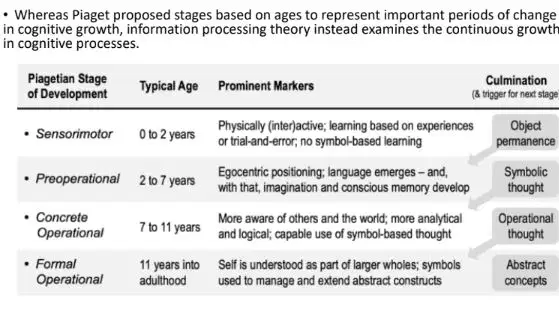
do not see development as occurring in distinct stages with a brief transition period from one stage to the next.
see children as directing their own cognitive development.
identify cognitive capabilities and limitations at various points in development.
try to explain how more advanced understanding grows out of a less advanced version.
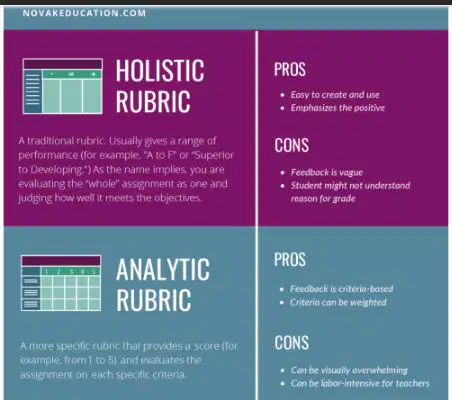
Analytic
Holistic
Either holistic or analytic
Both holistic and analytic
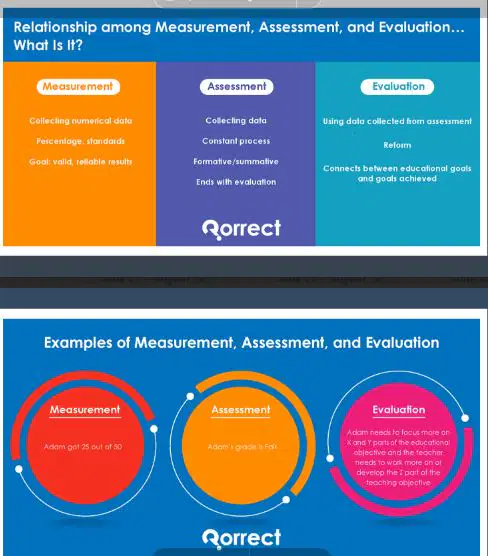
I and II only
III and IV only
I, II, and III
I, III and IV
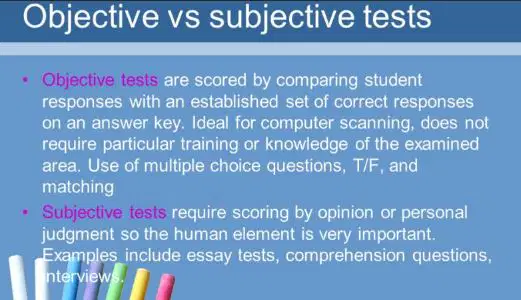
Yes, because essay test is easier to construct than objective test.
Yes, because essay test can measure any type of objective.
No, he should have conducted oral questioning.
No, he should have prepared an objective test.
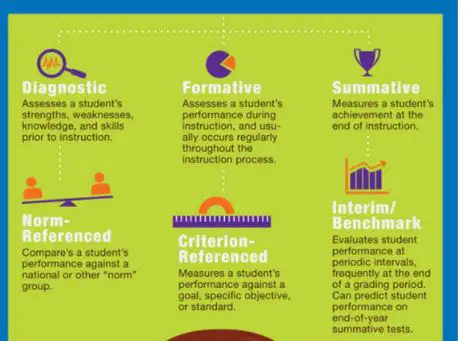
Summative Assessment
Formative Assessment
Diagnostic Test
Placement Test
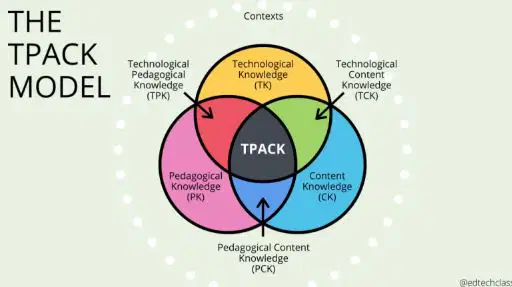
I, I, V
I, II, III
I, II, V
I, III, IV
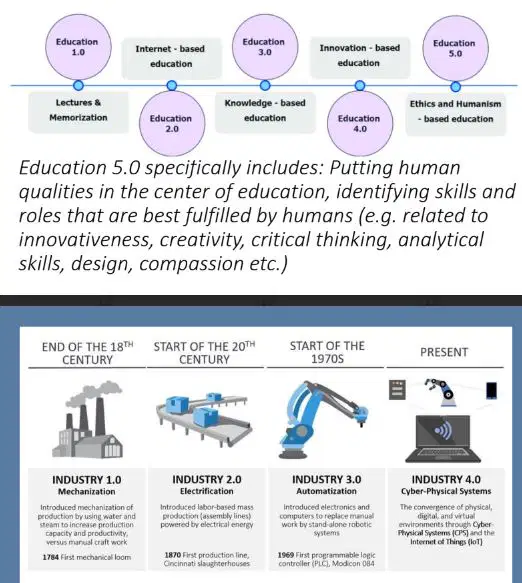
Education 3.0
Industrialization 4.0
Education 4.0
Education 5.0
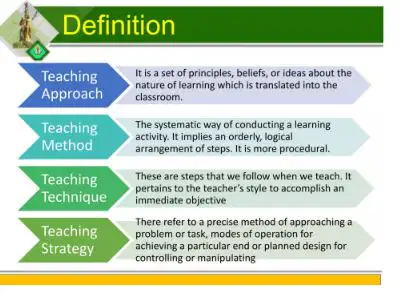
Strategy
Approach
Method
Technique
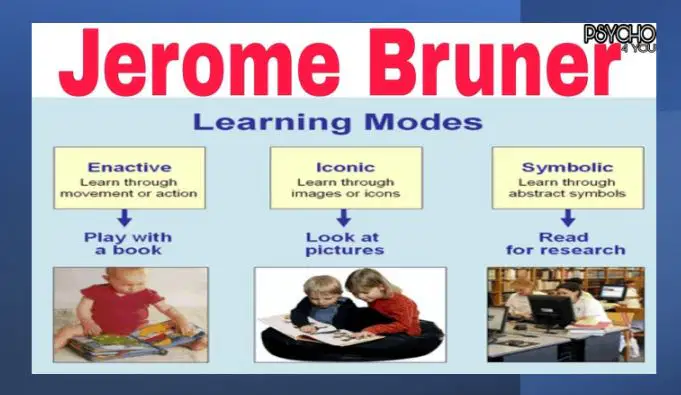
Video and books
Pictures and videos
Radio and recording
Modules and periodicals
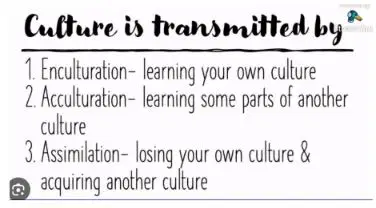
Acculturation
Enculturation
Cultural Relativity
Value Formation

salat
zakat
Ramadan
Hajj

Assertive Approach
Group Managerial Approach
Business Academic Approach
Behavior Modification Approach

Mores
Norms
Values
Tradition

