
 Worksheets
BIOG 221: Module 1
Total questions: 50
Worksheet time: 29mins
What is anatomy?
The study of how the body works.
The change in position of an organism.
The study of the structure of the body.
The complex material changes into simpler material.
What is physiology?
The study of how the body works
The study of the structure of the body
The process of getting oxygen
The process of making a new organism

What is homeostasis?
The movement of material
An abundant substance in the body
Blood moving under the pressure of the heart
Maintaining a steady state
You are told to assume the anatomical position. You would be looking at the
a wall
the floor
the ceiling
In the anatomical position your arms would be
bent at the elbow
straight
In the anatomical position you would be
sitting
standing
In the anatomical position your
Thumbs would be closest to your thighs
little finger would be closest to your thighs

This X-ray image is showing organs from the ____________ view.
frontal
sagittal
transverse
anatomical
Which plane divides the body into top half and bottom half?
Frontal
Transverse
Coronal
Sagittal
The knee is ________ to the ankle.
distal
proximal
superficial
medial
The torso/trunk is superior to the legs.
True
False
This space has both spinal cavity and cranial cavity.
ventral cavity
dorsal cavity
abdominopelvic cavity
pleural cavity
All the following characteristics apply to the body in the anatomical position except
the eyes are forward
the arms are at the side
the feet are together
the palms are facing the body
the body is viewed ventral or dorsal

Which of the following pairings, correctly identifies which plane is being demonstrated.
A: Sagittal, B: Transverse, C: Coronal
A: Transverse, B: Coronal, C: Sagittal
A: Coronal, B: Sagittal, C, Transverse
A: Sagittal, B: Coronal, C: Transverse
A: Coronal, B: Transverse, C: Sagittal
Based on the upper limb part, shoulder joint is ___________ to the elbow joint.
proximal
distal
deep
superficial
Based on the lower limb part, ankle joint is ___________ to the knee joint.
proximal
distal
deep
superficial
In clinical anatomy, the plane or section that divides body part into right & left side is known as ___________
axial
sagittal
coronal
In clinical anatomy, the plane or section that divides body part into front & back is known as ___________
axial
sagittal
coronal
The axial plane or also known as transverse plane separate the body part into ______________
superior - inferior
anterior - posterior
right - left
lateral - medial

This is an MRI image of brain in __________ section.
axial
mid-sagittal
coronal

[The eyes are _______ to the brain].


*right and left refer to "right" and "left" of the body in position.


Stimulus, Efferent Pathway, Response, Input, Output, Afferent Pathway, Receptor, Control Center
What is the correct order?
Receptor, Stimulus, Input, Efferent Pathway, Control Center, Output, Afferent Pathway, Response
Stimulus, Receptor, Input, Efferent Pathway, Control Center, Output, Afferent Pathway, Response
Stimulus, Receptor, Input, Afferent Pathway, Control Center, Output, Efferent Pathway, Response
Receptor, Stimulus, Input, Afferent Pathway, Control Center, Output, Efferent Pathway, Response
cells→ ___→ organs→ organ systems→ organism
What can fit in the blank?
Macromolecules
Cell Products
Proteins
Tissues
STABLE
EQUAL
COMPLETE
CORRECT
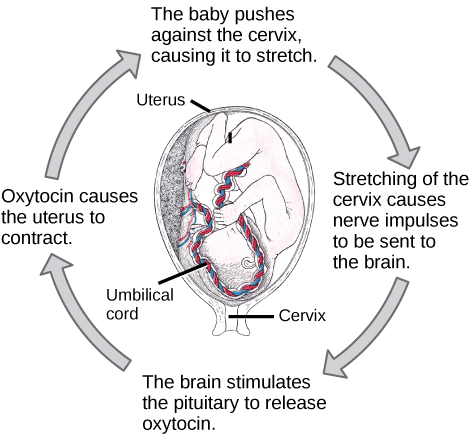
In a positive feedback loop, each action creates a consequence that _____________________ the other action.
decreases
has no effect on
amplifies
In a negative feedback loop, each action creates a consequence that _____________________ the other action.
decreases
has no effect on
amplifies

Sweating when exercising or hot outside
Negative Feedback Loop
Positive Feedback Loop
Which system consists of the skin, hair, and nails?
Circulatory
Respiratory
Nervous
Integumentary
Which system transports nutrients and oxygen to the parts of the body?
Respiratory System
Digestive System
Circulatory System
Integumentary System
Which system is responsible for the absorption of nutrition?
Circulatory
Integumentary
Digestive
Respiratory
Which system takes in information through the 5 senses?
Nervous
Respiratory
Circulatory
Digestive
Which system includes the lungs and trachea?
Circulatory
Nervous
Respiratory
Skeletal
Reorder the following from simplest to most complex.
Organelle
Cell
Tissue
Organ
Organ System
Match the organ system with its function
Nervous System
Controls the body
Circulatory System
Transports oxygen and nutrients through the body
Muscular System
Helps move the body
Excretory System
Removes waste
What is your Caudal or Caudad?
Toward the front
Head
Tail/Tail end
Anterior

