
 Worksheets
Unit 2 Olympics
Total questions: 29
Worksheet time: 15mins
Which of these is not associated with the CNS?
Brain
Thalamus
Spinal Cord
Dorsal Ramus
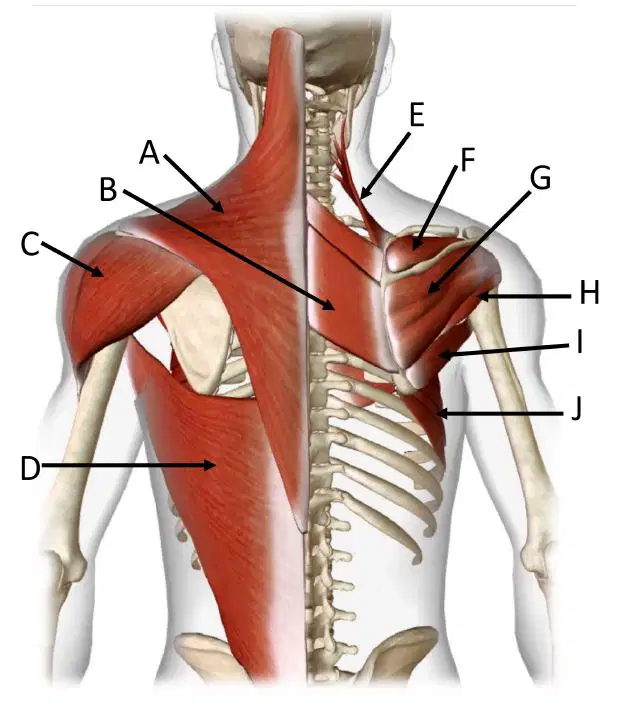
Identify the latissimus dorsi.
A
B
C
D
You are nervous and jiggling your foot. Which type of neurons carry the information that causes your muscles to contract?
visceral efferent
somatic efferent
somatic afferent
visceral afferent
Which muscle is NOT part of the rotator cuff?
supraspinatus
infraspinatus
teres minor
deltoid
An (inguinal or abdominal) hernia can be from:
Weakness of the abdominall wall
Weakness of the rotator cuff
Weakness of the back muscles
Lack of blood supply
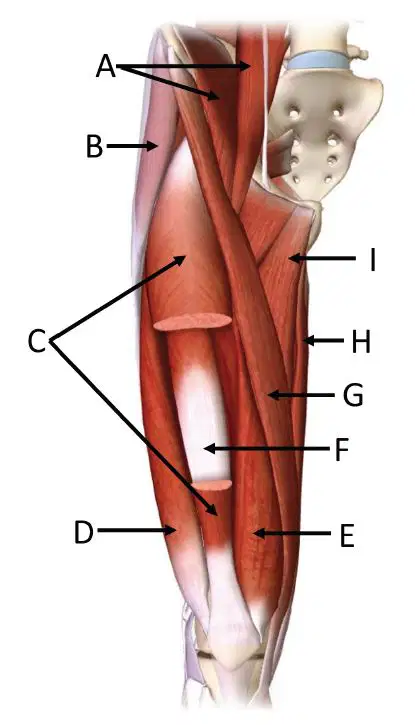
Identify the vastus medialis.
C
D
E
F
Oligodendrocytes:
produce CSF
produce myelin in the CNS
produce mylein in the PNS
form the blood-brain barrier
You eat too much and your stomach is very distended. Which type of neurons carry that information to your brain?
visceral efferent
somatic efferent
somatic afferent
visceral afferent
Which of the following cranial nerves is responsible for innervating the medial rectus muscle of the eye?
trochlear
oculomotor
abducens
optic
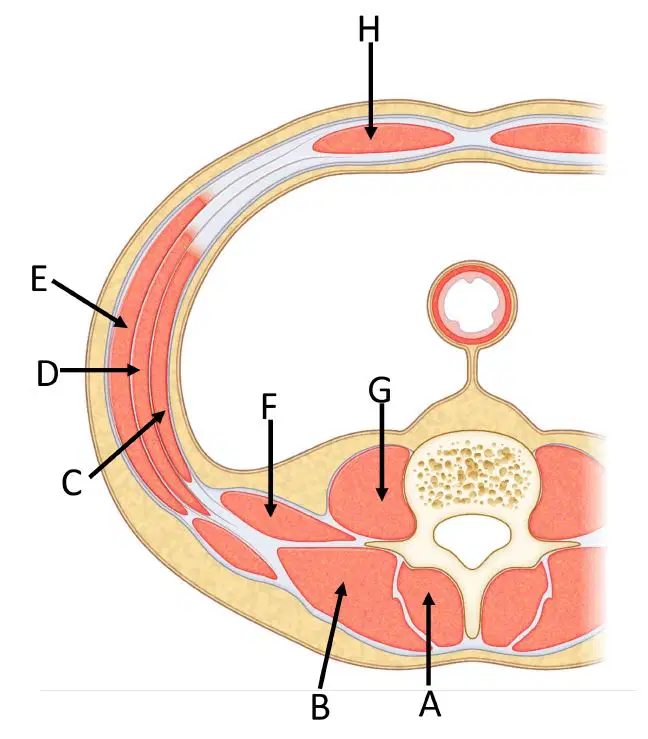
Identify the rectus adominus.
C
D
E
H
You burn your finger on the stove. Which type of neurons carry that information to your brain?
visceral efferent
somatic efferent
somatic afferent
visceral afferent
Which joint does the brachialis muscle act upon?
Shoulder
Elbow
Wrist
scapulothoracic
Which of the following nerves is responsible for dorsiflexion?
tibial
femoral
deep fibular
superficial fibular
Which joint do the rhomboid muscles act upon?
Shoulder
Elbow
Wrist
scapulothoracic
Identify the deltoid.
A
B
C
D
Identify the vastus intermedius.
C
D
E
F
Which of the following muscles is located in the lateral leg?
Vastus lateralis
semimembranosus
semitendinosus
fibularis longus
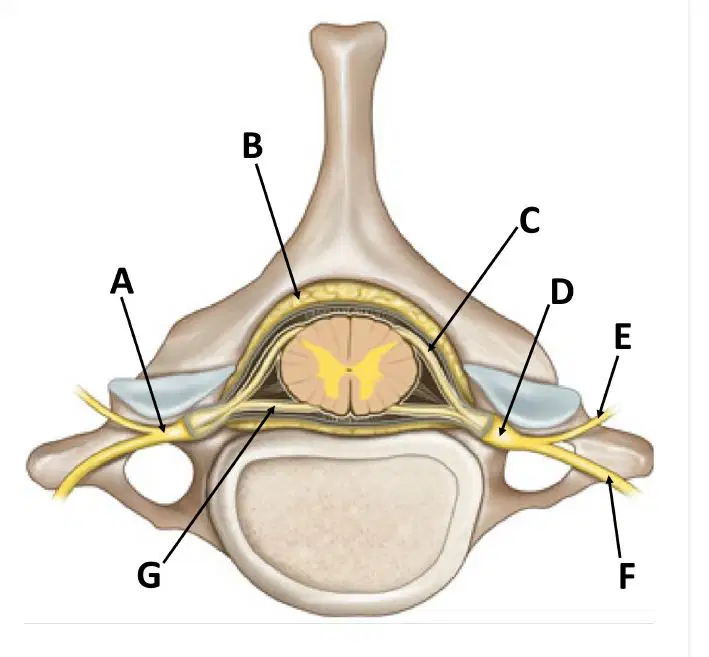
The structure labeled F innervates which of the following?
skin of the anterolateral body wall
skin of the back
the stomach and intestines
intrinsic back muscles
Which of the following cranial nerves is responsible for innervating the lateral rectus muscle of the eye?
trochlear
oculomotor
abducens
optic
Your patient seems to understand language but cannot form words. Which part of the brain is most likely damaged?
cerebellum
Wernicke's area
Broca's area
hippocampus
Which of the following best describes the action(s) of the posterior forearm compartment?
flexion of the fingers and wrist
extension of the shoulder
extension of the wrist
pronation of the radioulnar joints
Your patient cannot make new memories. Which part of the brain is most likely damaged?
cerebellum
Wernicke's area
Broca's area
hippocampus
Identify the internal abdominal oblique.
C
D
E
H
Which of the following best describes the action(s) of the anterior arm compartment?
flexion of the fingers and wrist
flexion of the shoulder
extension of the wrist
pronation of the radioulnar joints
Astrocytes:
produce CSF
produce myelin in the CNS
produce mylein in the PNS
form the blood-brain barrier
patient suffering from a tumor in the RIGHT parietal lobe might present with which of the following symptoms?
tingling in RIGHT arm
weakness in RIGHT arm
tingling in LEFT arm
weakness in LEFT arm
Which of the following nerves is responsible for extension of the knee?
tibial
femoral
deep fibular
superficial fibular
Which of the following muscles is located in the anterior leg?
Vastus lateralis
tibialis anterior
semitendinosus
fibularis longus
The structure labeled C carries which of the following?
parasympethetic visceral efferent neurons
somatic efferent neurons
sympathetic visceral efferent neurons
somatic afferent neurons

