
 Worksheets
Exam
Total questions: 42
Worksheet time: 21mins
Name
Class
Date
1.
A part is to be machined to a length of 5.504" plus or minus 0.006". Which of the following dimensions is not acceptable?
a)
5.496
b)
5.503
c)
5.498
d)
5.51
e)
All would be acceptable
2.
A precise reference plane or surface used in precision measurement is called a:
a)
Surface Gage
b)
Surface Plate
c)
Parallel
d)
Combination Set
3.
HMIS stands for:
a)
High-speed Machining Information SystemHigh-speed Machining Information System
b)
Hazardous Material Inspection SheetsHazardous Material Inspection Sheets
c)
Hazardous Materials Identification SystemHazardous Materials Identification System
d)
Hazardous Materials Information SystemHazardous Materials Information System
4.
How would "Five Hundred Thousandths of an Inch" be written as a three place decimal?
a)
0.500
b)
0.005
c)
0.05
d)
0.05
5.
SDS stands for:
a)
Shop Disposal System
b)
Safety Data System
c)
System Diagnostic Sheet
d)
Safety Data Sheet
6.
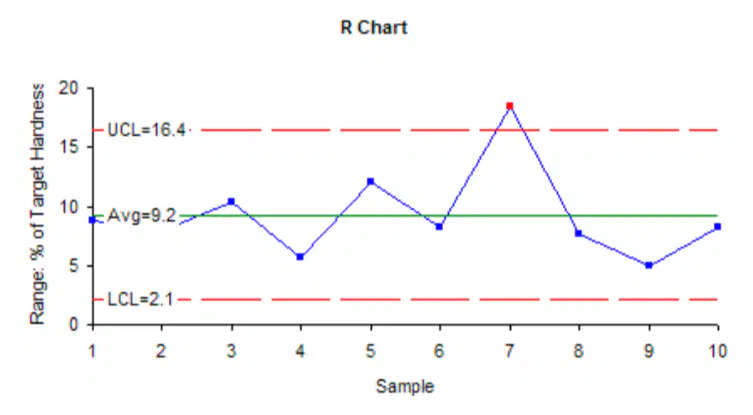
The R chart below shows we are making consistent parts:
a)
True
b)
FALSE
7.
The amount of permissible variation on part size and shape is known as:
a)
Variation Value
b)
Allowance
c)
Tolerance
d)
Range
8.
What tool would be most accurate for checking perpendicularity during a relaxed check?
a)
Precision or Solid Square
b)
Hook Rule
c)
Dial Caliper
d)
Combination Square
9.
A type of metal that contains no iron and is not magnetic is:
a)
Cast Steel
b)
Nonferrous Metal
c)
Super Alloy
d)
Ferrous Metal
10.
1070 plain carbon steel contains ________ carbon than 1020 plain carbon steel.
a)
an equal amount
b)
less
c)
more
d)
The answer cannot be determined based on the provide information
11.
SAE 1050 steel has what percentage of carbon content:
a)
0.0005%
b)
0.05%
c)
0.50%
d)
0.005%
12.
A type of hardening where only an outer layer of material is hardened is called:
a)
Surface Hardening
b)
Indirect Hardening
c)
Annealing
d)
Direct Hardening
13.
A process that uses some type of material containing solid carbon to add carbon to the outer layer of steel is called:
a)
Carburizing
b)
Normalizing
c)
Annealing
d)
Tempering
14.
This process returns metals to their original, unhardened condition:
a)
Nitriding
b)
Tempering
c)
Annealing
d)
Quenching
15.
A negative consequence of hardening metal is that it becomes:
a)
Fragile
b)
Brittle
c)
Tough
d)
Un-cutable
16.
The ______ and ______ scales both measure the hardness of a material.
a)
Smith & Wesson
b)
Normal & Quench
c)
Brinnel & Rockwell
d)
Carbon & Tempered
17.
Using a standard 81 piece gage block set, which combination of gage blocks would be selected to make a gage block build of 2.8337"?
a)
0.1007, 0.033, 0.600, 2.000
b)
0.103, 0.1307, 0.600, 2.000
c)
0.1337, 0.800, 2.000
d)
0.1007, 0.133, 0.600, 2.000
18.

Read 0-1" micrometer to the nearest thousandth of an inch.
a)
0.416
b)
0.441
c)
0.466
d)
0.341
19.

Read 0-1" micrometer to the nearest thousandth of an inch.
a)
0.749
b)
0.724
c)
0.751
d)
0.774
20.
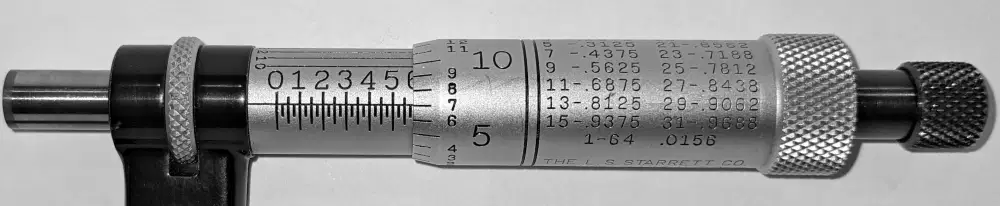
Read 0-1" micrometer to the nearest thousandth of an inch.
a)
0.577
b)
0.582
c)
0.607
d)
0.557
21.

Read 0-1" micrometer to the nearest thousandth of an inch.
a)
0.294
b)
0.319
c)
0.269
d)
0.219
22.

Read 0-1" micrometer to the nearest thousandth of an inch.
a)
0.214
b)
0.164
c)
0.189
d)
0.114
23.
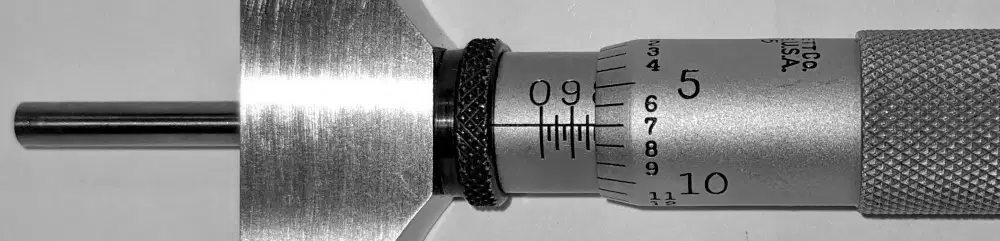
Read 0-1" depth micrometer to the nearest thousandth of an inch.
a)
0.982
b)
0.957
c)
0.807
d)
0.832
24.
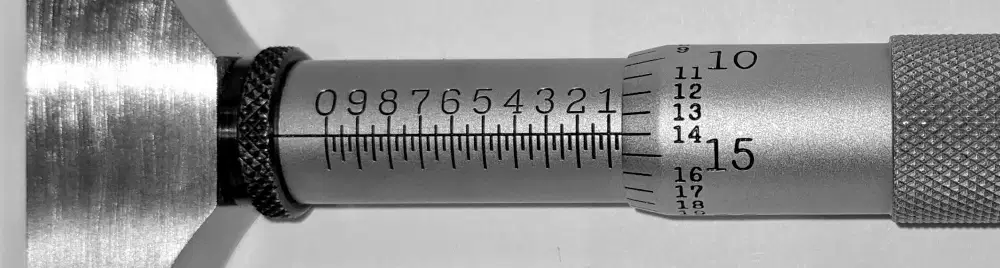
Read 0-1" depth micrometer to the nearest thousandth of an inch.
a)
0.114
b)
0.139
c)
0.064
d)
0.039
25.
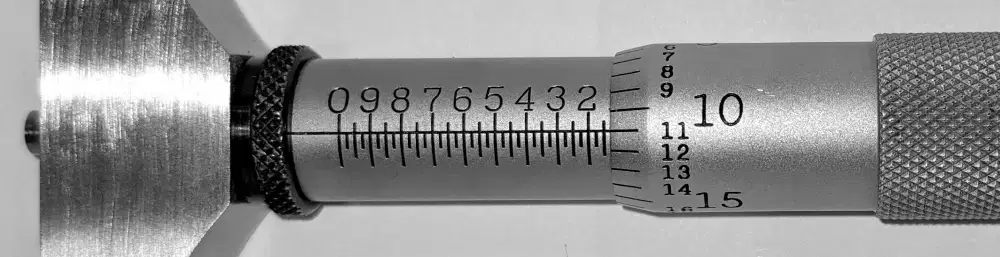
Read 0-1" depth micrometer to the nearest thousandth of an inch.
a)
0.036
b)
0.261
c)
0.211
d)
0.136
26.
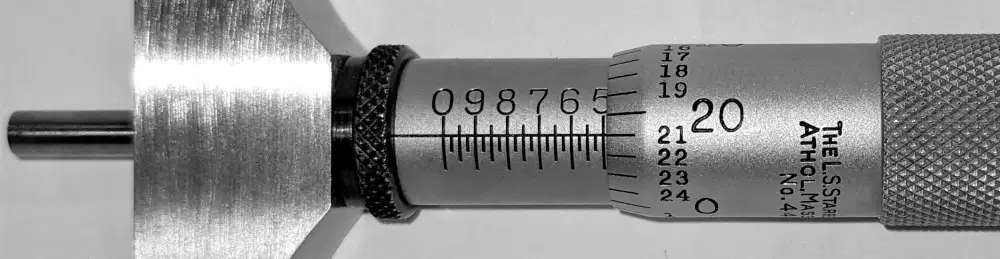
Read 0-1" depth micrometer to the nearest thousandth of an inch.
a)
0.521
b)
0.496
c)
0.471
d)
0.546
27.
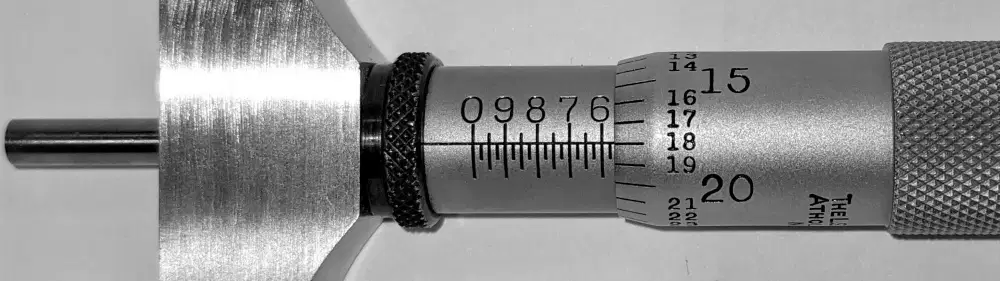
Read 0-1" depth micrometer to the nearest thousandth of an inch.
a)
0.568
b)
0.618
c)
0.643
d)
0.518
28.
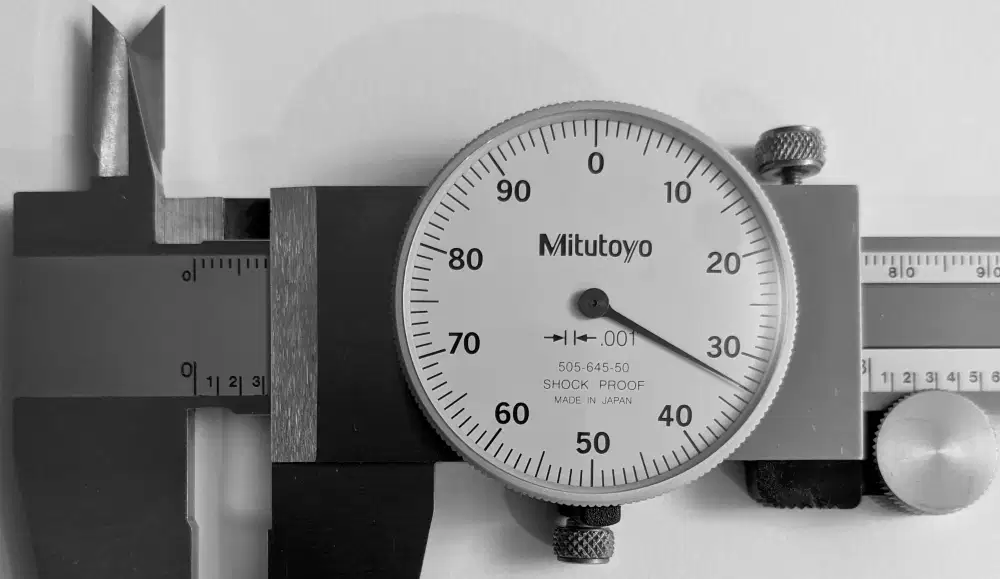
Read to the nearest thousandth of an inch.
a)
0.347
b)
0.233
c)
0.333
d)
0.247
29.
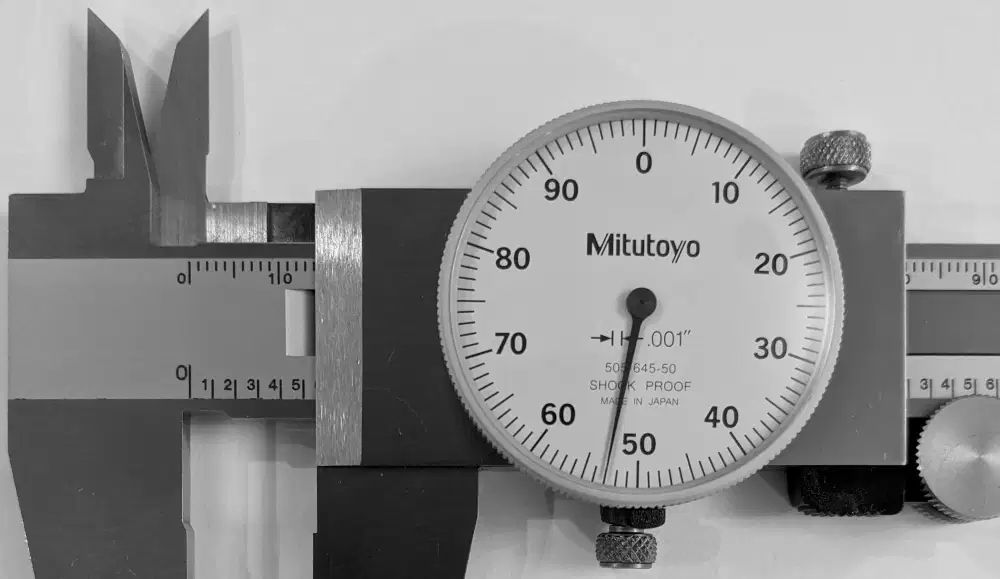
Read to the nearest thousandth of an inch.
a)
0.567
b)
0.553
c)
0.153
d)
0.145
30.

Read to the nearest thousandth of an inch.
a)
0.272
b)
0.288
c)
1.288
d)
1.272
31.

Read to the nearest thousandth of an inch.
a)
0.126
b)
0.134
c)
2.126
d)
2.134
32.
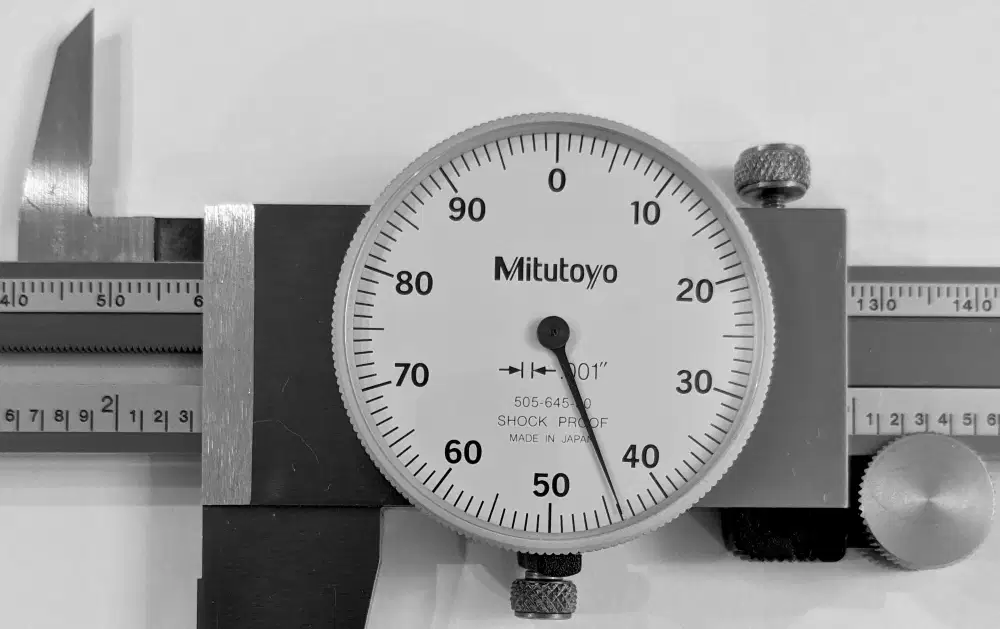
Read to the nearest thousandth of an inch.
a)
2.356
b)
2.344
c)
0.356
d)
0.344
33.

Read the .050 vernier caliper to the nearest one thousandth at the indicated measurement.
a)
3.246
b)
3.25
c)
0.996
d)
0.946
34.
The best way to calibrate or check the accuracy of a standard 1-2" micrometer would be to use a:
a)
Inside Micrometer
b)
Parallel
c)
Dial Caliper
d)
Gage Block
35.
This is a federal agency responsible for conducting research and making recommendations for the prevention of work-related injuries and illnesses:
a)
NFP
b)
NIOSH
c)
NIMS
d)
OSHA
36.
All fires can be extinguished with water if a fire extinguisher is not available.
a)
True
b)
FALSE
37.
What items are required in order for a fire to occur? Check all that apply.
a)
Oxygen
b)
Smoke
c)
Heat
d)
Metal
e)
Carbon Dioxide
38.
When should safety glasses be worn?
a)
When you enter the machining facility
b)
Anytime there is a potential eye hazard
c)
When operating a machine
d)
All of the answers
e)
None of the answers
39.
Any liquids spilled on the floor should be wiped up immediately because:
a)
It looks bad when visitors are touring the facility
b)
It may cause someone to slip and fall
c)
It will stain the floor
d)
It causes more work for the janitor
40.
Which tool would work best for measuring a 3.408" diameter shaft with a tolerance of plus or minus .001"?
a)
3-4" Outside Micrometer
b)
6" Steel Rule
c)
6" Dial Caliper
d)
6' Vernier Caliper
41.
The quantity of parts to be inspected from a production run during a specified time period is stated in the company's:
a)
Production Plan
b)
Inspection Plan
c)
Process Plan
d)
Sampling Plan
42.
The symbol 125√ indicates _______ and is ________ in comparison to a 250√.
a)
the surface finish of 125 microinches or better is required; smoother
b)
the surface finish of 125 microinches or better is required; rougher
c)
the carbon percent is 25%; harder
d)
the carbon percent is 25%; softer
100 %

