
Font size
 Worksheets
Soil Mechanics Revision
Total questions: 20
Worksheet time: 29mins
---rocks are formed by the cooling of the molten magma
Sedimentary
Igneous
Metamorphic
quartz

This rock formed when bits of other rocks and sediment were pressed into a solid. What type of rock is it?
Sedimentary Rock
Metamorphic Rock
Igneous Rock
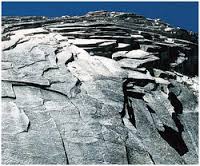
If the rate of weathering is more than rate of transportation of weathered material, the resulting accumulated soil is ------
Alluvial soil
lacustrine deposits
residual soil
sedimentary soil
Cohesion is a measure of the …..
Intermolecular forces.
Molecular forces.
Destructive forces.
Axial forces.
Compressive forces.

What is c in the following figure?
cohesive component
frictional component
friction force
cohesive force
normal stress
Shear strength consists of two components:
(a)
What is the cohesion value for sand?
(a)
_________ apparatus is used to test liquid limit of a soil.
Mohr
Cassagrande
Otto
Terzaghi
What is the porosity of a soil sample whose void ratio is 0.35
19.5
40.65
25.9
30
______ is independent of the total volume of the soil mass.
Bulk unit weight
Dry unit weight
Submerged unit weight
Unit weight of solids
Void ratio is the ratio of _____
volume of voids to total volume
volume of voids to volume of solids
volume of solids to volume of voids
volume of soil mass to volume of voids
The formula for density index ID is ______
(emax – e)
(emax–e)/(emin−e)
(emax–emin)/(emax−e)
(emax–e)/(emax−emin)
Which of the following assumptions is wrong, with respect to sedimentation analysis?
The soil particles are spherical
Particle settle independent of other particles do not have any effect on its velocity of settlements
Soil particles has different specific gravity
The walls of jar, in which the suspension is kept do not affect the settlement
The water content corresponding to the maximum density in compaction curve is called ____________
Water content of compacted soil
)
Optimum water content
Air void water content
None of the mentioned
What are the types of water flow in the soil?
Turbulent flow and Laminar flow
Linear flow
None of the mentioned
All of the mentioned

