
Font size
 Worksheets
CHAPTER 3 TRANSPORTATION
Total questions: 95
Worksheet time: 2hrs 32mins
Human Heart has
one chamber
two chambers
three chambers
four chambers
Human Heart has
one valves
two valves
three valves
four valves
Human Heart has
one valves
two valves
three valves
four valves
Human Heart has
one blood vessels
two blood vessels
three blood vessels
four blood vessels
Pulmonary vein carries ____________ from the lungs to the heart.
oxygenated blood
deoxygenated blood
What is the function of valves in heart?
To prevent the backflow of blood in the chambers.
To allow the backflow of blood in the heart.
To initiate the flow of the blood in the heart.

Figure below shows one type of blood cell. What is the name of the blood cells and its function?
Red blood cell , Transport food
White blood cell , Transport food
Red blood cell, Transport oxygen
White blood cell, Transport oxygen

Identify the part labelled C.
Left atrium
Left ventricle
Right atrium
Right ventricle
Which of the following is FALSE about white blood cell?
Irregular shape
Has a large nucleus
Produced by bone marrow
Carries oxygen
Why left ventricle have thicker wall compared to right ventricle?
pump blood with low pressure from right ventricle to the whole body cell except lung
pump blood with low pressure from left ventricle to the whole body cell except lung
pump blood with high pressure from left ventricle to the whole body cell except lung
pump blood with high pressure from right ventricle to the whole body cell except lung


What part of the heart divides the ventricles into two sides?
ventricular separator
divider
Septum
The main artery in the heart is the
aorta
vena cava
pulmonary artery
pulmonary flow
Which side of the heart has the oxygenated blood?
Left
right
both
top

Which blood vessel transport deoxygenated blood?
Pulmonary vein
Aorta
Pulmonary artery
Renal artery
Blood cells P function to fight infections in human body. name blood cells P.
Platelet
Plasma
White blood cell
Red blood cell
* The process of exchange of substances needed by cells and waste products occurs at suitable rate and comprehensively.
*Have no specialised transport system.
These are the characteristics of:
Complex organism
Simple organism
Complicated organism
Singular organism
Tick the CORRECT Importance of The Function of Transport System in Organisms.
Transport substances needed by cells such as oxygen and nutrients to produce energy through cellular respiration.
Eliminates toxic waste products from the cells such as carbon dioxide and urea.
Transport substances needed by plant cells such as carbon dioxide and water to carry out photosynthesis.
Transport the products of photosynthesis such as sucrose and carbon dioxide from the leaves to the other parts of the plants.
Type of blood circulatory system in fish is:
Double blood circulatory system
Incomplete double circulatory system
Complete double circulatory system
Single blood circulatory system
Type of blood circulatory system in amphibians is:
Double blood circulatory system
Incomplete double circulatory system
Complete double circulatory system
Single blood circulatory system
Type of blood circulatory system in reptiles is:
Double blood circulatory system
Incomplete double circulatory system
Complete double circulatory system
Single blood circulatory system
Type of blood circulatory system in mammals and birds is:
Double blood circulatory system
Incomplete double circulatory system
Complete double circulatory system
Single blood circulatory system
For mammals and birds, the component of heart consists of:
one atrium and one ventricle
two atria and one ventricle
two atria and two ventricles
two atria and three ventricles
Human Heart has
one chamber
two chambers
three chambers
four chambers
Human Heart has
one valves
two valves
three valves
four valves
Human Heart has
one blood vessels
two blood vessels
three blood vessels
four blood vessels
Pulmonary vein carries ____________ from the lungs to the heart.
oxygenated blood
deoxygenated blood
Tick the CORRECT statement(s) about capillary:
Wall is one cell thick
Without any muscle or elastic tissue for exchange of substances
have the largest lumen and with valves
slow circulation of blood and no pulse
Tick the CORRECT characteristic(s) of artery:
Thick and muscular wall with a lot of elastic tissues to withstand high blood pressure
Small lumen and no valve
Transport deoxygenated blood from the heart to the whole body, except the lungs
Rapid blood flow under high blood pressure
Has pulse
Which are the components of Human Blood?
Red blood vessel
White blood vessel
Platelet
Blood vessel
What are the two circulatory systems in human?
Pulmonary Circulatory System
Paramater Circulatory System
Systonic Circulatory System
Systemic Circulatory System


Transpiration is a part of____________?
Condensation
Sublimation
Evaporation
Precipitation
What is absorbed by the plant by it's roots, and transpiration takes place as the water exits the ________?
Leaves
Stem
Branch
Roots
What is the effect of increasing light intensity in transpiration?
It decreases transpiration rates
It increases transpiration rates
It doesn't impact the rate of transpiration
Can excess transpiration lead to stunted growth?
YES
NO
Which of the following indicates the pathway of water through a plant?
root hair cell --> xylem --> stomata
stomata --> root hair cell --> xylem
xylem --> stomata --> root hair cell

The diagram shows a blood circulatory system that contains of one ventricle and one atrium. Which vertebrate that has the circulatory system as mentioned above?


This vertebrate has double circulatory system which consists of pulmonary circulatory system and systemic circulatory system. The oxygenated blood and deoxygenated blood are separated and do not mix with each other in the heart.
Which vertebrate has this type or circulatory system? Tick the correct answers.


The diagram shows a blood circulatory system that contains of one ventricle and two atria. Which vertebrate that has the circulatory system as mentioned above?


How many chambers does a human heart have?
Two chambers
Three chambers
Four chambers
Five chambers

How many valves does a human heart have based on the diagram above?
Two valves
Three valves
Four valves
Five valves

SEMILUNAR VALVES are located at aorta and pulmonary artery. What is the function of semilunar valve?
To ensure blood flow in one direction FROM LEFT ATRIUM TO LEFT VENTRICLE
To ensure blood flow in one direction and DOES NOT FLOW BACK TO THE VENTRICLE
To ensure blood flow in one direction FROM RIGHT ATRIUM TO RIGHT VENTRICLE
Tick TWO characteristics and functions of right atrium
Has muscular wall
Has thin muscular wall
Receive oxygenated blood from lungs
Receive deoxygenated blood from body cells

Why do ventricles have thicker muscular wall than atrium? Tick TWO correct answers
Ventricles carry blood in higher pressure
Blood in ventricles is forced to flow out from the heart
Ventricles carry oxygenated blood
Which chamber of the heart has the thickest muscular wall?
Right atrium
Right ventricle
Left atrium
Left ventricle
This blood vessel carries deoxygenated blood from body cells to the heart.
Name the blood vessel as mentioned above.
Pulmonary artery
Pulmonary vein
Vena cava
Aorta

The diagram shows a human heart. Label B in the diagram
(a)

The diagram shows a human heart. Label E in the diagram.
(a)

The diagram shows a human heart. Label C in the diagram.
Semilunar valve
Tricuspid valve
Bicuspid valve

The diagram shows a human heart.
X is the muscular wall which separates the left side and the right side of the heart. X prevents oxygenated blood from mixing with deoxygenated blood. What is X?
Pulmonary artery
Septum
Semilunar valves
Aorta

The diagram shows artery and vein in blood circulatory system. Tick THREE answers that show the characteristics of artery
Carry deoxygenated blood
Muscular wall
Small lumen
Has valve
Blood flows very fast
The function of valves is to ensure the blood flow in one direction. Which blood vessel has valve?
Blood capillary
Vein
Artery

The blood capillary allows the exchange of gases, food and waste products between the blood and body cells via diffusion. Which characteristic of blood capillary that helps the diffusion to happen?
Small lumen
One cell thick wall
No valve
All arteries carry oxygenated blood EXCEPT
(a)
All veins carry deoxygenated blood EXCEPT
(a)
What is the function of pulmonary artery?
To carry oxygenated blood from heart to body cells
To carry deoxygenated blood from heart to lungs
To carry oxygenated blood from lungs to heart
To carry deoygenated blood from body cells to heart

The diagram shows double circulatory system of humans and other mammals. Name the circulatory system labelled by Y.
Pulmonary circulatory system
Systemic circulatory system

The diagram shows pulmonary circulatory system that connects lungs and heart. What is X?
Pulmonary artery
Vena cava
Pulmonary vein
Aorta

The heartbeat produces 'lub dub' sound during the process of diastole and systole. Tick THREE correct answers that show the process of systole.
Tricuspid valve opened
Ventricles contract
Semilunar valves opened
Blood pumped out from heart to lungs and body cells
Which factor influences the pulse rate of a person? Tick the correct answers
Physical activities
Gender
Age
Body health

The diagram shows a reading of normal blood pressure shown by a sphygmomanometer. The reading is written as 120/70 mm Hg. 120 mm Hg is systolic pressure reading, meanwhile 70 mm Hg is diastolic pressure reading. Why is the reading of systolic pressure reading is higher than diastolic pressure reading?
During systole, the blood flowing into and filling in the heart. The ventricles are relaxing.
During systole, the blood flow out of the heart and pumped to the lungs and the body. The ventricles are contracting.

The diagram shows blood pressure categories. What diseases that a person may have if he or she has high blood pressure? Tick the correct answer.
Stroke or heart attack
Diabetes
Kidney failure
Heart failure
Vision loss
Which pysical activity contributes to the highest pulse rate of a person?


The diagram shows components of human blood. What is X
(a)
Tick TWO correct statements of blood components and their functions
Red blood cells are to transport oxygen in our body
White blood cells help blood clotting after injury
Plasma carries dissolved substances include nutrients, carbon dioxide, enzymes, hormones and waste products
Platlets helps to fight bacteria in our body
Which blood group has A antigen? Tick the correct answers
Blood group A
Blood group B
Blood group AB
Blood group O
Blood group O can be donated to everyone. The person who has blood group O is called as
(a)
Which blood group is a universal recipient? Universal recipient is the person who can receive all types of bloods.
Blood group A
Blood group B
Blood group AB
Blood group O
A person who has blood group A can donate to a person who has
Blood group A
Blood group B
Blood group AB
Blood group O
Why does a person who has blood group AB cannot donate to other types of blood?
Because of the presence of Anti-A and Anti-B antibodies in his or her plasma
Because there are no antibodies in his or her blood
Because his or her blood contain A antigen and B antigen
Because his or her blood does not have A antigen and B antigen

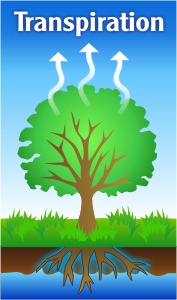
What is the name of the process shown in the diagram?
(a)

The diagram shows a process of transpiration. The small openings on the underside of leaves are called
(a)

The diagram shows the opening and closing of stoma (pore). What is X?
(a)

The diagram shows exudation or guttation process by a plant. The water loss from the plant is in liquid form known as HYDATHODES. When does this process usually occur? Tick TWO correct answers
Hot day
Night
When air humidity is high
Morning
Evening

The diagram shows a mass potometer and a bubble potometer. Potometer is a device to measure the rate of transpiration of a plant. Which factor causes the rate of transpiration to be high? Tick the correct answer(s).
High humidity of air
Slow air movement
High temperature
High light intensity

The diagram shows a cross-section of a stem. Tick TWO true statements about the function of phloem and xylem
Phloem is a vessel to transport water and salt mineral from roots
Xylem is a vessel to transport water and salt mineral from roots
Phloem is a vessel to transport food from leaf
Xylem is a vessel to transport food from roots

