wayground logo

Free Printable Worksheets

Font size

S
M
L
XL
Worksheets

Bonding and Nomenclature

Total questions: 90

Worksheet time: 23hrs 30mins
Name
Class
Date
1.
What type of bond forms when electrons are transferred from one atom to another?
a)
ionic bond
b)
atomic bond
c)
covalent bond
d)
metallic bond
2.
The bond between Na & F.   Ionic or covalent?
a)
Ionic
b)
Covalent
3.
The bond between N & H.   Ionic or covalent?
a)
Ionic
b)
Covalent
4.
Which of the following gives the correct chemical formula for the compound Magnesium Phosphide?
a)
Mg2P3
b)
MgP
c)
Mg3P2
d)
MgP2
5.
Which of the following gives the correct chemical formula for the compound Dinitrogen Monoxide?
a)
NO
b)
N2O
c)
N2O2
d)
O2N2
6.
What is the correct chemical name for the ionic compound:  Na2O
a)
Sodium oxide
b)
Sodium (II) oxide
c)
Disodium monoxide
d)
Disodium oxide
7.
What is the correct chemical name for the ionic compound: Fe3N2
a)
Iron nitride
b)
Iron (III) nitride
c)
Iron (II) nitride
d)
TriIron dinitride
8.
What is the correct chemical name for the ionic compound: CuS
a)
copper sulfide
b)
copper (I) sulfide
c)
copper (II) sulfide
d)
copper monosulfide
9.
What is the correct chemical name for the molecular compound:  CS2
a)
Carbon Sulfide
b)
Carbon diSulfide
c)
diCarbide diSulfide
d)
Carbon (II) Sulfide
10.
What is the correct chemical name for the molecular compound:  SF4
a)
Sulfur Fluoride
b)
Sulfur TetraFluoride
c)
TetraSulfide Fluoride
d)
Sulfur (IV) Fluoride
11.
What type of atoms make a covalent bond?
a)
only Nonmetals
b)
Metal and a Nonmetal
c)
only Metals
d)
only Noble Gases
12.
Ionic bonds are between...
a)
Metal and Non-metal
b)
Non-metal and Non-metal
c)
Metal and Metal
13.
What type of compound is CaF2?
a)
covalent
b)
ionic
c)
polar
d)
metallic
14.
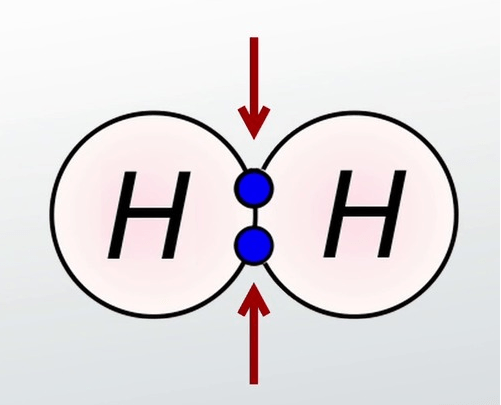
Given the picture, what type of bond is  holding the atoms together in this molecule?
a)
polar covalent bond
b)
nonpolar covalent bond
c)
ionic bond
d)
metallic bond
15.
How do covalent bonds form?
a)
Donating & receiving valence e- between atoms.
b)
Opposite slight charges attract each other between compounds.
c)
Scientists are still not sure how they form.
d)
Sharing valence e- between atoms.
16.
What do we call a covalent bond where electrons are shared UNEVENLY or UNEQUALLY?
a)
Ionic
b)
Polar Covalent
c)
Nonpolar Covalent
d)
Van der Waals Force
17.
Which of the following is NOT considered a diatomic element?
a)
Carbon
b)
Nitrogen
c)
Chlorine
d)
Iodine
18.
Diatomic elements are defined as IDENTICAL elements that bond with each other (i.e. Oxygen with Oxygen).  What type of bond should they form?
a)
Ionic
b)
Polar Covalent
c)
Nonpolar Covalent
d)
Van der Waals force
19.
If a molecule contains polar bonds, the molecule MAY OR MAY NOT be polar overall. 
a)
True 
b)
False
20.
In a(an) POLAR bond, one atom pulls on the shared electrons more than the other atom. 
a)
True
b)
False
21.
What is the name of this Compound
a)
P2O5
b)
Phosphorous PentaOxide
c)
Diphosphorous pentaoxide
d)
Phosphourous Oxide
22.
What is the name of this Molecule shape
a)
Tetrahedral
b)
Trigonal Pyramidal 
c)
Trigonal bipyramidal
d)
Bent
23.
A polar bond is one that
a)
Has an electronegativity difference greater than 0.7
b)
Has an electronegativity difference greater than 0.5
c)
Has an electronegativity difference less that 0.5
d)
Has an electronegativity difference less than 0.7
24.
Which of these forces applies to all molecules
a)
London Dispersion
b)
Dipole dipole
c)
Hydrogen Bonding
d)
Covalent bonding
25.

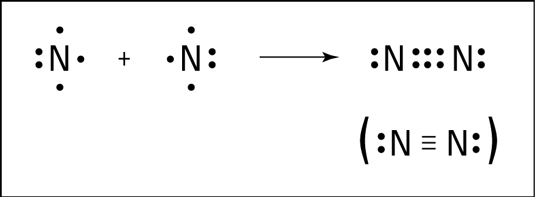
What type of bond is depicted in the image?

a)

Covalent

b)

Polar Covalent

c)

Ionic

26.

What type of bond is depicted in the image?

a)

Covalent

b)

Polar Covalent

c)

Ionic

27.

What type of bond is depicted in the image?

a)

Covalent

b)

Polar Covalent

c)

Ionic

28.

Which bond shares electrons evenly?

a)

non polar Covalent

b)

Polar Covalent

c)

Ionic

29.

The difference in electronegativity affects the type of bond will be formed. What type of bond would be formed with a difference of 0.3?

a)

Covalent

b)

Polar Covalent

c)

Ionic

30.

The difference in electronegativity affects the type of bond will be formed. What type of bond would be formed with a difference of 2.0?

a)

Covalent

b)

Polar Covalent

c)

Ionic

31.

The difference in electronegativity affects the type of bond will be formed. What type of bond would be formed with a difference of 0.6?

a)

Covalent

b)

Polar Covalent

c)

Ionic

32.

True or False: The smaller the difference in electronegativity, the more polar the bond

a)

True

b)

False

33.
What type of elements will form an ionic bond?
a)
Metals + Metals
b)
Nonmetals + Nonmetals
c)
Metals + Nonmetals
d)
None of the above
34.
Metals tend to 
a)
gain electrons
b)
lose electrons
35.
Nonmetals tend to 
a)
gain electrons
b)
lose electrons
36.
If I gain electrons I become
a)
Positive because I've added to my atom
b)
negative because I've added electrons
c)
same because i'm balanced
d)
equal because now I have electrons
37.

When two or more different elements are chemically combined.

a)

Mixture

b)

Element

c)

Solution

d)

Compound

38.
When naming ionic compounds you always write the name of the positive element  _______ .
a)
first
b)
second
c)
with "ide"
d)
with a prefix
39.
Which of the following is NOT an ionic compound:
a)
CaO
b)
NaOH
c)
BaCl2
d)
Br2
40.
If my charge becomes 2+ what does that say about me?
a)
I am stealing 2 electrons
b)
I am losing 2 electrons
c)
I am in period 2
d)
I have an atomic # of 2
41.

When naming a covalent compound or a binary ionic compound, you change the ending of the second element to ________.

a)

-ate.

b)

-ite.

c)

-ide.

d)

-ine.

42.
How do the following two elements bond together?
Cr3+  O2-         
a)
CrO
b)
Cr3O2
c)
Cr2O3
d)
CrO3
43.
How do the following two elements bond together?
Al3+  O2-         
a)
AlO
b)
Al2O3
c)
Al3O6
d)
Al3O2
44.
How do the following two elements bond together?
Na1+  F1-         
a)
NaF
b)
NaF3
c)
Na3F
d)
Na1F2
45.
How do the following two elements bond together?
K1+  S2- 
a)
KS
b)
K8S
c)
K6S3
d)
K2S
46.
What is the correct formula for the compound, lithium oxide?
a)
LiO
b)
Li2O
c)
LiO2
d)
Li2O2
47.
What is the NAME of....
Na2S
a)
sodium (II) sulfide
b)
sodium sulfide
c)
disodium sulfide
d)
sodium sulfur
48.

What is the charge of copper in the compound: CuBr2

a)

+1

b)

+2

c)

-1

d)

-2

49.

What is the what charge of lead in the compound: lead (IV) iodide

a)

+1

b)

+4

c)

+6

d)

-1

50.
PbS2
a)
lead sulfide
b)
lead sulfur
c)
lead II sulfide
d)
lead IV sulfide
51.
The name for CrN:
a)
Chromium nitride
b)
Chromium (I) nitride
c)
Chromium (III) nitride
d)
Chromium nitride (III)
52.

Name this compound: NH4F

a)

Ammonia fluoride

b)

Ammonium fluorite

c)

Ammonia fluorate

d)

Ammonium fluoride

53.

Name the following ionic compound: LiNO3

a)

lithium nitrate

b)

lithium III nitrate

c)

lithium nitride

d)

lithium oxide

54.
The proper formula for magnesium hydroxide:
a)
MgOH
b)
Mg2OH
c)
Mg(OH)2
d)
Mg2OH2
55.
The name of Al₂(SO₄)₃ is
a)
aluminum sulfur oxide
b)
aluminum sulfate
c)
aluminum trisulfate
d)
aluminum (III) sulfate
56.
The name of Ca₃(PO₄)₂ is
a)
calcium phosphide oxide
b)
calcium phosphate
c)
tricalcium diphosphate
d)
carbon phosphate
57.

What is the formula for Magnesium Carbonate?

a)

MgCO3

b)

Mg(CO3)2

c)

Mg2CO6

d)

Mg2CO3

58.
Name the acid: HC2H3O2
a)
Acetic Acid
b)
Acetous Acid
c)
Hydrogen Acetate
d)
Hydrogen Dicarbon Trihydrogen Dioxygen
59.
Name the acid: H3PO3
a)
hydrophosphoric acid
b)
phosphorous acid
c)
phosphoric acid
d)
phosphoric hydroxide
60.

What is the formula for hydrochloric acid?

a)

HCl (aq)

b)

HClO

c)

H3ClO3

d)

HClO3

61.
What is the formula for nitric acid?
a)
HNO2
b)
HNO3
c)
HNO4
d)
H2NO3
62.
HNO2
a)
hydronitrogen
b)
hydrogen nitrogen oxygen
c)
nitrous acid
d)
nitric acid
63.

Hydroiodic acid

a)

HIO2

b)

HIO3

c)

HI (aq)

64.
carbonic acid
a)
H2CO3
b)
H2CrO4
c)
H2C2O4
d)
HCO3
65.

chlorous acid

a)

HClO3

b)

HClO2

c)

HClO

d)

HCl (aq)

66.

Binary acids start with "____________"

a)

acid

b)

nitric

c)

hydraulic

d)

hydro

67.

Always add the word "________" to the end when naming acids

a)

base

b)

hydro

c)

acid

d)

Baumstark

68.

When naming oxyacids, change "-ite" to:

a)

-ate

b)

-ic

c)

-ous

d)

-ite

69.

When naming binary acids, the ending always changes to:

a)

-ate

b)

-ite

c)

-ic

d)

-ous

70.

When naming oxyacids, change "-ate" to:

a)

-ate

b)

-ic

c)

-ous

d)

-ite

71.

Which of the following does not determine the shape of a molecule?

a)

electron pairs around the central atom

b)

lone pair of electrons on other attached atoms

c)

lone pair of electrons around the central atom

d)

number of attached atoms

72.

What name is given to the shape shown in the picture?

a)

bent

b)

trigonal planar

c)

triangular

d)

trigonal pyramidal

73.

Which of the following shapes is linear?

a)
b)
c)
d)
74.

In the following lewis structure, how many bonds are around the central atom?

a)

1 bond

b)

2 bonds

c)

3 bonds

d)

4 bonds

75.

In the following lewis structure, how many lone pairs of electrons are around the central atom?

a)

0 lone pairs of electrons

b)

1 lone pair of electrons

c)

3 lone pairs of electrons

d)

4 lone pairs of electrons

76.

This molecule has 3 bonds and 1 lone pair around the central atom. What shape is it?

a)

bent

b)

trigonal pyramidal

c)

tetrahedral

d)

linear

77.

In the following lewis structure, how many bonds are around the central atom?

a)

1 bond

b)

2 bonds

c)

3 bonds

d)

4 bonds

78.

In the following lewis structure, how many lone pairs of electrons are around the central atom?

a)

0 lone pairs of electrons

b)

1 lone pair of electrons

c)

2 lone pairs of electrons

d)

4 lone pairs of electrons

79.

This molecule has 2 bonds and 2 lone pairs around the central atom. What shape is it?

a)

bent

b)

trigonal pyramidal

c)

tetrahedral

d)

linear

80.

In the following lewis structure, how many bonds are around the central atom?

a)

1 bond

b)

2 bonds

c)

3 bonds

d)

4 bonds

81.

In the following lewis structure, how many lone pairs of electrons are around the central atom?

a)

0 lone pairs of electrons

b)

1 lone pair of electrons

c)

3 lone pairs of electrons

d)

4 lone pairs of electrons

82.
What explains the very high melting and boiling point of water
a)
Strong dipole-dipole bonds between water molecules
b)
Strong hydrogen bonds between water molecules
c)
Dispersion forces which are present in all molecules
d)
Asymmetrical shape of the polar bonds.
83.
Hydrogen bonding occurs when hydrogen is bonded to N, O, or F.  Which of the following has hydrogen bonding?
a)
CBr4
b)
NO2
c)
H2S
d)
NH3
84.
Does H2O have hydrogen bonding?
a)
yes
b)
no
85.
Does HCl have hydrogen bonding?
a)
yes
b)
no
86.

________________________ have the strongest intermolecular forces of attraction.

a)

Dipole- Dipole

b)

Dispersion

c)

Hydrogen Bonds

87.

Intermolecular forces for: CO2

a)

Dispersion Force

b)

Dipole dipole

c)

Hydrogen bonding

88.
Which of the following molecules contains only London dispersion forces?
a)
CF4
b)
HCl
c)
H2O
d)
MgO(aq)
89.
Which of the following statements correctly explains why hydrogen bonding is such a strong intermolecular force?
a)
There is an attraction between a small, weakly electronegative hydrogen atom and a large, strongly electronegative atom of fluorine, nitrogen, or oxygen
b)
There is an attraction between a small, highly electronegative hydrogen atom and a large, highly electronegative fluorine atom
c)
There is an attraction between the hydrogen and oxygen atoms, only
d)
There is an attraction between the hydrogen and nitrogen atoms, only
90.

Which compound is a binary compound?

a)

CaO

b)

NaOH

c)

BaCl2

d)

KBr2