
 Worksheets
8SSU1: Reconstruction Review
Total questions: 75
Worksheet time: 44mins


Which of the following is true about sharecropping
Sharecropping favored the freeedmen.
Many freedmen were able to buy new homes through sharecropping
Most sharecroppers remained in debt or in a cycle of poverty
Many state governments offered loan for sharecropping farmers.
A law that prevented groups such as the Ku Klux Klan from interfering with equal rights given to African Americans
Amnesty Act of 1872
Compromise of 1877
Enforcement Act
Civil Rights Act of 1866
True or False: President Johnson created many laws to help freedmen during Reconstruction
True
False
Free people who had previously been enslaved were known as __________.
freedmen
unslaved
new citizens
righteous and harmonious fists
What did Radical Republicans want to accomplish?
punishment for Union military officers and returning to pre-Civil War policies
punishment for Confederate leaders and protection of the rights of freedmen
to secede from the Union
to reinstate the practice of slavery
What was vetoed by President Andrew Johnson, because he thought it gave the federal government too much power and was unconstitutional?
Black Codes
The Davis-Wade bill
The Civil Rights Act of 1866
The Dwyane Wade bill
What problems did formerly enslaved people face during Reconstruction?
Black Codes
lack of education
sharecropping
All of the above
In what ways did the Freedmen's Bureau help freedmen?
The Bureau helped the Ku Klux Klan by guiding freedmen to their "proper place."
The Bureau helped white plantation owners find freedmen to exploit.
The Bureau helped create sharecropping and the freedmen's cycle of debt to white landowners.
The Bureau helped people find jobs and medical care, and supported education.
When African-American men gained the right to vote, how did this affect political parties?
Most African American men voted for white Democrats.
Radical Democrats became powerful before reconstruction began.
This increased the power of the Republican Party during Reconstruction.
This did not change politics very much, because many African American men secretly voted before the Civil War anyway.
According to his critics, President Johnson's Reconstruction plan:
was just ok, but not great.
was too similar to President Lincoln's plan.
was too easy on plantation owners and did too much to protect the rights of freedmen.
did not really punish wealthy plantation owners and did not protect the rights of freedmen.
Which was a result of the Reconstruction Acts?
All freedmen were provided land.
Congress divided the South into military districts, and placed it under martial law.
Plantation owners were forced to give their land to poor whites who did not own land.
Congress decided to put Confederate leaders in charge of the executive branch.
Where did Robert E. Lee surrender to Ulysses S. Grant, ending the Civil War?
Washington, D.C.
Richmond, Virginia
Appomattox Court House, Virginia
Atlanta, Georgia

Use the following chart to answer the question that follows.
According to the bar graph, what region had the larger share of resources in the United States?
The South
The North
The West
All regions had equal amount of resources
What was the original goal of the Union at the start of the Civil War?
Ban slavery
Restore the Union
Separate from the United States
Make slavery legal everywhere
Which document signed by Abraham Lincoln freed all slaves on January 1, 1863, in the states that were still in rebellion?
Kansas-Nebraska Act
Compromise of 1850
Emancipation Proclamation
The Gettysburg Address
Disadvantages of the South during the Civil War included having a small navy, fewer railroads, and ______________.
Lack of agricultural land
larger population
Inexperienced military leaders
Lack of industries
Who was the president of the Confederacy?
Abraham Lincoln
Ulysses S. Grant
Jefferson Davis
Robert E. Lee
The most well known Confederate general was Ulysses S. Grant.
True
False

What year did the Civil War end?
1863
1864
1865
1866
What was the purpose of General William T. Sherman's "March to the Sea"?
to free all remaining slaves held by Southern plantation owners
to punish the South for daring to secede from the Union
to weaken Southern morale and bring an end to the war by using total war
to allow his hungry and tired troops to acquire necessary supplies
What was the capital of the Confederacy?
Washington D.C.
Atlanta, GA
Philadelphia, PA
Richmond, VA
Who was the president of the United States during the Civil War?
Jefferson Davis
Robert E. Lee
Abraham Lincoln
John Wilkes Booth
The capital of the United States of America during the Civil War was:
Washington D.C.
Richmond
Philadelphia
Charleston
Which major battle had the most casualties and was the turning point of the Civil War?
Anteitem
Gettysburg
Vicksburg
Fort Sumter
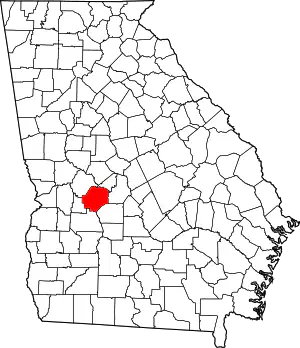
Which city is highlighted on the map?
Macon
Augusta
Albany
Savannah
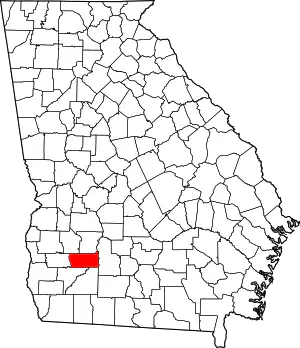
Which city is shown on the map?
Columbus
Augusta
Albany
Macon
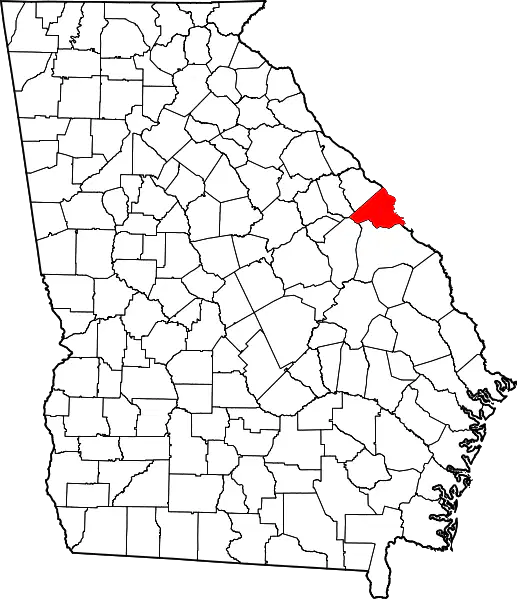
Which city is shown on the map?
Macon
Columbus
Savannah
Augusta

Which city is shown on the map?
Columbus
Savannah
Macon
Altanta

Which city is shown?
Savannah
Columbus
Augusta
Atlanta
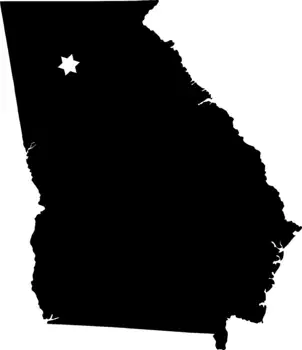
Which city is shown?
Augusta
Albany
Macon
Atlanta
Which city is the capital of Georgia?
Augusta
Savannah
Altanta
Macon
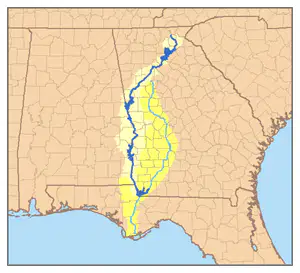
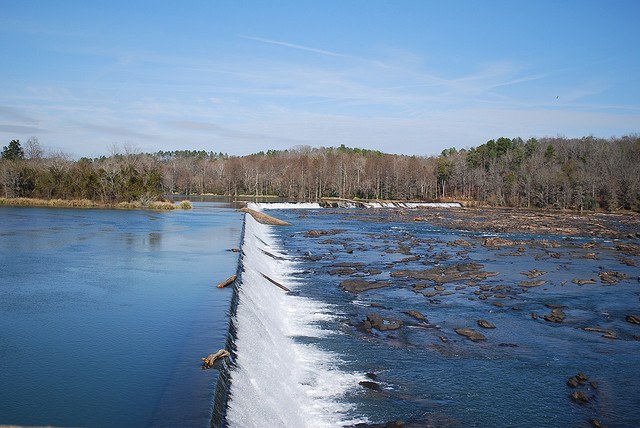
Which river is shown?
Cattachoochee
Savannah
St. Mary's
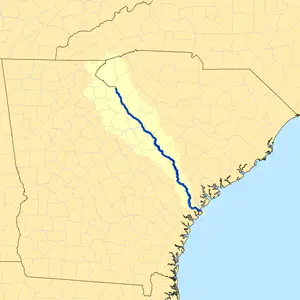
Which River is Shown?
Cattahoochee
Savannah
St. Mary's

Which river is shown?
Chattahoochee
Savannah
St. Mary's
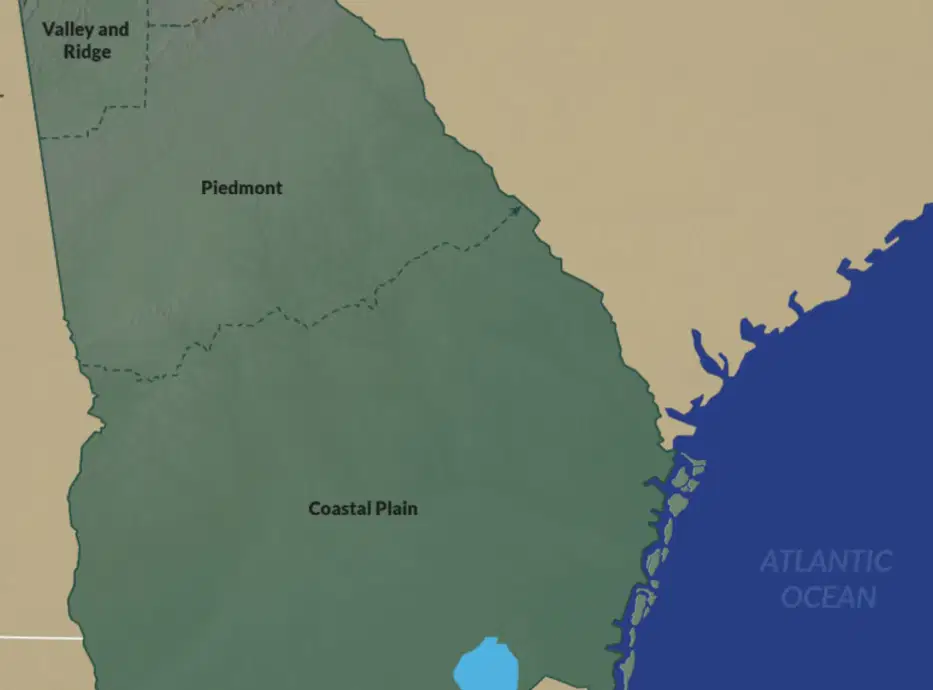
Which natural feature is being shown?
Okefenokee Swamp
Fall Line
Brasstown Bald
Appalachian Mountain Range

Which Lake is being Shown?
Lanier
Allatoona
Hartwell

Which Lake is being Shown?
Lanier
Allatoona
Hartwell

Which Lake is being Shown?
Lanier
Allatoona
Hartwell
Which ocean borders Georgia?
Atlantic
Pacific
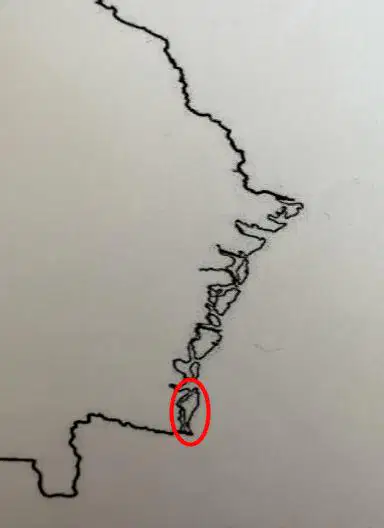
Which Barrier Island is being shown?
Cumberland Island
Jekyll Island
St. Simons Island
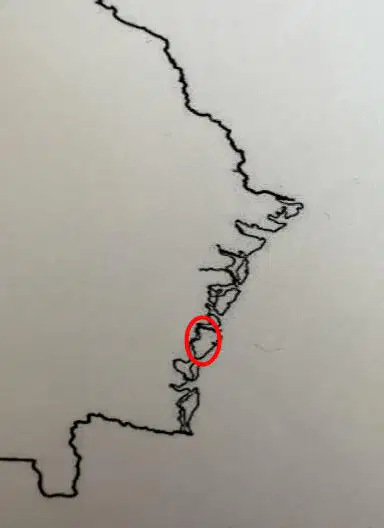
Which Barrier Island is being shown?
Cumberland Island
Jekyll Island
St. Simons Island
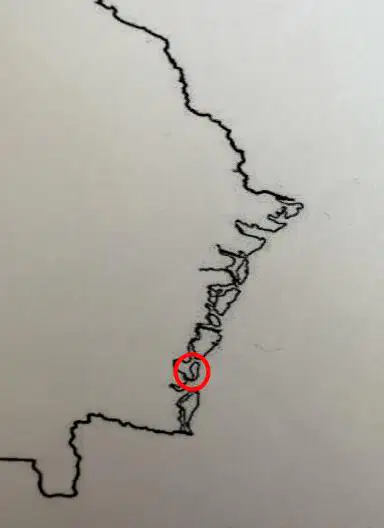
Which Barrier Island is being shown?
Cumberland Island
Jekyll Island
St. Simons Island
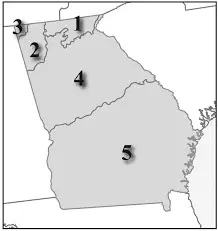
Which Region is labeled #3?
Appalachian Plateau
Ridge and Valley
Blue Ridge
Piedmont
Which Region is labeled #2?
Appalachian Plateau
Ridge and Valley
Blue Ridge
Piedmont
Which Region is labeled #1?
Appalachian Plateau
Ridge and Valley
Blue Ridge
Piedmont
Which Region is labeled #4?
Coastal Plains
Ridge and Valley
Blue Ridge
Piedmont
Which Region is labeled #5?
Coastal Plains
Ridge and Valley
Blue Ridge
Piedmont

Which natural feature is being shown?
Okefenokee Swamp
Fall Line
Brasstown Bald
Appalachian Mountain Range
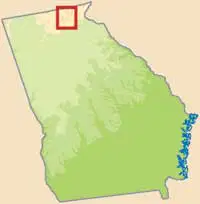
Which natural feature is being shown?
Okefenokee Swamp
Fall Line
Brasstown Bald
Appalachian Mountain Range

Which natural feature is being shown?
Okefenokee Swamp
Fall Line
Brasstown Bald
Appalachian Mountain Range
Which State DOES NOT border Georgia?
South Carolina
Mississippi
Tennessee
Alabama
(SS8G1) ~ Population heart, Industrial Heart (cars and planes built here),2nd largest physiographic region
Coastal Plain
Blue Ridge
Ridge and Valley
Piedmont
Economic activity in this region include pulp and paper, seafood production, tourism/ recreation and shipping from deep-water ports.
Valley and Ridge
Appalachian Plateau
Coastal Plain
Blue Ridge
Piedmont

