
 Worksheets
07 Ancient China 7.01 - 7.07
Total questions: 122
Worksheet time: 2hrs 17mins
Drag the geographic feature to the correct place on the map

A group of rulers from the same family.
loess
philosophy
dynasty
seismograph

The right to rule in ancient China.
Filial Piety
Legalism
Mandate of Heaven
Acupuncture

Respect for one's parents and elders.
Daoism
Legalism
Great Wall
Filial Piety

A set of beliefs about how to live.
philosophy
dynasty
loess
oracle bones

What Chinese philosophy says people should live in harmony with nature?
Legalism
Buddhism
Daoism
Christianity
What barrier separates China from India?
The Gobi Desert
The Taklamakan Desert
The Himalaya Mountains
The Great Wall

The Chinese first settled in a river valley. What other civilizations also settled near river valleys?
Phoenicians & Sumerians
Sumerians & Egyptians
Phoenicians & Canaanites
Babylonians only
While traveling along the Silk Road, traders had to be wary of the ____ army.
Indian
Persian
Mongol
Along with trade items, like silk, spices and tea, ideas like this also traveled the Silk Road?
Buddhism
Islam
Judaism
Which of the following was NOT invented by the Chinese?
Gunpowder
acupuncture
concept of zero
The Mandate of Heaven:
(choose all correct answers)
said that rulers were destined to rule by a command from heaven
said that rulers should treat their people well
said that rulers could do whatever they wished with no consequences

On which continent is China located?
North America
Africa
Asia
Europe
Which of these are natural barriers of China which contributed to it's isolation? (choose all that apply)
Himalaya Mountains
Gobi Desert
Plateau of Tibet
The Ocean

What are the 2 major rivers of China?
Yellow River and Yangtze River
Rhine River and Po River
Tigris River and Euphrates River
Upper Nile and Lower Nile Rivers

The period of the Tang dynasty was considered the ______________ age.
Golden
Silverish
Bronzy
Platinum

Mark all accomplishments of the Tang dynasty:
Literature
Dancing
Pottery
Wood-Block Printing
Gunpowder

Under the Song dynasty, ______________ became a major crop and food for China.
Corn
Rice
Peaches
Cows

The ________________ conquered the Song dynasty after breaking their alliance.
Mongols
Huns
Nuns
Romans

Under the Song dynasty, the _______________ _______________ was invented.
Lead Pencil
Curved Sword
Magnetic Compass
Smart Phone

Confucius was trying to bring _______________ and _______________ to the endless warfare of the Feudal States.
chaos, confusion
order, peace
unicorns, rainbows
war, hate

The Mandate of Heaven means:
Rule by nothing
Rule by peace and love
Rule by anger and hate
Rule by authority of nature and the gods
The Tang and Song is known as the
End of Chinese Civilization
Dynastic Cycle
Golden Age of China
Beginnings of the Mongol Empire

Which achievements are most closely associated with the Tang and Song dynasties?
spinning wheel and stirrup
domes and arched bridges
gunpowder and magnetic compass
cannon and longbow
Mongols were nomadic -- this means they
Moved frequently with food source
Stayed in one location to gather berries
Farmed the land

Who was the most powerful leader of the Mongols?
Mansa Musa
Genghis Khan
Qin Shi Huang
Kublai Khan
Which animal was most important to the Mongols?
Horses
Dogs
Elephants
Cow
Mongolian soldiers were experts with which weapon?
Bow and arrows
Samurai swords
Bayonets
Axe and Shield

Officers in Genghis Khan’s army were chosen for their _________, not there noble blood, which made his army the most skilled in the world.
Political Status
Wealth
Fighting Ability
People could avoid being killed when attacked by the Mongols if they
Paid taxes to the Mongols
Surrendered without a fight
Donated scholars and artisans to the empire
Placed garlic around the walls to stop the "hord"
Considered to be the greatest period in Chinese history.
Tang Dynasty
Song Dynasty
Neither
Compass, printing press, and gunpowder are all invented during this dynasty.
Tang Dynasty
Song Dynasty
Neither
Implemented civil service exams and promoted people based on their merit.
Tang Dynasty
Song Dynasty
Neither
Developed acupuncture to treat injury and illness.
Tang Dynasty
Song Dynasty
Neither
Divided the government into Departments to rule over the territory more effectively.
Tang Dynasty
Song Dynasty
Neither
Developed rapid growing rice which led to rapid population growth, which ultimately caused problems for this dynasty.
Tang Dynasty
Song Dynasty
Neither
What allowed the Song Dynasty to flourish
Christianity
stability and prosperity
Legalism
the Grand Canal
Which of the following are technological innovations during the Song Dynasty?
algebra
gunpowder
navigational compass
pound lock
alarm clocks
The use of the civil service exam resulted in what?
women working in government
less confidence in government
fewer artisan jobs
greater social mobility
Confucianism stressed
pragmatics
state order
morality and ethics
respect for women
How did the Ming Dynasty come to power?
The dynasty arose from the disorder and weakening of the Yuan Dynasty.
The dynasty arose because the Ming leaders were fierce Mongol fighters.
The dynasty arose because the Ming military leaders overthrew the Yuan scholar-officials.
The dynasty arose from the artisan revolt to gain more power than they had under the Yuan Dynasty.'eljaf

How did the Ming Dynasty’s government differ from the Yuan Dynasty’s government?
The Ming put Mongols in charge of the military.
The Ming gave scholar-officials more power than military officials.
The Ming abandoned the hereditary status system.
The Ming discontinued civil service exams.

Main purpose of moving the capital from Nanjing to Beijing during the Ming Dynasty?
to move the capital to a seaport to improve access to trade goods
to move the capital to the home of the scholar-officials
to move the capital closer to the Mongol threat
to move the capital to a city known for art and culture

How did the design of this building project contribute to the Ming Dynasty’s power?
It gave scholar-officials an inner court they could use to study quietly for their exams.forbiddenforbidde
It separated the rulers from the ruled and gave the rulers a sense of importance and mystery.
It gave all citizens a shared space for making offerings to their gods.
It separated the military from the artisan class and gave the artisans a private place to work.

Why did the Ming rulers rebuild and improve the Great Wall?
to protect against the Mongol threat
to honor the sun
to use local materials such as limestone
to provide an inner and outer court

Why did the treasure ship voyages end after Zheng He’s death?
The rulers decided that they were more likely to face attacks from the North and needed to focus resources on land defenses.
The rulers decided that the ships had achieved their goal of bringing great wealth to China and were no longer needed.
The rulers decided that they did not want to share too much of China’s culture with the world.
The rulers decided that they would use the treasure ships to move troops instead.
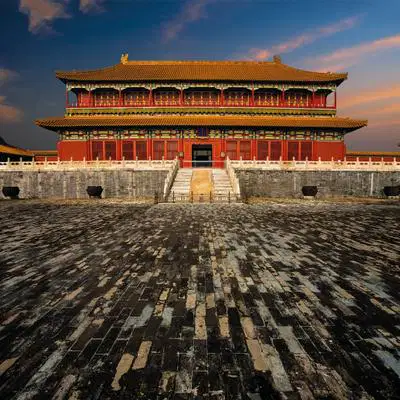
What is this temple called?
The Forbidden Castle
The Forbidden City
The Forgiven City
The Outlawed City
What does the name Ming mean in Chinese?
Loud
Brilliant
Smart
Powerful
Why do you think the Ming emperors gave gifts to foreign rulers? Select all that apply.
To cut off trade with other countries
To establish good relations with foreign states
To show Chinese superiority
What caused the fall of the Ming Dynasty?
higher taxes
bad harvests
bad rulers
corruption
One of the reasons the Mongols were successful conquerors was
They live in yurts.
Their skill at horse and bow.
Their ability to read and write.
They valued Chinese government.
The dynasty that was the result of the defeat of the Mongols and reuniting China.
Ming
Han
Yuan
Tang
Made the Great Wall stronger and more elaborate, the way we see it today.
Ming
Yuan
Han
Qing
Which dynasty did not trust the Chinese to be a part of the government and relied on foreigners?
Yuan
Ming
Song
Sui
Who was the Mongol emperor of the Yuan dynasty?
Kublai Khan
Genghis Khan
Ogedei Khan
Mr. Givens


What was the purpose of the Seven Voyages?
To show off the Chinese prestige, power, and riches
To find more trade routes to Europe
To make money for the Chines
To find a lost treasure
What policy does the Chinese emperor adopt after the Seven Voyages?
Expansionism
Expedition
Exploration
Isolationism
Which type of animal did Zheng He bring back from Africa for the emperor?
Gorilla
Giraffe
Emu
Lion
What type of blue and white art was the Ming Dynasty famous for?
Calligraphy
Porcelain
Pottery
Painting
The _______ industry was supported by the Ming and was used for other purposes than clothing, such as paper, fishing line, bow strings, and canvas for painting.
Tea
Jade
Linen
Silk
Who was the Chinese explorer that established relations with many other world nations and regions, including India and Africa?
Kublai Kahn
Ibn Battuta
Zheng He
Marco Polo
The ____________ is the largest and best preserved imperial palace in the world.
Hagia Sophia
The Forbidden City
The White House
Edo Castle
Which is NOT a reason that Zheng He's voyages were discontinued.
Scholars argued that the voyages wasted valuable resources that could be used to defend against barbarians.
China withdrew into isolation.
Zheng He was no longer bringing back tributes from different countries on the huge "treasure" ships.
Officials believed that the new ideas and increased wealth of merchants were hurting Chinese Confucian values.
Which of the following is true about the Ming Dynasty?
It was a time of great civil engineering, projects, and construction.
Art such as porcelain, painting, poetry, and literature all flourished.
It is often considered the last of the great Chinese dynasties.
All of these

Which TWO statements describe Genghis Khan?
He conquered parts of China, Australia, and Africa.
He was leader of the Mongol empire.
He was leader of the Han Dynasty.
He conquered parts of China, Europe, and India.

(a) Khan was the (b) of (c) Khan.

(a) conquered the (b) Dynasty, making him the first (c) ruler over all China.

Kublai Khan created the _____ Dynasty.
Sui
Tang
Song
Yuan

The Mongols improved the Silk Road by lowering ______.
taxes & toll
highways & bridgesSilk Si

The Mongols way of life as ______ influeced them to value trade & merchants.
Nomads
Business Men
Farmers
Place these events in the correct order
Marco Polo met Kublai Khan.
Kublai was impressed with Marco Polo.
Polo helped Kublai administer his empire.
Which of the following is NOT considered an action taken by Genghis Khan?
United Mongol Tribes
Conquered North & West China
Became a universal ruler
Led a weak and unstable army
Kublai Khan was related to what other individual?
Genghis Khan
Marco Polo
Siddhartha
Emperor Qin
Kublai Khan favored what religion?
Hinduism
Christianity
Judaism
Buddhism
Islam
Marco Polo was a young trader who eventually helped Kublai Khan. Marco Polo was from what country?
France
England
Italy
Egypt
(a) was the grandson of (b) who is considered the (c) .
Where was Mongolia in relation to China?
north of China
south of China
near Tibet
on the islands
What did Temujin do to earn the title "Genghis Khan"?
United all Mongol tribes for the first time
Defeated his enemies
Promoted people based on merit
All of the above
What enabled the Mongols to easily defeat their enemies and become the world's largest empire?
Skilled horseback riders
Superior weaponry (bows, arrows, swords, canons)
Superior military strategies-luring the enemy
All of the above
2 main rivers of eastern Asia
Yellow & Nile
Po & Nile
Yellow & Yangtze
Tiber & Yellow
Himalayan Mountains
natural barrier between China and the Pacific Ocean
natural barrier between India and China
natural barrier between Russia and China
natural barrier between Mongolia and India
All where positive impacts of the Mongolian Empire EXCEPT:
a strong Chinese naval fleet
increased China's foreign trade
studies of mathematics and astronomy
mail system connected Mongolian Empire
What effect did Mongols have on the Silk Road?
Mongols made it safer & increased trade
Mongols extended the road but decreased trade
Mongols had no effect on the Silk Road
Mongolian wars destroyed many parts of the road
Kublai Khan
founder of the Huns
founder of the Mongol empire
founder of Mongol Yuan dynasty of China
founder of the Qin dynasty of China
World's longest man-made structure; built to keep people out of northern China
Great Wall of China
Gobi Desert
Plateau of Tibet
Silk Road
Invented in China in 800's CE; militaries used this to expand empires; used against walls of Constantinople in 1453
bow & arrows
gunpowder
cannons
chariots
Zheng He was from
Korea
China
Japan
India
Zheng He followed what religion?
Confucianism
Buddhism
Islam
Hinduism

How many treasure ships went with Zheng He on his first voyage.
75
89
62
102
How many voyages did Zheng He take part in?
1
2
7
6
Why did the new emperor want to end the voyages after Zheng He's death? (Choose all options that apply)
He no longer wanted to pay for the voyages
The voyages were not making any money
The country needed to defend themselves from Japanese invaders
Christopher Columbus wanted to visit China
What did Zheng He accomplish?
He conquered Japan
He discovered America
He spread spread Confucianism
He expanded China's political influence
Why did Zheng He go to the seas?
To look treasure and money
To trade and explore new trade routes
The emperor wants to show off their power and wealth
To capture people to work for them
To trade, explore new trade routes, and to show off their power

China's civilization developed between which two rivers?
Yin and Yang
Chang Jiang and Yangtze
Shang and Zhou
Huang He (Yellow River) and Yangtze (Long River)


This strong, yet smooth fabric was first made in China many years ago. It was called _______.
Great Wall
silk
red
Yellow River
Invaders were kept out of China by the ___________ which spanned some 4,000 miles.
silk
Great Wall
dragons
cycle of the moon
China's civilization developed between which two rivers?
Yin and Yang
Mississippi and Ohio
North and South
Huang He (Yellow River) and Yangtze (Long River)

Which number represents where China is located?
4
2
1

