
 Worksheets
Chemistry Chap 1-2 Study Guide
Total questions: 54
Worksheet time: 12hrs 18mins
The study of carbon containing compounds.
Organic Chemistry
Inorganic Chemistry
Physical Chemistry
Biochemistry
The study of compounds that do not contain carbon.
Organic Chemistry
Inorganic Chemistry
Biochemistry
Analytical Chemistry
The identification of the components and composition of materials refers to___________________________
Biochemistry
Physical Chemistry
Organic Chemistry
Analytical Chemistry
What kind of physical property is this? Density
intensive
extensive
What kind of physical property is this? Boiling Point
intensive
extensive
What kind of physical property is this? Length
intensive
extensive
What kind of change occurs if matter changes in amount, size, or shape?
substance change
physical change
chemical change
elemental change
What is the example of the physical change?
Burning firewood
Rotting Banana
Pencil breaking

The state of matter that has no definite size or shape is
Solid
Liquid
Gas
What does it mean if a mixture is homogeneous?
you can see the different parts
cannot distinguish the parts
consists of two phases
The horizontal rows on the periodic table are called:
periods
elements
groups
matter
T/F: A quaNtitative measurement does include a number quantity.
True
False
A qualitative observation focuses on the quantity of an object, true or false?
True
False
Which SI unit is used to measure mass?
s
m
kg
Pa
Which SI unit is used to measure time?
K
s
mol
N
Which SI unit is used to measure temperature?
m
K
s
A
Does density change when the temperature changes?
True
False
0.00345
How many significant figures does the following number have?1.2500 x 10³
Ambiguous: 3 or 5
7
How would you write 4.3756 x 10⁴ in standard form?
(a)
How would you write 0.0005 in scientific notation?
50 x 10-5
5 x 10⁻⁴
5 x 10³
.5 x 103
Which of the following numbers is written in scientific notation?
20.35 x 10⁴
.2035 x 104
2035 4
2.035 x10⁴
Convert to scientific notation:
520,000,000
52 x 107
5.2 x 10⁻⁷
5.2 x 10⁸
0.52 x 10⁹
100000000
100.00
2.50g ÷ 5.0mL = ???
0.5 g/mL
0.50 g/mL
0.500 g/mL
7.5 g / mL
7.25kg = ?g

Which conversion factor would be needed?


What elements tend to be brittle and have some properties of metals and nonmetals?
Metalloids
Metals
Non-Metals
Noble Gases
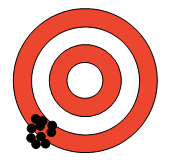
How close a measurement is to the accepted value is called..
Accuracy
Precision
Significant
Estimate
The accepted value for an apple to drop 2 meters is .64 seconds. Isaac dropped an apple from 2 meters and it took .62 seconds to hit
the ground. What is the percent error?
3.8%
3%
4%
3.9 %

What is the formula for Mass?
Mass/Volume
Density x Volume
Mass/Density

A plasma can be made in a laboratory by
cooling a gas to very low temperatures
cooling a gas and reducing the pressure
heating a gas to extremely hot temperatures
heating a liquid to the point it turns into a gas
In a plasma the electrons are no longer associated with a particular nucleus.
True
False
The center of the atom is the
nucleus
proton
neutron
electron
The negatively charged particles of an atom are the
electrons
protons
neutrons

