
Font size
 Worksheets
08 - 02 - The American Revolution (1700-1783)
Total questions: 143
Worksheet time: 2hrs 11mins


The Intolerable Acts were laws made to punish colonies for the Boston Tea Party
True
False
The Intolerable Acts were passed as punishment for what incident?
Boston Massacre
The Declaration of Independence
Boston Tea Party
First Continental Congress
What country imposed the Intolerable Acts on The American colonies?
France
Spain
Britain
Germany
First battle after Valley Forge-Americans proved to the British they were a well-trained fighting force
Battle of Monmouth
Battle of Trenton
Battle of Yorktown
Battles of Saratoga
Battle for New York
The "turning point in the war". It showed the patriots had a good chance of winning. France decided to ally with the Americans after this battle.
Battle of Monmouth
Battle of Trenton
Battle of Yorktown
Battles of Saratoga
Battle for New York
1776 battle in New Jersey in which George Washington's troops captured a Hessian encampment in a surprise attack after crossing the Delaware River
Battle of Monmouth
Battle of Trenton
Battles of Saratoga
Battle of Yorktown
Battle for New York
The last major battle of the Revolutionary War which resulted in the surrender of British forces
Battle of Monmouth
Battles of Saratoga
Battle of Trenton
Battle of Yorktown
Battle for New York
Prussian drill master who taught American soldiers during the winter at Valley Forge how to successfully fight the British.
Baron von Steuben
Marquis de Lafayette
Lord Cornwallis
Francis Marion
Henry Clinton
A 19-year-old French nobleman who volunteered to serve in Washington's Army.
Baron von Steuben
Marquis de Lafayette
Lord Cornwallis
Henry Clinton
Francis Marion
British General who surrendered at Yorktown
Baron von Steuben
Marquis de Lafayette
John Burgoyne
Lord Cornwallis
Henry Clinton
South Carolina militia leader nicknamed the "Swamp Fox" for his hit-and-run attacks on the British during the American Revolution.
Baron von Stueben
Lord Cornwallis
Francis Marion
John Paul Jones
Henry Clinton
American naval commander in the American Revolution (1747-1792) said "I have not yet begun to fight."
Baron von Steuben
Francis Marion
John Paul Jones
Marquis de Lafayette
William Howe
British general in the American Revolution who captured Fort Ticonderoga but lost the battle of Saratoga in 1777 (1722-1792)
Marquis de Lafayette
Ethan Allen
Nathaniel Green
William Howe
John Burgoyne
Commander-in-Chief of the British army in America replacing General Howe after the Battle of Saratoga.
John Burgoyne
Henry Clinton
Francis Marion
Lord Cornwallis
Benjamin Franklin
Commander of the Southern Patriot forces. He kept the British forces always moving.
Nathaniel Green
Horatio Gates
Lord Cornwallis
Henry Clinton
Benjamin Franklin
American intellectual, inventor, and politician He helped to negotiate French support for the American Revolution.
Francis Marion
Marquis de Lafayette
Benjamin Franklin
Lord Cornwallis
John Burgyone
British Commanding General at the start of the American Revolution
George Washington
John Paul Jones
Barry St. Leger
William Howe
Henry Clinton
Which of the following are true about fighting in the South? (2)
fighting was more civilized in the south.
there was more guerrilla fighting
Continental soldiers wanted to fight the British in large battles
John Burgoyne was in charge of British soldiers in the sout
American leaders like the "swamp fox" avoided large battles in the south
The year the Treaty of Paris was signed, ending the American Revolution.
1763
1783
1776
1781
Colonists sent delegates to meet in Philadelphia to discuss the Intolerable Acts. This meeting became known as the __________.
First Boy Scout Meeting
Colonists Club
First Continental Congress

Paul Revere created this image of the _______________. The Sons of Liberty used the picture to convince colonists that British soldiers were dangerous.
Boston Massacre
The Boston Battle
Cowboys and Indians
During the French and Indian War, Britain and France fought for control of land in ________.
Disney World
North America
your backyard
Colonists believed they should not have to pay British taxes when they had no _______ in Parliament.
place to sit
snacks
representation
The Townshend Acts put a tax on glass, lead, paints, paper, and _____.
cupcakes
tea
party hats

On the night of December 16, 1773, several members of the Sons of Liberty boarded ships carrying tea and threw the tea into the Boston Harbor. This event became known as _____.
The Night of Tea
The Night Tea was Wasted
The Boston Tea Party
Britain spent a lot of money to fight in the French and Indian war which left them with ______.
war debt
broken piggy banks
taxes
In response to the Boston Tea Party, Parliament passed laws called the __________ to punish the colonists.
Intolerable Acts
Shame on You Acts
You're Grounded Acts
The letter the Continental Congress sent to ___________ and Parliament asked that they stop being taxed without representation and for the Intolerable Acts to be repealed.
the president
King George III
the principal
Colonists spoke out against the British government and _______ started to prepare for war.
militias
Girl Scouts
the Boston Chess Club

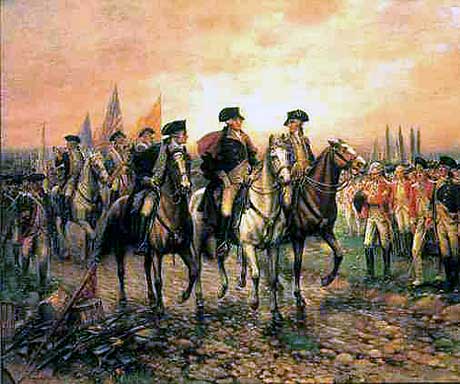
Many American colonists believed that British tax laws were unfair because
colonists lacked representation in Parliament
the British treasury had a surplus of funds
Native American Indians were exempt from British tax laws
taxes were higher in the colonies than in England
The slogan “No taxation without representation” referred to taxes enacted by
colonial legislators
town meetings
the English Parliament
the First Continental Congress
Which statement expresses an opinion about the causes of the Revolutionary War?
Colonists participated in triangular trade.
The Boston Massacre took place on March 5, 1770.
Samuel Adams founded the Sons of Liberty.
The Quartering Act was a serious violation of the colonists’ liberties.
The main purpose of the Navigation Acts passed by England was to
limit the size of ships in English waters
ensure that England benefited from colonial trade
train sailors for the British navy
limit manufacturing in colonial America
Colonial boycotts of British goods before the Revolutionary War were effective measures because they
reduced the profits of British merchants
lowered the prices of imported products
left British troops short of supplies in the colonies
allowed the Americans to start their own factories
The belief that colonies exist to benefit the economy of the mother country is known as
triangular trade
mercantilism
free trade
nativism
In the American colonies, boycotts were an effective way of protesting British policies mainly because the boycotts
ended trade within the colonies
forced Britain to remove most troops
kept out products from other European nations
caused economic hardships for British merchants
The major reason the British government issued the Proclamation of 1763, which banned colonial settlement west of the Appalachian Mountains, was to
avoid conflicts with Native American Indians
reduce casualties during the French and Indian War
maintain markets for British manufactured goods
promote easy collection of new taxes
Which statement is most consistent with the views of Loyalists in the 1770s?
The colonists should be grateful to be under British rule and protection.
Taxation without representation is tyranny.
Citizens, under British rule, have the right to declare independence.
The king is violating the rights of British citizens.
“…give me liberty or give me death!” “A government of our own is our natural right…” “We must indeed all hang together or, most assuredly, we shall all hang separately.”
During the period of the American Revolution, these statements were made by members of which group?
Redcoats
Patriots
Tories
Native American Indians
Many American colonists believed that British tax laws were unfair because
colonists lacked representation in Parliament
the British treasury had a surplus of funds
Native American Indians were exempt from British tax laws
taxes were higher in the colonies than in England
The slogan “No taxation without representation” referred to taxes enacted by
colonial legislators
town meetings
the English Parliament
the First Continental Congress
Which statement expresses an opinion about the causes of the Revolutionary War?
Colonists participated in triangular trade.
The Boston Massacre took place on March 5, 1770.
Samuel Adams founded the Sons of Liberty.
The Quartering Act was a serious violation of the colonists’ liberties.
The main purpose of the Navigation Acts passed by England was to
limit the size of ships in English waters
ensure that England benefited from colonial trade
train sailors for the British navy
limit manufacturing in colonial America
Colonial boycotts of British goods before the Revolutionary War were effective measures because they
reduced the profits of British merchants
lowered the prices of imported products
left British troops short of supplies in the colonies
allowed the Americans to start their own factories
The belief that colonies exist to benefit the economy of the mother country is known as
triangular trade
mercantilism
free trade
nativism
In the American colonies, boycotts were an effective way of protesting British policies mainly because the boycotts
ended trade within the colonies
forced Britain to remove most troops
kept out products from other European nations
caused economic hardships for British merchants
The major reason the British government issued the Proclamation of 1763, which banned colonial settlement west of the Appalachian Mountains, was to
avoid conflicts with Native American Indians
reduce casualties during the French and Indian War
maintain markets for British manufactured goods
promote easy collection of new taxes
Which statement is most consistent with the views of Loyalists in the 1770s?
The colonists should be grateful to be under British rule and protection.
Taxation without representation is tyranny.
Citizens, under British rule, have the right to declare independence.
The king is violating the rights of British citizens.
“…give me liberty or give me death!” “A government of our own is our natural right…” “We must indeed all hang together or, most assuredly, we shall all hang separately.”
During the period of the American Revolution, these statements were made by members of which group?
Redcoats
Patriots
Tories
Native American Indians
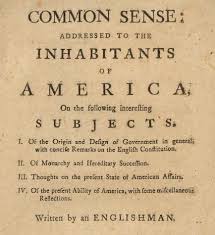
What effect did 'Common Sense' have in the colonies?
It persuaded many colonists that America should be independent.
It instilled fear of war in the colonies.
It convinced the colonies to remain loyal to Great Britain.
It petitioned the king to end the quarrel between the colonies and Great Britain.


What is a refusal to buy goods called?
repeal
boycott
rebellion
quartering
Which the meaning of Grievances?
Virtues
Complaints
Petitions
Answers
"He has dissolved Representative Houses repeatedly, for opposing with manly firmness his invasions on the rights of the people."
The boycotting of paper, playing cards, printed material, etc., led to the repeal of what act?
The Declaratory Acts
The Coercive Acts
The Intolerable Acts
The Stamp Act

What did the Colonists do after the Stamp Act?
Boycott British goods
Made their own goods
Decided they didn't need goods
Stopped paying all of their taxes


What was the purpose of this flag?
To show the colonists were ready to pay the high British taxes.
The British were willing to give colonists representation in Congress.
A form of propaganda to show that the colonies were united against the British.
To show the colonists were ready to be part of Britain forever.

According to the Declaration of Independence, the government's job is to protect _______________.
people's rights
people's wealth
the government's power
democracy
Based on the US Constitution, the government is run by _________.
The President
Congress
The Supreme Court
"The People"
Patriots wanted to gain independence from Britain, and become their own country.
True
False
Patriots felt that the British taxes were fair.
True
False
People who wanted to stay a part of Britain and remain British citizens.
Patriots
Loyalists
Loyalists wanted to remain under British rule because...
they were afraid to fight the British army.
they thought British trade was important to the economy.
they thought British rule would be better than Patriot rule.
all of the above
George Washington was a famous...
Patriot
Loyalist
Benedict Arnold was a famous...
Patriot
Loyalist
Everyone picked a side. They chose either to be a Patriot or a Loyalist.
True
False

British law that forbade American colonists to settle west of the Appalachian mountains in the Ohio River Valley.
Tea Act
Proclamation Line
Intolerable Act
Writs of Assistance

British law that put a tax on legal documents such as newspapers, playing cards and dice.
Stamp Act
Townshend Acts
Quartering Acts
Olive Branch Petition

A refusal to buy goods or services.
Boycott
Repeal
Forbade
Ratify

To cancel
Consent
Loyalist
Patriot
Repeal

To not allow
Ratify
Boycott
Forbade
Propaganda

A British law that taxed imported goods such as paint, glass, paper and tea.
Townshend Acts
Tea Act
Stamp Act
Boston Massacre

Promise of colonial merchants to stop importing goods taxed by the Townshend Acts
Nonimportation agreements
Proclamation Line
Committee of Correspondence
Intolerable Acts

The shooting of five Bostonians by British soldiers on March 5th, 1770.
Boston Massacre
Boston Tea Party
Committee of Correspondence
Writs of Assistance

Allowed the British East India Company to sell tea directly to the colonists without paying a tax.
Tea Act
Intolerable Acts
Quartering Act
Stamp Act

Protest in which Bostonians, dressed as Native Americans, dumped British tea into the Boston Harbor.
Olive Branch Petition
Writs of Assistance
Boston Tea Party
Boston Massacre

A series of laws made to punish colonists for the Boston Tea Party.
Stamp Act
Tea Act
Quartering Act
Intolerable Acts

Law that required colonists to provide housing to British soldiers stationed in the colonies.
Quartering Act
Townshend Act
Writs of Assistance
Intolerable Acts

Groups of colonists who wrote letters to inform and unite colonists against British rule.
Writs of Assistance
Committee of Correspondence
Propaganda
Proclamation Line

An offering of peace by the colonists to the King of England ad Parliament.
Repeal
Olive Branch Petition
Nonimportation Agreements
Proclamation Line

Colonists who protested British taxes and wanted independence from England.
Patriot
Loyalist
Boycott
Forbade

Colonists who stayed loyal to the King of England and Parliament.
Loyalist
Patriot
Ratify
Repeal

To approve
Consent
Boycott
Ratify
Forbade

To give permission
Consent
Ratify
Forbade
Boycott

The spreading of ideas to help a particular cause and hurt another.
Propaganda
Consent
Boycott
Ratify

Allowed British officials to search a colonial ship without giving a reason.
Writs of Assistance
Nonimportation Agreements
Committee of Correspondence
Olive Branch Petition

