
 Worksheets
EXPLORING LIFE
Total questions: 20
Worksheet time: 8mins
Based on "EXPLORING LIFE" material, biology is....
the scientific study of life
a lesson about animal life
the study of the interrelationships between living things and the environment
the science that studies the life of fungi
how we recognize life?
by what living things do
by recognizing certain types of living creatures
by what we can do
by looking at the nature around us
Below are some characteristics of life. What is not included in the nature of life is...
evolutionary and adaptation
response to the environment
growth and development
can see something using the eye with the help of light
Does studying life start from the microscope scale of molecules and cells to the global scale of the entire living planet?
YES
MAY BE
NO
I DONT KNOW
Please write down the second level of life hierarchy
(a)
please write down the level of the life hierarchy at the fourth level is
(a)
Based on "exploring life" that there are two Dynamics of any ecosystem includes two main processes are
Cycling of Nutrient and The flow of Energy
Cycling of Nutrient and Cycling of Water
The flow of Energy and The Flow of Sunlight
The flow of Energy and Cycling of Sodium
the organism does something it needs?. Please choose the correct answer!
Food
Energy
Water
Nutrient
What do you think is the definition of a cell?
is the smallest part of the structure of living things
is the smallest part of the functional body of living things
Is the lowest level of organization that can perform all activities required for life
is the lowest living creature from the hierarchical level of life in this world

The meaning indicated in number 1 in the picture is...
(a)
What is the definition of a prokaryotic cell?
are cells that have an internal cell membrane
are cells that do not have an internal cell membrane
is a type of animal cell that composes the bodies of living things
are cells that have cell organelles in their cytoplasm
There are two main forms of cells is Prokaryotics and Eukaryotics Cells. Which of the following is a correct definition of a prokaryotic cell?
is a cell that can move actively in the body of the organism because it has a means of locomotion in the body
is a cell that has a means of locomotion in the form of a flagellum on one side of its body
Lack the kinds of membrane-enclosed organelles found in eukaryotic cells
Are subdivided by internal membranes into various membrane-enclosed organelles
What is meant by a system in biology?
Is a combination of components that form a simple organization
Is a combination of components that form a more complex organization
is a combination of simple components
Is a combination of components that form a more complex organism
The branch of biology that names and classifies species according to broader and broader systems of groups. The definition above is a definition of?
Biology
Taxonomy
Organ Systems
Environment
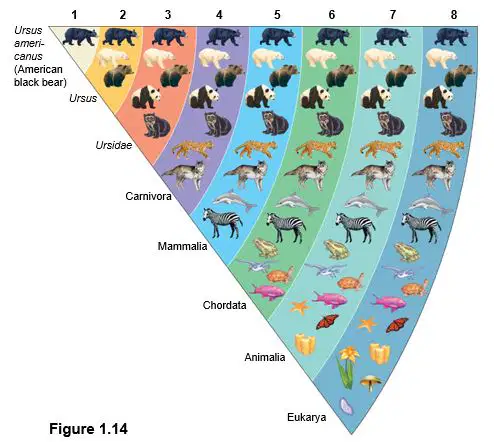
the picture is a classification of living things with taxon levels. What are the taxon levels designated in numbers six and seven?
Phylum and Kingdom
Domain and Kingdom
Family and Order
Genus and Species
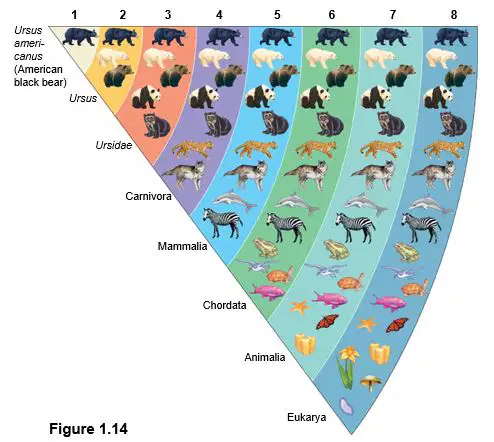
the picture is a classification of living things with taxon levels. What are the taxon levels designated in numbers Eight and Three?
Family and Class
Order and Domain
Domain and Family
Genus and Kingdom
At the highest level, life is classified into three domains is...
Bacteria, Eukarya, Archaea
Bacteria, Prokarya, Archaea
Bacteria, Eukarya, Prokrya
Animals, Plantae, Fungi
the eukaryotes Includes the various protist kingdoms and the kingdoms.......
Plantae, Fungi, and Animalia
Plantae, Fungi, and Archaea
Plantae, Animalia, and Bacteria
Animalia, Bacteri, and Protist
Biology blends two main processes of scientific inquiry....
Discovery Science and Hyphothesis-based Science
Hyphothesis-based Science and Research
Discovery Science and Problem Based Learning
Problem Based Learning and Biology
Eleven themes that unify biology.....
the Cell, Heritable Information, Biological System, Regulation, Interaction with Environment, Energy and Life, Unity and Diversity, Evolution, Structure and Function, Scientific Inquiry, Science Technology and Society
the Cell, Heritable Information, Biological System, Regulation, Interaction with Environment, Water Flow, Unity and Diversity, Evolution, Structure and Function, Scientific Inquiry, Science Technology and Society
The Cell, Heritable Information, Biological System, Regulation, Interaction with Environment, Energy and Life, Kingdom of Organism, Evolution, Structure and Function, Scientific Inquiry, Science Technology and Society
The Cell, Heritable Information, Biological System, Regulation, Interaction with Environment, Energy and Life, Kingdom of Organism, Evolution, Structure and Function, Scientific Inquiry, Natural Selection

