wayground logo

Free Printable Worksheets

NEW

Font size

S
M
L
XL
Worksheets

Rock Cycle

Total questions: 48

Worksheet time: 46mins

Name
Class
Date
1.
A rock formed from fragments of other rocks is a(n)
a)
Metamorphic Rock
b)
Sedimentary Rock
c)
Extrusive Rock
d)
Igneous Rock
2.
As lava cools and crystallizes, what type of rock will form?
a)
Sedimentary
b)
Metamorphic
c)
Extrusive Igneous
d)
Intrusive Igneous
3.
What are the 3 major types of rocks?
a)
Igneous, Metamorphic, Sedimentary
b)
Metamorphic, Igneous, Cementation
c)
Brown, Red, Gray
d)
Streak, Hardness, Breakage
4.
When you watch a volcano erupt molten rock, you are seeing _____
a)
Lava
b)
Magma
c)
Mineral Crystals
d)
Igneous Rocks
5.

In which type of rock might you see a fossil?

a)

Marble

b)

Igneous rock

c)

Metamorphic rock

d)

Sedimentary rock

6.
Rock that forms when sediment from older rocks get pressed and cemented together.
a)
Sedimentary Rock
b)
Metamorphic Rock
c)
Igneous Rock
7.
The process by which metamorphic rocks are formed...
a)
heat and pressure
b)
erosion and deposition
c)
melting and cooling
8.
_______ rock forms from magma/lava
a)
Metamorphic
b)
Sedimentary
c)
Igneous
9.
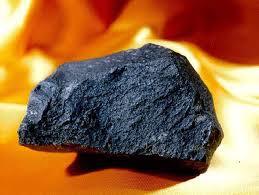
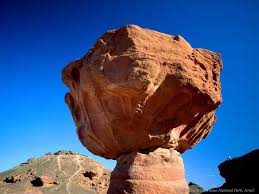
This rock was formed by smaller pieces of rock that settled at the bottom of a lake millions of years ago. What type of rock is this?
a)
Sedimentary
b)
Igneous
c)
Metamorphic
10.
Cooling & crystalization produce
a)
igneous rocks
b)
metamorphic rocks
c)
sedimentary rocks
11.
Wind, water, and ice breaking down rock is called
a)
Erosion
b)
Deposition
c)
Compaction
d)
Weathering
12.
What is the MAIN way rocks are classified?
a)
Their color and shapes
b)
How they form
c)
Mineral bands
d)
Where they form
13.
True/False: Igneous rocks can only turn into metamorphic rocks.
a)
True
b)
False
14.
The process in which dissolved minerals crystallize and glue sediment together.
a)
compaction
b)
deposition
c)
organic rock
d)
cementation
15.
When sediments are pressed together tightly, this is called ____________.
a)
Compaction
b)
Cementation
c)
Weathering
d)
Erosion
16.
This rock was found near the mouth of a volcano. What type of rock is this?
a)
Sedimentary
b)
Igneous
c)
Metamorphic
17.
This rock was molten magma that slowly cooled under the ground. What type of rock is this?
a)
Sedimentar
b)
Igneous
c)
Metamorphic
18.
After lots of time, pressure, and heat, you get this kind of rock. What type of rock is this?
a)
Sedimentary
b)
Igneous
c)
Metamorphic
19.
Each rock type can follow only one pathway of the rock cycle.
a)
True
b)
False
20.

How is magma formed?

a)

Sedimentary rock is melted

b)

Igneous Rock is melted

c)

Metamorphic Rock is melted

d)

Sedimentary, Igneous, and Metamorphic Rock are Melted

21.

What process is necessary to change sedimentary rock to metamorphic rock?

a)

Solidification (Cooling and Hardening)

b)

Metamorphism (Heat and Pressure)

c)

Compaction and Cementation

22.

Can an Igneous Rock become another Igneous Rock?

a)

Yes

b)

No

c)

Depends

23.

How do Sediments become Sedimentary Rock?

a)

Weathering, Uplift, Erosion

b)

Deposition, Burial, Compaction, and Cementation

c)

Metamorphism (Heat and Pressure)

d)

Solidification (Cooling and Hardening)

24.

How does a Metamorphic Rock become an Igneous Rock?

a)

Melting and Solidification (Cooling and Hardening)

b)

Metamorphism (Heat and Pressure)

c)

Weathering, Uplift, and Erosion

d)

Compaction and Cementation

25.

How does Igneous Rock become Metamorphic Rock?

a)

Weathering, Uplift, and Erosion

b)

Solidification (Cooling and Hardening)

c)

Metamorphism (Heat and Pressure)

d)

Compaction and Cementation

26.

How does Magma become an Igneous Rock?

a)

Weathering, Uplift, and Erosion

b)

Compaction and Cementation

c)

Metamorphism (Heat and Pressure)

d)

Solidification (Cooling and Hardening)

27.

How does wind cause weathering?

a)

wind can not weather rocks

b)

wind blows sand to create new landforms

c)

wind blows sand from one rock surface to another

d)

wind blows sand against the rock's surface breaking it down

28.

When water freezes in cracks of rock and expands, causing it to break apart. What type of weathering is this?

a)

biological

b)

chemical

c)

physical/mechanical

d)

erosional

29.

This student is blowing sand from one part the the pan to another demonstrating ________ to the class.

a)

erosion

b)

weathering

c)

how soil is formed

d)

deposition

30.
The process that breaks down rocks and other materials on Earth's surface is called
a)
Weathering
b)
Erosion
31.

This is the movement of sediment by water ice ,gravity, and wind.

a)

glacier

b)

erosion

c)

water cycle

d)

precipitation

32.
Rain washing away soil from a hillside
a)
Weathering
b)
Erosion
c)
Deposition
33.
Waves dropping sand on the beach
a)
Weathering 
b)
Erosion
c)
Deposition
34.

Deltas forming at the mouths of rivers are an example of:

a)

Weathering

b)

Erosion

c)

Deposition

35.
The process of breaking up rocks on Earth's surface is called...
a)
sediment
b)
erosion
c)
weathering
d)
deposition 
36.

Which layer of the Earth is in a liquid state of matter?

a)

Crust

b)

Inner Core

c)

Mantle

d)

Outer Core

37.

According to scientific data, which layer of Earth is the thickest?

a)

Crust

b)

Inner Core

c)

Mantle

d)

Outer Core

38.

Oceans and other bodies of water are found on which layer of the Earth?

a)

Outer Core

b)

Mantle

c)

Inner Core

d)

Crust

39.

How many layers does Earth have?

a)

1

b)

2

c)

3

d)

4

40.

What is the thinnest layer?

a)

Crust

b)

Mantle

c)

Outer Core

d)

Inner Core

41.

What is the hottest layer?

a)

Crust

b)

Mantle

c)

Outer Core

d)

Inner Core

42.

Which layer is the only liquid layer?

a)

Crust

b)

Mantle

c)

Outer Core

d)

Inner Core

43.
There are how many different types of crust?
a)
1
b)
2
c)
5
d)
3
44.
What is the correct order (starting from the surface) of Earth's layers?
a)
crust, outer core, inner core, mantle
b)
mantle, outer core, inner core, crust
c)
crust, mantle, outer core, inner core
d)
outer core, inner core, crust, mantle
45.

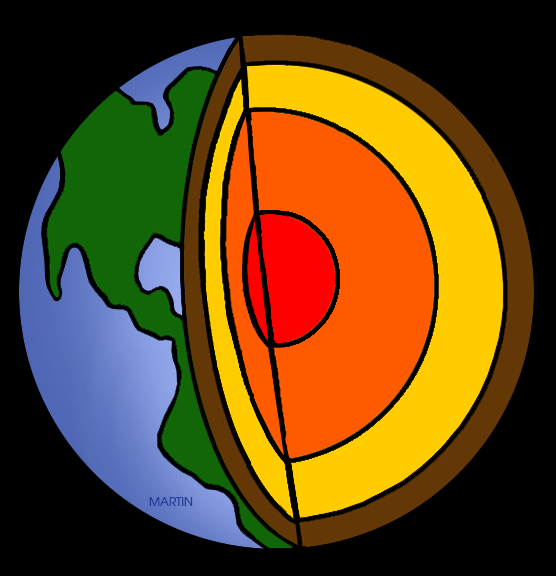
Which layer is shown in red?

a)

crust

b)

mantle

c)

outer core

d)

inner core

46.

Which layer is shown in orange?

a)

crust

b)

mantle

c)

outer core

d)

inner core

47.

Which layer is shown in yellow?

a)

crust

b)

mantle

c)

outer core

d)

inner core

48.

Which layer is shown in brown?

a)

crust

b)

mantle

c)

outer core

d)

inner core