
 Worksheets
Skill check M1-M3
Total questions: 44
Worksheet time: 1hrs 24mins
Let
f(x)=2x−1 and g(x)=x2+x−2. Find (f+g)(x).
If f(x) = x−1 and g(x)=5x−2 , then (f−g)(x)=
If f(x) = x−1 and g(x)=5x−2 , then (f⋅g)(x)=
If f(x) = 3x2−4 and g(x)=x2−8x+4 , then (gf)(x)=
If f(x)=2x and g(x)=2x2−1 find f(g(x))
If f(x)=x1 and g(x)=3x+2 find (f∘g)(2)
If f(x)=2x and g(x)=2x2−1 find f(g(3))

Inverse Functions
Not Inverse Functions

True
False
(1, 4) and (4, 6)
(-4, -1) and (-6, -4)
(-1, -4) and (-4, -6)
(4, 1) and (6, 4)
Find the correct order to find the inverse of f(x)= 2x-5
y=2x-5
2y-5=x
2y= x+5
y=2x+5
f−1(x)=21x+25

A
B
C
D

Yes
No

no
yes
no way to tell

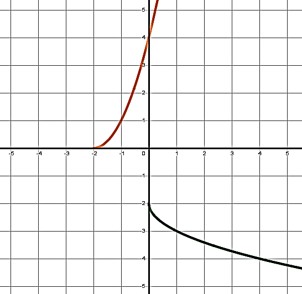
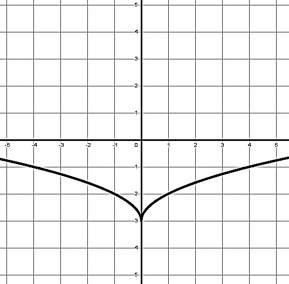
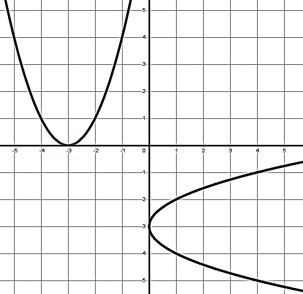
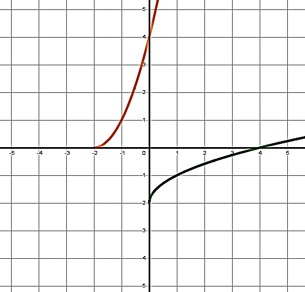
Which graph shows the inverse of the graph above?
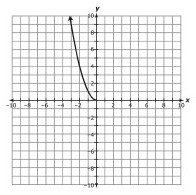
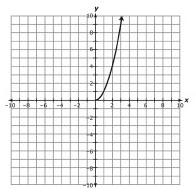
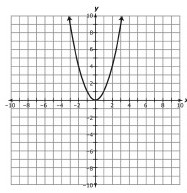
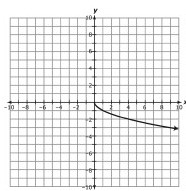
Which graph shows inverse functions?
(1,3)(2,4)(6,8)
(3,1)(4,2)(8,6)
(-3,-1)(-4,-2)(-8,-6)
(1,3)(2,4)(6,8)
(-1,-3)(-2,-4)(-6,-8)

What is the RANGE of the INVERSE function?
{-5, 1, 3, 4}
{-4, -3, -1, 5}
{-4, -2, 0, 7}
{-7, 0, 2, 4}
Which of the following is NOT TRUE about inverse functions?
Inverse functions are reflections of each other over the line y = x.
You find the inverse by switching x and y in the equation.
The domain of a function becomes the domain of its inverse.
The domain of a function becomes the range of its inverse.
Determine the inverse for the function:
R (x) = 2x + 1
(Write your answer as y = ... )
Determine the inverse for the function:
T(x) = 6x − 7
(Write your answer as y = ... )

Which is the inverse of the table?


If f(x)=2x and g(x)=2x2−1 find g(f(−1))

h(f(-2)) =

f(f(0)) =
If f(x)=x2−2, g(x)=x+9 and h(x)=−3x, find h[f(g(−2))].
If f(x)=76x+3, g(x)=32x−1 and h(x)=41x+6, find f[g(h(24))].
q(x) = 2x2
Find p(q(x))
Evaluate the function f(x)=x2+4x+1 when x=−2 .
f(x)=x−6 , find f(15)
If f(x)=x−12x +1
find f(23)

State the domain
(-oo, -1) U (-1, oo)
[-1, oo)
(-oo, -1]
(-1, oo)

State the domain:
(-oo, 7) U (7, oo)
(-oo, -7) U (7, oo)
(7, oo)
[7, oo)

State the domain:
(-oo, 4)
(-oo, 2]
[2, oo)
[4, oo)

State the domain
(-oo, oo)
[0, oo)
(-oo, 0]
(-oo, 0) U (0, oo)

State the domain:
(-oo, oo)
(-oo, 3) U (3, oo)
(-oo, -3) U (-3, 3) U (3, oo)
[3, oo)

State the domain:
(-oo, 2]
[5, oo)
(-oo, 5/2]
[5/2, oo)

State the domain:
(-oo, 3) U (3, oo)
(-oo, 3]
(-oo, 3)
(3, oo)

State the domain:
(-oo, oo)
[0, oo)
(-oo, 0)
(0, oo)
g(x)=x−1x+5 Find the x-values where g(x)=0
x = 1
x = -1
x = -5
x = 5

Find h(f(j(19)))
Given that f(x)=x+1 and g(x)=x+31 Find the domain of the division f(x)g(x)
(-∞,-3) ∪ (-3, -1) ∪
(-1, ∞)
(-∞,-3) ∪ (-3, ∞)
(-∞,-1) ∪ (-1, ∞)
(-3,-1)
Given that f(x)=x2−1 and g(x)=x+31 Find the domain of the division f(x)g(x)
(-∞,-3) ∪ (-3, -1) ∪
(-1, ∞)
(-∞,-3) ∪ (-3, -1) ∪
(-1, 1) ∪ (1, ∞)
(-∞,-1) ∪ (-1, ∞)
(-∞,-3) ∪ (-3, 1) ∪
(1, ∞)

