
NEW
Font size
 Worksheets
Macromolecules Unit 1
Total questions: 30
Worksheet time: 34mins
The building blocks for organic compounds are called...
Polygons
Polymers
Monograms
Monomers
___ are used by cells to get quick energy.
Carbohydrates
Lipids
Proteins
Nucleic Acids
_____ store genetic information.
Carbohydrates
Lipids
Nucleic Acids
Proteins
What is the monomer of proteins?
Amino Acid
Fatty Acid
Nucleotide
Monsaccharide
What is the monomer of nucleic acids?
Monsaccharide
Nucleotide
Amino Acid
Fatty Acid

Which is shown in the picture?
Monosaccharide
Fatty Acid
Amino Acid
Nucleotide

Which is shown in the picture?
Monsaccharide
Amino Acid
Fatty Acid
Nucleotide

Which of the following macros provides you with energy?
Carbohydrates
Lipids
Proteins
Nucleic Acids
Which of the following is a polysaccharide?
Starch
Glucose
Enzymes
RNA
Wax is a highly hydrophobic lipid polymer. What is it's main function?
Make cell membranes
Waterproof surfaces
Provide Energy
Part of the immune system
Stores genetic instructions

What is the monomer of a protein?
Amino Acid
Monosaccharides
Nucleotides
Fatty Acid
Which macromolecule has the most variety in the number of monomers and thus, the number of polymers?
Carbohydrates
Lipids
Proteins
Nucleic Acids
What is the purpose of an enzyme?
transports materials in our bodies
makes up structures in animals
speed up chemical reactions
part of our immune system

What happened to the protein?
It was polymerized
It was denatured
It was unsaturated
It was saturated

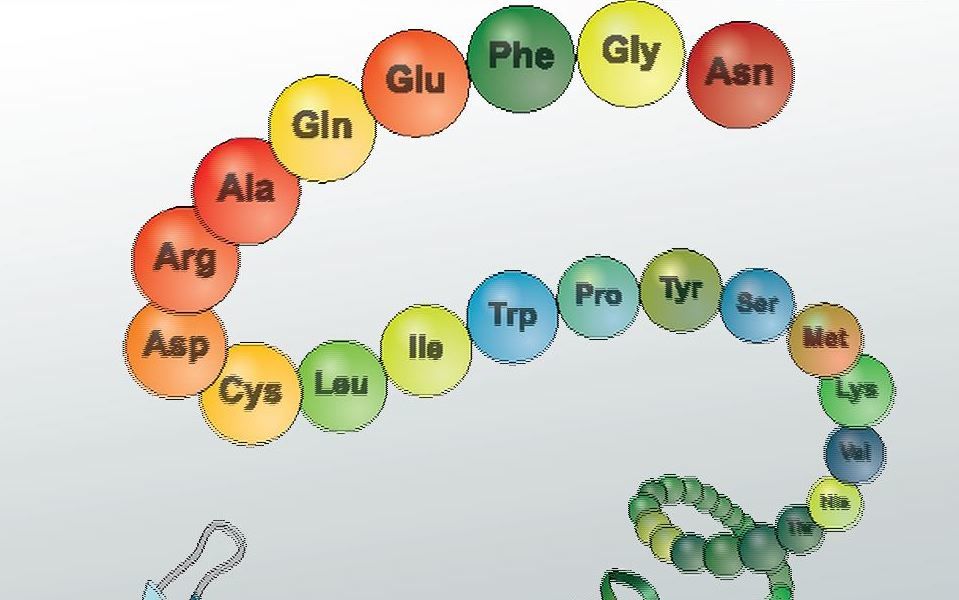
Which monomer is shown?
lipid
protein
nucleic acid
carbohydrate

What macromolecule shown?
Nucleic acid
Lipid
Protein
Carbohydrate
___________ holds the information required to build ____________
Nucleic Acid
Protein
Carbohydrate
Protein
Nucleic Acid
Carbohydrate
Protein
Lipd

What does part A represent?
active site
substrate
product
enzyme
What does part B represent?
active site
substrate
product
enzyme
What does denature mean?
to change a protein structure
to add more product
level of the pH is insignificant
The environmental condition where the enzyme performs the best.
optimal environment
detrimental environment
hazardous environment
catalyst environment


A nucleotide is composed of
A phosphate, sugar and nitrogenous base
A protein, protein and Guanine
A phosphate, Adenine, and nitrogenous base
A protein, Adenine and nitrogenous base
Which of the following nitrogenous bases would not be found in DNA?
AGUC
ACTG
ACTU
AGTU

