
 Worksheets
Honors - Unit 02 Shaping A New Nation Study Guide
Total questions: 141
Worksheet time: 3hrs 16mins

What was the name of the first American Government?
The Articles of Confederation
The Constitution
The Declaration of Independence
The Declaration of Rights of Man and Citizen

Which of the following best describes the Articles of Confederation?
"A Firm League of Friendship" - A military alliance between the states against Britain, with a weak central government.
"A Firm League of Friendship" - A military alliance between the states against Britain, with a strong central government.
"A Firm League of Friendship" - A commercial alliance between the states against Britain, with a weak central government.
"A Firm League of Friendship" - A commercial alliance with Britain, with a weak central government.

Which branches were not included in the Articles of Confederation?
Executive
Judicial
Legislative
All of the Above.

Which of the following was the biggest issue with the Articles of Confederation?
It couldn't levy Federal taxes.
It couldn't levy State taxes.
It couldn't negotiate treaties.
It couldn't print currency.

Which of the following are accomplishments of the Articles of Confederation?
It was functional enough to allow the U.S. to win the American Revolution.
The Land Ordinance of 1785
The Northwest Ordinance of 1787
All of the above

The Northwest Ordinance of 1787 acknowledged that Indians had a claim to the land and had to be treated better to avoid violence.
The ordinance outlawed slavery in all five states.
The ordinance outlawed liquor in all five states.
The ordinance prohibited slavery in all five states.
The ordinance claimed Canadian territories.

What is a notable example of the failure of the Articles of Confederation?
Shays’ Rebellion
Pontiac's Rebellion
The Whiskey Rebellion
The Stono Rebellion

Which founding father was a fan of Shays' Rebellion, stating, "A little rebellion now and then is a good thing. The tree of liberty must be refreshed from time to time with the blood of patriots and tyrants."?
Thomas Jefferson
John Adams
George Washington
Alexander Hamilton

Which social group lobbied for changes to the Articles of Confederation after Shays' Rebellion?
The wealthy, as the weak government could not protect them or their property, which was not in their best interest.
Poor farmers, as the weak government could not protect them or their property, which was not in their best interest.
Native Americans, as the weak government could not protect them or their property, which was not in their best interest.
Women, as the weak government could not protect them or their property, which was not in their best interest.

The Constitutional Convention is also known as the ______ Convention. It took place in which city between May 25 and September 17, 1787?
Philadelphia
Annapolis
Washington D.C.
New York

Which of the following best describes the members of the Constitutional Congress?
The majority were white males.
The majority were college educated.
The majority were wealthy.
The majority had served in the Army during the Revolutionary War.

Which Founding Father, a Federalist, was one of the greatest proponents of a very strong government?
Alexander Hamilton
Thomas Jefferson
George Washington
Patrick Henry

This picture illustrates that a major goal of the members of the Constitutional Convention was to create a government that protected against:
The tyranny of the government.
The tyranny of the people.
The tyranny of an elected few.
The tyranny of a supreme leader.

Which constitutional plan composed by James Madison favored states with large populations?
The Virginia Plan
The New Jersey Plan
The Connecticut Plan
The Pinckney Plan

Which constitutional plan favored states with small populations?
The Virginia Plan
The New Jersey Plan
The Connecticut Plan
The Pinckney Plan
Which constitutional plan is known as the Great Compromise?
The Virginia Plan
The New Jersey Plan
The Connecticut Plan
The Pinckney Plan

Which two elements are part of the Great or Connecticut Compromise?
Bicameral Legislature
The “three-fifths” Compromise
Missouri Compromise
The Tariff Compromise

The Connecticut (Great) Compromise resulted in two legislative houses, which are:
The House of Representatives
The Senate
The President
The Supreme Court

Members of the House are called ______ and serve two-year terms.
Congressmen
Senators
Judges
Executives
(a) serve six-year terms, with 1/3 of them being up for election in every two-year cycle.
The House of Representatives (Lower House) allots the number of representatives for a state based on population. This satisfies the proposal of which plan?
The Virginia Plan
The New Jersey Plan
The Connecticut Plan
The Pinckney Plan
The Senate (Upper House) allots two Senators for each state. This proposal is satisfied by which plan?
The Virginia Plan
The New Jersey Plan
The Connecticut Plan
The Pinckney Plan
This portion of the Connecticut (Great) Compromise is often referred to as the "not so great compromise" because it addressed the issue of population and African slaves.
Bicameral Legislature
The “three fifth” Compromise
Missouri Compromise
The Tariff Compromise

To avoid the tyranny of the government, what two principles did the Constitution embrace?
Separation of Powers
Federalism
Socialism
Nationalism

What are the three branches of the U.S. government?
Legislative
Executive
Judicial
Congressional

What is one example of a check that the Executive branch has on the Legislature?
Veto
Impeachment
Judgment on the constitutionality of a law.
All of the above.

How many states were required for the ratification of the constitution?
9
10
13
It had to be unanimous.

To promote the ratification of the Constitution, Alexander Hamilton, John Jay, and James Madison wrote which series of papers?
The Federalist
The Anti-Federalist
American Crisis
Common Sense

The Anti-federalist arguments led to the later adoption of 10 amendments, which are commonly known as?
The Bill of Rights
The Declaration of Independence
The Declaration of the Rights of Man and Citizen
The Preamble
"The plan of the government now proposed is evidently calculated totally to change, in time, our condition as a people. Instead of being thirteen republics under a federal head, it is clearly designed to make us one consolidation government." This quote by the unknown Federalist Farmer best reflects which view of the Constitution?
Anti-federalist
Federalist
Place the following events in chronological order
Treaty of Paris 1783
Shays Rebellion
Philadelphia Convention
Ratification of the Constitution
Washington Administration
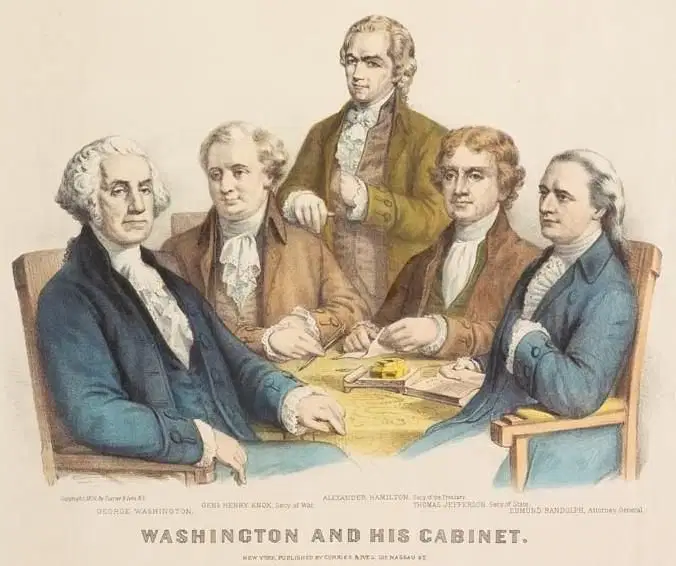
Which branches of government did Washington expand?
Executive and Legislative
Executive and Judicial
Legislative and Judicial
Executive, Legislative and Judicial
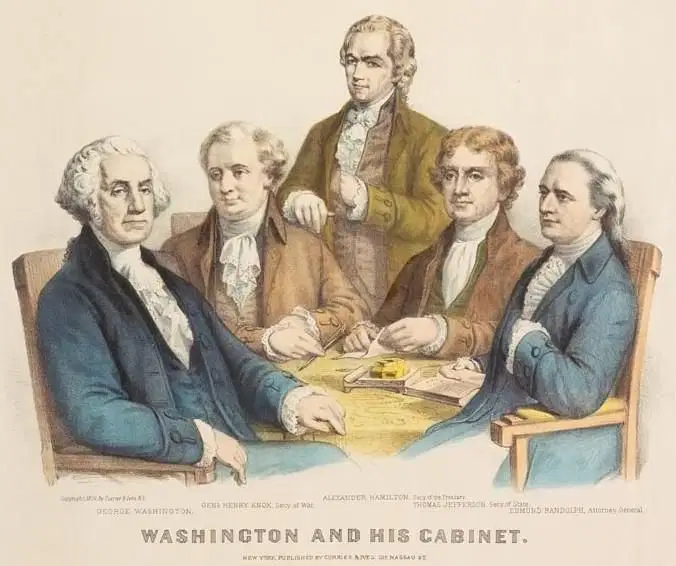
The major division in Washington's cabinet was between which two members?
Dep. of State: Foreign affairs Thomas Jefferson
Department of Treasury: National Finance Alexander Hamilton
Vice President: John Adams
Dep. of War: Military Matters Henry Knox

Which of the following were parts of Alexander Hamilton's economic plan?
Redemption & Assumption
Creation of a National Bank
An excise (sales/sin) tax on whiskey
Tariffs on popular imports.
Match the following parts of the Hamiltons financial plan
Federal government buys state debts and re-issues them as government bonds
Created via the "Necessary and Proper Clause" or Elastic Clause.
Sales tax on Whiskey
Tax on imports
This Hamiltonian policy (plan by Hamilton) involved the federal government buying up state debts and selling them as government bonds to pay off the old debts.
Redemption & Assumption
Creation of a National Bank
An excise (sales/sin) tax on whiskey
Tariffs on popular imports.
Where would tariffs most likely be popular?
Where would tariffs be least popular?
What clause in the Constitution did Alexander Hamilton use to create a National Bank?
(a)
Which of the following locations best represents the site of the US capital as agreed upon in the "Dinner Table Compromise"?
Which location did the Whiskey Rebellion Occur?
Bacon's Rebellion
Shay's Rebellion
Whiskey Rebellion
Stono's Rebellion
The Haitian Rebellion

Which of the following were reasons why frontier farmers opposed the whiskey tax?
It was a regressive tax that hurt small distillers more than larger producers.
It was a progressive tax that hurt larger distillers more than smaller producers.
Whiskey was commonly used as a trade good in place of scarce (limited) currency on the frontier.
The production of whiskey was a way to convert excess grain into perservable product.

Politically what were the results of the Whiskey Rebellion?
Rural America largely voted for anti-federalist policies and politicians.
It resulted in the abolition of taxes on whiskey
It strengthened the power and influence of the federal government
It caused the secession of several western states

What is the name of the term that describes the political division of certain areas of the country?
(a)
During the Washington administration two political parties emerged. The (a) led by (b) and the (c) led by (d)
Federalist
Alexander Hamilton
Democratic-Republicans
Thomas Jefferson
Strong CENTRAL Gov.
Loose Construction
Pro National Bank
Pro Protective Tariff
Feared Anarchy/Mob Rule
Urban (Commerce)
Feared Tyranny
Strict Construction
Rural (Agrarian)
Anti-National Bank
Anti-Tariff
Anglophile
States Rights
Francophile
Pro-Federal Assumption of State War debts
Anti-Federal Assumption of State War debts
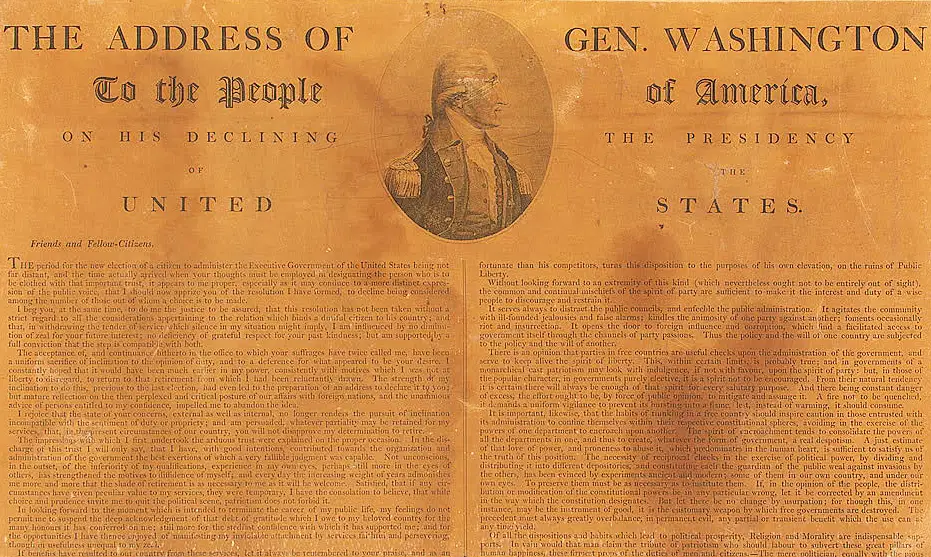
Domestically (at home) what did Washington warn against in his farewell address?
Involvement in foreign wars
Political parties
Sectionalism
The expansion of slavery

Why was Washington fearful of political / sectional interest?
He believed they would lead to disunity and conflict as they would put their political / sectional interest ahead of the nations interest.
He was afraid they would lead to his personal downfall as political / sectional rivals would seek to be his successor.
He thought they would cause economic instability political / sectional over the issue of slavery.
He feared they would lead to foreign invasion

In regard to foreign policy what did Washington's warn against in his farewell address?
Not forming alliances with foreign nations

As President George Washington did not support their former allie from the War of Independence as what was occuring in their nation?
(a)

Which are two notable treaties with European powers during Washington's Presidency?
Jay's Treaty & Pinckney's Treaty

What was the governing document of the U.S. before the Constitution?
The Articles of Confederation
The Declaration of Independence
The Declaration of the Rights of Man and Citizen
The Treaty of Paris

Which of the following would be appealing to Alexander Hamilton?
A Federalist Government (strong & centralized)
Mercantile manufacturing economy
Strong trade with Britain
All of the above.

Which of the following would Thomas Jefferson be in favor of?
Anti-Federalist (weak government)
Agrarian economy
Strong trade with France.
All of the above.

Which of the following statements would Thomas Jefferson most likely agree with?
The American people are capable of governing themselves and need as little government interference in their lives as possible.
America needs a well-informed social elite to make educated political decisions and a strong government to enforce those decisions.

What series of events were happening in Europe at this time that increased tension between the Federalist and Democratic (Jeffersonian) Republicans?
The French Revolution, and later the Napoleonic Wars
The 30 Years War
The War of 1812
The War of Spanish Succession

Though the Democratic (Jeffersonian) Republicans opposed the repression of free speech and democracy by the Federalist government, many of them were:
Southern slaveholders.
Southern business owners.
Southern Anglophiles.
Southern abolitionists.

What precedent did Washington set as president?
A president should only serve two terms.
Even though he was a general, the president should wear civilian clothing.
Presidents should be addressed as 'Mr. President'.
Presidents should reside in the White House.

Who was the financial policy brain of the Washington administration?
Alexander Hamilton
John Adams
Thomas Jefferson
James Madison

Which of the following are points of Hamilton's five-point plan?
Establish the nation's credit via assumption & redemption.
Create a bank of the United States.
Implement a whiskey tax.
Introduce tariffs.

The viewpoint that government decisions should be specifically outlined in the constitution is known as?
Strict construction
Loose construction
Mild construction
The elastic clause of the Constitution

What was the result of the compromise between Jeffersonian Republicans and Federalists in adopting four of Hamilton's five economic proposals?
A permanent capital on the Potomac in the South.
A repeal of the Whiskey Tax.
Closure of the National Bank.
Resignation of Hamilton.

What was possibly the most controversial part of Hamilton's plan for individuals on the frontier?
Establishing the nation's credit via assumption & redemption.
Creating a bank of the United States
A whiskey tax
Tariffs

Which rebellion did President George Washington lead troops in the field for a brief moment before handing over command to Light Horse Harry Lee?
The Whiskey Rebellion
Shays' Rebellion
Bacon's Rebellion
Gabriel's Rebellion

This wildly unpopular treaty stabilized trade with Great Britain, making the U.S. the “Most Favored Nation” in trade with Britain.
Jay's Treaty
Pinckney's Treaty
The Dinner Table Compromise
The Treaty of Paris
Washington warned against the “baneful effects of the spirit of party generally,” saying that “it agitates the community with ill-founded jealousies and false alarms; kindles the animosity of one part against another; foments occasionally riot and insurrection. It opens the door to foreign influence and corruption.” This quote best illustrates Washington's warning against what?
Political Partisanship
Sectionalism
Foreign Entanglement
Respect of the Constitution

What unique situation occurred in the 1796 election?
The second-place finisher, and opposition to the President, was made his Vice president.
The electoral college had a tie.
New Jersey refused to cast an electoral vote.
A sitting president refused to leave office.

What is the name of the dispute with France during the Adams administration, where France was capturing American ships and impressing American sailors?
Quasi War
The French & Indian War
The Battle of Fallen Timbers
The XYZ affair
This incident involved three French officials who attempted to bribe American officials during international talks, which turned American public opinion against France.
Quasi War
The French & Indian War
The Battle of Fallen Timbers
The XYZ affair

These were a series of highly unpopular acts pushed through by John Adams's administration. They increased the time it took to become a citizen and made it a crime to criticize the government.
The Alien & Sedition Act
Judicial Review
Jay's Treaty
The XYZ affair

The Alien & Sedition Acts were so unpopular that two states passed resolutions nullifying the acts as unconstitutional. Which two states were they?
Virginia
Kentucky
Georgia
New Jersey

Who won the Presidential Election of 1800?
Thomas Jefferson
James Madison
John Quincy Adams
John Adams

Thomas Jefferson defeated who in the 1800 election? Denying them a second term.
John Adams
John Quincy Adams
George Washington
James Madison

Because a Republican elector forgot to throw one of his votes away in the 1800 election there was a tie for president between?
Thomas Jefferson
Aaron Burr
Henry Clinton
James Madison

After 36 ballads in the House of Representatives, who persuaded the House to vote for Thomas Jefferson, as he thought Burr had questionable morals.
Alexander Hamilton
George Washington
James Madison
John Adams

This sketch is a painting of a famous duel in American history that would result in the death of one founding father and the political ruin of another. Which two individuals famously dueled each other?
Thomas Jefferson
Aaron Burr
Andrew Jackson
Alexander Hamilton

This amendment to the Constitution simplified the electoral college, took into account political parties, and reduced the chances of ties within political parties.
The 12th Amendment
The 11th Amendment
The 10th Amendment
The 13th Amendment

Thomas Jefferson would agree with which of the following statements?
The common man should be more free to express their opinion.
The common man is not educated enough to know what they truly want.

Did Thomas Jefferson believe that African Slaves were the moral and intellectual equal of whites?
Yes
No

What large-scale slave revolt in Virginia failed before it even started due to bad weather and two slaves telling their masters of the plan?
Gabriel's Rebellion
The Stono Rebellion
Nat Turner's Rebellion
The Haitian Revolution

Which of the following were initiatives that Jefferson would support?
Reduced size of the government.
Lower taxes.
Shrinking the military.
Supporting small farmers.

This conflict with pirates in North Africa who captured American ships and sailors demanding tribute from the U.S. is immortalized in the Marine Hymn "... shores of Tripoli".
The First Barbary War
The War of 1812
The XYZ Affair
The Chesapeake-Leopard Affair

The Jeffersonian Party or Democratic-Republican Party was the forerunner to what modern political party?
The Democratic Party
The Republican Party
The Tea Party
None of the above.

Though Jefferson was able to roll back many Federal policies which branch of the government had largely been appointed by the previous Federalist government?
The Judicial (Supreme Court)
The Legislative (House of Representatives)
The Legislative (The Senate)
The Executive (Vice President)

Who was the most influential Supreme Court Justice in early American History?
John Marshall
John Jay
Earl Warren
Oliver Wendell Holmes

Which Supreme Court case is possibly the most influential supreme court case in American History?
Marbury v. Madison
McCulloch v. Maryland
Gibbons v. Ogden
Plessy v. Ferguson

Marbury v. Madison granted the Supreme Court what power which would later be expanded in the ruling Fletcher v. Peck?
Judicial Review
Writ of Mandamus
Habeas Corpus
Pro Bono

Judicial review means the supreme court can review the
constitutionality of a law.
the fairness of a law.
the equality of a law.
the intent of a law.

This is the political and legal view that the power of the government should not extend past what is specifically outlined in the U.S. constitution.
Strict Construction
Loose Construction
Legalist View
Progressive View

As a strict constructionist, Thomas Jefferson struggled to justify this decision as the Constitution made no provision for it.
The Louisiana Purchase
Declaring war
Enacting an embargo
Displacing Native Americans from Georgia.

Who led the Corps of Discovery that explored the newly purchased Louisiana Territory?
Meriwether Lewis
William Clark
Daniel Boone
David Crockett

Diplomats to Paris originally aimed to purchase what critical port city before being offered the whole Louisiana Territory?
New Orleans
Galveston
Havana
Miami

The most controversial, and detrimental action of Jefferson's Presidency was
The Embargo
The War of 1812
The Louisiana Purchase
The treason trial of Aaron Burr

Jefferson's Embargo eventually lead to
The War of 1812
The Second Barbary War
The Louisiana Purchase
The treason trial of Aaron Burr

Many of the early settlers of upcountry South Carolina were?
Scots-Irish Presbyterians
Germans
French Huguenots
Anglican Separatists

Many of these early upcountry settlers moved south from what colony?
Pennsylvania
Ohio
Georgia
New York

What local tribe was the dominant tribe in our local region at the time of early upcountry settlement and still has a presence in the area today?
Catawba
Choctaw
Cherokee
Shawnee

This historic trading route used by Native Americans would be a prime location for early frontier settlers as it allowed individuals to easily cross the Catawba River for most parts of the year.
The Nation Ford Road
The Trail of Tears
Appalachian Trail
Skunk Rabbit Trail

Which early settler made strong ties with the local Catawba Indians?
Thomas “Kanawha” Spratt
Hernando de Soto
Charles Pinckney
John C. Calhoun

What was a major cause of the French and Indian War?
Colonial expansion
Taxes without representation
Fighting at Lexington & Concord.
Tensions between Britain & Spain

What was one of the biggest fear of frontier settlers for most of early US History?
A unified Native American force.
Plagues such as smallpox.
A general lack of food.
Pirates

Which of the following was a plan for unified colonial defense against the threat of Native Americans & the French during the French and Indian War?
Albany Plan
The Articles of Confederation
The Committees of Correspondence
Jays Treaty

Who were the biggest losers of the French & Indian War?
Native Americans
The French
The Americans
The British

What system of Naive American relations with European settlers came to an end with the British victory in the French and Indian War?
The Playoff System
The Mercantile System
The Caste System
The Plantation System

What rebellion attempted to unite the Native Americans on the frontier against the British and westward settlement of the American colonists?
Pontiac’s Rebellion
Bacon's Rebellion
Metacom's War
Little Turtle's War

Following Pontiac’s Rebellion what British policy attempted to stop American settlement west of the Appalachian Mountains?
The Proclamation Line of 1763
A tax on Sugar
An embargo on American goods
A series of forts in the Ohio territory.

This notable Virginian viewed the Royal Proclamation line as a "temporary expedient to quiet the minds of the Indians".
George Washington
Alexander Hamilton
John Adams
William Penn

This frontiersman ignored the Royal Proclamation Line. He developed a path through the Appalachian Mountains (the Wilderness Road through the Cumberland Gap) and established the first permanent colonial settlement in Kentucky.
Daniel Boone
Davie Crockett
Kit Carson
John C. Fremont

What were some complaints of the Americans in the Declaration of Indpendence regarding the frontier?
The British refused to allow for western land settlement.
The British tried to provoke the Native Americans against the Americans.
The British tried to strengthen Anglo-Indian trade relations.
The British tried to encourage Franco-Indian relations.

Did Native Americans clearly side with one side during the American Revolution?
Yes
No

Are Native Americans included in the US Constitution?
Yes, briefly in two locations.
No, they weren't included as they were "non-white".
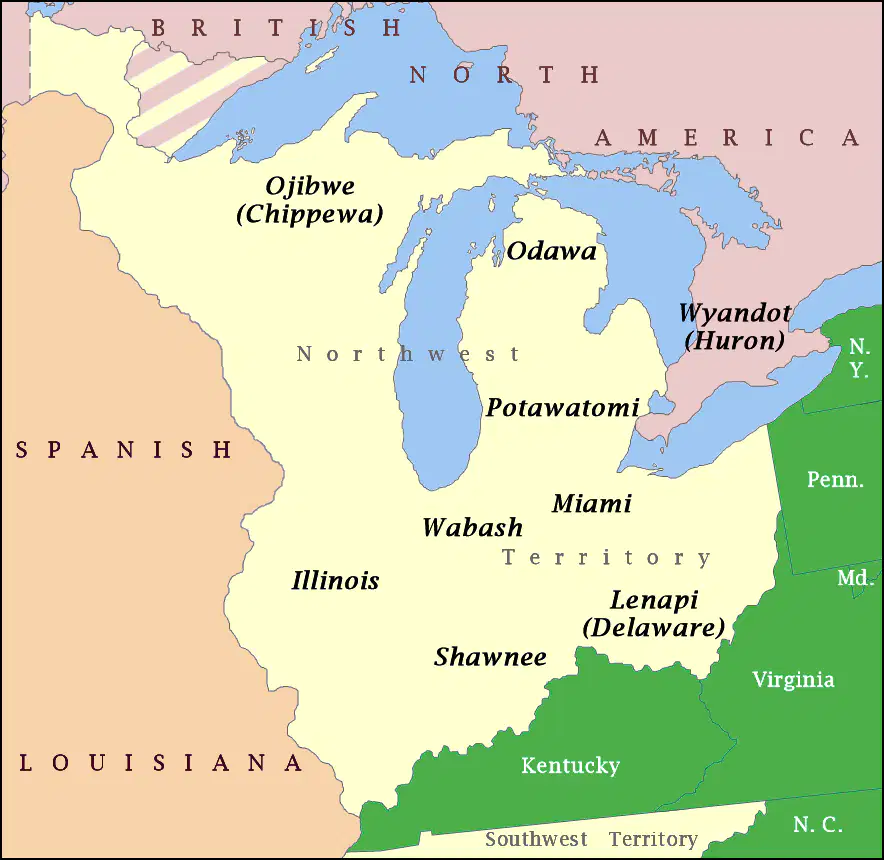
Which notable conflict between the US government and Native Americans occured during George Washington's Presidency?
Battle of Little Bighorn
Wounded Knee Massacre
Battle of Tippecanoe
Northwest Indian War (or Little Turtles War)

Which notable battle saw crushed Native American resistance ending the Northwest Indian War (Little Turtle's War)?
Battle of Fallen Timbers
Battle of Little Bighorn
Battle of Wounded Knee
Battle of Tippecanoe
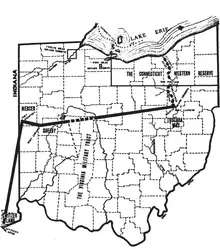
Which ended the Northwest Indian War (Little Turtles War) and pushed many Native American tribes out of the Ohio valley leading to increased settlement?
Treaty of Greenville
Treaty of Paris
Treaty of Ghent
Treaty of Versailles
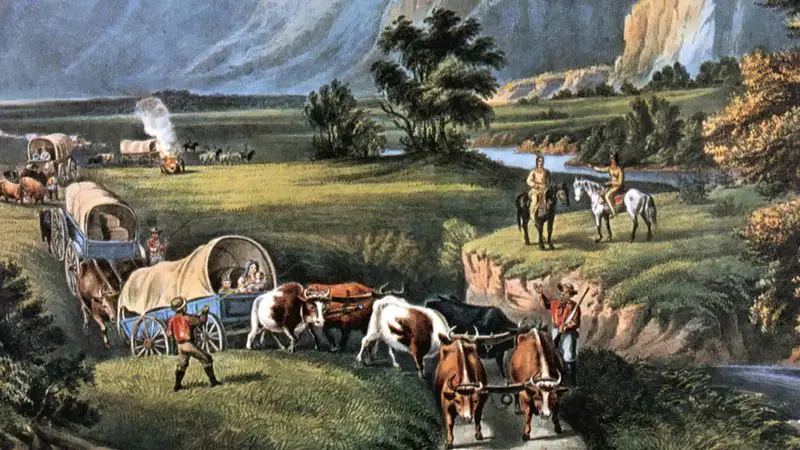
Though Thomas Jefferson outwardly respected Native Americans and called for peaceful assimilation he privately advocated for forced removal to achieve his idea of the US as an
(a)
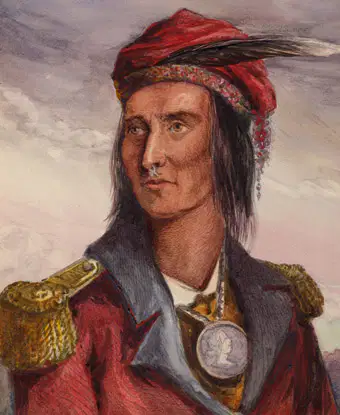
"Sell a country! Why not sell the air, the clouds and the great sea, as well as the earth?" This is a notable quote by this Shawnee Chief who would be the leader of a massive native confederacy prior to and during the War of 1812?
Chief Pontiac
Sitting Bull
Geronimo
Tecumseh
Which battle saw the destruction Tecumseh's base of operations known as Prophetstown?
Battle of Tippecanoe
Battle of Fallen Timbers
Battle of Thames
Battle of Horseshoe Bend

Which US Military leader would rise to prominence (popularity), and later the President for his role in defeating Tecumseh's forces at the Battle of Tippecanoe?
Lewis St. Claire
'Mad' Anthony Wayne
William Henry Harrison
Andrew Jackson
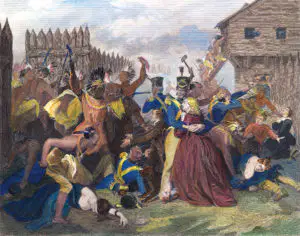
This group of Native Americans in the southeastern United States would wage a separate campaign of resistance against the settlers from Tecumseh's northern native confederation prior to and during the War of 1812?
Cherokee
Creek (Red Sticks)
Choctaw
Chickasaw

Which battle crushed the Red Stick (Creek) resistance in the Sourtheast during the War of 1812?
Battle of New Orleans
Battle of Horseshoe Bend
Battle of Tippecanoe
Battle of Lake Erie

Which US Military commander known as the 'The Hero' or 'Ole Hickroy' would rise to prominence (popularity) and later the President due to his massive military victories at the Battle of Horseshoe Bend against the Red Sticks and Battle of New Orleans against the British.
William Henry Harrison
Davy crockett
Andrew Jackson
Zachary Taylor

What is most often cited as the reason for the War of 1812?
Impressment of American sailors by the British navy.
Conflicts on the western frontier with Native Americans supported by the British.
Jefferson's Embargo of European powers.
The secession of New England over its relationship with the British.

What were the members of Madison's political party, who were pressing for war, known as?
War Hawks
Warmongers
Patriots
Tea Partiers

Who were the two most famous War Hawks during this time?
Henry Clay
John C. Calhoun
James Monroe
John Marshall

Which British territory was targeted for U.S. expansion because it was believed that British agents from this region were supplying Native Americans with firearms?
Canada
The Oregon Territory
Louisiana Territory
New Spain
Which militant Native American leader tried to unite the Native Americans against the ever-expanding U.S.?
Tecumseh
Pontiac
The Red Sticks
Tenskwatawa

Which general's victory at Tippecanoe against the Native Americans at Prophetstown helped propel him to the Presidency in 1840?
William Henry Harrison
William Harrison
Andrew Jackson
James Monroe

Which region of the U.S. was not in favor of the War of 1812 as they had strong economic ties to Britain?
The Northeast (New England)
The Southwest (Slave holding states)
The Western Frontier (Ohio, Kentucky, Tennessee)
None of the above

What conflict distracted the British at the beginning of the War of 1812?
The Napoleonic Wars
The Seven Years War
The French & Indian War
The Mughal Wars of Succession

Which campaign was a resounding failure in the War of 1812?
The Canadian Campaign
The Atlantic Campaign
The Western Frontier
The Southern Campaign in Florida

Which U.S. city was captured and burned in a major British victory?
Washington D.C.
Baltimore
New York
Charleston

This ship received the nickname "Old Ironsides" when British cannonballs bounced off its hull. (You can still visit this ship today).
The USS Constitution
The USS Maine
The HMS Leopard
The USS Monitor

Who was the U.S. naval commander who defeated a British fleet in Lake Erie?
Oliver Hazard Perry
John Paul Jones
Matthew Perry
David Farragut

Which battle saw the defeat and death of Tecumseh?
Battle of Thames
Battle of Tippecanoe
Siege of Detroit
Battle of Fallen Timbers

What was the largest American victory of the War of 1812?
The Battle of New Orleans
Battle of Tippecanoe
The Battle of Horseshoe Bend
The Siege of Fort McHenry

Who was the U.S. general at the Battle of Horseshoe Bend and New Orleans who would later go on to be President of the U.S.?
Andrew Jackson
William Henry Harrison
William Harrison
James Monroe

What is notable about the Battle of New Orleans?
It took place two weeks after the peace treaty was signed.
It took place in Mississippi, not New Orleans.
It resulted in more Native American casualties than British or U.S. soldiers.
All of the above.

What was the name of the treaty that ended the War of 1812?
The Treaty of Ghent
The Treaty of Paris
The Jay Treaty
The Pinckney Treaty

Who were the biggest losers of the War of 1812, according to most of U.S. History?
The Native Americans
The British
The French
Women

The War of 1812 saw the end of the Federalist Party as the Federalists tried to amend the constitution and threatened secession with the:
Hartford Convention.
Articles of Confederation.
Compromise of 1815.
Dumbarton Oaks Convention.

