
 Worksheets
PHR 1093 review for Q1
Total questions: 40
Worksheet time: 3600secs


How do the particles move in diffusion?
From a region of low concentration to a region of high concentration
From a region of high concentration to a region of low concentration
From a region of low concentration to a region of low concentration
From a region of high concentration to a region of high concentration

The top layer of the skin is called the ---
dermis
oil gland
subcutaneous fat
epidermis
____ is the coloring in skin and is found in the epidermis.
Melanin
Oil
Perspiration
Pores
Which layer contains accessory structures such as sweat glands, sebaceous glands, and hair follicles?
epidermis
dermis
subcutaneous fat
hyperdermis
Oil glands that are found all over the skin are called ---
merocrine glands
sebaceous glands
apocrine glands
sweat glands
What causes acne?
clogged sebaceous glands
chocolate
peanut butter
salty foods
What type of cells and tissue make up skin?
muscle
bone
epithelial
epidermis
Which skin layer is most superficial?
stratum corneum
stratum lucidum
stratum spinosum
stratum granulosum
stratum basale
What is the name given to the chronic skin disease characterized by moderate to severe inflammation, scaling, and sometimes severe itching?
conjunctivitis
rosacea
impetigo
eczema
Which skin hypertrophy is characterized by red patches covered with silver-white scales?
psoriasis
keratoma
verruca
eczema
Which skin pigmentation disorder is a genetic condition in which there is an absence of melanin pigment in the body, including the skin, hair, and eyes?
vitiligo
albinism
leukoderma
chloasma
Acne is a skin disorder characterized by chronic inflammation of the _____ glands.
Sudoriferous
Sebaceous
Sweat
Adrenaline
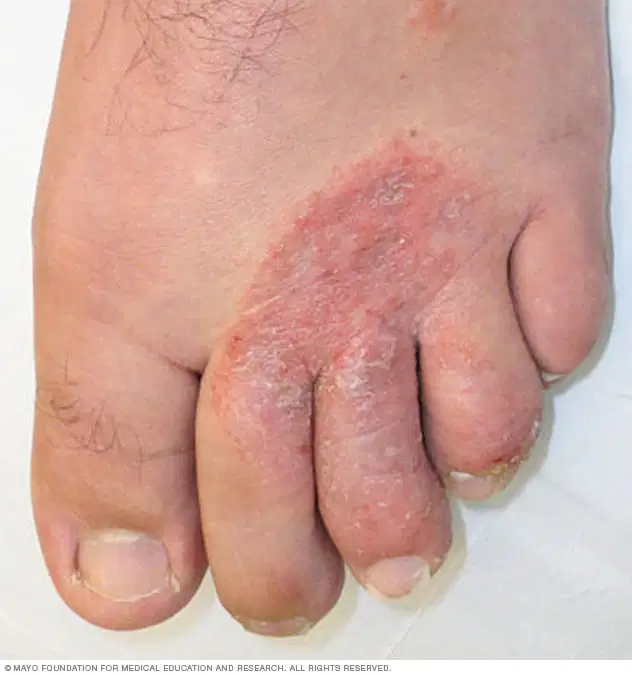
What is this?
Athletes foot
Rosacea
Acne
Hives

