
 Worksheets
23.1
Total questions: 27
Worksheet time: 16mins
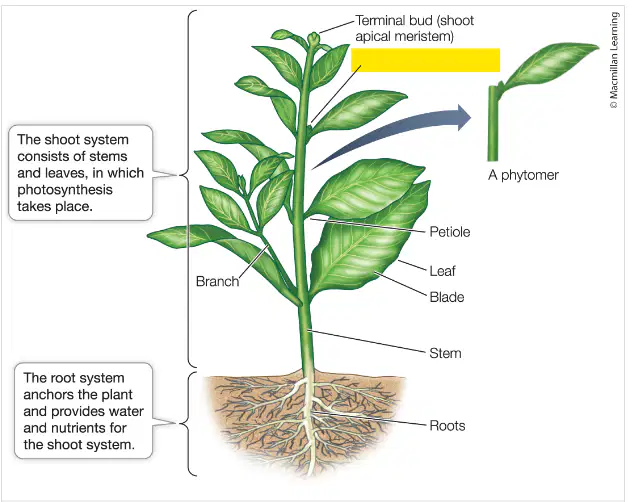
what is this part of the plant called (highlighted)?
axillary bud
rotatory bud
top bud
phytomer
what is the main function of the shoot apical meristem?
photosynthesis
water absorption
production of new organs
nutrient transport
which of the following is NOT considered an organ of the shoot system in plants?
leaves
stems
flowers
roots
why do plants have a remarkable ability to redirect their growth in response to their environment?
They possess the ability to move like animals.
They have a fixed number of body parts.
They can add new organs to their body plan.
They rely on a specialized sensory system.
what comprises a phytomer in a plant's shoot system?
a leaf, node, and an internode
a leaf and axillary bud
a node, internode, and an axillary bud
a leaf, stem, and a root
monocots have _____ roots while eudicots have ______ roots.
(a)
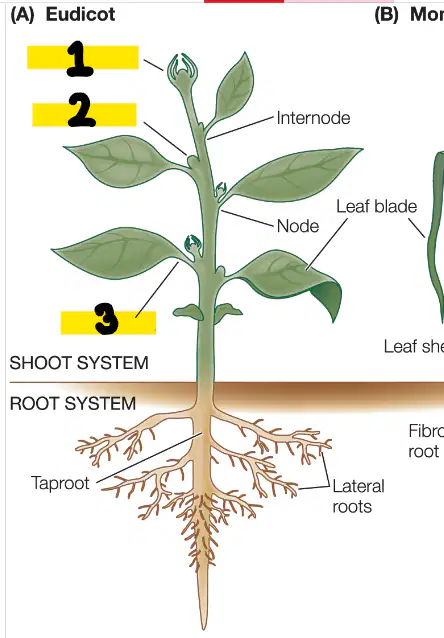
name the 3 parts of this plant in order
(a)
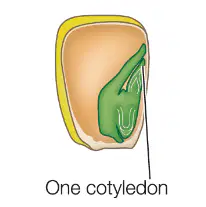
which plant?
monocots
eudicots
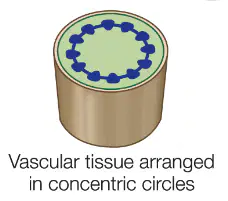
which plant?
monocots
eudicots
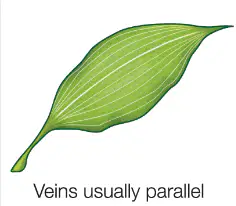
which plant?
monocots
eudicots
which tissue system develops in the outermost layer of cells in plants?
ground tissue
vascular tissue
dermal tissue
which tissue system makes up most of the plant body?
epidermal
ground tissue
dermal tissue
vascular tissue
ture or false: the ground tissue system is responsible for the transport of nutrients in plants?
true
false
what is the primary structual function of plant cell walls composed of cellulose?
facilitating cell elongation
providing flexibility to the plant
holding the plant upright
conserving cellular resources
what is the most abundant cells in a plant?
parenchyma
collenchyma
sclerenchyma
thin walls
parenchyma
collenchyma
sclerenchyma
depend on water content for firmnes (turgidness)
parenchyma
collenchyma
sclerenchyma
primary cell walls
parenchyma
collenchyma
sclerenchyma
balance between firm and flexible
parenchyma
collenchyma
sclerenchyma
contain lignin
parenchyma
collenchyma
sclerenchyma
primary cell when they are elongating and when that's done form a secondary cell wall
parenchyma
collenchyma
sclerenchyma
types: fibers and sclerids
parenchyma
collenchyma
sclerenchyma
which of the following is NOT a possible source of carbohydrates in the phloem?
leaves
tubers
stems
seeds
how are sieve tube elements connected to each other in the phloem tissue?
through plasmodesmata
through vessel elements
through sieve plates
through stomata
which tissue system in leaves carries out photosynthesis
epidermal
vascular
ground
What type of cells make up the lower layer of mesophyll in eudicot leaves?
palisade
chloroplast
spongy mesophyll
parenchyma
In plants that grow in low light conditions, what is the typical ratio of spongy mesophyll to palisade mesophyll cells?
Higher spongy to palisade mesophyll ratio
Equal spongy and palisade mesophyll ratio
Lower spongy to palisade mesophyll ratio
No difference in the ratio

