
 Worksheets
M1 & M2 Design Thinking
Total questions: 48
Worksheet time: 28mins
It predicts that the time it takes to make a decision increases with the number and complexity of choices available.
Hick’s Law
Miller’s Law
Chunking
Jakob’s Law of Internet User Experience
It predicts that the average person can only keep 7 (± 2) items in their working memory.
The act of visually grouping related information into small, distinct units of information.
Hick’s Law
Miller’s Law
Chunking
Jakob’s Law of Internet User Experience
The content are organized into smaller chunks to help users process, understand, and memorize easily.
Hick’s Law
Miller’s Law
Chunking
Jakob’s Law of Internet User Experience
It states that users spend most of their time on other sites, and they prefer your site to work the same way as all the other sites they already know.
Hick's Law
Miller's Law
Chunking
Jakob's Law of Internet User Experience
It refers to the output of the process of producing quality user experience from the product through its physical attributes and functionality.
Design
Cognitive Load
Ethical Design
Mental Models
It refers to the mental processing power being used by our working memory.
Design
Cognitive Load
Ethical Design
Mental Models
A design made with the intent to do good, and unethical design is its black hat counterpart.
Design
Cognitive Load
Ethical Design
Mental Models
It is what we think we know about a system, especially about how it works.
Design
Cognitive Load
Ethical Design
Mental Models
Too many choices will increase the cognitive load for users.
TRUE
FALSE
Don't break up long or complex processes into screens with fewer options.
TRUE
FALSE
Don't use progressive onboarding to minimize cognitive load for new users.
TRUE
FALSE
Don't use the "magical number seven" to justify unnecessary design limitations.
TRUE
FALSE
Don't organize content into smaller chunks to help users process, understand, and memorize easily.
TRUE
FALSE
Users will transfer expectations they have built around one familiar product to another that appears similar.
TRUE
FALSE
By leveraging existing mental models, we can create superior user experiences in which the user can focus on their task rather than learning new models.
TRUE
FALSE
Don't minimize discordance by empowering users to continue using a familiar version for a limited time.
TRUE
FALSE
Use the Ethical Hierarchy of Needs and best Practices in Ethical Design to be able to make an Ethical Design.
TRUE
FALSE
Ethical Design Best Practices
Use data to improve the human experience.
Advertising without tracking.
Always, always prioritize usability.
Don’t ask for more than you need.
Be transparent.
It refers to the quality of holistic user engagement to the system in which user capabilities and limitation are taken in considerations by the designers and developers, along with business goals and context and content.
User Experience
User Experience Design
User Experience Designer
User Experience Honeycomb
It is a process done to ensure the solution’s provision of user’s meaningful and relevant experiences.
User Experience
User Experience Design
User Experience Designer
User Experience Honeycomb
It is the person that uses his deep understanding of users’ emotions, capabilities, limitations and needs towards and from the solution.
User Experience
User Experience Design
User Experience Designer
User Experience Honeycomb
The factors that influence user experience are seen on the ___________ by Peter Morville?
User Experience
User Experience Design
User Experience Designer
User Experience Honeycomb
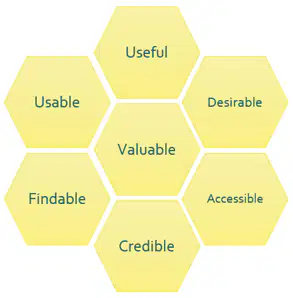
Solutions should be creative and innovative to fulfill the need. (all lowercase)
(a)
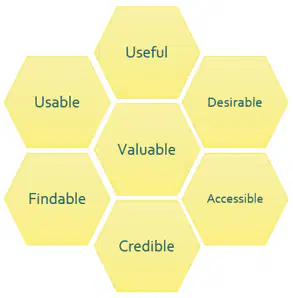
Solutions should be easy to use. (all lowercase)
(a)
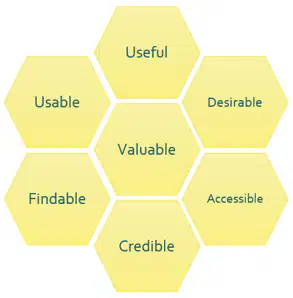
Use of emotional design to make the solution attractive and enticing. (all lowercase)
(a)
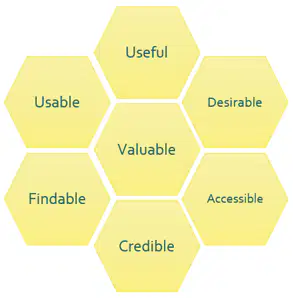
Solutions should be navigational in which information in the solution can be easily found. (all lowercase)
(a)
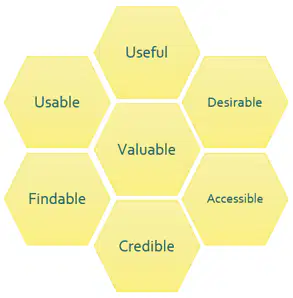
Solutions should be designed also for people with disabilities. (all lowercase)
(a)
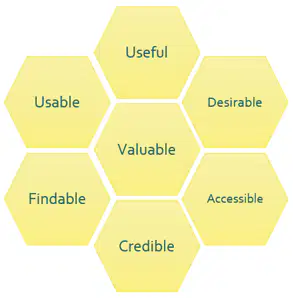
Provided information and executed processes by the solution is true and believable. (all lowercase)
(a)
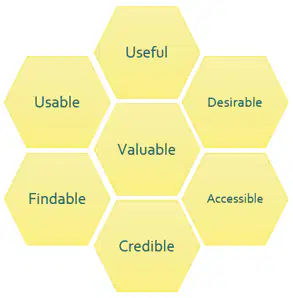
Solution must provide benefits that are beyond the expectations of the users. (all lowercase)
(a)
It focuses on planning and organizing a project and its resources.
Project Management
Usability Evaluation
User Research
Web Analytics
It focuses on how well users can learn and use a product to achieve their goals. It also refers to how satisfied users are with that process.
Content Strategy
Usability Evaluation
User Research
Web Analytics
It focuses on understanding user behaviors, needs, and motivations through observation techniques, task analysis, and other feedback methodologies.
Content Strategy
Usability Evaluation
User Research
Web Analytics
It focuses on anticipating what users might need to do and ensuring that the interface has elements that are easy to access, understand, and use to facilitate those actions.
Content Strategy
Web Analytics
User Research
User Interface Design
It focuses on how information is organized, structured, and presented to users.
Interaction Design (IxD)
User Interface Design
Information Architecture (IA)
Visual Design
It focuses on creating engaging interactive systems with well thought out behaviors.
Interaction Design (IxD)
User Interface Design
Information Architecture (IA)
Visual Design
It focuses on how a disabled individual accesses or benefits from a site, system or application. Section 508 is the governing principal for accessibility.
Interaction Design (IxD)
Visual Design
Accessibility
Content Strategy
It focuses on ensuring an aesthetically pleasing interface that is in line with brand goals.
Interaction Design (IxD)
Visual Design
Accessibility
Content Strategy
It focuses on the collection, reporting, and analysis of website data.
Interaction Design (IxD)
Accessibility
Content Strategy
Web Analytics
It focuses on writing and curating useful content by planning the creation, delivery and governance behind it.
Interaction Design (IxD)
Accessibility
Content Strategy
Web Analytics
It is the ability of the solution to have its user’s learnability, ease of achieving objective/s and competence in utilizing the solution. A sub-discipline of user experience design.
Usability
Learnability
Ease of Achieving Objective
Building User’s Competence
It should be easy for the user to become familiar with and competent in using the user interface on the first contact with the solution.
Usability
Learnability
Ease of Achieving Objective
Building User’s Competence
It should be easy for users to achieve their objective through using the solution.
Usability
Learnability
Ease of Achieving Objective
Building User’s Competence
It should be easy to recall the user interface and how to use it on subsequent visits.
Usability
Learnability
Ease of Achieving Objective
Building User’s Competence
It is the practice of testing how easy a design is to use on a group of representative users.
Usability
Learnability
User Experience Design
Usability Testing
In order to say that the solution is usable, the solution should pass the minimum criteria in the test.
TRUE
FALSE
Hick's Law is by __________?
William Edmund Hick and Ray Hyman
William Edmund Hay and Ray Man
William Edward Hick and Ray Hyman
William Jaymark Hick and John Ray
Miller's Law is by __________?
George Miley
Gerome Milles
George Miller
Gorgy Miller
Jakob’s Law of Internet User Experience is by __________? (syempre yung full name, wag kang ano dyan)
Jakob Nielsen
Jakob Pielsen
Jake Nieller
Jaymark Nielser

