wayground logo

Free Printable Worksheets

Font size

S
M
L
XL
Worksheets

Atoms Study Questions

Total questions: 60

Worksheet time: 48mins

Name
Class
Date
1.

Match the subatomic particle with its charge

a)

Proton

1.

Positive

b)

Electron

2.

Negative

c)

Neutron

3.

Neutral

2.
How many protons are in Cadmium?
a)
112.411
b)
170
c)
64
d)
48
3.
How many neutrons does Argon have in it's nucleus?
a)
39.948
b)
58
c)
22
d)
18
4.
The ______________ is the number of protons + neutrons in the nucleus of an atom.
a)
atomic number
b)
net charge
c)
chemical symbol
d)
atomic mass
5.
Which element has 6 protons?
a)
N
b)
C
c)
O
d)
B
6.

Changing the number of protons in an atom will change the atom's _____

a)

color

b)

atomic weight/mass

c)

net charge

d)

identity (name of element)

7.
Calculate the atomic number of an atom with :
2 protons
3 neutrons
4 electrons
a)
2
b)
3
c)
4
d)
5
8.
Calculate the atomic weight/mass of an atom with:
11 protons
10 neutrons
11 electrons
a)
11
b)
21
c)
22
d)
10
9.
What is the green arrow pointing to?
a)
Atomic Number
b)
Atomic Mass
c)
Subatomic Particle
d)
Element
10.
What information does the top number (that the green arrow is pointing to) ALWAYS tell you?
a)
Number of protons
b)
Number of neutrons
c)
Number of subatomic particles
11.
What is the bottom number (that the blue arrow is pointing to) equal to?
a)
# of protons + # of neutrons
b)
# of electrons + # of neutrons
c)
# of protons + # of electrons
d)
# of protons + # of nuetrons + # of electrons
12.
What is located in the nucleus?
a)
Protons and Neutrons
b)
Electrons
c)
Electrons and Protons
d)
Neutrons and Electrons
13.
Where is the majority of the mass located in an atom?
a)
Nucleus
b)
Electron Cloud
14.
The atomic number is the -
a)
Top number and equals # of protons
b)
Top number and equals # of protons + # of neutrons
c)
Bottom number and equals # of protons
d)
Bottom number and equals # of neutrons + # of electrons
15.
What is the charge of a proton?
a)
Positive 
b)
Negative
c)
Neutral
16.
the central region of an atom where its neutrons and protons are is its 
a)
nucleus 
b)
electron cloud
c)
core 
d)
center 
17.
How many protons does this atom have?
a)
2.5
b)
6
c)
5
d)
10.811
18.
In order for me to find the number of neutrons, I must round the atomic mass and then do what?
a)
atomic number-atomic mass
b)
atomic number x atomic mass
c)
atomic mass + atomic number
d)
atomic mass - atomic number
19.

Where is most of the MASS of an atom located?

a)

In the nucleus

b)

Electron cloud

c)

In the electron

d)

Evenly spread throughout the atom

20.
a)
Neutrons = Mass Number + Atomic Number
b)
Neutrons = Mass Number - Atomic Number
c)
Neutrons = Atomic Number + Electrons
d)
Neutrons = Atomic Number - Electrons
21.
a)
Number of protons
b)
Number of neutrons
c)
Number of electrons
d)
Mass Number
22.
a)
The number of protons
b)
The number of neutrons
c)
The Mass Number
d)
The number of valence electrons
23.
a)
It contains protons
b)
It contains neutrons
c)
It contains electrons
24.

How many protons does an atom of Sodium (Na) have?

a)

12

b)

11

c)

23

25.

The atomic number is the number of ____ in the nucleus. It's the element's "identification"!

a)

electrons

b)

neutrons

c)

protons

26.
All matter is made of
a)
atoms
b)
cells
27.
The atomic number tells you what?
a)
number of electrons
b)
number of protons
c)
number of neutrons
d)
both electrons and protons in an atom.
28.
A neutron has a charge of
a)
+2
b)
No charge
c)
-1
d)
+1
29.
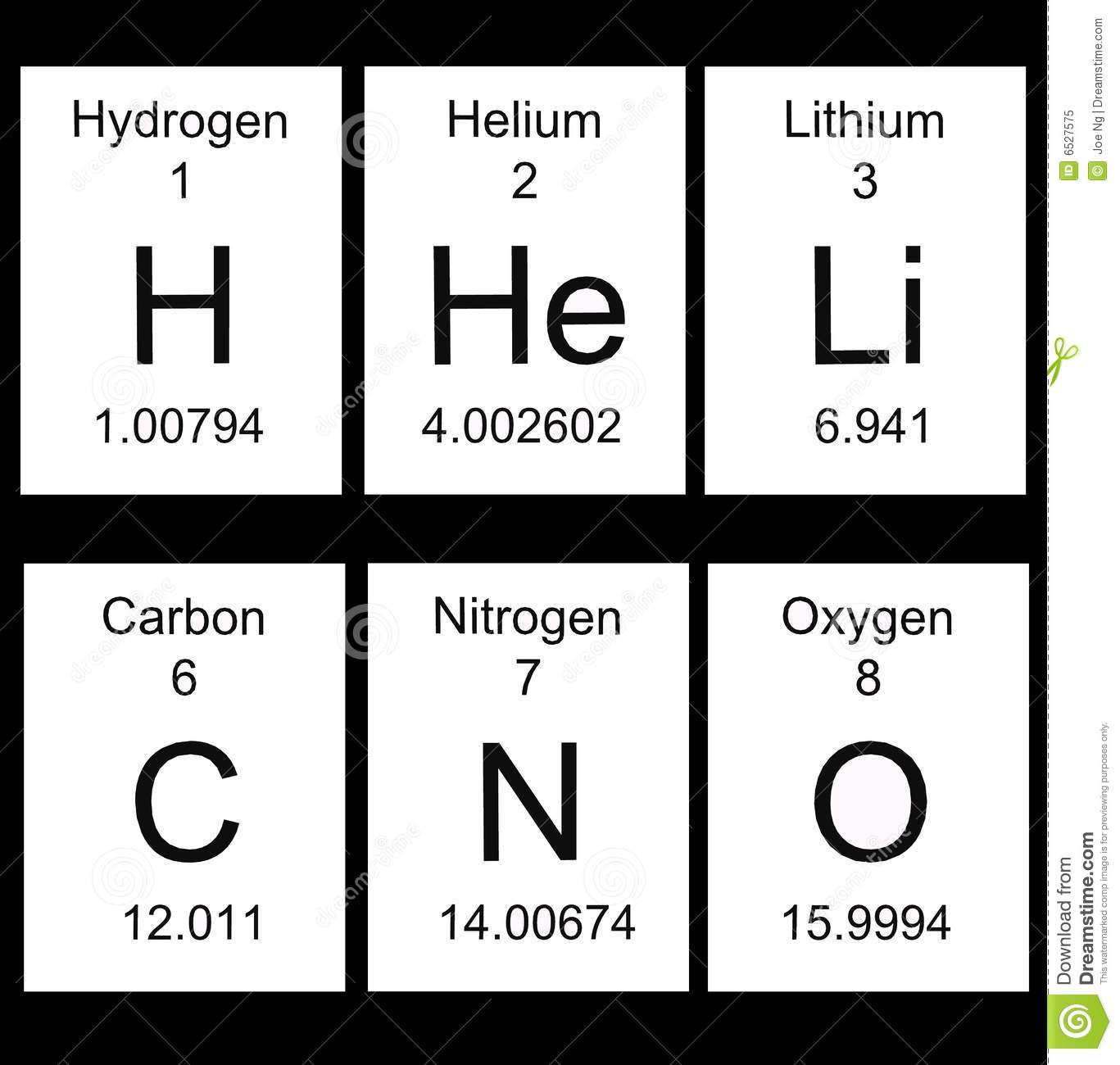
What does the 1.00794 stand for?
a)
Hydrogen
b)
atomic number
c)
atomic mass
d)
atomic explosion
30.
What is the chemical symbol for Lithium?
a)
H
b)
He
c)
Li
d)
N
31.

A nucleus of an atom contains what two parts?

a)

Electrons and Protons

b)

Neutrons and Electrons

c)

Protons and Neutrons

32.

How many neutrons does Chlorine (Cl) with an atomic number of 17 and an atomic mass of 35.

a)

17

b)

18

c)

19

33.
How many protons does this element have?
a)
40
b)
21
c)
20
d)
41
34.
The number of protons is equal to 
a)
the atomic number
b)
the number of neutrons
c)
the energy levels
d)
the periodic table groups
35.

The periodic table is organized into columns called _______ and rows called ______.

a)

groups and periods

b)

periods and groups

c)

categories and periods

d)

categories and groups

36.
The sum of the protons and neutrons in the nucleus of an atom
a)
Atomic Number
b)
Compound
c)
Electrons
d)
Mass Number (also called Atomic Mass)
37.
A substance composed of two or more elements chemically bonded together.  Examples are H2O and CO2.
a)
Element
b)
Compound
c)
Electron Cloud
d)
Metalloid
38.
What is the atomic mass of "F"
a)
9
b)
18
c)
17
d)
19
39.
The part of the atom that determines the identity of the atom is the ____________.
a)
proton
b)
nucleus
c)
electron
d)
neutron
40.
A vertical column is called...
a)
group
b)
tower
c)
period
d)
crew
41.

Choose all the items that are elements.

a)

NaCl (table salt)

b)

Sulfur

c)

O2

d)

Water

e)

Air

42.

Choose all of the items that are compounds.

a)

NaCl (table salt)

b)

Sulfur

c)

O2

d)

Water

e)

Air

43.

Choose all of the items that are mixtures

a)

NaCl (table salt)

b)

Sulfur

c)

O2

d)

water

e)

Air

44.

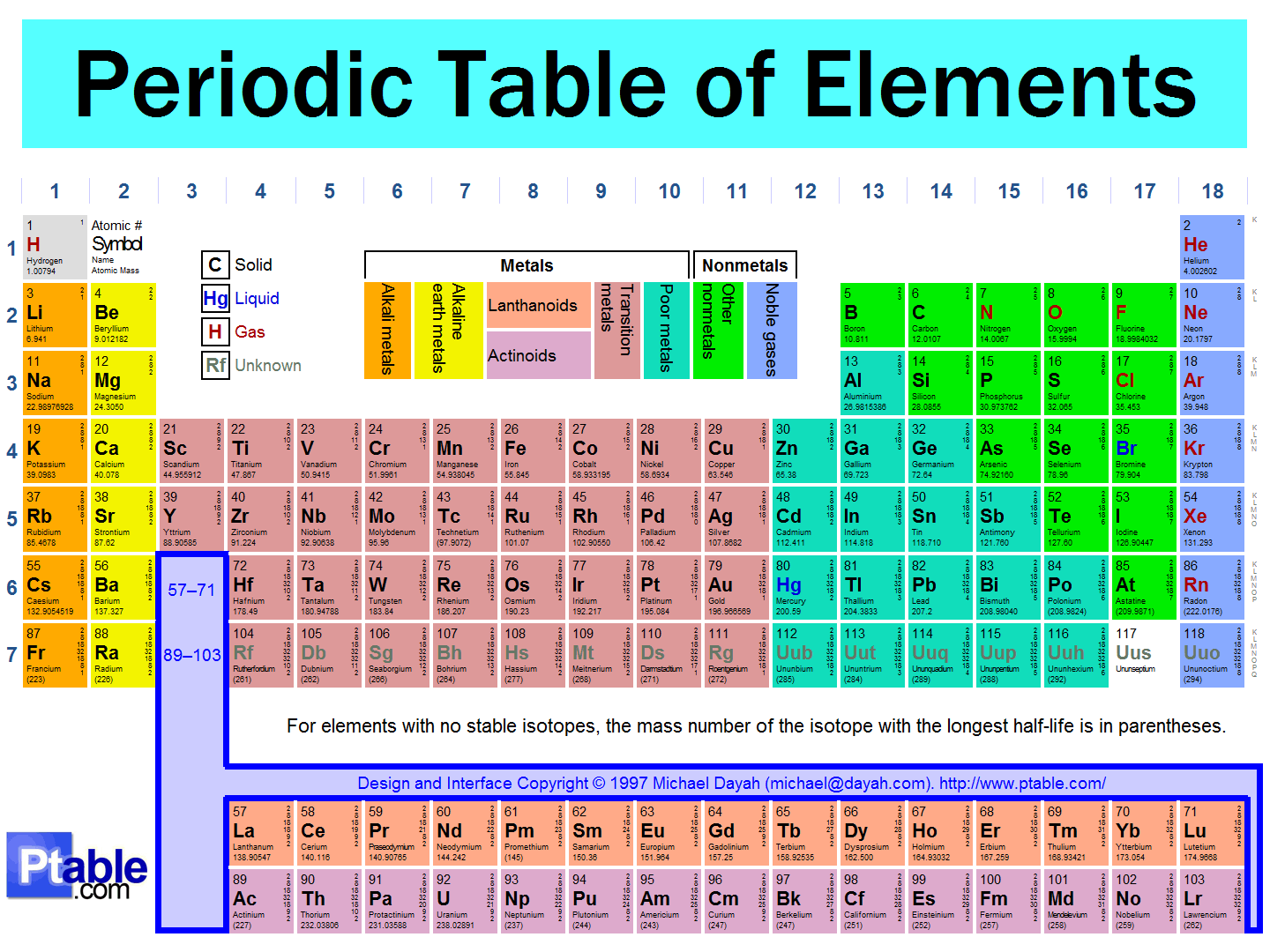
Which element is similar to Li?

a)

Be

b)

K

45.

Which element is similar to Mg?

a)

Ca

b)

B

46.

Which element is similar to B?

a)

C

b)

Al

47.

Which element is similar to F?

a)

Ne

b)

Cl

48.

Which element is similar to He?

a)

H

b)

Ar

49.

Groups run:

a)

up and down

b)

left to right

50.

Periods run:

a)

up and down

b)

left to right

51.

Which two elements share common characteristics based on the periodic table?

a)

Sodium and Magnesium

b)

Chlorine and Sulfur

c)

Argon and Neon

d)

Calcium and Bromine

52.

The vertical (up and down) columns in the Periodic Table are called

a)

groups

b)

towers

c)

periods

d)

atomic numbers

53.
The Modern Periodic Table of Elements is arranged by
a)
atomic mass
b)
atomic number
c)
valence electrons
d)
number of isotopes
54.
Which group of the periodic table is composed of inert (not reactive)  gases?
a)
alkali metals
b)
alkaline earth metals
c)
halogens
d)
noble gases
55.
Elements in a ..................have similar chemical properties.  
a)
period
b)
group
c)
row
56.

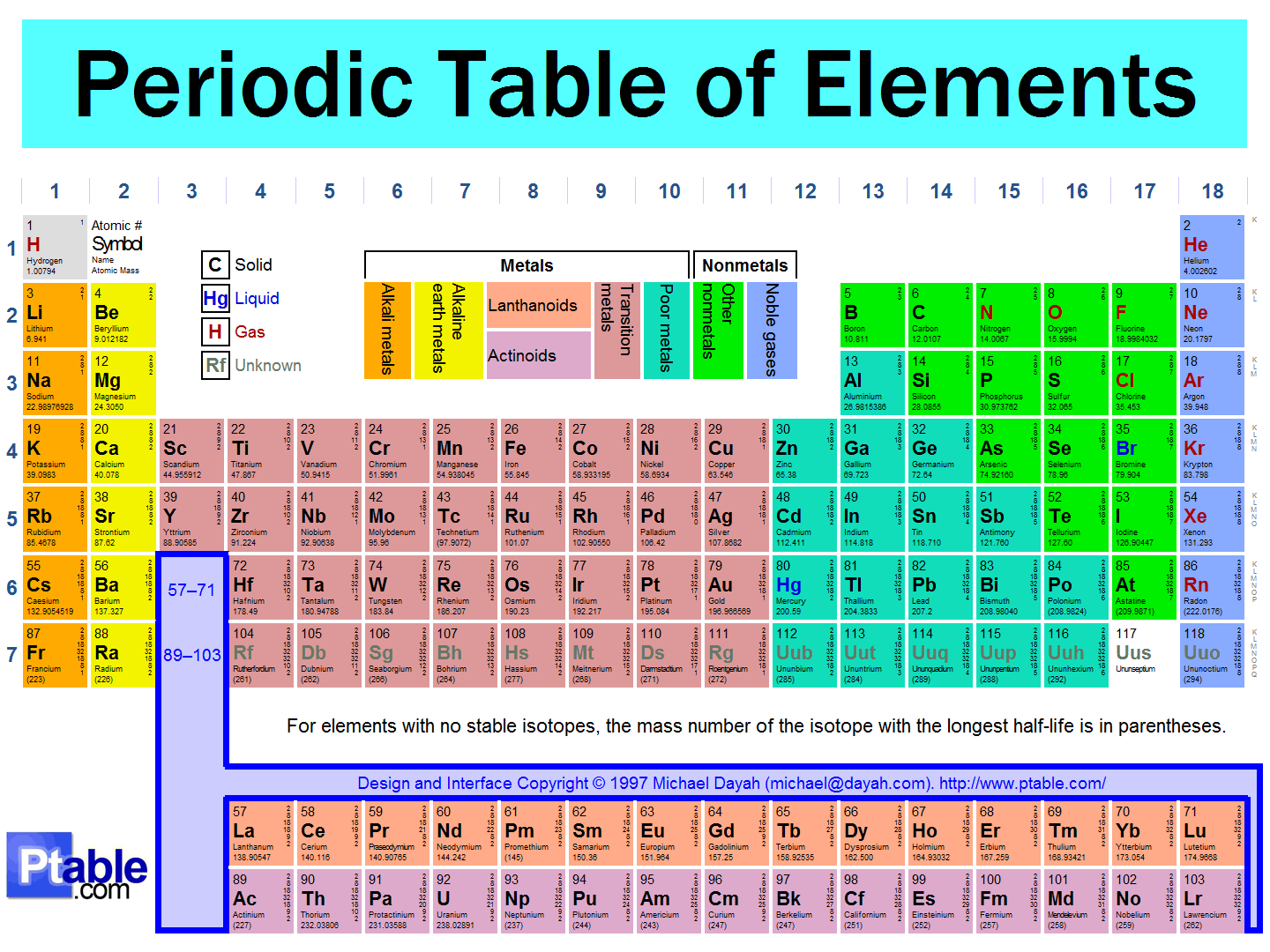
Find an element with similar chemical properties to Barium (Ba).

a)

Ca an Ra, because they are in the same group and have similar chemical properties.

b)

Cs and La, b/c they are in the same period number.

c)

Ca and Y, b/c they are 90 degree angle and have similiar properties.
57.
An arrangement of the elements showing the repeating pattern of their properties.
a)
Chemical Table
b)
Periodic Table
c)
Table of Elements
d)
None of These
58.
A horizontal row of elements in the periodic table.
a)
column
b)
group
c)
period
d)
family
59.
Elements in the same vertical column of the periodic table; also called family.
a)
period
b)
row
c)
group
d)
vertigo
60.
The horizontal row on the periodic table is called a
a)
group
b)
family
c)
period
d)
atomic number