wayground logo

Free Printable Worksheets

Font size

S
M
L
XL
Worksheets

Atomic Strucure Review

Total questions: 202

Worksheet time: 16hrs 5mins

Name
Class
Date
1.

Subatomic particles with a negative charge

a)

Electrons

b)

Neutrons

c)

Protons

d)

Quarks

2.

Subatomic particles with a negative charge

a)

Electrons

b)

Neutrons

c)

Protons

d)

Quarks

3.
Subatomic particles with a positive charge
a)
neutrons
b)
atomic mass
c)
protons
d)
isotopes
4.
Value representing the number of protons in an element
a)
Atomic Mass
b)
Mass Number
c)
Valence Electrons
d)
Atomic Number
5.
Subatomic particles that are neutral in charge
a)
Neutrons
b)
Protons
c)
Nucleus 
d)
Electrons
6.
Which two subatomic particles make up the nucleus of an atom?
a)
Protons and Electrons
b)
Neutrons and Electrons
c)
Electrons and Protons
d)
Protons and Neutrons
7.
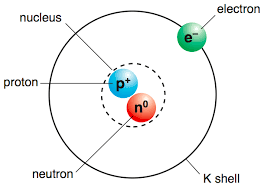
Where are the Electrons found in the structure of an atom?
a)
In the nucleus
b)
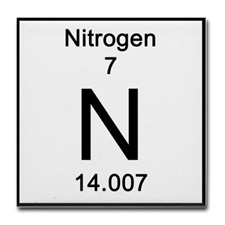
In spaces around the nucleus
8.

What is the mass number?

a)

the number of protons in the nucleus

b)

the number of protons and neutrons in the nucleus

c)

the number of neutrons in the nucleus

d)

the number of protons and electrons in the atom
9.
In order for an atom to be neutral what has to be true?
a)
The atom has more protons than neutrons
b)
The atom has more neutrons than protons
c)
The atom has the same number of protons and neutrons
d)
The atom has the same number of protons and electrons
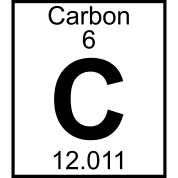
10.
What does the C represent?
a)
atomic mass
b)
atomic number
c)
element name
d)
chemical symbol 
11.

What does the 6 represent?

a)

Atomic mass

b)

atomic number

c)

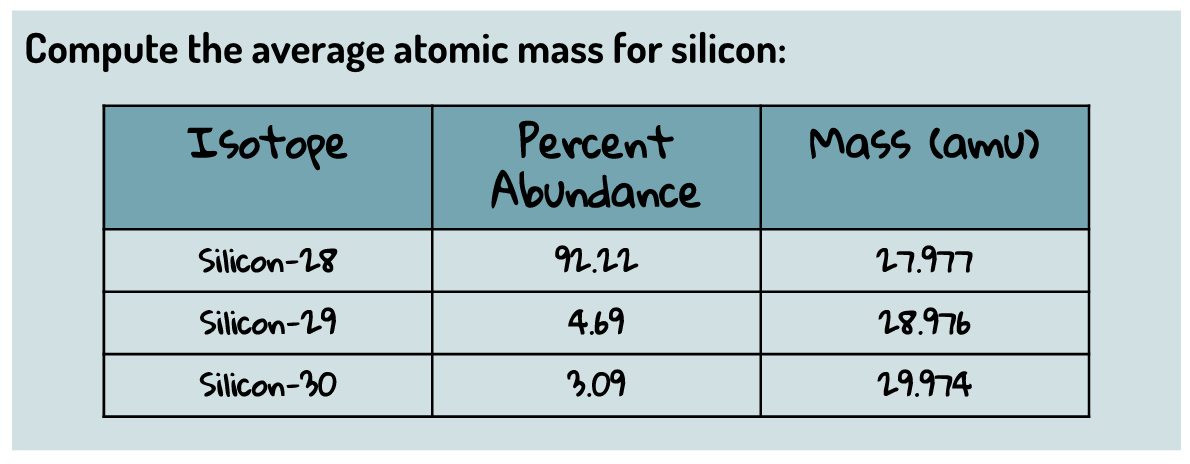
chemical symbol

d)

element name

12.
How is the number of neutrons in the nucleus of an atom calculated?
a)
Add the number of e- and p+ together
b)
Subtract the number of e- from p+
c)
Subtract the number of p+ from the mass number
d)
Add the mass number to the number of e-
13.
If an atom has 12 positively charged subatomic particles, which of the following must it also have to be considered a neutral atom?
a)
12 neutrons
b)
12 electrons
c)
12 protons
d)
24 protons and neutrons
14.

An atom has 10 protons, 15 neutrons and 10 electrons what is its mass number.

a)

20

b)

10

c)

35

d)

25

15.
The atomic number of an element that has 9 protons, 9 electrons, and 10 neutrons is _____.
a)
9
b)
10
c)
19
d)
28
16.
An element with a mass number of 11 and an atomic number of 5 has how many neutrons?
a)
11
b)
5
c)
6
d)
16
17.
Where is most of the mass in an atom located?
a)
in the nucleus
b)
in the protons
c)
in the neutrons
d)
in the electrons
18.
An atom has an atomic number of 15 and a mass number of 31. How many protons are there in the atom?
a)
15
b)
31
c)
16
d)
47
19.

Which of the following determines the identity of an element?

a)

number of protons

b)

atomic mass

c)

number of neutrons

d)

number of shells

20.
What is the atomic number of the atom pictured? 
a)
9
b)
10
c)
18
d)
19
21.

How many protons does indium have?

a)

49

b)

66

c)

114

d)

115

22.

Subatomic particles with a negative charge

a)

Electrons

b)

Neutrons

c)

Protons

d)

Quarks

23.
Subatomic particles with a positive charge
a)
neutrons
b)
atomic mass
c)
protons
d)
isotopes
24.
Measure mainly of the nuclear particles: protons + neutrons
a)
Subatomic Particles
b)
Atomic Number
c)
Atomic Mass
d)
Gluons
25.
Subatomic particles that are neutral in charge
a)
Neutrons
b)
Protons
c)
Nucleus 
d)
Electrons
26.

Atoms of the same element with a different number of neutrons

a)

Ion

b)

alloy

c)

Isotope

d)

Quarks

27.
A charged atom
a)
Ion
b)
Isotope
c)
Electron Cloud
d)
Quark
28.
Where electrons are likely to be found as they travel around the nucleus
a)
Nucleus
b)
Electron Cloud
c)
Within a Proton
d)
Within a Neutron
29.
A tiny but very dense, positively charged portion of the atom that holds most of the atomic mass
a)
Electron Shells
b)
Orbitals
c)
Electron Cloud
d)
Nucleus
30.
Arrangement of elements organized by atomic number
a)
Electron Cloud 
b)
Periodic Table 
c)
Electron Configuration
d)
None of these
31.

Calculation used to find the number of neutrons in an atom

a)

Mass Number- Atomic Number

b)

Atomic Number - Mass Number

c)

Mass Number - Electrons

d)

protons = electrons = neutrons

32.
How many protons does an aluminium atom have? (Use the image to help you)
a)
27
b)
14
c)
40
d)
13
33.
How many neutrons does a sodium atom have? (Use the image to help you)
a)
23
b)
11
c)
12
d)
34
34.
Atoms of the same element must always have the same number of _________
a)
electrons
b)
neutrons
c)
isotopes
d)
protons
35.
The _________ of an element equals the number of protons in an atom of that element
a)
mass number
b)
atomic weight
c)
atomic number
d)
isotopes
36.

The __________ of an atom is the sum of the protons and neutrons in the nucleus of that atom.

a)

mass number

b)

atomic number

c)

ionic charge

d)

isotope weight

37.
What subatomic particles would you find in the nucleus of an atom?
a)
Protons only
b)
Protons and Neutrons
c)
Neutrons and Electrons
d)
Protons and Electrons 
38.
What subatomic particle is electrically neutral (no charge)?
a)
Proton
b)
Ion
c)
Neutron
d)
Electron
39.
Which subatomic particles contribute the most to the mass of an atom?
a)
Protons, Neutrons, Electrons
b)
Protons only
c)
Protons and Electrons
d)
Protons and Neutrons
40.
How many protons does this atom have?
a)
2.5
b)
6
c)
5
d)
10.811
41.
In order for me to find the number of neutrons, I must round the atomic mass and then do what?
a)
atomic number-atomic mass
b)
atomic number x atomic mass
c)
atomic mass + atomic number
d)
atomic mass - atomic number
42.

How many neutrons are in Magnesium?

a)

36

b)

12

c)

24

d)

6

43.

How many electrons are in Sulfur?

a)

32

b)

16

c)

48

d)

8

44.

Which would you do to change this Lithium to a new element?

a)

Add a neutron

b)

Add an electron

c)

Add a proton

d)

Add a proton and neutron\

45.

Which atom will have a +1 charge?

a)

3 protons

4 neutrons

3 electrons

b)

3 protons

4 neutrons

4 electrons

c)

3 protons

4 neutrons

2 electrons

d)

3 protons

3 neutrons

3 electrons

46.
4.35% of all X atoms have a mass of 39.946 amu. 83.79% have a mass of 41.941 amu, 9.50% have a mass of 42.941 amu, and 2.36% have a mass of 43.939 amu. What is the average atomic mass of atom X?
a)

41.996 amu

b)

42.194 amu

c)

10.432 amu

d)

40.048 amu

47.

What are the three subatomic particles?

a)
Protons, Neutrons, Electrons
b)

Brotons, Negatrons, Effectrons

c)

Notrons, Flotrons, Votrons

d)

Untrons, Icetrons, Joltrons

48.

Protons have a (a)   electric charge.

49.

What is the electric charge of a neutron?

a)

Positive

b)

Negative

c)

Neutral

d)

High

50.

Electrons have a (a)   electric charge.

51.

Which subatomic particle(s) will be located in the nucleus?

a)

Electrons

b)

Electrons and Protons

c)

Protons and Neutrons

d)

Neutrons and Electrons

52.

Which subatomic particle(s) will be located in the cloud?

a)

Electrons

b)

Electrons and Protons

c)

Protons and Neutrons

d)

Neutrons and Electrons

53.

How do you calculate atomic mass?

a)

Protons + Electrons

b)

Neutrons + Electrons

c)

Protons + Protons

d)

Protons + Neutrons

54.

Isotopes of an element have a different number of...

a)

Protons

b)

Neutrons

c)

Electrons

d)

Mass

55.

What number represents an element's identity? (How do we know what element it is?)

a)

Atomic Smell

b)

Atomic Number

c)

Atomic Mass

d)

Atomic Temperature

56.

What element has 16 protons?

(a)  

57.

If a proton is added or removed from an atom, what happens?

a)

It becomes a different element.

b)

It becomes a different isotope.

c)

Nothing happens.

58.

What is the difference between Neon-20 and Neon-22?

a)

They have different numbers of electrons.

b)

They have different numbers of neutrons.

c)

Only 1 is radioactive.

d)

No difference.

59.

Which atom of these isotopes has 3 protons? The symbol for lithium is Li.

a)

Lithium-6

b)

Lithium-7

c)

All of them.

d)

Lithium-9

60.

How many neutrons are in this isotope?

a)

20

b)

41

c)

61

d)

21

61.

Which is the correct symbol for Fluorine-18?

a)
b)
c)
d)
62.

How many protons are in this isotope?

a)

9

b)

21

c)

12

63.

How many protons are in the isotope pictured above?

a)

29

b)

34

c)

63

d)

92

64.

What is the number of protons in phosphorus-31?

a)

15

b)

16

c)

31

d)

46

65.

The atomic number of an element is the total number of which subatomic particle found in the nucleus?

a)

Electron

b)

Neutron

c)

Proton

d)

Neutrons + Protons

66.

What is the mass number of an element with 11 protons and 12 neutrons?

a)

1

b)

11

c)

12

d)

23

67.
The positive particles of an atom are 
a)
electrons 
b)
positrons 
c)
neutrons 
d)
protons 
68.
The central region of an atom where neutrons and protons are located is the __________________.
a)
nucleus 
b)
electron cloud
c)
core 
d)
center 
69.
Particles in an atom that are neutral and have no charge are 
a)
negatrons 
b)
electrons 
c)
neutrons 
d)
protons 
70.

Used the word "atomos" to decsribe the uncuttable (indivisible) atom.

a)

Democritus

b)

Thomson

c)

Bohr

d)

Dalton

71.

Proposed that electrons move around the nucleus in specific layers, or shells.

a)

Bohr

b)

Rutherford

c)

Chadwick

d)

Thomson

72.

This picture best represents ___________________ atomic model.

a)

Thomson's

b)

Dalton's

c)

Bohr's

d)

Chadwick's

73.
In Dalton's Atomic Theory, all elements consist of __________ that cannot be divided.
a)
Atoms
b)
Parts
c)
Molecules
d)
Hydrogen
74.

Which of the following is/are conclusions based on Rutherford’s gold foil experiment?

a)

Atom is mostly empty space

b)

The nucleus is positively charged

c)

The atom has a small dense nucleus

d)

All answers are correct

75.
What is the number of protons that the element in this image contain?
a)
14
b)
7
c)
15
d)
18
76.
What number indicates the nucleus?
a)
1
b)
2
c)
3
d)
4
77.
How many electron shells/levels does this atom have?
a)
1
b)
2
c)
3
d)
4
78.
How many electrons does this picture show?
a)
4
b)
5
c)
6
d)
3
79.
The number in the upper corner of an element tile (7 for nitrogen) is called _____
a)
the proton number
b)
the atomic number
c)
the electron number
d)
the mass number
80.
If an atom contains exactly three protons, then it's an atom of _____
a)
lithium
b)
gold
c)
nitrogen
d)
carbon
81.
For an atom to be electrically neutral, it must contain the same number of _____
a)
protons and neutrons
b)
neutrons and electrons
c)
protons and electrons
d)
nucleons and electrons
82.
How many Protons+Neutrons are in one atom of Lithium?
a)
6.941
b)
7
c)
3
d)
6
83.
How many Neutrons are in one atom of Lithium?
a)
6.941
b)
7
c)
3
d)
4
84.
How many Protons are in one atom of Lithium?
a)
3
b)
6
c)
7
d)
6.941
85.
How many Electrons are in one atom of Lithium?
a)
3
b)
6
c)
7
d)
6.941
86.

Which part of an atom is used to identify it?

a)

number of protons

b)

number of neutrons

c)

number of electrons

87.
Which of these statements was made by John Dalton?
a)
A nucleus contains protons and neutrons
b)
Electrons orbit an atom
c)
Atoms combine in whole number ratios
d)
Atoms can be divided
88.
Isotopes are atoms of the same element with different #’s of __________ & therefore different __________.
a)
n0 ;  atomic #’s
b)
p+ ; atomic #’s
c)
e- ; atomic masses
d)
n0 ; atomic masses
89.
What is atomic number?
a)
Number of protons in an atoms 
b)
Number of neutrons in an atom
c)
Mass of an atom
d)
Charge on an atom
90.
Which subatomic particles are found in the nucleus of an atom?
a)
Protons and Electrons
b)
Protons and Neutrons
c)
Neutrons and Electrons
d)
Protons, Neutrons and Electrons
91.
How many protons does an aluminium atom have? (Use the image to help you)
a)
27
b)
14
c)
40
d)
13
92.
How many neutrons does a sodium atom have? (Use the image to help you)
a)
23
b)
11
c)
12
d)
34
93.
Atoms of the same element must always have the same number of _________
a)
electrons
b)
neutrons
c)
isotopes
d)
protons
94.
The atomic number of an element that has 9 protons, 9 electrons, and 10 neutrons is _____.
a)
9
b)
10
c)
19
d)
28
95.
In order for an atom to be neutral what has to be true?
a)
The atom has more protons than neutrons
b)
The atom has more neutrons than protons
c)
The atom has the same number of protons and neutrons
d)
The atom has the same number of protons and electrons
96.
What is an ion?
a)
A Charged Atom
b)
A Large Atom
c)
A Small Atom
d)
A Cute Atom
97.
Cations are...
a)
Positive
b)
Negative
c)
Neutral
d)
Purring
98.
Anions are...
a)
Positive
b)
Negative
c)
Neutral
d)
Crying
99.
An atom becomes _________ when it gains electrons.
a)
Positive
b)
Negative
c)
Neutral
d)
Invinsible
100.
An atom becomes _______ when it loses electrons.
a)
Positive
b)
Negative
c)
Neutral
d)
Invinsible
101.
Which particles change the charge in atoms when ions are formed?
a)
Protons
b)
Electrons
c)
Neutrons
d)
Kittens
102.
What is the charge of an atom that has lost one electron?
a)
-1
b)
-2
c)
+1
d)
+2
103.
What is the charge of an atom that has gained one electron?
a)
-1
b)
-2
c)
+1
d)
+2
104.
Discovered the nucleus of the atom through the Gold Foil Experiment
a)
Rutherford
b)
Chadwick
c)
Thomson
d)
Dalton
105.
Proposed the Modern Electron Cloud Model of the atom
a)
Schrodinger & Heisenberg
b)
Dalton
c)
Chadwick
d)
Rutherford
106.
Discovered the electron within the atom
a)
Thomson
b)
Chadwick 
c)
Schrodinger & Heisenberg
d)
Dalton
107.
Created the Planetary Model of the atom
a)
Bohr
b)
Dalton
c)
Rutherford
d)
Chadwick
108.
Discovered the neutron within the atom
a)
Democritus
b)
Thomson
c)
Rutherford
d)
Chadwick
109.
Believed that atoms of the same element are identical to each other
a)
Bohr
b)
Rutherford
c)
Dalton
d)
Thomson
110.
Who believed that electrons were scattered amongst positively charged material.
a)
JJ Thomson
b)
Ernest Rutherford
c)
John Dalton
d)
Niels Bohr
111.
Believed that atoms are small, hard particles that were "indivisible"
a)
Democritus
b)
Aristotle
c)
Schrodinger
d)
Greek Philosophers
112.
How many neutrons in C-14?
a)
6
b)
7
c)
14
d)
8
113.
Isotopes are atoms of the same element with different #’s of __________ & therefore different __________.
a)
n0 ;  atomic #’s
b)
p+ ; atomic #’s
c)
e- ; atomic masses
d)
n0 ; atomic masses
114.
How many neutrons does the isotope of lithium have?
a)
8
b)
3
c)
4
d)
5
115.

Calculate the average atomic mass of silver.

a)

106.38649amu

b)

111.91896amu

c)

107.8677amu

d)

121

116.
An element has two naturally occurring isotopes. One is 10.013 amu and is 19.9% abundant. The other is 11.01 amu and is 80.1% abundant. What is the average atomic mass? What element is it?
a)
9.012, Beryllium
b)
12.011, Carbon
c)
6.941, Lithium
d)
10.812, Boron
117.
Compute the average atomic mass for silicon:
a)
27.977
b)
28.09
c)
28.976
d)
The average mass cannot be determined from provided information.
118.
An isotope has three forms.  30% have a mass of 4 amu, 20% have a mass of 5 amu and 50% have a mass of 3 amu.  Average atomic mass will be closest to
a)
2 amu
b)
3 amu
c)
4 amu
d)
5 amu
119.
24.1% of all the isotopes of a an element have a mass of 75.23 amu, 48.7% have a mass of 74.61 amu, and 27.2% have a mass of 75.20 amu.
What is the average mass of this element?
a)
74.92 amu
b)
24.97 amu
c)
75.01 amu
d)
74.51 amu
120.
4.35% of all X atoms have a mass of 39.946 amu. 83.79% have a mass of 41.941 amu, 9.50% have a mass of 42.941 amu, and 2.36% have a mass of 43.939 amu. What is the average atomic mass of atom X?
a)
41.97 amu
b)
42.19 amu
c)
10.43 amu
d)
40.04 amu
121.

Magnesium exists as the three isotopes shown. What is the average atomic mass of magnesium?

a)

20.74 amu

b)

22.56 amu

c)

18.39 amu

d)

24.31

122.

Naturally occurring chlorine that is put in pools is 75.53 percent 35Cl (mass = 34.969 amu) and 24.47 percent 37Cl (mass = 36.966 amu). Calculate the average atomic mass.

a)

35.46 amu

b)

35.00 amu

c)

37.00 amu

d)

17.00 amu

123.
An element with 4.35% have a mass of 49.9461 amu, 83.79% have amass of 51.9405 amu, 9.50% have a mass of 52.9407 amu, and 2.36% have a mass of 53.9389amu.
a)
51.99 amu
b)
52.19 amu
c)
53.45 amu
d)
17.33 amu
124.
An element with 4.35% have a mass of 49.9461 amu, 83.79% have amass of 51.9405 amu, 9.50% have a mass of 52.9407 amu, and 2.36% have a mass of 53.9389amu.
a)
51.99 amu
b)
52.19 amu
c)
53.45 amu
d)
17.33 amu
125.
24.1% of all the isotopes of a an element have a mass of 75.23 amu, 48.7% have a mass of 74.61 amu, and 27.2% have a mass of 75.20 amu.
What is the average mass of this element?
a)
74.92 amu
b)
24.97 amu
c)
75.01 amu
d)
74.51 amu
126.
Calcium has three different isotopes. One has a mass of 35.00 amu; another has a mass of 41.00 amu; and another has a mass of 40.00 amu. Which isotope is the most abundant of the three?
a)
40.00 amu
b)
41.00 amu
c)
35.00 amu
d)
impossible to tell
127.
24.1% of all the isotopes of a an element have a mass of 75.23 amu, 48.7% have a mass of 74.61 amu, and 27.2% have a mass of 75.20 amu.
How many protons does this element have?
a)
32
b)
33
c)
34
d)
no way to know
128.
An element has three different isotopes. One has a mass of 35.00 amu; another has a mass of 36.00  amu; and another has a mass of 38.00  amu. What is the average atomic mass of this element?
a)
36.33 amu
b)
37.00 amu
c)
12.11 amu
d)
impossible to tell
129.
4.35% of all X atoms have a mass of 39.946 amu. 83.79% have a mass of 41.941 amu, 9.50% have a mass of 42.941 amu, and 2.36% have a mass of 43.939 amu. What is the average atomic mass of atom X?
a)
41.97 amu
b)
42.19 amu
c)
10.43 amu
d)
40.04 amu
130.
An isotope has three forms.  30% have a mass of 4 amu, 20% have a mass of 5 amu and 50% have a mass of 3 amu.  Average atomic mass will be closest to
a)
2 amu
b)
3 amu
c)
4 amu
d)
5 amu
131.
Calculate the average atomic mass of silver.
a)
106.38649amu
b)
111.91896amu
c)
107.8677amu
d)
121
132.
An element has two naturally occurring isotopes. One is 10.013 amu and is 19.9% abundant. The other is 11.01 amu and is 80.1% abundant. What is the average atomic mass? What element is it?
a)
9.012, Beryllium
b)
12.011, Carbon
c)
6.941, Lithium
d)
10.812, Boron
133.
Atom 1 has Mass=12  Protons=6
Atom 2 has Mass= 14 Electrons=6
Are these atoms isotopes of each other or different elements?
a)
Different Elements - Mg & Si
b)
Different Elements - Ar & Ca
c)
Isotopes of Carbon
d)
Isotopes of Magnesium
134.
What is the name of the atom pictured here?
a)
Nitrogen
b)
Nitrogen-15
c)
Nitrogen-7
d)
Nitrogen-8
135.
Compute the average atomic mass for silicon:
a)
27.977
b)
28.09
c)
28.976
d)
The average mass cannot be determined from provided information.
136.
Which of the following could have 82 neutrons?
a)
W-182
b)
Ta-181
c)
Cs-132
d)
Ba-138
137.
If X is the symbol for an element, which of the following two symbols represent    isotopes of the same element?  
I. 7735X  II. 7733X  III. 8137X  IV. 8135 X
a)
I and II
b)
III and IV
c)
I and IV
d)
I and III
138.
4.35% of all X atoms have a mass of 39.946 amu. 83.79% have a mass of 41.941 amu, 9.50% have a mass of 42.941 amu, and 2.36% have a mass of 43.939 amu. What is the average atomic mass of atom X?
a)
41.97 amu
b)
42.19 amu
c)
10.43 amu
d)
40.04 amu
139.
Compute the average atomic mass for silicon:
a)
27.977
b)
28.09
c)
28.976
d)
The average mass cannot be determined from provided information.
140.
24.1% of all the isotopes of a an element have a mass of 75.23 amu, 48.7% have a mass of 74.61 amu, and 27.2% have a mass of 75.20 amu.
How many protons does this element have?
a)
32
b)
33
c)
34
d)
no way to know
141.
An element has three different isotopes. One has a mass of 35.00 amu; another has a mass of 36.00  amu; and another has a mass of 38.00  amu. What is the average atomic mass of this element?
a)
36.33 amu
b)
37.00 amu
c)
12.11 amu
d)
impossible to tell
142.
An element with 4.35% have a mass of 49.9461 amu, 83.79% have amass of 51.9405 amu, 9.50% have a mass of 52.9407 amu, and 2.36% have a mass of 53.9389amu.
a)
51.99 amu
b)
52.19 amu
c)
53.45 amu
d)
17.33 amu
143.
An isotope has three forms.  30% have a mass of 4 amu, 20% have a mass of 5 amu and 50% have a mass of 3 amu.  Average atomic mass will be closest to
a)
2 amu
b)
3 amu
c)
4 amu
d)
5 amu
144.
Calculate the average atomic mass of silver.
a)
106.38649amu
b)
111.91896amu
c)
107.8677amu
d)
121
145.
An element has two naturally occurring isotopes. One is 10.013 amu and is 19.9% abundant. The other is 11.01 amu and is 80.1% abundant. What is the average atomic mass? What element is it?
a)
9.012, Beryllium
b)
12.011, Carbon
c)
6.941, Lithium
d)
10.812, Boron
146.
What is the name of the atom pictured here?
a)
Nitrogen
b)
Nitrogen-15
c)
Nitrogen-7
d)
Nitrogen-8
147.
Which of the following could have 82 neutrons?
a)
W-182
b)
Ta-181
c)
Cs-132
d)
Ba-138
148.

What element has this electron configuration?

a)

hydrogen

b)

helium

c)

lithium

d)

beryllium

149.

What element has this orbital notation?

a)

lithium

b)

beryllium

c)

boron

d)

carbon

150.

What element has this electron configuration?

a)

helium

b)

lithium

c)

beryllium

d)

boron

151.

What element has this electron configuration?

a)

boron

b)

carbon

c)

nitrogen

d)

oxygen

152.

Which element is represented by this orbital notation?

a)

carbon

b)

nitrogen

c)

oxygen

d)

fluorine

153.

Which element is represented by this electron configuration?

a)

neon

b)

sodium

c)

magnesium

d)

aluminum

154.

Which element is represented by this orbital notation?

a)

neon

b)

sodium

c)

magnesium

d)

aluminum

155.

Which of the following is the electron configuration for Fluorine

a)
b)
c)
d)
156.

Which of the following is the electron configuration for neon?

a)
b)
c)
d)
157.

Which of the following is the electron configuration for silicon?

a)
b)
c)
d)
158.

Which of the following is the orbital notation for oxygen?

a)
b)
c)
d)
159.
An electron occupies the lowest energy orbital that can receive it.
a)
Hund’s rule
b)
Pauli exclusion principle
c)
Bohr model of the atom
d)
Aufbau principle
160.
All orbitals of equal energy are occupied by one electron before any single orbital is occupied by a second electron.
a)
Aufbau principle
b)
Pauli exclusion principle
c)
Hund’s rule
d)
Core Notation
161.
No two electrons in the same atom can have the same four quantum numbers.
a)
Aufbau principle
b)
Pauli exclusion principle
c)
Hund’s rule
d)
Noble gas notation
162.
Which guideline, Hund’s rule or the Pauli exclusion principle, is violated in the following orbital diagrams?
a)
Hund's
b)
Aufbau's
c)
Pauli's Exclusive
163.
Which guideline, Hund’s rule or the Pauli exclusion principle, is violated in the following orbital diagrams?
a)
Aufbau's
b)
Hund's
c)
Pauli exclusive
164.
Electrons are paired based on their spin directions, clockwise and counterclockwise, is what electron configuration rule?
a)
Hund’s Rule
b)
Aufbau Principle
c)
Pauli Exclusion Principle
165.

What is the element?

a)

Neon

b)

Chlorine

c)

Aluminum

d)

Argon

166.

What is the element?

a)

sulfur

b)

chlorine

c)

phosphorus

d)

silicon

167.

Which is the electron configuration for beryllium?

a)
b)
c)
d)
168.
What is the noble gas shorthand electron for Sulfur atom?
a)
[Ar] 3p4
b)
[He] 3s23p4
c)
[Ne] 3s23p4
d)
[Na] 3s23p4
169.
What is the electron configuration for this atom?
a)
1s22s22p6
b)
1s22s22p5
c)
1s22s22p3
d)
2s22p3
170.
What atom matches this electron configuration?
1s22s22p63s2
a)
Neon
b)
Magnesium
c)
Aluminum
d)
Potassium
171.
Which element is depicted from this orbital diagram
a)
Fluorine
b)
Neon
c)
Chlorine
d)
Argon
172.
Which is associated with more energy? 
a)
2p
b)
2s
c)
3p
d)
1s
173.
What is the charge of an atom that has lost one electron?
a)
-1
b)
-2
c)
+1
d)
+2
174.
What is the charge of an atom that has gained one electron?
a)
-1
b)
-2
c)
+1
d)
+2
175.
Anions are _______ that form ____________ ions and __________ electrons.
a)
nonmetals, positive, lose
b)
nonmetals, negative, gain
c)
metals, positive, gain
d)
metals, positive, lose
176.
Which element is pictured?
a)
neon
b)
fluorine
c)
magnesium
d)
argon
177.
What atom matches this electron configuration?
1s2s2p3s2
a)
Neon
b)
Magnesium
c)
Aluminum
d)
Potassium
178.
How many electron can be found in a s orbital?
a)
2
b)
3
c)
4
d)
1
179.
How many electron can be found in a p orbital?
a)
2
b)
3
c)
4
d)
6
180.
What is the electronic configuration of sodium?
a)
1s22s22p63s1
b)
[Ne]3s1
c)
1s22s22p7
d)
Both A and B are correct
181.
What is the electronic configuration of iron?
a)
1s22s22p63s23p64s23d6
b)
1s22s22p63s23p63d8
c)
1s22p63s23p64s23d6
d)
1s22s22p63s23p64s13d6
182.
Which is the electron configuration for an oxygen atom?
a)
1s22s22p63s23p64s2
b)
electronic configuration
1s22s22p4
c)
1s22s22p6
d)
1s22s22p63s23p6
183.
How many electrons can the s sublevel hold?
a)
14
b)
10
c)
2
d)
6
184.
How many electrons can the d sublevel hold?
a)
14
b)
10
c)
2
d)
6
185.

Which of the following is not a correct designation for a sublevel?

a)

zz

b)

p

c)

d

d)

f

186.

Which element is depicted from this orbital diagram?

a)

Fluorine (9)

b)

Neon (10)

c)

Chlorine (17)

d)

Argon (18)

187.

Write the electron configuration

a)

1s22s22p6

b)

1s12s12p3

c)

1s22s22p63s2

d)

1s22s22p63s3

188.

What do you start an electron configuration with?

a)

1s2

b)

1d10

c)

1f14

d)

1p6

189.
Electrons occupy orbitals of lowest energy first is part of what electron configuration rule?
a)
Hund’s Rule
b)
Aufbau Principle
c)
Pauli Exclusion Principle
190.
Electrons are paired based on their spin directions, clockwise and counterclockwise, is what electron configuration rule?
a)
Hund’s Rule
b)
Aufbau Principle
c)
Pauli Exclusion Principle
191.

Which orbital shows a violation of Hund's Rule (bunk bed rule)?

a)

A

b)

B

c)

C

d)

D

192.

Which orbital shows a violation of the Pauli Exclusion Principle (2 electrons with opposite spins)?

a)

A

b)

B

c)

C

d)

D

193.

Which orbital shows a violation of the Aufbau Principle (lowest levels filled first)?

a)

A

b)

B

c)

C

d)

D

194.

Write the electron configuration for the element.

a)

1s12s12p33s1

b)

1s22s22p53s1

c)

1s2s2p3s

d)

1s22s22p63s1

195.

This orbital diagram represents:

a)

C (6)

b)

B (5)

c)

N (7)

d)

O (8)

196.

What is the next orbital filled after 4s?

a)

5s

b)

3d

c)

4p

d)

3p

197.

What is the next orbital filled after 4d?

a)

6p

b)

5d

c)

5p

d)

4f

198.

What is the correct electron configuration for Phosphorus (15)?

a)

1s22s22p63s23p4

b)

1s22s22p63s23d3

c)

1s22s22p63s23p3

d)

1s2s2p3s3p

199.

What is the correct electron configuration for Titanium (22)?

a)

1s22s22p63s23p4

b)

1s22s22p63s23p64s23d2

c)

1s22s22p63s23p64s24p2

d)

1s22s22p63s23p64s24d2

200.
How many electrons can the p sublevel hold?
a)
14
b)
10
c)
2
d)
6
201.

The electron configuration for Cobalt is 1s22s22p63s23p64s23d7. What would the ion configuration look like if Cobalt has a +2 charge?

a)

1s22s22p63s23p64s23d7

b)

1s22s22p63s23p63d7

c)

1s22s22p63s23p64s23d5

d)

1s22s22p63s23p64s23d10

202.

The electron configuration for Nitrogen is 1s22s22p3. What would the electron configuration of the ion look like if Nitrogen has a -3 charge?

a)

1s22s22p6

b)

1s22s2

c)

1s22s22p3

d)

1s22s22p5