wayground logo

Free Printable Worksheets

Font size

S
M
L
XL
Worksheets

Unit 1 Review

Total questions: 39

Worksheet time: 33mins

Name
Class
Date
1.

What is the genus name here?

Canis lupus

a)

Canis

b)

lupus

c)

Canis lupus

d)

lupus canis

2.
Which one of these isn't one of the 5 kingdom names?
a)
Animalia
b)
Protista
c)
FUngi
d)
Virusia
3.
Autotrophs- make their own  food.
Heterotrophs- obtain food from other animals.
Observing the table above, Fungi and Animals are________?
a)
Autotrophs
b)
Heterotrophs
4.
Vertebrate have:
a)
Fur and Gills
b)
Cold-Blood
c)
A spine and an internal skeleton
5.
Which of the following pairs is most closely related?
a)
snake & alligator
b)
Kangaroo and snapper fish
c)
Penguin and snake
6.
Snails, clams and slugs belong to what group of invertebrate?
a)

Molluscs

b)
Jellyfish and sea anemones
c)
Echinoderms
d)
Flatworm
7.

An organism identified with binomial nomenclature includes which two taxa?

a)

class and order

b)

family and genus

c)

genus and species

d)

kingdom and phylum

8.

Which taxonomic category is higher than the others?

a)

Class

b)

Genus

c)

Family

d)

Phylum

9.

What is the order of the taxonomic levels from least specific to most specific?

a)

Kingdom, Family, Species, Order, Class, Phylum, Genus

b)

Kingdom, Phylum, Class, Order, Family, Genus, Species

c)

Species, Order, Kingdom, Family, Genus, Phylum, Class

d)

Species, Genus, Family, Order, Class, Phylum, Kingdom

10.
Organisms in this smallest taxonomic group share many characteristics.
a)
domain
b)
kingdom
c)
species
d)
class
11.

Organisms whose cells do not have a nucleus are called _____.

a)

Eukaryotes

b)

Multicellular

c)

Unicellular

d)

Prokaryotes

12.
A student discovers an arachnid with a segmented abdomen, long legs, and a tail with no stinger. The student uses the dichotomous key below to identify it. Which arachnid has the student found?
a)
Whip Scorpion
b)
Wind Scorpion
c)
Daddy long legs
d)
Scorpion
13.

What is the genus name here:

Canis lupus

a)

Canis

b)

lupus

14.
What is a Heterotroph?
a)
A producer
b)
An organism that makes its own food
c)
A consumer or decomposer
15.
How many Domains are there?
Name them:
a)
3; Archaea, Bacteria, Eukarya
b)
2; Bacteria, Eukarya
c)
1; Eukarya
d)
3; Bacteria, Eukarya, Protists
16.
Organisms in the Kingdom Animalia are
a)
mutlicellular and heterotrophic
b)
multicellular and autotrophic
c)
unicellular and autotrophic
d)
unicellular and autotrophic
17.
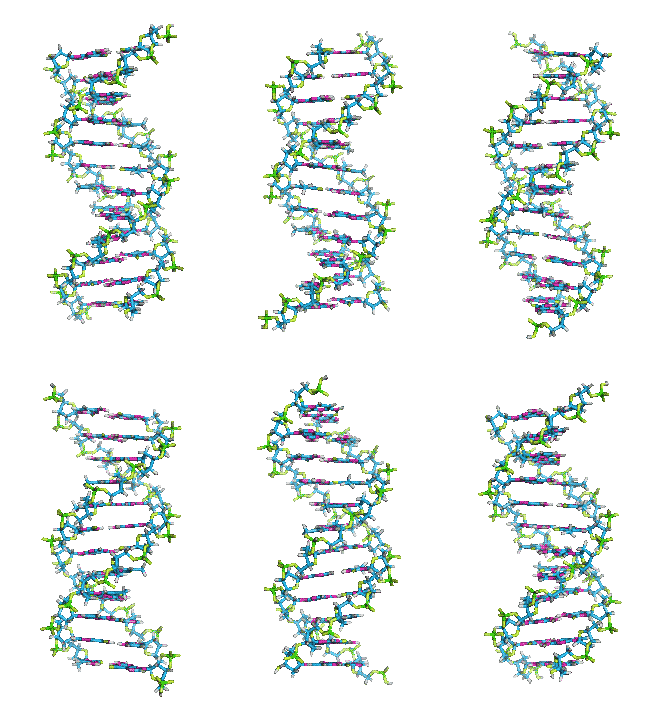
Which biomolecule is made of nucleotides and include your DNA? (Hint: they carry genetic information)
a)
Carbohydrate
b)
Lipids
c)
Protein
d)
Nucleic Acid
18.
Which biomolecule is responsible for insulation and LONG term energy storage?
a)
Proteins
b)
Nucleic Acids
c)
Lipids
d)
Carbohydrates
19.
The monomer (building block) of a nucleic acid is
a)
Monosaccharide
b)
Amino Acid
c)
Nucleotide
d)
Polysaccharide
20.
Which of the following is NOT a biomolecule?
a)
Water
b)
Nucleic Acid
c)
Protein
d)
Lipid
21.

Which statement is supported by this cladogram?

a)

Hippopotamuses are more closely related to cows than to javelinas.

b)

Toothed whales are more closely related to mouse deer than to hippopotamuses.

c)

Javelinas and pigs are more closely related than baleen whales and toothed whales.

d)

Cows and mouse deer are more closely related than javelinas and pigs.

22.

Which organism is the LEAST related to the other three organisms?

a)

Organism 1

b)

Organism 2

c)

Organism 3

d)

Organism 4

23.

Which statement is best supported by the observable structures of the different humerus

a)

The primates lived in similar environments.

b)

The primates shared a common ancestor.

c)

The primates interbreed with similar organisms in a population.

d)

The primates had diets that consisted of similar types of foods.

24.

Which statement provides the best evidence that Ambulocetus natans is an ancestor of Basilosaurus isis?

a)

Homologous structures occur in each fossil.

b)

Similar nitrogenous bases are found in the DNA of each fossil.

c)

The fossils were found in different locations.

d)

The youngest fossil is larger than the older fossils.

25.

These limbs provide evidence of common ancestry because they —

a)

have the same basic structure

b)

perform the same function

c)

are the same size

d)

are parts of mammals

26.
a)

A

b)

B

c)

C

d)

D

27.

What molecules are in nucleotides?

a)

Phosphate group

b)

Protein

c)

Sugar

d)

lipid

e)

Nitrogenous base

28.

Which molecules make up the "backbone" of DNA and RNA?

a)

Sugar

b)

Phosphate group

c)

Nucleotide base

29.

Thymine will bond with...

a)

Guanine

b)

Cytosine

c)

Adenine

d)

Uracil

30.

Guanine will bond with...

a)

Thymine

b)

Cytosine

c)

Adenine

d)

Uracil

31.

Which bases are only found in DNA?

a)

Thymine

b)

Cytosine

c)

Adenine

d)

Uracil

e)

Guanine

32.
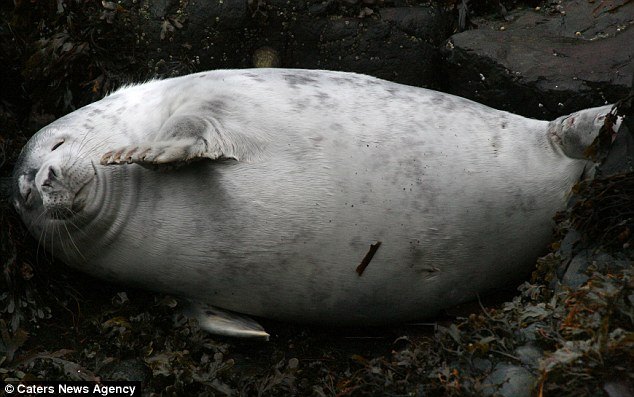
Which kingdom would this organism belong to?
a)
Protist
b)
Plant
c)
Animal
d)
Fungi
33.
A hetertrophic, eukaryotic organism associated with the decomposition of dead material is a(n):
a)
bacteria
b)
fungi
c)
plant
d)
archaea
34.
All of the following have a nucleus except...
a)
Eubacteria
b)
Animalia
c)
Plantae
d)
Protista
35.
In what kingdom would you find trees and flowers?
a)
Plantae
b)
Fungi
c)
Eubacteria
d)
Animalia
36.
What can an autotrophic organism due that a heterotrophic organism can NOT?
a)
Make their own food 
b)
Have a nucleus
c)
Reproduce through binary fission
d)
They're the same
37.
What is the difference between unicellular and multicellular?
a)
They are the same
b)
One has a nucleus and one doesn't
c)
Unicellular has one cell and multicellular has many 
d)
One is bacteria and the is archaebacteria
38.
Is fungi autotrophic or heterotrophic?
a)
Autotrophic, they make their own food
b)
Hetertrophic, they get food from other organisms
39.

Which kingdom is prokaryotic?

a)

Animalia

b)

Archae

c)

Planta

d)

Fungi