
 Worksheets
Unit 2 Test: Energy Flow
Total questions: 25
Worksheet time: 15mins
The process of cellular respiration takes food and rearranges it into carbon dioxide (CO2) which is breathed out into the air. Which two spheres are involved in this process? (select 2)
Atmosphere
Biosphere
Geosphere
Hydrosphere
Lithosphere

The diagram provided shows the amount of energy available in Watts per square meter in a typical habitat. Which of the following is the best estimate of the energy available at the level of tertiary consumers in this habitat?
0.01 W/m2
0.002 W/m2
0.08 W/m2
0.0008 W/m2
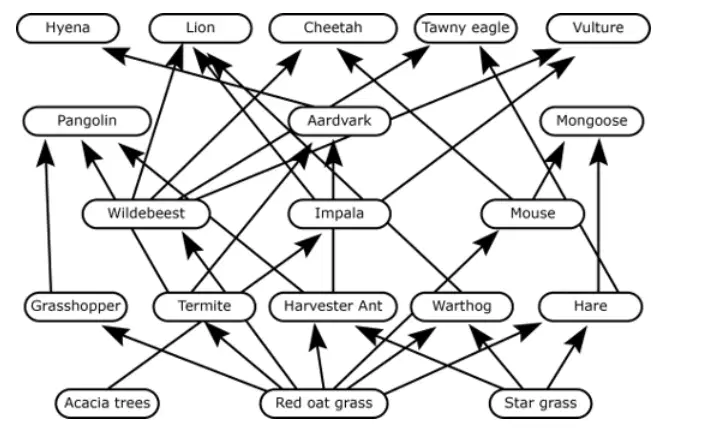
The food web diagram shows feeding relationships between organisms on the African savannah. Which of the following organisms is part of the trophic level with the greatest amount of stored energy?
Red oat grass
Termite
Vulture
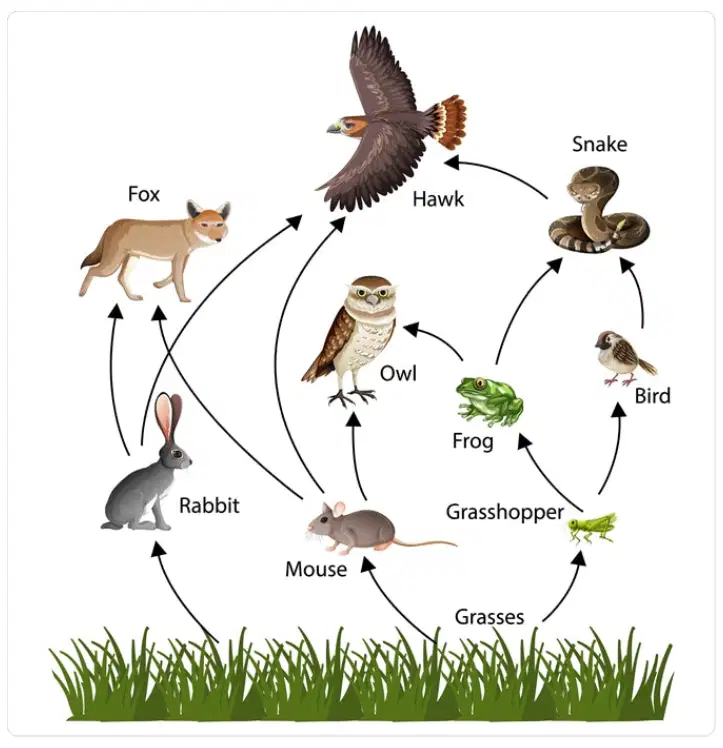
Which trophic level is the Grasshopper in?
Producer
Primary Consumer
Secondary Consumer
Tertiary Consumer
Quaternary Consumer
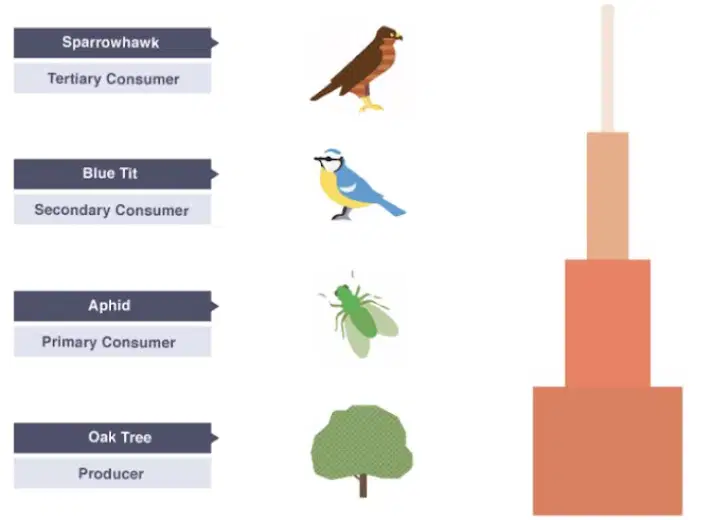
The diagram represents a model of a biomass pyramid. Which statement best describes what happens in this biomass pyramid?
Organisms decay at each level, and thus less biomass can be supported at higher levels
Energy is lost to the environment at each level, so less biomass can be supported at each higher level.
When organisms die at higher levels, their remains sink to lower levels, increasing the biomass of lower levels.
More organisms die at higher levels than at lower levels, resulting in less biomass at higher levels.
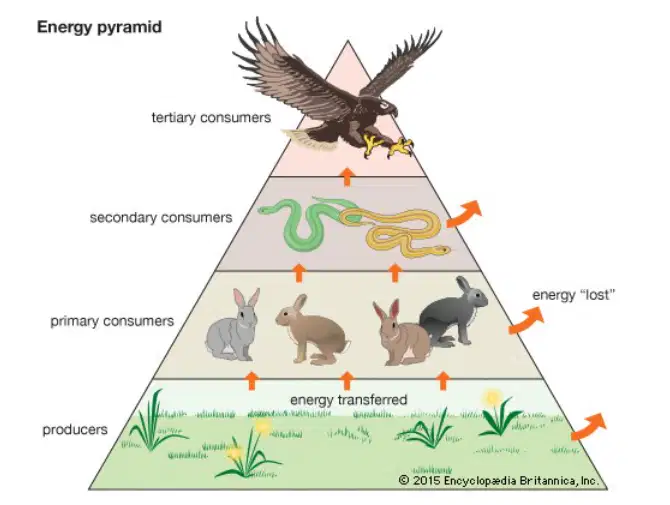
Kilocalories (kCal) is a measure of energy. If there are 50,000 kCal available for the producers in trophic level #1, how much energy is available for the secondary consumers in trophic level #3?
0 kCal
5 kCal
50 kCal
500 kCal
5000 kCal
How much energy is lost at each trophic level?
10%
20%
80%
90%
Steps in an ecosystem, comprising organisms that share the same function in the food chain and are the same number of steps away from the primary sources of energy are called _______________.
food chains
food levels
food webs
levels of organization
trophic levels
What is the original source of energy in an ecosystem?
Consumers
Decomposers
Producers
The Sun
The energy lost at each trophic level is lost as...
Sunlight
Nitrogen
Heat
ATP
Which model correctly shows energy flow in a food chain?


The food web below shows some of the feeding relationships among organisms in Arctic waters.
Which organism would be least affected by overfishing for cod in Arctic waters?
seals
shrimp
baleen whales
toothed whales

Which organisms are primary consumers in this food web?
tree, shrub, mountain lion
mountain lion and deer
squirrel, grasshopper, rabbit, deer
shrew, snake and rabbit

What organisms are considered secondary consumers in this food web?
rabbits, mice and grasshoppers
grains, grasses and carrots
foxes, owls, and birds
birds only
Where is the least amount of energy available in an energy pyramid?
The very bottom level
Secondary consumer level
The very top level
Primary consumer level
How does available energy compare at different trophic levels?
Producers have less available energy than primary consumers
Producers have more available energy than primary consumers
Tertiary consumers have more available energy than secondary consumers
Primary consumers have less available energy than secondary consumers

