
 Worksheets
Color Theory Quiz
Total questions: 56
Worksheet time: 1hrs 2mins
What is color theory?
The science and art of using color
The study of how colors mix and match
The study of how humans perceive color
All of the above
Which colors are considered primary colors?
Red, Yellow, Green
Blue, Green, Purple
Red, Yellow, Blue
Orange, Green, Purple
What are secondary colors?
Colors created by adding two primary colors together
Colors created by adding one primary and one secondary color together
Colors created by adding three primary colors together
Colors created by adding one primary and one tertiary color together
What are tertiary colors?
Colors created by adding two primary colors together
Colors created by adding one primary and one secondary color together
Colors created by adding three primary colors together
Colors created by adding one primary and one tertiary color together
What is the purpose of a color wheel?
To determine what two colors will create when added together
To map out color scheme rules for pairing colors aesthetically
To neutralize and tone down vibrant colors
All of the above

How many colors or spaces are there between each primary color
For example; how many colors or spaces are between Red and Yellow.
1 Space/Color
2 Spaces/Colors
3 Spaces/Colors
No Spaces/Colors
Label the primary colors
Purple/Violet
Blue
Red
Orange
Yellow
Green
Label the secondary colors
Purple/Violet
Blue
Red
Orange
Yellow
Green
Label the Tertiary Colors
Magenta (Red Purple/Violet)
Indigo (Blue Purple/Violet)
Teal (Green Blue)
Chartreuse (Yellow Green)
Amber (Orange Yellow)
Vermillion (Red Orange)
According to Josef Albers, color is considered ________?
Relative
Definitive
Reliable
Match the following Color Scheme Rules to the colors that match the color scheme rule

Monochromatic Color Scheme

Complimentary Color Scheme

Triadic Color Scheme

Split Complementary Color Scheme

Analogous Color Scheme

To create a tint, you add what value to the base color?
What value is being added to the teal?
White
Gray
Black

To create a tone, you add what value to the base color?
What value is being added to the teal?
White
Gray
Black
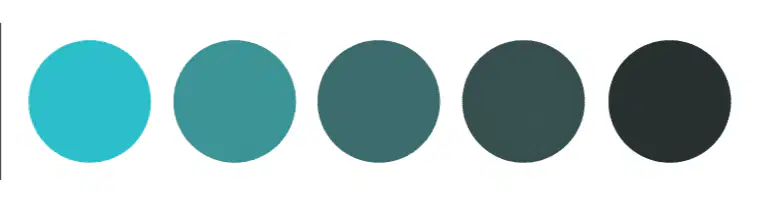
To create a shade of a color, you add what value to the base color?
What value is being added to the teal?
White
Gray
Black
To Tint a color is to add what value to the color
(a)
To Shade a color is to add what value to the color
(a)
To Tone a color is to add what value to the color
(a)

Why do we combine two complimentary colors together? What does it do?
To make brown
To neutralize or darken a color
Because Art
Josef Albers told me to
What is the effect of complementary colors when placed next to each other?
They neutralize each other
They enhance each other's brightness
They create a monochromatic effect
They create a dull effect
What happens when you add black to a color?
It becomes a shade
It becomes a tint
It becomes a tone
What happens when you add White to a color?
It becomes a shade
It becomes a tint
It becomes a tone
What happens when you add Gray to a color?
It becomes a shade
It becomes a tint
It becomes a tone
What is an analogous color?
A color that is opposite to another on the color wheel
A color that is next to another on the color wheel
A color that is the same as another on the color wheel
A color that is a shade of another on the color wheel

Red

Orange

Yellow

Green

Blue

Purple/Violet

Vermillion (Red Orange)

Amber (Yellow Orange)

Teal (Blue Green)

Indigo (Blue Purple/Violet)

Chartreuse (Yellow Green)

Magenta (Red Purple/Violet)
A monochromatic color scheme utilizes colors and (a)

What color scheme rule is primarily used in this image?


Analogous color scheme

Triadic color scheme

Monochromatic color scheme

What color scheme rule is primarily used in this image?
Analogous color scheme
Triadic color scheme
Monochromatic color scheme

What color scheme rule is primarily used in this painting?
Analogous color scheme
Triadic color scheme
Monochromatic color scheme

What color scheme rule is primarily used in this painting?
Analogous color scheme
Triadic color scheme
Monochromatic color scheme
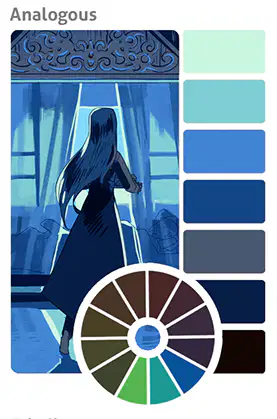
An analogous color scheme contains colors that are... (a)

A Complementary color scheme contains colors that are... (a)
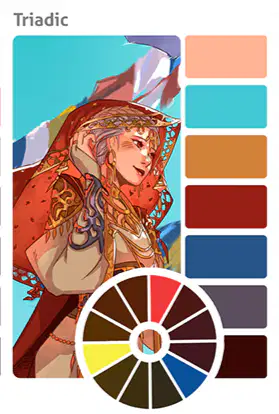
A Triadic color scheme contains colors that are... (a)

A Monochromatic color scheme contains colors that are... (a)
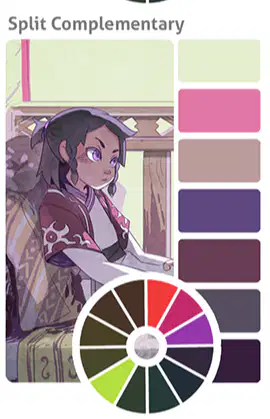
A split complimentary color scheme contains colors that are...

next to one another on the color wheel

across from one another and split

three colors equally spaced apart on the color wheel

across from one another
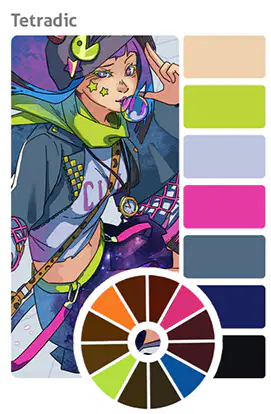
A Tetradic color scheme contains colors that are...
next to one another on the color wheel
across from one another and split

three colors equally spaced

In a square on the color wheel

Drag each color to it's complementary color

Orange

Purple/Violet

Green
Drag each color to it's complementary color

Red

Yellow

Blue
Organize the colors into the right categories!

Red/Rojo

Yellow/Amarillo

Blue/Azul

Orange/Naranja

Purple/Violet/Morada

Green/Verde

Magenta (Red Violet/Purple)

Indigo (Blue Violet/Purple)

Chartreuse (Yellow Green)

Vermillion (Red Orange)

Amber (Yellow Orange)
A (a) is a pure color
A (a) is a pure color plus white
A (a) is a pure color plus Black
A (a) is a pure color plus Gray
_______ is commonly used interchangeably with the word color.
Primary
Hue
Mood
Neutral

The value of a hue is determined by adding white to create a tint, black to create a ___________, or gray to create a tone.
tint
intensity
gray
shade
Do you shiver when you’re in a light blue space? Fan yourself in a room full of red? Don’t worry — there’s a scientific reason why. Colors are indelibly tied to natural elements like fire, water, sky, evoking certain responses just as if you were seeing and experiencing it firsthand. What word is being described here?
intensity
saturation
mood
secondary

This is an example of a _____________ color scheme painting.
Cool
Monochromatic
Warm
Analogous

RED + BLUE =
what color do they make?


(a) and (b) can be mixed together to create the color Amber

(a) and (b) can be mixed together to create the color Magenta

(a) and (b) can be mixed together to create the color Vermillion

(a) and (b) can be mixed together to create the color Indigo

(a) and (b) can be mixed together to create the color Teal

(a) and (b) can be mixed together to create the color Chartreuse

BLUE + YELLOW =
what color do they make?


YELLOW + RED =
what color do they make?


Warm colors (a) forward in a composition and cool colors (b) back into a composition.

