wayground logo

Free Printable Worksheets

NEW

Font size

S
M
L
XL
Worksheets

MIDTERM QUIZ NO. 2

Total questions: 51

Worksheet time: 1hrs 28mins

Name
Class
Date
1.

Vertical columns on the periodic table are called ___?

a)

groups

b)

periods

c)

rows

d)

families

2.

Which color on the image of the periodic table corresponds with the halogens.

a)

red

b)

black

c)

blue

d)

orange

3.

Which color on the image of the periodic table corresponds with the noble gases.

a)

red

b)

black

c)

blue

d)

orange

4.

Which color on the image of the periodic table corresponds with the metalloids.

a)

bright yellow

b)

gold

c)

teal

d)

light blue

5.

Which color on the image of the periodic table corresponds with the transition metals.

a)

red

b)

black

c)

blue

d)

orange

6.

Mendeleev first ordered the periodic table of elements by increasing

a)

atomic number

b)

atomic mass

c)

atomic symbol

d)

atomic weight

7.

Most metals share four common physical characteristics. Which of the options is not one of the four?

a)

Luster

b)

Conductivity

c)

Ductility

d)

Malleability

e)

Reactivity

8.

The periodic table is mostly comprised of what type of element?

a)

Metals

b)

Nonmetals

c)

Metalloids

9.

What is the most reactive nonmetal?

a)

Fluorine

b)

Iodine

c)

Chlorine

d)

Bromine

10.

Which of the following is not true of metalloids?

a)

Silicon and Germanium are common metalloids used in computers.

b)

Metalloids contain properties similar to both metals and nonmetals.

c)

Metalloids are found in a stair step line between metals and nonmetals on the periodic table.

d)

Metalloids are the first choice in building materials.

11.

An engineer is building a sun reflector which must withstand storms, large winds, and reflect sunlight well, what would suggest they use?

a)

Alkali metal

b)

Alkaline earth metal

c)

Transition metal

d)

Metalloid

e)

Lanthanide

12.
Which of these elements has the greatest atomic radius? 
a)
H
b)
N
c)
Cl
d)
Cs
13.
The Periodic Table of the Elements is useful for revealing patterns and trends in the elements. Which statement accurately describes a pattern in the size of atomic radii in the Periodic Table of the Elements?
a)
Atomic radii decrease from left to right across a period and decrease from top to bottom in a group.
b)
Atomic radii increase from left to right across a period and increase from top to bottom in a group.
c)
Atomic radii decrease from left to right across a period and increase from top to bottom in a group.
d)
Atomic radii increase from left to right across a period and decrease from top to bottom in a group.
14.
The symbols W, X, Y, and Z represent four elements shown on the outline of a periodic table.
Which element has the highest electronegativity?

a)
W
b)
X
c)
Y
d)
Z
15.
Fluorine, chlorine, bromine, and iodine all have the same number of valence electrons and have a tendency to gain electrons. Which element has the greatest ionization energy and electronegativity?
a)
fluorine
b)
chlorine 
c)
bromine 
d)
iodine 
16.
Which element has 2 valence electrons? 
a)
cesium (Cs) 
b)
magnesium (Mg)
c)
boron (B)
d)
argon (Ar) 
17.
How many Valance electrons does Iodine Have?
a)
6
b)
16
c)
7
d)
17
18.
Electronegativity is...
a)
how good an atom is at attracting electrons
b)
the ability of an atom to lose electrons
c)
the energy required to remove an electron from a specific atom
d)
how easy it is to make friends. 
19.
Which of the following will have a larger radius than Zinc?
a)
Gallium
b)
Aluminum
c)
Magnesium
d)
Strontium
20.
Why do bonds form?
a)
To fill the valence shell of electrons for the elements involved
b)
to release energy stored in the bonds
c)
because whenever you mix two chemicals, there will be a reaction
d)
because of attraction
21.

Which compound is held together by electrostatic forces?

a)

NO2

b)

CaSO4

c)

Aluminum

d)

P4O10

22.
The name of Cu₃N₂ is
a)
copper (III) nitride
b)
copper (II) nitride
c)
copper nitride
d)
tricopper dinitride
23.
The name of Ni₂O₃ is
a)
nickel (II) oxide
b)
nickel (III) oxide
c)
nickle oxide
d)
dinickel trioxide
24.
The chemical formula of iron (III)bromide is
a)
FeBr
b)
Fe(III)Br
c)
FeBr₃
d)
Fe₂Br₃
25.
An ionic compound made of copper (Cu2+) and oxygen would be named
a)
copper oxygen.
b)
copper oxide.
c)
dicopper oxide.
d)
copper(II) oxide.
26.

What is the word equation or chemical equation of the following:

a)

Zn(s) + S(s) -> ZnS2(l)

b)

Zn(g) + S(s) -> ZnS2(l)

c)

Zn(s) + S(g) -> ZnS2(l)

d)

Zn(s) + S(s) -> ZnS2(s)

27.

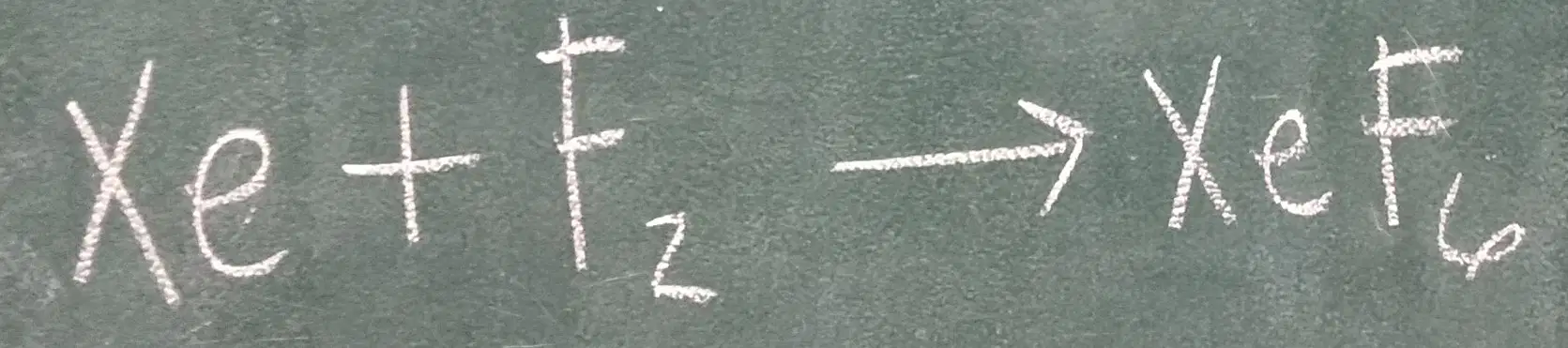
What type of chemical reaction is the chemical equation?

a)

Synthesis

b)

Decomposition

c)

Substitution

d)

Methathesis

28.

What type of chemical reaction is the chemical equation?

a)

Synthesis

b)

Decomposition

c)

Substitution

d)

Methathesis

29.

What type of chemical reaction is the chemical equation?

a)

Synthesis

b)

Decomposition

c)

Substitution

d)

Methathesis

30.

What is the word equation or chemical equation of the following:

a)

Gaseous hydrogen reacts with Oxygen gas to produce water

b)

Gaseous hydrogen reacts with solid oxygen to produce water

c)

Gaseous hydrogen reacts with Oxygen gas to produce water

d)

Gaseous hydrogen reacts with Oxygen gas to produce aqueous water

31.
Balance this equation:
MgCl2 --> Mg4+ Cl2
a)
It's already balanced.
b)
4MgCl2 --> Mg4+ 4Cl2
c)
4MgCl2 --> Mg4+ 5Cl2
32.
Balance this equation:
Al2O3 -> Al + O2 
a)
2Al2O3 -> 2Al + 3O2 
b)
2Al2O3 -> 4Al + 3O2 
c)
3Al2O3 -> 2Al + O2 
d)
2Al2O3 -> 3Al + 2O2 
33.
Balance this reaction: ____ BaS + ____ PtF2 ---> ____ BaF2 + ____ PtS
a)
1,1,1,1
b)
1,2,1,1
c)
1,1,1,2
d)
2,1,1,1
34.
Using the balanced equation in question 1,
Mg(s)   +   HCl(aq)  -->   MgCl₂(aq)   +   H₂(g)
How many grams of HCl are consumed by the reaction of 2.50 moles of magnesium?
a)
5.00 g
b)
7.29
c)
182 g
d)
218 g
35.
Using the balanced equation in question 1,
Mg(s)   +   HCl(aq)  -->   MgCl₂(aq)   + H₂(g)
How many moles of HCl are consumed in the production of 7.5 moles of MgCl₂?
a)
3.8 moles
b)
15 moles
c)
7.5 moles
d)
23 moles
36.

Given the equation:

2NaClO3 (s) → 2NaCl (s) + 3O2 (g)


When 2.00 moles of NaClO3 react, how many grams of O2 is produced?

a)

56 g of O2

b)

96 g of O2

c)

64 g O2

d)

32 g O2

37.

2Na + 2H2O → 2NaOH+ H2

How many grams of hydrogen are produced if 120 g of Na are available?

a)

5.27 g

b)

2.6 g

c)

690 g

d)

45 g

38.
How many grams are in 1.2 x 1024 molecules of CO?
a)
28 grams
b)
56 grams
c)
6.02 grams
d)
1.2 grams
39.

How many formula units are in 2.5 mol of NaCl?

a)

1.51x10²³

b)

146

c)

4.15

d)

1.51x1024

40.

2Al + 3H2SO4 → Al2(SO4)3 + 3H2

How many grams of aluminum sulfate would be formed if 250g H2SO4 completely reacted with aluminum?

a)

0.85 g

b)

290 g

c)

450 g

d)

870 g

41.

Stoichion means?

a)

Element

b)

Compound

c)

Mixture

d)

Solution

42.

The amount that the limiting reactant produces.

a)

Formula Mass

b)

Percent Composition

c)

Percent Yield

d)

Theoretical Yield

43.

The reactant that is left over and produced the GREATEST amount of product.

a)

Limiting Reagents or Limiting Reactant

b)

Excess Reagent or Excess Reactant

44.
Silver nitrate and sodium phosphate are reacted in equal amounts of 200 g each. How many grams of silver phosphate are produced? 
3AgNO3  + Na3(PO4)  --->  Ag3(PO4)  + 3NaNO3
a)
164 g
b)
64 g
c)
146 g
d)
164 moles
45.
2NaOH + H2SO4 → Na2SO4 + H2O. If 0.020 mol NaOH and 0.025 mol H2SO4 added, which is excess?
a)
H2SO4
b)
NaOH
c)
Na2SO4
d)
H2O
46.
2NaOH + H2SO4 →Na2SO4 + H2O. If 0.02 mol NaOH and 0.025 mol H2SO4 added, which is limiting?
a)
H2SO4
b)
NaOH
c)
Na2SO4
d)
H2O
47.
1 Cheese + 2 Bread --> 1 Grilled cheese
How many grilled cheeses can you make with 26 slices of bread and 14 pieces of cheese?
a)
14
b)
13
c)
26
d)
7
48.

What is the atomic mass of Argon (Ar)?

a)

39.948g

b)

39.849 g

c)

38.994 g

d)

38.499 g

49.

How many Carbons "C" are in C18H34O3

a)

18

b)

34

c)

3

d)

37

50.
A compound consists of 72.2% magnesium(Mg) and 27.8% nitrogen(N) by mass. What is the empirical formula?
a)
Mg4N3
b)
MgN2
c)
Mg3N
d)
MgN
51.

What is the molecular formula for a compound with the empirical formula: K2SO4 and a molecular mass of 696g.

a)

K2SO4

b)

K8SO16

c)

K8S4O8

d)

K8S4O16