
 Worksheets
Plate Tectonics by Mr E (EFL do * only)
Total questions: 27
Worksheet time: 1hrs 21mins
*Crust
a thin shell on the outside of Earth
the innermost geologic layer of planet Earth
a layer of silicate rock between the crust and the outer core
a fluid layer about 2,260 km thick, composed of mostly iron and nickel that lies above Earth's solid inner core and below its mantle
*Outer core
a thin shell on the outside of Earth
the innermost geologic layer of planet Earth
a layer of silicate rock between the crust and the outer core
a fluid layer about 2,260 km thick, composed of mostly iron and nickel that lies above Earth's solid inner core and below its mantle
*Mantle
a thin shell on the outside of Earth
the innermost geologic layer of planet Earth
a layer of silicate rock between the crust and the outer core
a fluid layer about 2,260 km thick, composed of mostly iron and nickel that lies above Earth's solid inner core and below its mantle
*Inner core
a thin shell on the outside of Earth
the innermost geologic layer of planet Earth
a layer of silicate rock between the crust and the outer core
a fluid layer about 2,260 km thick, composed of mostly iron and nickel that lies above Earth's solid inner core and below its mantle
*Choose ALL answers that are NOT caused by tectonic activity.
Hurricanes
Droughts in the dessert
Landslides
Global warming
Island formation
*Type true or false: Tectonic plates are giant slabs in Earth's crust and lithosphere .
(a)

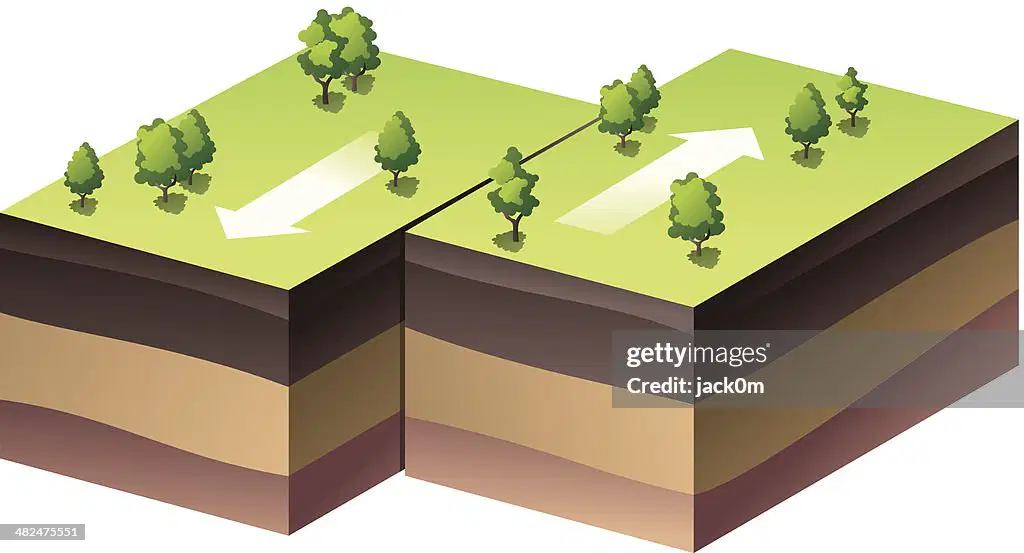
*What are we seeing here?
The rock cycle
Transverse boundary
The San Francisco earthquake simulation
Convection currents

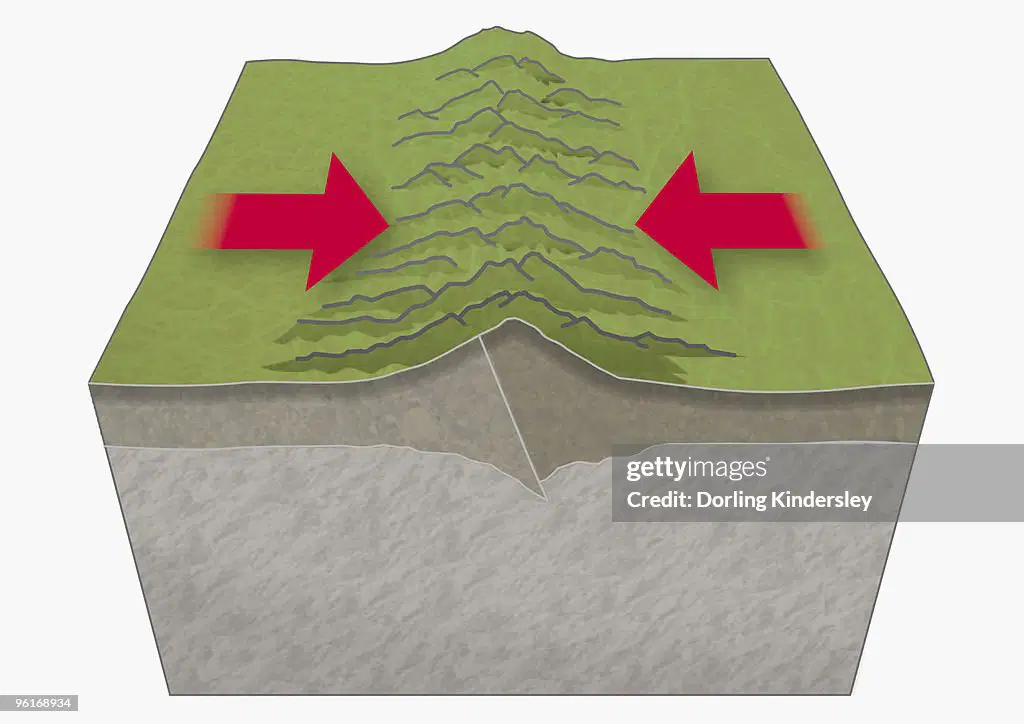
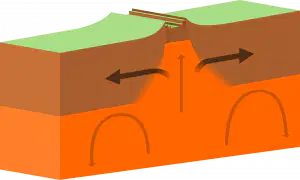
*What are we seeing here?
The rock cycle
Divergent boundary
Convergent boundary
Convection currents

*What are we seeing here?
The rock cycle
Divergent boundary
Convergent boundary
Convection currents
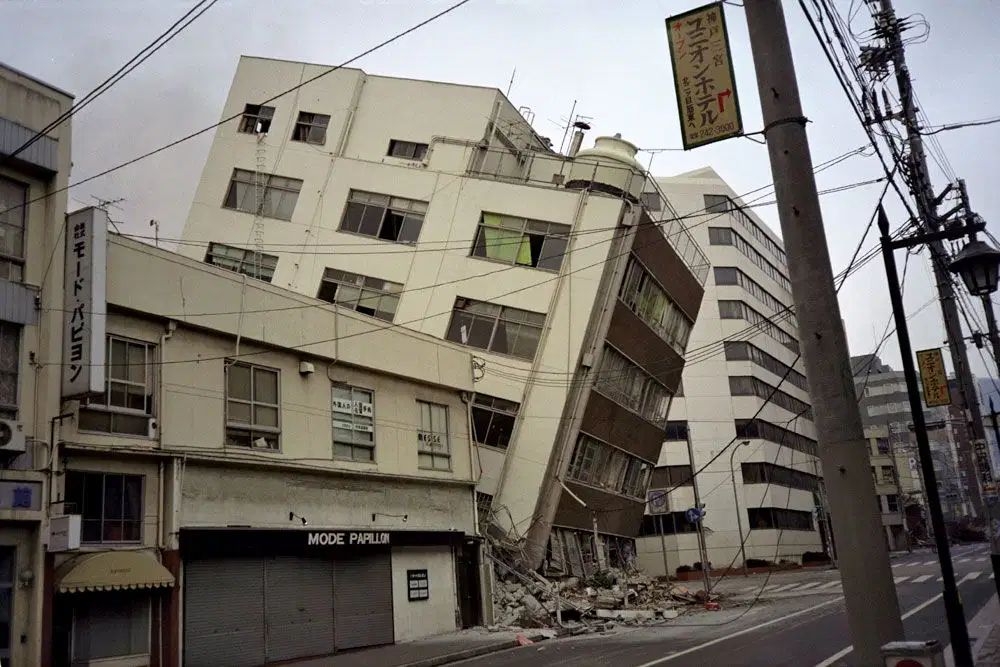
When two plates that have been _______ together suddenly break free. We experience the release of this energy as a/an _________.
frozen / tsunami
stuck / aftershock
stuck / earthquake
sliding / volcano
*Draw how the Oceanic crust collides with the Continental plate. How do they collide, which is denser and how does that affect the outcome?
*Draw and label how volcanoes form as plates come together.

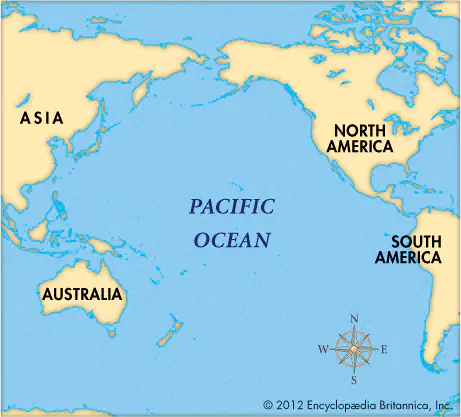
*Where is the Ring of Fire? Draw a line showing where it is.
Rift valleys often occur along what type of plate boundary?
*Name two features that occur where plates converge?
*Draw and label convection currents
*Type these parts of the rock cycle in order; Metamorphic rock, Igneous rock & Sedimentary rock
*Transform boundary

*Convergent boundary
*Divergent boundary
*Cool volcano gif
*Scientists, known as (a) help us understand the role that geological forces play in climate change.
*Many scientists believe that at one time, the planet was completely frozen. What is this theory called?
The idea that a change of temperature in one direction causes more change in the same direction. Because ice is largely white in color, ice reflects the Sun’s light back into space rather than trapping the light on Earth.
_______________to track the direction and speed of each tectonic plate.
Scientists use homing pigeons
Scientists use infrared devices
Scientists use the global positioning system
Scientists use googlemaps

*In your professional opinion, this test was...
Just about what you expected it to be
Full of material you'd never seen before
Mostly easy with a little hard
Mostly hard with some easy

