
 Worksheets
Science 6 Q3
Total questions: 190
Worksheet time: 2hrs 35mins
What energy is present in a moving object?
Chemical energy
Kinetic energy
Nuclear energy
Potential energy
When does energy transformation occur?
Energy transformation occurs when
Energy moves from one place to another
Energy changes from one form to another
When energy is created or destroyed
When energy remains the same
How does energy transformation occur in a ceiling fan?
From electrical to mechanical energy
From electrical to chemical energy
From mechanical to electrical energy
From mechanical to thermal
Explain how energy transformation occur in a green plan on a sunny day.
When
Light energy transforms into mechanical energy
Chemical energy transforms into mechanical energy
Light energy transforms into chemical energy
Chemical energy transforms into light energy
How does energy transformation occurs when your rub your hands together?
From mechanical to heat
From mechanical to chemical
From heat to light
From heat to mechanical
What is friction?
Force
matter
Substance
What reduces friction?
making the surface cool
making the surface rough
making the surface smooth
Which of the following shows kinetic friction?
washing machine pushed along a floor
papers on a table top
towel hanging on a rack.
How can you increase friction?
by using oil or another lubricant
by making the surface rougher
asking a friend to help push or pull.
Ian is playing with a toy sledge. In which surface will it travel fastest?
the carpet
the rough floor
the polished floor
Which of the following is an example of increasing friction?
scrubbing the floor
applying oil on door hinges
spreading gravel on the road
A pingpong ball and a flat sheet of paper are dropped at the same time from the same height. What will occur if there is no air resistance?
The pingpong ball will land first.
The pingpong ball will float slowly through the air
The pingpong ball and the flat sheet of paper will land at the same time.
What lubricant can you use to reduce the friction on the floor?
lotion
floorwax
cooking oil
What is gravity?
It is the force that holds the Earth together
It is one of the four physical forces found in nature
all of the above
Which is the best example of gravity?
A person drops a ball, and it falls to the ground
A breeze blows, and a sailboat moves
A car hits a tree, and its motion stops
What causes the falling objects to fall?
acceleration
gravity
speed
Why do you move faster when running down a hill?
Gravity pulls you down
Gravity pulls you up
None of the above
What happens when you go against gravity?
More force is needed to accelerate.
Less force is needed to accelerate.
No force is needed to accelerate,
The ability to do work is called ____________.
Energy
Force
Matter
Which of the following is NOT true about energy?
Energy makes life convenient and comfortable
Life is not possible on Earth without energy from the sun
The only source of energy on Earth is the sun
What is vibration?
how loud a sound is
the back and forth movement of matter
the loudness of softness of a sound
What form of energy is used in sonar for military purposes to detect and determine the location, size and relative motion of underwater objects?
heat energy
sound energy
chemical energy
Which of the following objects make use of sound energy?
fluorescent lamp
electric stove
television
Pattern of disturbance caused by the movement of energy travelling through a medium.
light waves
sound waves
tidal waves
It is a substance through which a vibration does NOT travel?
medium
vacuum
gas
How heat energy is being transferred through ironing of clothes?
Conduction
Convection
Radiation
How heat energy is being transferred through cool air coming from an air conditioner?
Conduction
Convection
Radiation
How heat energy is being transferred through heat coming from a bonfire
Conduction
Convection
Radiation
TRUE or FALSE.
Light energy is a kind of kinetic energy.
TRUE
FALSE
TRUE or FALSE.
Light is made up of tiny packets of energy called photons.
TRUE
FALSE
TRUE or FALSE.
Light energy travels on a zigzag line.
TRUE
FALSE
What kind of lever is the seesaw?
First-class lever
Second-class lever
Third-class lever
A screw is a special kind of what simple machine?
Inclined plane
Lever
Wheel and axl
What is a device consisting of few parts used to make work easier and faster by reducing the effort or force used in doing to work?
Simple machine
Complex machine
Washing machine
Which of the following best describes the use of friction?
Friction makes an object slide.
Gravity pushes an object upward.
Force is needed to stop an object.
An object in motion will remain in motion.
What would happen if youl sat on a grassy hillside?
you will stay in place.
you will fall downhill.
you will increase your weight.
you will accelerate
Jack is playing with a toy push car. On which surface would his toy push car
travel the fastest?
Carpet
Sand
Tiled floor
Sandpaper
All of the materials below can reduce friction EXCEPT.
Bearings
Lubricants
Sand
Wax
Your mother asked you to polish the floor. What will happen to the friction of
the floor after you polish it?
Friction will decrease.
Friction will increase.
Friction makes you float.
Friction remains the same.
When you hold a glass, you keep it from falling using the friction between your
hand and the glass. How does friction prevent the glass from falling?
The friction of the glass is smooth.
Your fingers and the glass stick together.
The friction acts upwards, opposing the downward pull of gravity.
The friction acts downwards, opposing the upward pull of gravity.
Friction is beneficial to our daily lives, but sometimes we can find it less
helpful. Which of the following activities shows that friction is undesirable?
Lighting matchsticks
Pushing furniture
Walking on the wet floor
Using brake when approaching a road intersection
Jupiter has greater gravity than Earth, therefore, you will weigh more on Jupiter.
True
False
The Law of Universal Gravitation was developed by _______.
Galileo Galilei
Sir Isaac Newton
Aristotle
Batman
The farther a planet is from the Sun, the lesser the gravitational pull.
True
False
When distance between two objects is greater, the force of gravity is smaller.
True
False
Gravitational force depends on _____.
The distance between the objects
The mass of the objects
The mass of the objects and the distance between them
The volume of the objects
If two objects are compared at a certain distance, according to Newton's Law of Universal Gravitation, what is true? Select all the phrases that apply
Both objects have mass and therefore they have no gravitational force.
Lower mass objects have less gravitational force.
Lower mass objects have more gravitational force.
Higher mass objects have stronger gravitational force.
TRUE or FALSE? The gravitational force becomes smaller as objects move closer to each other.
True
False

The objects in the following diagrams have different masses and are different distance apart. Which diagram shows the two objects that have the greatest force of gravity acting between them?
Diagram A
Diagram B
Diagram C
Diagram D
Which of the following roles does gravity play in our solar system?
it keeps the planets in orbit around the Sun
it keeps the moon in orbit around the Earth
it causes all things to fall to the ground
all of the above

The scientific law that states that every object in the universe attracts every other object
(a)
The attractive force between objects; the forces that moves objects downhill
(a)
A measure of how much matter an object is made of
(a)
Two factors effecting the magnitude of the force of gravity between 2 objects are _____ and _______.
mass and distance
mass and matter
distance and weight
weight and mass
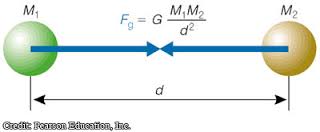
This property refers to the amount of matter present in an object.
(a)
Gravitational force of the sun is ________ compared to the moon because it is more massive.
stronger
weaker
the same as
The greater the distance of a planet from the Sun, the __________ the gravitational pull of the Sun for that planet.
stronger
weaker
the same as
Weight is measured in _______, while mass is measured in _______.
kilogram; Newton
Newton; kilogram
gram; ton
ton; gram
Friction is a force that results from two surfaces of different objects rubbing against each other.
True
False
In a vacuum, a metal ball will fall faster than a feather when falling from the same height.
True
False
To resist friction, the force applied must be weaker than friction itself.
True
False
Fluid friction occurs when an object is in contact with water or air.
True
False
A man pushing a box on a rough surface will be able to do it faster than a man pushing a box on a smooth surface
True
False

All given examples are helpful


Will it be easier for a person to push a table on a carpeted floor than on tiled floor?
No, because the carpeted floor is rough, so friction is lesser.
No, because the carpeted floor is rough, so friction is greater.
Yes, because the carpeted floor is smooth, so friction is lesser.
Yes, because the carpeted floor is smooth, so friction is greater.
When can we say that friction on a floor is greater?
If the floor is wet.
If the floor is tiled.
If the floor is rough.
If the floor is smooth.
Which force causes a rolling ball to stop after a few seconds?
friction
gravity
magnetic
motion
Why is difficult to move heavy objects on a rough surface?
rough surface is slippery
there is no friction on a rough surface
there is lesser friction on a rough surface
there is greater friction on a rough surface
When you are travelling along a road, how does the wet road affect friction?
It increases friction.
It decreases friction.
It maintains friction.
It increases and decreases friction.


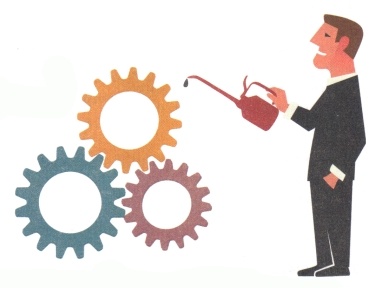
Which of these materials do you predict would have the MOST amount of friction?
metal
tile
sand paper
denim
In a vacuum defying air resistance, which of the following objects will fall fastest and hit the ground first?
Uncrumpled paper
Rock
Coin
All will land at the same time.
Work is done when an object moves at a certain distance when force is applied
True
False
Simple machines contain two or more simple machines.
True
False
Pulleys and levers are examples of compound machines.
True
False
Riding a bicycle, the wheels and axles make the bicycle move from one place to another place.
True
False
Machines make work harder by lessening the force applied to an object.
True
False
Is a flat surface whose one end is higher than the other to lift heavy objects with relatively little effort.
Wedge
Inclined Plane
Screw
Pulley
Is a simple machine made up of two inclined planes placed back to back creating a thick base and a sharp edge.
Wedge
Inclined Plane
Wheel and axle
Lever
Is another simple machine, which consists of an inclined plane wrapped around a cylinder.
Wedge
Lever
Pulley
Screw
Is a grooved wheel that turns around an axle which is held in place by a mounting bracket. Rope and wire moves along the wheel's circumference.
Screw
Inclined plane
Pulley
Lever
It has the same appearance with a pulley, but is has a wheel that is fixed to the axle, like in the steering wheel of a car.
Incline plane
Lever
Wedge
Wheel and axle
Machines are used to transform, transfer energy, multiply speed or force, and change the direction of the force.
True
False
Do work in one movement or a one-type-of-work easing device.
Compound machine
Simple machine
Washing machine
Factory machine
The following are examples of compound machines EXCEPT..
Bicycles
Sewing machines
Scissors
Crowbar
The following are parts of a lever.
Resistance
Effort
Fulcrum
Distance
Simple machines make work easier by trading ________ for force.
Distance
Motion
Work
Friction
Levers consist of a fulcrum, load, and effort
True
False
In a second-class lever, the load is between the effort and the fulcrum.
True
False

Which class of lever is in the image?
CLASS 1
CLASS 2
CLASS 3

Which class of lever is in the image?
CLASS 1
CLASS 2
CLASS 3

Which class of lever is in the image?
CLASS 1
CLASS 2
CLASS 3

Which class of lever is in the image?
CLASS 1
CLASS 2
CLASS 3

Which class of lever is in the image? (nutcracker)
CLASS 1
CLASS 2
CLASS 3

Which class of lever is in the image? (broom)
CLASS 1
CLASS 2
CLASS 3

Which class of lever is in the image? (crowbar)
CLASS 1
CLASS 2
CLASS 3

Which class of lever is in the image? (food tongs)
CLASS 1
CLASS 2
CLASS 3

Which class of lever is in the image? (fishing rod)
CLASS 1
CLASS 2
CLASS 3

Which class of lever is in the image? (tweezers)
CLASS 1
CLASS 2
CLASS 3

What class lever is a seesaw?
1st
2nd
3rd

What class lever is a baseball bat?
1st
2nd
3rd

What class lever does this picture show?
1st
2nd
3rd

What class lever does this picture show?
1st
2nd
3rd

What class lever does this picture show?
1st
2nd
3rd

What class of lever does this picture show?
First class lever
Second class lever
Third class lever
What class of lever does this picture show?
First class lever
Second class lever
Third class lever
What class of lever does this picture show?
First class lever
Second class lever
Third class lever
The wheel is attached to the object or load.
Fixed Pulley
Movable Pulley
Compound Pulley
The effort force applied is equal to the load.
Fixed Pulley
Movable Pulley
Compound Pulley
The wheel is attached to a fixed support.
Fixed Pulley
Movable Pulley
Compound Pulley
It changes the direction of the force.
Fixed Pulley
Movable Pulley
Compound Pulley
The effort force applied is less than the load.
Fixed Pulley
Movable Pulley
Compound Pulley

What does this image represent?
A pulley
A wedge
A lever
A wheel and axle

Identify the type of pulley
fixed
moveable
block and tackle or pulley system

Identify the type of pulley
Fixed
Moveable
Block and Tackle or pulley system

Which of the following is an example of a pulley?
flag pole
see saw
jump rope


In a simple machine, what is the load?
point where the lever arm pivots
the force needed to move the load
the mass lifted by a system
the distance the load travels
What is the unit used to measure force?
meter
gram
Newton
liter
Work is done when an object moves at a certain distance when force is applied.
True
False
Which of these is an example of a wedge?
wheel
spoon
seesaw
butter knife
Which of these is an example of inclined plane?
wheel
slide
wall
driveway
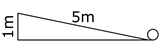
Which inclined plane requires the most effort to push the ball to the top?
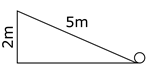
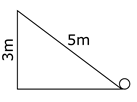
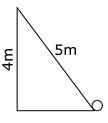
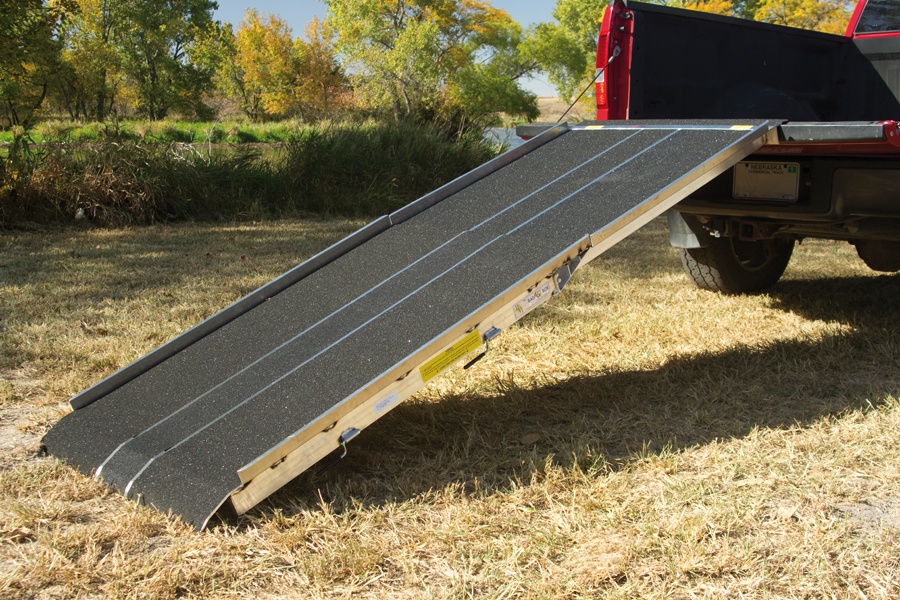
Which of the following inclined planes would require the least amount of effort to lift a box?
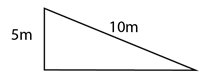
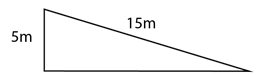
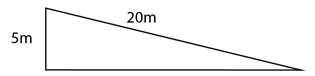
They all require the same amount of effort.
Which of the following is TRUE?
Ramps increase work
Ramps make it harder to move things
Ramps reduce the amount of effort
Inclined planes are only found in buildings
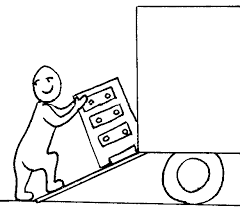
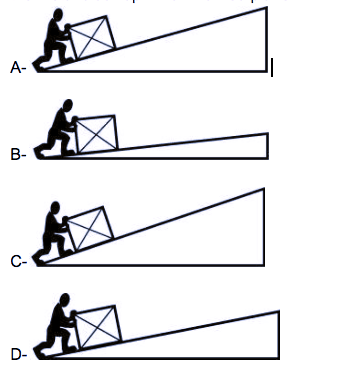
Is a waterslide an inclined plane?
Yes
No
Is a staircase an inclined plane?
Yes
No
What is a screw?
Move heavy loads vertically.
Is an inclined plane around a cylinder that fastens two objects together.
An object used to tear apart.
A wheel and a rope to move or change direction of an object
Which object is NOT considered a screw?
Bolt
Drill Bit
Light Bulb
Nail
Which of the following is an example of a screw?
nail
ramp
jar lid
It is a contact force, that exists when one surface slides over another, affected by the irregularities in the surfaces of two objects in contact during sliding or rolling, it resists motion.
(a)
It is a downward force acting on an object.
(a)
This is formed when two objects are rubbed together causing the electrons to move from one object to another.
(a)
This is the type of friction that keeps an object at rest.
(a)
This is the resistive force that slows down a moving object.
(a)
This kinetic friction acts on dry , solid objects sliding on a surface.
(a)
This is a kinetic friction that acts on objects with wheels, where it slows down the motion of the wheels on the solid surface.
(a)
This is a kinetic friction that acts on an object that is falling or moving through air.
(a)
Which of these has the tendency to change the state of motion of an object?
acceleration
force
mass
weight
Which type of friction is evident on a ball thrown upward?
air friction
rolling friction
sliding friction
static friction
Which of the following shows a rolling friction?
swimming
flying a kite
playing on a slide
pushing a supermarket cart
Which of the following shows an object in motion?
a book on top of a table
a car that is parked on a lot
a child running around a tree
a dog that is resting under a tree
When you push a ball in the same direction it is rolling, what will happen to the ball?
It will slow down.
It will move faster.
It will continue to move.
It will slow down then move fast again.
When you push a cart and it does not move. The force you applied is _____________ the force of friction acting on the cart.
less than
more than
equal to or less than
almost the same with
If you push a cart and it moves, the friction force is ____________ your applied force.
less than
more than
equal to
equal to or more than
If you want to maintain the motion of a moving object the force needed is
zero
equal to the kinetic friction
less than the kinetic friction
more than the kinetic friction
What causes your hair to stand after being rubbed against a balloon?
friction
gravity
heat
static electricity
Which of the following shows an object experiencing gravitational force? (Tick all that are applicable.)
a car rolling down the hill
falling leaves from a tree
tears falling from the eyes
egg rotting inside a refrigerator
the windmill keeps on turning
The energy that an object has due its position or motion, can be potential energy or kinetic energy, can be observed in a swinging pendulum, a moving Ferris wheel, a rushing avalanche , a book on the shelf, and other objects that are in motion or at rest.
(a)
The stored energy possessed by objects that are at rest.
(a)
The energy possessed by objects that are
moving.
(a)
The energy possessed by sound waves.
(a)
The energy possessed by an object due to the movement of particles within it.
(a)
Energy from within Earth is called (a) .
The thermal energy from bodies of water such as the ocean is called (a) .
The energy carried by electromagnetic waves, also know as radiation.
(a)
The form of radiant energy that is visible to human eyes.
(a)
The most commonly used form of energy, where most household appliances, including the computer, radio, and television, are powered by it, and results from the flow of electric charge.
(a)
The energy that is stored in the nucleus of an atom and is released during nuclear reactions.
(a)
The energy which is stored in the bonds of chemical compounds.
(a)
These are machines that can be found inside your house, school, or even in every industrial place, that are considered basic machines that aid humans with their work or activity.
(a)
Also known as the ramp, is the simplest of all machines, where one of its ends is higher than the other, allowing things to go from a lower place to a higher place or vice versa.
(a)
This simple machine is a long rigid bar that rotates around a fulcrum.
(a)
What do you call the pivot point of a lever?
(a)
What do you call the pivot point of a lever?
screw
bolt
nut
Which of the following statements is true?
Energy can be created and destroyed.
Energy can neither be created nor destroyed.
Energy can be created but cannot be destroyed.
Energy cannot be created but can be destroyed.
What type of energy is supplied to a car engine by fuel?
chemical
electrical
nuclear
potential
Which of the following is a tool that can multiply force or speed of work, change the direction of force, and transform energy?
cup
lever
machine
wrench
Which of the following energy transformations takes place for a battery operated flashlight to work?
chemical energy ---+ electrical energy ---+ light energy
thermal energy ---+ mechanical energy ---+ chemical energy
mechanical energy ---+ chemical energy ---+ thermal energy
chemical energy ---+ thermal energy ---+ mechanical energy

