
 Worksheets
Study Guide Mid-Term Question Bank
Total questions: 195
Worksheet time: 4hrs 58mins
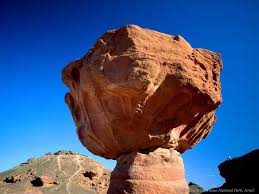
The process that breaks down rocks and other materials on Earth's surface is called
Weathering
Erosion
Deposition
Decomposition

A cliff formed near the ocean. Which statement best describes how this cliff formed?
Warm air melted the rock.
Sun rays evaporated the rock.
Ocean waves washed away rock.
Plant roots pushed away the rock.


What is an enormous mass of ice moving over land, causing weathering of rock and soil?
A glacier
An iceberg
An ice wedge
A sand dune
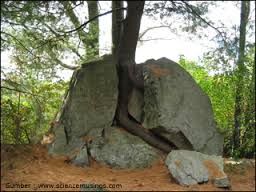
How do plants weather rocks?
During photosynthesis
When roots grow into cracks of rocks and expand the rock breaks.
When the plant moves water from the roots to the leaves, the rock breaks.
Plants don't weather rocks.

Which of the following is NOT a slow change to Earth's surface?
Weathering
Erosion
Deposition
Landslides

A delta is formed by the action of -
weathering
erosion
deposition
condensation

Rocks being picked up and carried downstream is an example of ____________.
weathering
erosion
deposition

Which type of weathering occurs when rocks are chemically broken down or dissolved by substances in the environment?
Physical
Chemical

Which type of weathering occurs when living things mechanically break down (crack, dig etc.) rocks and minerals?
Chemical
Physical


The process in which sediment settles out (drops to the bottom) of the water or wind that is carrying it
Weathering
Erosion
Sedimentation
Deposition

Which best describes the surface of the earth over billions of years?
High mountains gradually wear down until most of the earth is at sea level
High mountains stay side by side for billions of years with little change
Flat surface is gradually pushed up into higher and higher mountains until the earth is covered with mountains
High mountains gradually wear down as new mountains are continuously being formed, over and over again

What always plays the main role in a landslide, regardless of the cause?
Mud
Gravity
Wind

Which letter has a higher speed?
A
B

Which letter is there more deposition occurring?
A
B

Which letter has the lowest speed?
A
B

Which letter has the most weathering and erosion occurring?
A
B

What would the river channel look like from B to B'


What is a meander?
A straight river
A bend in the river
The start of a river
The flow of the river

What would the river channel look like from C to C'


What is the ultimate driving force for W.E.D.?
The tides
The moon
The sun

Geologists have classified rocks into three major groups of rocks which are:
inorganic, organic and chemical rocks
igneous, sedimentary and metamorphic rocks
metamorphic, chemical and non chemical rocks
sedimentary, inorganic and igneous rocks

Any rock that forms from another rock as a result of changes in heat or pressure (or both) is a:
chemical rock
igneous rock
sedimentary rock
metamorphic rock

What kind of igneous rock usually contains large visible crystals?
clastic
extrusive
organic
intrusive

You find a deposit of organic limestone. In what type of rock setting did it probably form? (hint - Owasso has limestone because this area was once an ______)
the ocean
a volcano
a swamp
sand dunes

As lava cools and crystallizes, what type of rock will form?
Sedimentary
Metamorphic
Extrusive Igneous
Intrusive Igneous

The three groups of rocks are classified by
How they form
Color
Grain size
Chemical Composition

Fossils are only found in
Sedimentary rocks
Foliated Metamorphic rocks
Igneous Rocks
Nonfoliated Metamorphic rocks


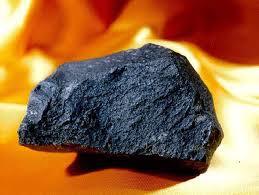


Which type of rock is made from lava or magma cooling?
igneous
sedimentary
metamorphic

what is the rock cycle.
molten rock that is stored underground.
rock material that forms where rocks are broken down into smaller pieces.
a process that changes one type of rock into another type of rock.

From your knowledge of Earth's crust, where would you most likely find igneous rocks like basalt?
Within mountain ranges
In my backyard
On the ocean floor
Sandy Beaches

What is molten or liquid rock material that is deep beneath the Earth's surface?
grain
lava
magma
rock

What is molten rock that erupts onto or above the Earth’s surface?
grain
lava
magma
sediment

Which process is best illustrated by the diagram?
igneous rock formation
sedimentary rock formation
igneous rocks changing into metamorphic rocks
sedimentary rocks changing into metamorphic rocks

Schist and quartzite are examples of metamorphic rocks. Which processes are necessary for the formation of metamorphic rocks?
cooling and weathering
cooling and pressure
heating and pressure
weathering and heating

Why are most fossils found in sedimentary rocks?
Sedimentary rocks crush a lot of fossils
Organisms live only in areas with sedimentary
rock
Organisms can be preserved in sedimentary
rock.

The best answer for section "B"
metamorphic/melting
compaction/cementation
weathering/erosion
heat/pressure

Why do some rocks fizz in HCl (acid)?
They are formed from other rocks.
They have organic sediments.
They are layered.

In the picture, what is the process shown by #7?
Weathering and Erosion
Heat and Pressure
Melting
Cooling
Compacting and Cementing

Using the picture, what is the process shown by #8?
Melting
Cooling
Compacting and Cementing
Heat and Pressure
Weathering and Erosion

Rocks that have sparkles are usually _____.
metamorphic
sedimentary
igneous

Minerals are ____. Rocks are ______ minerals.
a pure substance, a combination of
rocks, just
vitamins, large

Which answer causes earthquakes?
plates slipping
a hurricane
water weathering rocks
tidal stresses caused by the moon

Volcanoes in the Ring of Fire were formed near______.
hot spots.
subduction zones.
divergent boundaries.
normal faults.

A _____________ measures the size of an earthquake.
barometer
Doppler radar
depth scale
seismograph

Volcanoes are constructive because they _____________.
deposit lava and make new seafloor
cause weathering and erosion
cause earthquakes
release gases

Why does Iceland have so many active volcanoes?
It lays over two tectonic plates colliding.
It lays over two tectonic plates moving apart.
It's on a single tectonic plate, away from plate boundaries.
It's on a single tectonic plate that's moving under another plate.

What could form when an oceanic plate subducts under a continental plate?
volcanic mountain
transform boundary
continental shelf
normal fault

How do mountains form?
when tectonic plates spread apart
when they bubble in the mantle
when two continental plates push against each other, forcing the rock upward.
when lava pushes up

A big wave caused by an earthquake on the ocean floor is called a....
epicenter
hurricane
fault
tsunami

The spot where the earthquake's energy snaps underground. Figure A
fault
focus
epicenter
vent

What is the definition of a dormant volcano?
sleeping but can awaken
extinct- it won't come back
active- signs of activity
invisible activity

Which type of wave travels the fastest?
P wave (primary wave)
S wave (secondary wave)
Surface Wave

How does water get into the magma of Ring of Fire volcanoes?
There are springs and reservoirs under the volcanic magma.
The water gets into the magma from melting glaciers.
Seawater is carried with the subducting plate into the mantle.
The magma is basaltic and has no water in it.

What is driving the movement of the tectonic plates?
Gravity
Tides caused by lunar activity
Convection currents in the mantle
weather currents

What percentage of Earth's volcanoes are found in the Ring of Fire?
10%
25%
50%
75%

Carbon-12 is a common component of living organisms. Where did the Carbon-12 found in the volcanic gasses come from? (this is a more advanced idea but goes along with what you know when seawater subducts)
Phytoplankton from the seafloor sediment that has been carried down during subduction.
Animals that live in and around volcanoes.
Volcanic limestone melting.
Molecular reactions causing the loss of electrons from Carbon-14.

What percentage of all earthquakes occur around the Ring of Fire?
25%
50%
75%
90%

Where are deep sea trenches found?
Along convergent plate boundaries.
Along divergent plate boundaries.
Along transform plate boundaries.
Around volcanic hot spots.

Divergent boundaries are marked by what geologic feature?
Volcanic island arcs
Subduction trenches
Mid-ocean ridges
Seamounts

Plates that diverge or move apart from each other
divergent
transform
convergent
lithosphere

Continental plate collides with another continental plate creates
volcanoes at a subduction zone
volcanoes at a mid ocean ridge
rift valley
folded mountains

What type of plate boundary is shown in the picture?
folded mountains
transform
convergent
divergent

The area where two or more plates meet is called a __________________.
fault
plate boundary
plate edge
ring of fire

What is the point on the Earth’s surface directly above the focus of an earthquake? (letter B)
Epicenter
Fault
Hypocenter
Tremor
S Waves or secondary waves can move through which of the following? (hint by using different earthquake waves they could figure out earth layers)
Liquids only
Solids only
Liquids but not solids
Liquids and solids

Where are volcanoes located?
Places where plates move apart
Places where plates are moving together
Hot Spots
All of these options

What is the best explanation for why oceanic crust is subducted by continental crust?
The oceanic crust is cooler than continental crust.
Continental crust is denser than oceanic crust.
Oceanic crust is denser than continental crust.
The oceanic crust is hotter than continental crust.


The Richter scale measures:
the amount of radon gas released
the damage caused
the strength of an earthquake
the weight of tectonic plates

An instrument that detects and measures earthquakes is a
sonogram
focus seismic map
epicenter
seismometers

At about what time did all of the S-waves hit?
20 sec
45 sec
60 sec
10 seconds


These are the first waves released during an earthquake
S waves
Surface Waves
P waves

What natural disaster has killed more people when tectonic plates move?
volcanoes
subduction
tsunamis
earthquakes

Tsunami means_______________.
harbor wave in Japanese
harbor wave in English
surfer wave in Japanese
surfs up in Chinese

Tsunamis can be caused by _____________.
an asteroid impact
an earthquake
a giant landslide into the water
all of the answers

Lituya Bay had the ___________ tsunami because an earthquake caused such a large landslide into the bay. There were __________ survivors to tell the tale.
tallest recorded, a few
tallest recorded, no
widest recorded, 1,000
deepest recorded, no

Seismic waves carry___________.
energy
light
rock particles
faults

How does temperature change as you move from the crust to the core?
it gets cooler
it gets hotter
it stays the same
the core is frozen


What layers work together to create the earth's magnetic field?
the convection currents in the asthenosphere
the lithosphere sliding on the asthenosphere
the Inner core spinning in the outer core
What layers work together to create the earth's magnetic field?
the convection currents in the asthenosphere
the lithosphere sliding on the asthenosphere
the Inner core spinning in the outer core

Which is the best description of the characteristics of the asthenosphere?
Solid, but flowing
Brittle, but shifting
Hot, but solid metal

According to scientific data, which layer of Earth is the thickest?
Crust
Inner core
Mantle
Outer Core

Which of the following models would best represent the inner and outer core of Earth, based on the physical characteristics of each layer?
A metal ball bearing (solid) suspended in oil (liquid).
Gelatin (red semi-solid) on top of a cracker (brittle solid).
A ball of clay (solid) filled with water (liquid).
Rubber ball (flexible solid) painted red (thin solid covering).

Which of Earth’s layers would be best modeled as a metallic sphere?
Mantle
Outer core
Crust
Inner core

Which layer of Earth is characterized by rock that is like fudge, solid but can flow ?
asthenosphere
crust
inner core
lithosphere

Pressure ______________________ as you go deeper into the Earth
increases
decreases
stays the same

The lithosphere combines what two layers?
Athenosphere & Crust
Crust & Upper Mantle
Mantel & Asthenosphere
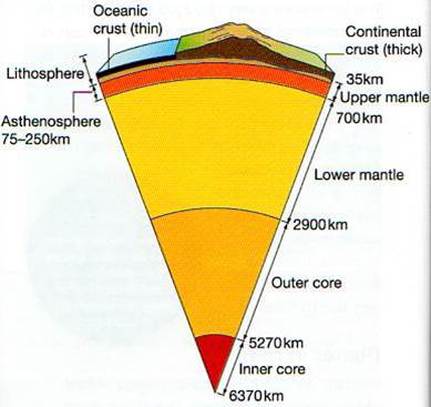
Large pieces of lithosphere that move around on the asthenosphere are called
Crust plates
Tectonic plates
Mantle pieces
Core plates

Scientists determine what Earth’s interior layers looks like by using:
Convection Currents
Seismic (earthquake) Waves
Continental Drift

Oceanic crust is _____ than continental crust.
denser
less dense

What effect does the spinning of the earth’s core have?
It creates the earth's magnetic field
It creates matter
It creates mass

What are the two kinds of crust that the Earth has?
Oceanic and Crustatious Crust
Oceanic and Continental Crust
Optic and Continental Crust

Which of the following occurs because of convection currents?
Tectonic plates on the crust move.
The mantle increases in size.
Pressure in the crust increases.
Pressure in the crust decreases.


Oceanic crust is primarily composed of
Basalt
Granite

The core heats up the mantle like a _________.
stove heats up a pot of soup
electricity goes through a cord
switch turns on a lightbulb

Based on the information in the table, what can you conclude about the density of the Earth’s layers?
The density of the layers decreases as the pressure increases.
The density of the layers increases as the temperature decreases.
The density increases in layers that are closer to the core of the Earth.
The density increases in layers that are closer to the surface of the Earth.

Scientists can find evidence of earth's layers from studying__________.
Rocks that may have uplifted or come out of volcanos from the mantle
tree layers
what minerals can combine to make rocks

Our magnetic field protects our planet from________.
solar wind
cosmic rays
the suns deadly rays
all of the answers

The farthest man has drilled down in the earth is the Kola borehole that is _________.
7 1/2 miles deep
77 miles deep
700 miles deep

At the top of a convection current the mantle rock will_____.
start to fall
continue to rise
go up or down depending on the area

Mars used to have layers like our planet because_______.
It had volcanoes-evidence of magma.
It has magnetic rock crystals-a magnetic field must of existed.
It has evidence of water.
All of the answers are evidence

The distance to the center of the earth is like flying from Tulsa, Oklahoma to_____________.
Dallas, Texas about 315miles
London, England about 4,000 miles
New York, NY 1,600 miles

What did Wegener name the large supercontinent where all the continents were joined together?
Wegenerland
Gondwanaland
Laurasia
Pangaea

Most geologists rejected Wegener's idea of Continental Drift because _________.
He used too many pieces of evidence to support the idea.
He wanted to know what Earth looked like millions of years ago, which is impossible.
He couldn't identify "how" continents to move around.
They were afraid of the new idea.

Wegener used the fit of the continents as evidence to support his hypothesis of Continental Drift.
true
false

Wegener used matching matching fossils of the same organisms on different continents as evidence to support his hypothesis of Continental Drift.
true
false

What were 2 kinds of evidence were used to prove that the seafloor spread?
rock formations, WWII shipwrecks,
magnetic seafloor stripes, WWII ship logs
magnetic seafloor stripes, age of rock samples

What technology was used during WWII to detect enemy submarines and produce the first map of the seafloor?
Sonar
Radiam
GPS

Process by which new ocean crust forms.
Seafloor spreading
Continental drift
Mid-ocean ridge
Rift

Undersea mountain ranges are called a_________.
Rift
Mid-ocean ridge
seafloor spreading
Continental drift

The OLDEST seafloor is located?
Closest to the mid-ocean ridge
Farthest from the mid-ocean ridge

Sea-floor spreading begins at the
Deep ocean trench
Mid-ocean ridge
Continent's edge

Older crust is found towards the...
Mid-ocean ridge
Deep-ocean trench
Asthenosphere

Wegener's idea of Continental Drift was rejected by geologists because _________.
He used too many pieces of evidence to support the idea.
He wanted to know what Earth looked like millions of years ago, which is impossible.
He couldn't identify how or even why the continents to moved around.
They were afraid of the new idea.
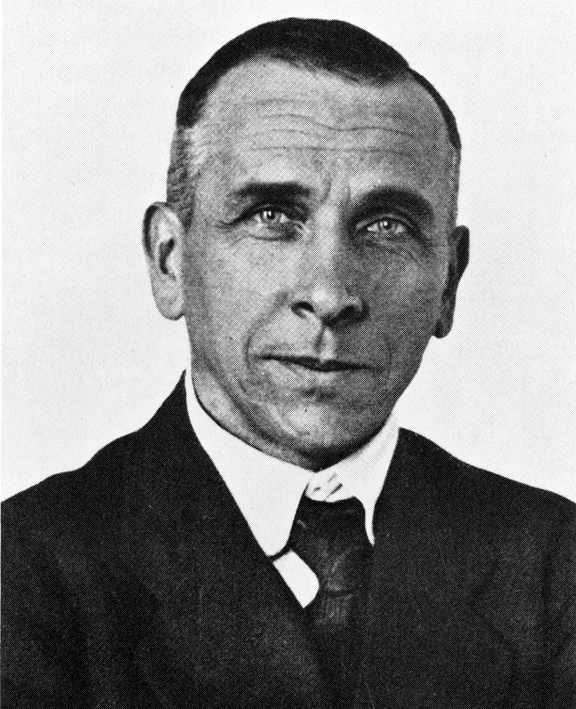
Who is the person credited with developing the theory of continental drift?
Harry Hess
Albert Einstein
Alfred Wegener
Isaac Newton

Who came up with the theory of seafloor spreading?
Harry Hess
Alfred Wegner
Mrs. White

Why were magnetic patterns found on the ocean floor puzzling?
They showed alternating bands of rock crystals pointing north and south.
No rocks were magnetic.
They did not show alternating bands of rock crystals pointing north and south.
All rocks were magnetic.


What do you call the evidence of Wegener's Theory that tells about the remains of an organism that lived long time ago?
ashes
follicles
bones
fossils

What causes continents to move?
seafloor spreading
convection currents swirling
magma oozing out of a mid ocean ridge
all of the above

What is the rate at which the Atlantic Ocean is expanding?
5-10 cm per year- like how our fingernails grow
5-10 feet per year
5-10 km per year

True or False: The plates will never stop moving
True
False

The Glomar Challenger_____
is a space shuttle
is an oil rig
has been drilling seafloor samples for over 50 years

Before sonar waves evidence, people believed that the ocean was ______.
had mountains just like on land
was coral reefs
flat and sandy

Which of the following places the geologic time eras in order from oldest to most recent?
Precambrian, Paleozoic, Mesozoic, Cenozoic
Mesozoic, Cenozoic, Paleozoic, Precambrian
Cenozoic, Mesozoic, Paleozoic, Precambrian
Paleozoic, Cenozoic, Precambrian, Mesozoic

The ______________ era covers 80%-88% of earth's history.
Paleozoic
Mesozoic
Cenozoic
Precambrian


The Geologic Time Scale is a record of what?
old geologists
sweet geology music
the known history of rocks and fossils
a list of every living thing ever

What time Era do we live in?
Mesozoic
Cenozoic
Paleozoic
Pre-Cambrian

Known as the age of the mammals?
Mesozoic Era
Holocene Epoch
Cenozoic Era
Cambrian

The dinosaurs and reptiles were dominant in which Era?
Precambrian
Mesozoic
Paleozoic
Cenozoic

The disappearance of a species.
Evolution
Extinction
Migration
Mutation

Mammals evolved and diversified in this era
cenozoic
paleozoic
phanerozoic eon
mesozoic

a mass extintion is
a short geological time when most species die
a short geological time when some species die
a long geological time when most species die
a long geological time when a fraction of species die

Which era is the longest?
Cenozoic
Cambrian
Precambrian
Phanerozoic

Jellyfish are one of the oldest species on Earth. In what time period did they first appear?
Precambrian
Paleozoic
Mesozoic
Cenozoic

Which Era was mainly dominated by dinosaurs?
Cenozoic
Jurassic
Mesozoic
Paleozoic

Which Era occurred last (most recent)?
Cenozoic
Mesozoic
Paleozoic

Which period is closest to present day?
Cambrian
Devonian
Triassic
Tertiary

What type of environment do you think was present during the Devonian Period?
mostly land
land with some water
mostly water

What is the oldest organism on the geologic time scale from the choices below?
primitive horses
sea scorpions
giant insects
trilobites

Which organisms are the most recent (closest to present day)from the choices below?
primitive reptiles
giant insects
primitive horses
brachiopods


Which period did "Lucy" the Australopithecus appear in?
Triassic Period
Pre-Cambrian Era
Cenozoic Era
Carboniferous Period

We think our early atmospheric oxygen came from
asteroids
comets
cyanobacteria from the Pre-Cambrian era
vascular plants

Finding Fossils from the Precambrian Time are rare because_____.
Fossils of soft organisms are really rare
the fossils would be extremely old and might of been destroyed in the rock cycle
the fossils are so small you need a microscope unless they are clumped together in big colonies
all answers are true

The Permian Extinction or "Great Dying" ended the _____era with about 95% of life going extinct . This was the biggest mass extinction our planet has ever faced.
Pre-Cambrian Time
Paleozoic Era
Mesozoic Era
Cenozoic Era

The Cambrian Explosion is____
the extinction from Pre-Cambrian time
when life explodes and is very diverse and abundant
when bombs exploded in Cambria
an explosion of volcanoes during the Pre-Cambrian time

One way that mammals survived the age of dinosaurs was to ______.
have fur to keep warm
hide underground from predators
keep babies inside their bodies instead of eggs in a nest
all of the answers are correct

During Pre-Cambrian Time the ______.
sun was dying
the big bang was forming
the earth and moon was forming
early humans were inventing fire

Coal is from _____and oil is from ______.
woods, swamp life
rocks, mud
fish, sponges

If all of earth's history was in one calendar year when did humans appear?
December
November
July
January

Which lab tool might you use to measure the volume of a liquid?
electric scale
bunsen burner
test tube
graduated cylinder

What is the volume of Object X?
10 cm3
15 cm3
20 cm3
25 cm3

What is the formula for density?
density = mass x volume
density = mass / volume
density = mass + volume
density = mass - volume
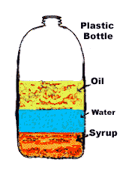
Which liquid is the least dense?
oil
water
syrup
plastic bottle

Calculate the density of the block.
2 g/cm3
4 g/cm3
6 g/cm3
8 g/cm3

Calculate the density of the block.
2 g/cm3
4 g/cm3
6 g/cm3
8 g/cm3
Will an object with a density of 1.01 g/cm3 float or sink?
float
sink


Which TWO objects have the same DENSITY based from the table below?
A and B
A and C
B and C
B and D

Which substance has the highest density?
Oil
Water
Syrup
Which substance has the lowest density?
Oil
Water
Syrup
Which substance has the highest density?
Plastic Block
Cork
Grape

What is a factor that can change in an experiment?
Claim
Variable
Scientific Inquiry
Hypothesis

Factor that you keep the same in an experiment
Independent Variable
Dependent Variable
Controlled Variable
Operational Definition

What variable in an experiment is measured? - it is also called the responding variable. It just __________. You have to wait and see....
For example: measuring the amount of mold on bread
Dependent variable
Operational Definition
Independent Variable
Control Variable

Why is it important to share a conclusion in an experiment?
It could help someone else figure out the same question or problem.
Sharing information is always a required step.
It's not that important.

What are diverse ways that scientists study the natural world and propose explanations based on evidence?
Scientific Law
Scientific Theory
Scientific Inquiry
Scientific Calculator

What can be defined as:
a possible explanation for a set of observations, or an educated guess that must be "testable."
purpose
experiment
hypothesis
Conclusion

Why do scientists conduct experiments?
To make a lot of money.
To ask a question.
To make a hypothesis.
To prove a prediction is correct.

Graphing data can help you recognize
predictions
patterns
inferences
bias
Term that describes a situation by using numbers:
quantitative observation
qualitative observation
inference
hypothesis

Does this image show results that are accurate and/or precise?
Accurate, but not precise
Precise, but not accurate
Both precise and accurate
Neither precise nor accurate

