
 Worksheets
Unit 1 Test Review
Total questions: 56
Worksheet time: 35mins
At higher temperatures.....
particles in an object have less energy
a gas contracts
particles in an object move faster
thermal contraction occurs
A gas...
has a definite shape but no definite volume
has fast-moving particles
has a definite volume but no definite shape
acts just like a liquid
Freezing.....
solid to gas
gas to solid
liquid to solid
liquid to gas
Boiling....
liquid to solid
liquid to gas
gas to liquid
gas to solid
Which state of matter has a definite shape?
solid
liquid
gas
What is happening when my ice cream changes from a solid to a liquid?
freezing
boiling
condensing
melting
Particles in a _______ move quickly and are far apart.
solid
liquid
gas
Particles of a liquid....
are tightly packed together and stay in a fixed position
are free to move around one another but still touch
move quickly and are far apart
What is condensation?
gas to solid
gas to liquid
solid to gas
liquid to solid
What is temperature?
How hot or cold something is
The measure of average kinetic energy of the particles in a substance
The measure of the speed of the particles in a subtance
The sum of kinetic energy and thermal energy
While warming water to cook pasta, you place a lid on the pot. You have made the pot of water into a......
microwave
open system
closed system
complete system
The bathroom mirror has fogged up while you took a shower. Which explains what happened?
radiation
condensation
conduction
the water was too hot
This is a substance that only has one atom
particles
element
compound
chemical formula
This is a substance that has two or more different elements.
atom
chemical formal
compound
element
H2O is the ________ for water.
element code
scientific name
chemical factor
chemical formula
What charge do electrons have?
+1
0
-1
What is the overall charge of an ATOM?
+1
0
-1
What particles are atoms made of? (Check ALL that apply:)
Protons
Neutrons
Electrons
Nucleus
What particles are in the nucleus?
Protons
Neutrons
Electrons
Nucleus
Which particle is outside the nucleus?
Protons
Neutrons
Electrons
Nucleus
Which two particles have mass?
Protons
Neutrons
Electrons
Nucleus
Protons are:
Positive
Neutral
Negative
Neutrons are:
Positive
Neutral
Negative
Electrons are:
Positive
Neutral
Negative
The smallest piece of an element:
quark
electron
shell
atom
The cloud-like space that electrons travel around:
nucleus
shell
neutrons
Oort cloud
Classification system for elements is called:
Elements
Periods
The Periodic Table of Elements
Families
The subatomic particles are called:
protons, nucleus and electrons
protons, electrons and neutrons
protons, positives and negatives
cloud, shell and quarks
Substances that have only one kind of atom are called:
elements
nitrogen
electrons
nucleus
What is the study of matter?
Chemistry
Biology
Earth Science
Physics
What is the sum of an atom's protons and neutrons called?
atom
atomic theory
atomic mass
atomic number
What subatomic particle is represented by this symbol (+):
neutron
proton
electron
What subatomic particle is represented by this charge (-):
neutron
proton
electron
All matter is made of _____.
light
energy
cells
atoms

Where is the element's atomic NUMBER located?
the top
the bottom
the top + the bottom
the number of protons + the number of neutrons

Where is the element's atomic MASS located?
at the top
at the bottom
the top number + the bottom number
the number of protons + the number of neutrons
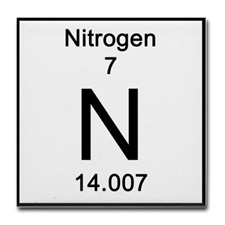


Which of these is an element?
Salt (NaCl)
Water (H20)
Oxygen (O)
Carbon Dioxide (CO2)
Which of these is a compound?
Aluminium (Al)
Carbon Dioxide (CO2)
Nitrogen (N)
Sand
Which of these is a mixture?
Laundry Detergent
Salt (NaCl)
Oxygen (O)
Fluorine (Fl)
Which of the following is classified as a pure substance?
Lemonade
Fruit punch
ketchup
Helium
___________ are the smallest unit of an element that maintains the properties of that element.
Atoms
Elements
Compounds
Mixtures
True or False: elements AND compounds are pure substances.
True
False

Pure Substance
Mixture
Which of the following is NOT a mixture?
milk
lemonade
vegetable salad
aluminum
A ______________ mixture is one that does not have a uniform composition.
heterogeneous
homogenous
pure substance
A _________________ mixture is one where the substances are evenly spread throughout.
heterogeneous
homogeneous
pure substance
In which mixture can you see all of the parts?
homogeneous
heterogeneous
In which mixture can you not see all of the parts?
homogeneous
heterogeneous

A salad is an example of a __________.
homogenous mixture
solution
heterogeneous mixture
homogenous solution


