
 Worksheets
Physics Test 1 Practice
Total questions: 87
Worksheet time: 2hrs 10mins
Define distance.
the relationship between to objects
the motion of an object between two points in space
the position of a point in space
the separation between any two point in space
What does position mean in physics?
the distance of an object
the same origin point in space
a unique location in space
the distance between two objects in space
How is distance different from position?
position is always positive, but distance can be negative
position implies an origin
distance is relative to speed
position is below the origin and distance is above it
What is a displacement?
a change in position
a change in the origin
a coordinate system
two different origin points
What is a vector?
a type of variable with the same origin point
a type of variable that includes direction as well as size
a variable with only positive values and shows direction
a displacement with no direction and no magnitude
A scalar does not depend on _____.
position
distance
magnitude
direction
Which of the following is a vector?
distance
mass
displacement
temperature
What is the difference between distance and displacement?
both show movement, so they are the same
one is a vector and the other is a scalar
distance shows direction, displacement does not
With a vector, what kind of information is carried by the positive and negative signs?
the direction
the size
the math function
the coordinates
What is the "magnitude" of a vector?
the units of the vector show magnitude
the sign of the vector shows magnitude
the length of the vector shows magnitude
the direction of the vector shows magnitude
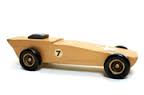
direction


Wind blowing at 20 knots
A deer running 15 meters per second due west

100 N 230 N
<------ --------->
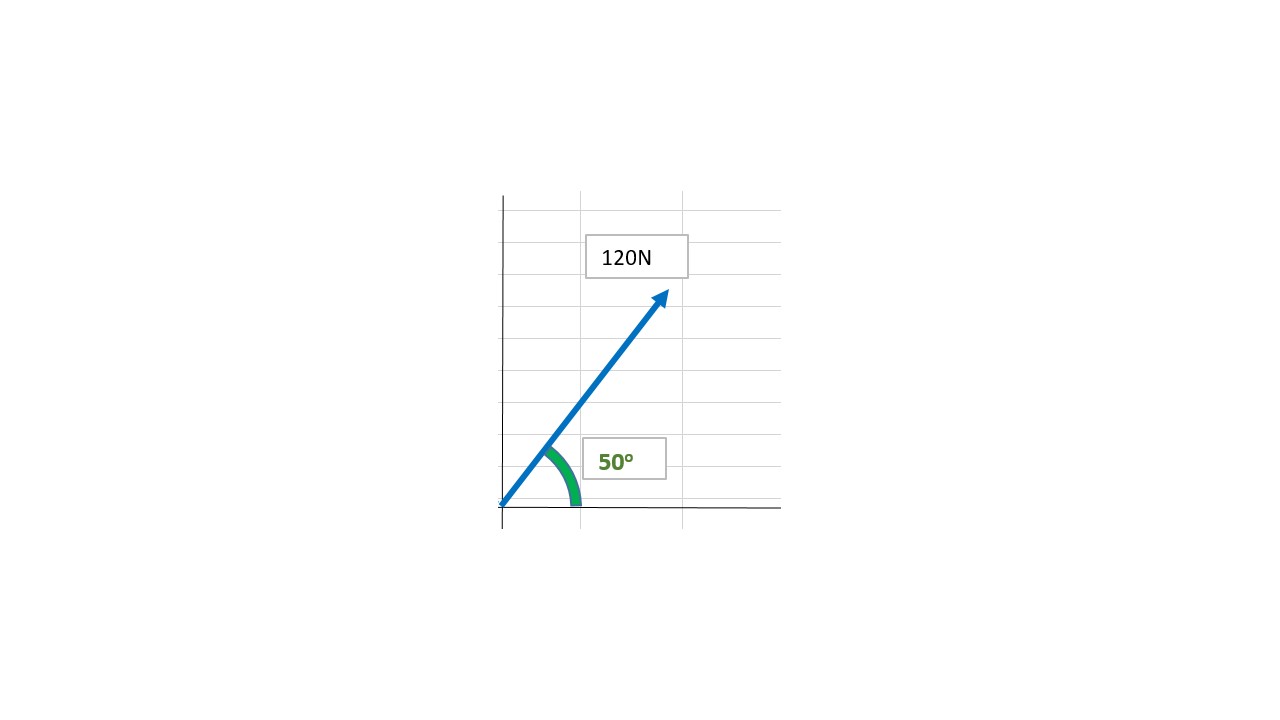
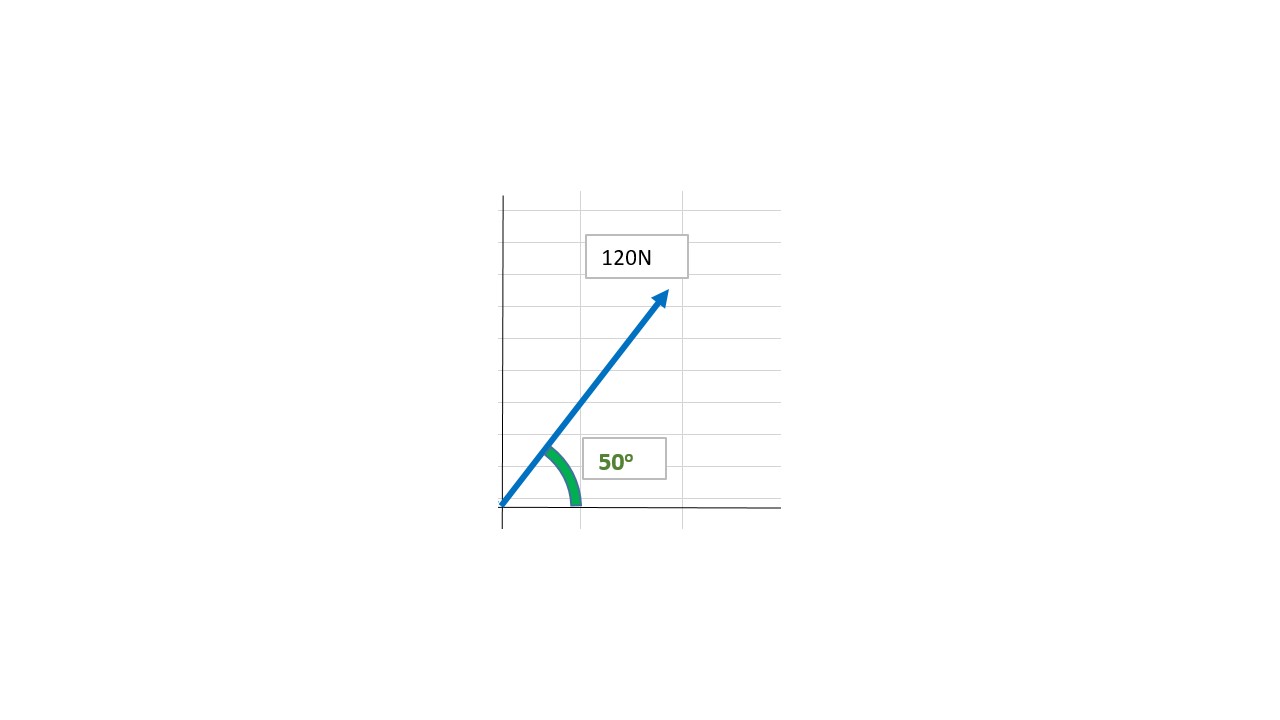
what is kinematic
branch of physics and a subdivision of classical mechanics concerned with the geometrically possible motion of a body or system of bodies without consideration of the forces involved
a force
a solution
the unit we measure time is in ___.
m/s
m
m/s^2
s
A car accelerates uniformly from rest at 3.2m/s 2
when the car traveled a distance of 40 m it’s speed will be
12.5 m/s
8.0m/s
16m/s
128m/s
an object can be moving for 10 seconds and still have zero displacement.
true
false
a car is NOT accelerating if it is moving
at constant velocity
only as influenced by gravity
in a circle
at increasing speed
a tiger travels 96 m in 8s. what is his velocity over the interval
0.04m/s
25m/s
225m/s
12m/s
what is the formula to calculate speed.
S=t/d
S=t/d
S=t x d
S=d x t

A cheetah travels 75 m in 3 s. What is her velocity?
225m/s
25m/s
0.04m/s
what is an example of kinematics
firing a cannonball
walking
grabbing your phone
A stone is thrown vertically upward with a speed
of 15.5 m/sec from the edge of a cliff 75 m high.
What total distance did it travel?
74.25
99.52
45
66.97
In Newtonian physics, ________________ is any motion of a body where gravity is the only force acting upon it.
kinematics
free fall
mechanics
velocity
If an object is in free fall for three seconds, how fast will it be falling?
9.8 m/s
19.6 m/s
29.4 m/s
39.2 m/s
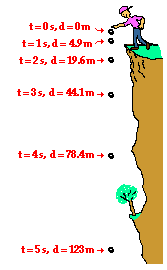

A textbook is dropped from a second floor window and falls to the ground. What happens to the velocity as the book falls to the ground
the velocity increases
the velocity decreases
the velocity remain constant

A textbook is dropped from a second floor window and falls to the ground. What happens to the acceleration as the book falls to the ground
the acceleration increases
the acceleration decreases
the acceleration remains constant

A baseball is thrown up into the air. What happens to the velocity as the ball rises in the air?
the velocity increases
the velocity decreases
the velocity remains constant

A baseball is thrown up into the air. What happens to the acceleration as the ball rises in the air?
the acceleration increases
the acceleration decreases
the acceleration remains constant
A baseball is thrown up into the air. What direction is the velocity of the ball?
upward
downward
A baseball is thrown up into the air. What direction is the acceleration of the ball?
upward
downward

A textbook is dropped from a second floor window and falls to the ground. What direction is the velocity?
upward
downward

A textbook is dropped from a second floor window and falls to the ground. What direction is the acceleration?
upward
downward

A ball is thrown upward with an initial speed of 30m/s. At what location will the ball be moving downward with a speed of 20m/s
A
B
E
F
A ball is thrown upward with an initial speed of 30m/s. At what location will the ball be moving upward with a speed of 20m/s
A
B
E
F
All free falling objects on Earth accelerate downward at a rate of __________.
9.8 m/s/s
-9.8 m/s
-9.8 m/s/s
9.8 m/s




What is happening between 4 and 5 seconds?
The object is slowing down in a negative direction.
The object is slowing down in a positive direction.
The object is speeding up in a positive direction.
The object is speeding up in a negative direction.

Find the displacement in the first 5 seconds.
8 centimeters
4 centimeters
2 centimeters
5 centimeters

Find the total displacement in the 7 seconds of motion.
1 centimeter
0 centimeters
9 centimeters
12 centimeters


A person walking along a straight line moves such that her velocity as a function of time can be represented by the graph above. At what time does the person have the same position as she had at time t = 0?
At t = 5 s
During the interval 5 s < t < 8 s
At t = 8 s
During the interval t > 8 s


What is the resultant of these two vectors?
+17 m
+3 m
-17 m
-3 m

What is the resultant vector of the two labeled vectors?
+2 km
+14 km
-2 km
-14 km

What is the magnitude of the resultant vector, r?
3
4
5
7

What is the resultant of the two vectors shown above?
+5
-5
+15
-15
Which of the following is a vector? (Select all that apply.)
Acceleration
Velocity
Speed
Distance
Which of the following is a scalar? (Select all that apply.)
Acceleration
Speed
Displacement
Distance
A vector includes ______ and ________.
direction, magnitude
magnitude, units
direction, units
scalars, scalars
A scalar includes ______.
Magnitude and direction
Magnitude
Direction
Vectors

Which of the following describes the vector above?
45 cm
45 cm at 30 degrees North of East
45 cm at 30 degrees East of North
45 cm North East

Describe the direction of the vector above.
30 degrees
30 degrees North East
30 degrees North of East
30 degrees East of North
Definition: The end point of a vector
Vector
Terminal point
Initial Point
Definition: A directed line segment with magnitude and direction
Vector
Terminal point
Initial Point
Definition: The starting point of a vector
Vector
Terminal point
Initial Point
Definition: The length of the vector
Magnitude
Direction
Vector Operations
Dot Product
Definition: The sum of the products of a vectors horizontal and vertical components
Magnitude
Direction
Vector Operations
Dot Product
Definition: Addition, subtraction and scalar multiplication
Magnitude
Direction
Vector Operations
Dot Product
Definition: The slope of a vector
Magnitude
Direction
Vector Operations
Dot Product

